Uwe Tellkamp - The Tower
Здесь есть возможность читать онлайн «Uwe Tellkamp - The Tower» весь текст электронной книги совершенно бесплатно (целиком полную версию без сокращений). В некоторых случаях можно слушать аудио, скачать через торрент в формате fb2 и присутствует краткое содержание. Год выпуска: 2014, Издательство: Penguin, Жанр: Современная проза, на английском языке. Описание произведения, (предисловие) а так же отзывы посетителей доступны на портале библиотеки ЛибКат.
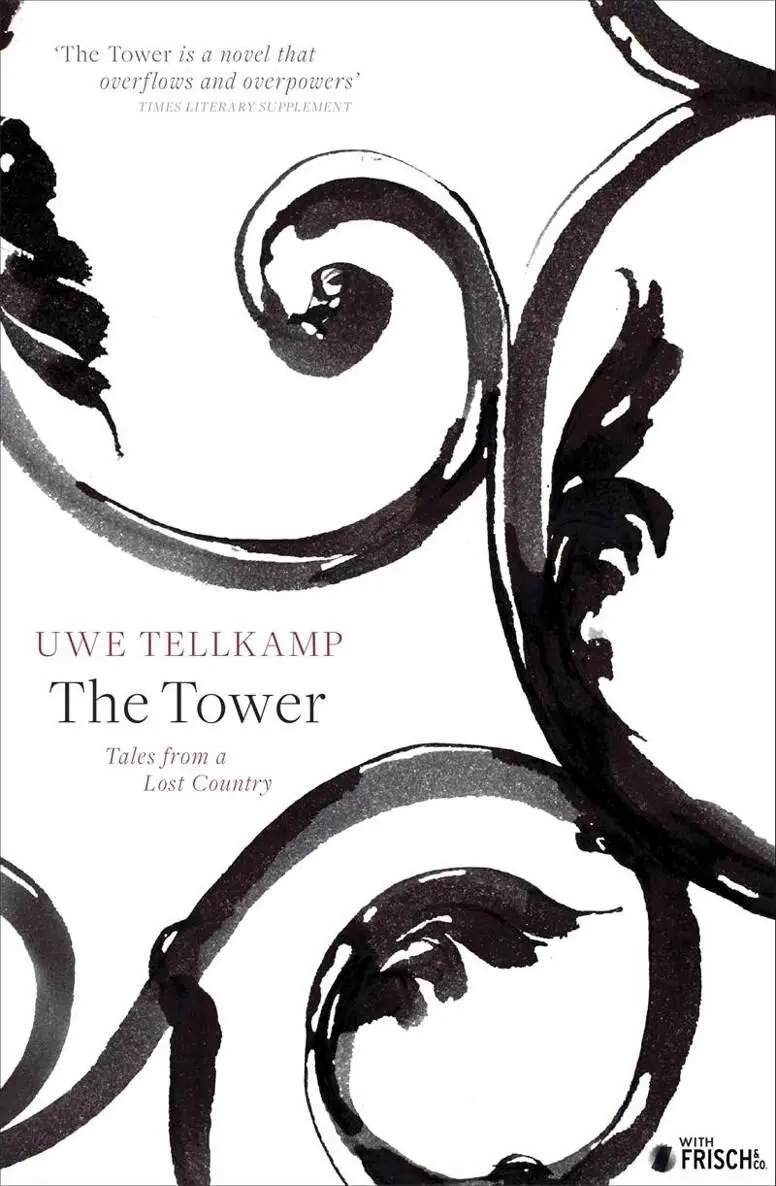
- Название:The Tower
- Автор:
- Издательство:Penguin
- Жанр:
- Год:2014
- ISBN:нет данных
- Рейтинг книги:5 / 5. Голосов: 1
-
Избранное:Добавить в избранное
- Отзывы:
-
Ваша оценка:
The Tower: краткое содержание, описание и аннотация
Предлагаем к чтению аннотацию, описание, краткое содержание или предисловие (зависит от того, что написал сам автор книги «The Tower»). Если вы не нашли необходимую информацию о книге — напишите в комментариях, мы постараемся отыскать её.
The Tower — читать онлайн бесплатно полную книгу (весь текст) целиком
Ниже представлен текст книги, разбитый по страницам. Система сохранения места последней прочитанной страницы, позволяет с удобством читать онлайн бесплатно книгу «The Tower», без необходимости каждый раз заново искать на чём Вы остановились. Поставьте закладку, и сможете в любой момент перейти на страницу, на которой закончили чтение.
Интервал:
Закладка:
In the evening he sometimes looked out of the cell window. By that time the swirling wind had mostly died down; across the black Saale and beside the coke-drying plant, which let off its soot now, sending housewives dashing out in their aprons to save their washing, you could see the housing estate where Asza, King Siewert, Ruscha and many of the other carbide workers lived. New blocks surrounded a square, in the middle was a windmill, its sails turning against the chemically inflamed sky of Samarkand.
62. Nu zayats — pogodi
If you wanted to know what was new in the district, the place to go to was Veronica, a building in Querleite where a communal bathhouse was run for those who didn’t have a bathroom of their own or, as in the House with a Thousand Eyes, where there was only one used by too many tenant families. At the beginning of the winter of 1986 three events caused a stir: the return of Muriel Hoffmann from the reformatory, the strange operation of the Minister of National Defence and the story of the exchanged child. Meno went to the bathhouse once a week, as the water allocation and usage plan allowed, showered, observed, listened. Herr Unthan, who was in charge of the bathhouse, was blind. He made his way round the cellar of 12 Querleite, where the baths were housed, with its atmosphere of steam and spray, dimly lit by Schuckert bulbs, from its time as a popular sanatorium, whose contacts could still withstand the damp, with the sureness of a sleepwalker. The cubicles were approached along duckboards with pimpled rubber mats; two still had the good zinc baths with the wind vane symbol of the Erzgebirge firm of Krauss that had originally been installed there; two others were wooden tubs and the last two injection-moulded plastic baths with original enamel signs above them on which was written, in black Gothic letters: ‘O Krauss, O name of fearful chime — I never bathe, I love my grime’ (the sarcastic advert was by Joachim Ringelnatz), as well as, presumably, to deny the boys of the district any excuse: ‘This rule holds true for ev’ry house: you need a bath — you need a Krauss.’ The cubicles were secured with brass padlocks that hung in the gloom like greeny-gold jewel beetles; since, however, the wood of the doors had become so rotten with the damp and mould you could easily put your hand through them, this security measure was like trying to keep jewels in cardboard boxes with strong metal locks. Beyond the baths, farther back in the cellar, there were shower cubicles with brown plastic swing doors that reached from the knees to the shoulders of an average adult and sounded like a Jew’s harp when opened or closed. Herr Unthan had a grandfather who had played the violin and since Herr Unthan senior lacked both arms, he’d done it in a circus, with just his toes; Herr Unthan junior had a shellac record, ‘incontrovertible proof’, that he never played to anyone, even though when the Tietzes came to have a bath Ezzo would, by his expressions of disbelief as far as his grandfather’s skills were concerned, provoke Herr Unthan to statements such as ‘He died poor, but with rich eyes.’
Niklas too would have liked to have had the record for the Friends of Music but Herr Unthan junior’s response to all offers was silence, as he lugged bucket after bucket of hot water to the baths and showers using a yoke decorated in folk-art style. The communal baths had only two cold-water connections, which were linked by pipes to a tank over a stove, for which there was a significant pile of briquettes in the backyard of Veronica, tipped out there in the summer by Plisch and Plum from their boss’s Framo pickup truck and, if the winter was long, Herr Unthan very busy and the deluge ‘after us’ cool, people stole without compunction.
‘Well, Meno, too much ink on your fingers again?’
‘And you, Niklas? Washing off the rosin?’
‘Oh well, you know how it is.’
‘Frau Knabe, I’ve forgotten my bath salts, could you pour me some over?’
‘But it’s from over there, Frau Fiebig.’
‘But that’s what I meant, Frau Knabe. Could you pour me some from your cubicle over there into my bathtub. If you would be so kind.’
Laughter, the hum of voices. Curses and jokes. Gossip and scandal from the district and the town. Sometimes someone would start singing and mostly others would join in. Herr Unthan slaved away with the water (it never occurred to anyone to help him) and Meno listened:
‘You still haven’t told us the story of the minister, Herr Tietze.’
‘Ah, this is how it was, Herr Kühnast.’
The Minister of Defence, who naturally took a military approach to matters, was, as happens to men of a more advanced age, visited by a problem in a place where orders are no use. The Minister of Defence thought about it and called his adjutant.
‘Find me the best specialist in the Republic!’
‘The best specialist for the task in question, Comrade Minister, is in Dresden, St Joseph’s Hospital.’
Surely he wasn’t trying to tell him, the Minister growled, that in the whole of the capital of the German Democratic Republic there was no specialist for that manoeuvre of the same rank!
‘The specialists were unanimous in naming that name, Comrade Minister.’
‘All right, then. Make the necessary preparations and have the comrade brought here.’
Dr Focke, the Chief Urologist at St Joseph’s was, like many urologists, a man with a tendency to fly into a rage and express himself very directly.
‘Then I’ll just have to fly to Dresden,’ the Minister told his adjutant. ‘I have to check out things at the Military Academy there anyway. See to it that everything’s prepared in that hospital and have the helicopter on stand-by. I want this Dr Focke to operate on me the day after tomorrow.’
Dr Focke said he was willing to do that. He asked for all the documents to be sent to him immediately. He had reserved a single room for the Herr Minister, but he refused to have the crucifix over the bed removed.
The Minister, who had led many companies, battalions and regiments, been in command of many attacks on the Eastern front as a young officer and spent time in the Nazis’ prisons, was a man with a tendency to fly into a rage and express himself very directly.
‘And so,’ Niklas Tietze explained, as he knocked the long-handled wooden back-brush against the cellar ceiling, making the brush head, which could be hired from a whole collection for twenty pfennigs, come off and drop into the next shower cubicle, ‘and so a compromise was agreed.’
It did not, as every sensible person would have imagined, consist of moving the operation to another Dresden hospital. Dr Focke wanted his tried-and-tested team around him, wanted to be able to concentrate fully on the task in hand and not be ‘stuck in an alien atmosphere’, as he explained to the adjutant on the telephone. But it was the Minister they were talking about! The latter, listening in on the second receiver, was, Niklas told his amazed audience in their bathwater or under dripping showers, in the picture ; first he had gone bright red then, with a grim smile and crushing the receiver in his hand, stomped up and down muttering ‘ Nu zayats — pogodi .’ Just you wait, hare.
‘Then he had a look at a map of Dresden and tapped a large patch of green with his finger. The large green patch close to which, on the other side of the busy Stübelallee, St Joseph’s lay, was the Great Garden. Just there, on the meadow that had been hurriedly reconnoitred and declared suitable, even though already attacked by hostile, negative hoarfrost, a tented camp was erected by the 7th Armoured Division, which was stationed in Dresden and had been put on unscheduled alert, and the officer cadets of the Friedrich Engels Military Academy. The Dresdeners were probably wondering why on that day there were diversions in operation on the busy Stübelallee, the equally busy Dr-Richard-Sorge-Strasse and the Brücke der Einheit, why the open-air Junge Garde stage, the exhibition centre on Fučikplatz, even the Zoo on the other side of the large patch of green, remained closed. Only the little narrow-gauge railway carrying cheerful schoolchildren through the fresh morning air had been forgotten, at which the Minister’s adjutant flew into a rage. The whistling might disturb the doctor, it was to be stopped at once! The adjutant, a far-sighted man, had even taken into consideration the fact that the operating area, since it was situated in an open meadow, might be liable to instability, which was confirmed by a call to the department responsible: there was a plague of voles that had long been out of control. Several companies of soldiers with torches had therefore spent the night emptying standard cartridges of carbide down holes in the ground; on the morning of the operation they had managed to blow away the oppressive stench by means of an aeroplane propeller mounted on a lorry.’
Читать дальшеИнтервал:
Закладка:
Похожие книги на «The Tower»
Представляем Вашему вниманию похожие книги на «The Tower» списком для выбора. Мы отобрали схожую по названию и смыслу литературу в надежде предоставить читателям больше вариантов отыскать новые, интересные, ещё непрочитанные произведения.









Обсуждение, отзывы о книге «The Tower» и просто собственные мнения читателей. Оставьте ваши комментарии, напишите, что Вы думаете о произведении, его смысле или главных героях. Укажите что конкретно понравилось, а что нет, и почему Вы так считаете.