Uwe Tellkamp - The Tower
Здесь есть возможность читать онлайн «Uwe Tellkamp - The Tower» весь текст электронной книги совершенно бесплатно (целиком полную версию без сокращений). В некоторых случаях можно слушать аудио, скачать через торрент в формате fb2 и присутствует краткое содержание. Год выпуска: 2014, Издательство: Penguin, Жанр: Современная проза, на английском языке. Описание произведения, (предисловие) а так же отзывы посетителей доступны на портале библиотеки ЛибКат.
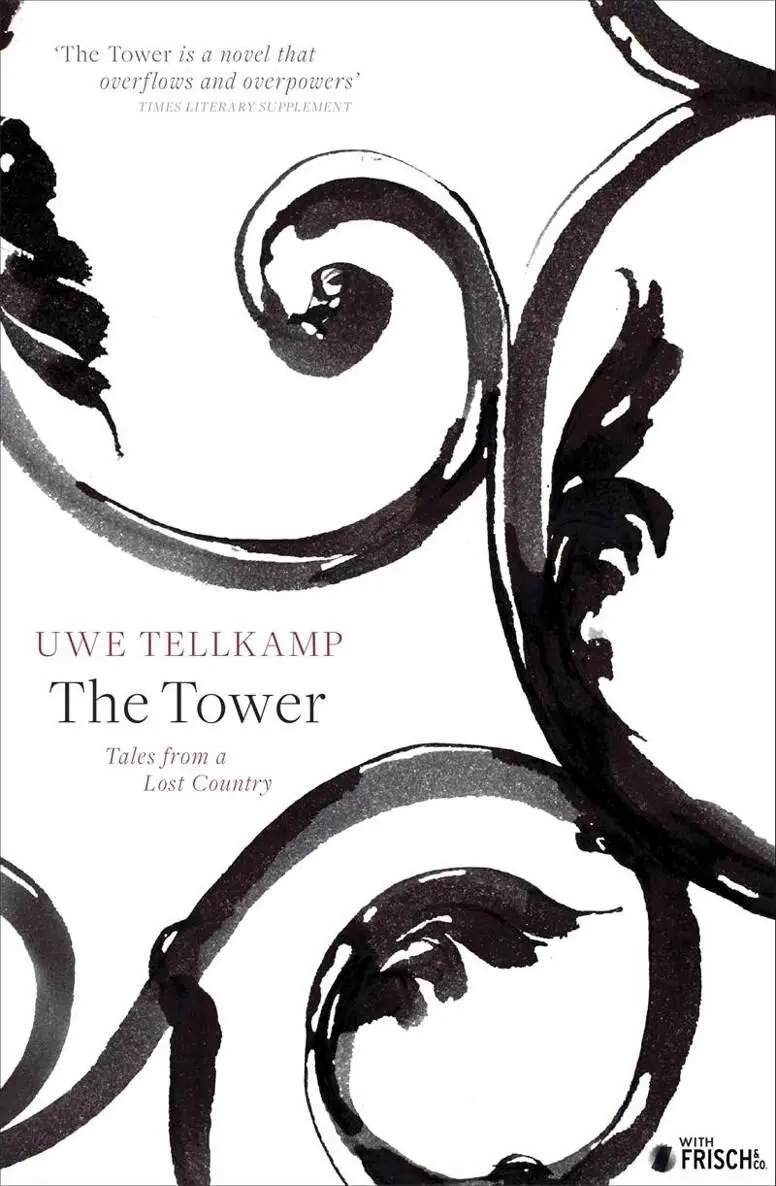
- Название:The Tower
- Автор:
- Издательство:Penguin
- Жанр:
- Год:2014
- ISBN:нет данных
- Рейтинг книги:5 / 5. Голосов: 1
-
Избранное:Добавить в избранное
- Отзывы:
-
Ваша оценка:
The Tower: краткое содержание, описание и аннотация
Предлагаем к чтению аннотацию, описание, краткое содержание или предисловие (зависит от того, что написал сам автор книги «The Tower»). Если вы не нашли необходимую информацию о книге — напишите в комментариях, мы постараемся отыскать её.
The Tower — читать онлайн бесплатно полную книгу (весь текст) целиком
Ниже представлен текст книги, разбитый по страницам. Система сохранения места последней прочитанной страницы, позволяет с удобством читать онлайн бесплатно книгу «The Tower», без необходимости каждый раз заново искать на чём Вы остановились. Поставьте закладку, и сможете в любой момент перейти на страницу, на которой закончили чтение.
Интервал:
Закладка:
Christian and his companions went in with the early shift along a passageway barely lit by fluorescent tubes, past a porter’s lodge with flowery wallpaper, through a barrier with a ‘No smoking’ sign over it. Conversations ceased, silent and hunched up, driven on by Staff Sergeant Gottschlich’s ‘At the double’, the prisoners hurried into the factory. It was already light, the air already oppressive, it was going to be a hot day. The company waited in a yard that the tall grey-dusted buildings on either side turned into a well-shaft. Cylinder drums, running diagonally across the yard, turned slowly, workers in blue-grey clothes and hard hats were running to and fro on gratings above the drums. Water was pouring over the drums, it seemed to come directly from the Saale. The drums boomed and rumbled as if boulders were turning round inside them. Strange noises came from the buildings — a shrill, dangerous-sounding hum, as if a special kind of stinging insect were being held captive; as if there were a new breed of long-extinct Meganeura dragonflies or carboniferous hornets behind the closed doors. The buildings were grey: mud-grey, the colour of lead dust, carbide dust that had settled in thick layers on pipes, walls, stairs, even on the windows, simple openings with flapping rags made in the walls. What Christian saw was a coral reef of muck and in every second during which the rust-brown cylinder drums turned and smoke from the chimneys crept up under the clouds, darkening the sky, dust was trickling, falling, crackling in fresh layers on the old ones hardened by wind and weather. Christian looked across at a woman parking her red Simson moped by a furnace and heading off towards a square brick tower at the back — he saw the outline of her shoes in the dust, at first cut sharply into the yielding layer but soon powdered over with the dust drifting down, the sharp edges blurred, gradually the footmark filled in, became invisible. After a ten-minute wait there were epaulettes of grey powder on Pancake’s shoulders, their caps, boots were snowed up; Staff Sergeant Gottschlich wiped his wristwatch clean. The dust got between their teeth, in their eyes, making them inflamed, rubbed against their groin until it was raw. And then there was the wind. The wind, ferreting round, bringing unrest, the blind marshal of the weather. Like a dark-grey djinn rising out of an unsealed bottle, a spiral of dust swelled up over the carbide factory; at ground level, where clumps of grass stuck up like the mops of hair of people buried in the carbide powder, the spiral was as slender as a boa, rising up, against the wagons on the goods line behind the factory, like a trombone that twisted and turned, spreading out its bell above the furnaces lining the top of the locomotive.
Pancake accepted it with a shrug of the shoulders. He’d heard that work in the carbide factory was well paid and when a foreman came to instruct them in their work he brightened up and started to haggle. Gottschlich was occupied elsewhere and the prisoners were left to themselves and the carbide people. Christian saw the bars on the windows of the furnace shed where the foreman took them. Here, not far above the ground, the windows were of glass, wiping them had left bright smears, like bull’s-eye glass, slim triangles of dust had built up in the corners.
‘But you can pay me extra.’ Pancake smiled. Aha, so he’d only kept his self-assurance hidden. He was a smart lad, knew when it was better to keep your head down and say nothing. To play the repentant: Christian hadn’t believed his ‘reformed character’ act. In the evening he would often talk about prisons he’d been in. There were people, even ones as young as Pancake, who saw the country from the prison perspective, with ‘bars before their eyes’. They’d been round the prisons of the Republic, knew the guards, their preferences and weaknesses, knew whether you could bribe them and what with. Pancake didn’t know Schwedt and Carbide Island, but they knew him, as Christian discovered. Pancake had immediately come to an understanding with Gottschlich, each sensed a ‘brother’ in the other. Chance, sometimes just the accident of birth, could decide what dress you wore: dark blue or striped. The only difference in expression was whether you hit people as per the law or not. That was something Christian had had to learn: that you didn’t waste words. A punch was quicker than a word and who was right was not sorted out by discussion, at least not by oral discussion. Do you want it in writing? To get something in writing . That meant something different in there from outside , that had to be learnt as well.
‘We’ll see,’ the foreman said. Pancake raised his head, had a quick look round.
‘You can look after it for me. I’ll collect it when I’m out again. You won’t lose out on it.’
‘For the moment you get your seventeen per cent.’ The prisoners were entitled to 17 per cent of the normal wage, if they reached their targets. If the foreman was open to discussion like that, the situation regarding the workforce must be bad and with that their prospects of reaching the planned targets. Christian was put in the Gustav furnace shop.
Carbide. He had heard of the substance, seen the film Carbide and Sorrel , knew that Grandfather Arthur’s Wanderer bike had a carbide lamp; but he had no idea exactly how it worked. That was now explained to him by Asza Burmeister, the tapper of furnace 8 in Gustav furnace shop, an oldish worker who had been ‘in carbide’ for twenty-two years, had trained as a carpenter and had also been to sea. He took a piece of carbide and poured some water over it. ‘Y’see, Krishan,’ (he called him the same as Libussa, which pleased him) ‘now that makes acetylene. It’s welding gas, that is, welding gas. An’ now when I hold my cigar against it,’ (he smoked Jägerstolz cigars) ‘there’s a bang an’ it lights up. That’s the way a carbide lamp works. Only no bang, it shouldn’t go bang.’ Asza spoke very quickly, it was difficult to follow him, he often repeated individual words, rolled his ‘r’s in a dialect Christian had never heard before. ‘I’m a Sudeten lousewort,’ Asza said, avoiding a direct answer. Asza: an unusual name, but Christian didn’t ask. He couldn’t ask many questions. Questions were forbidden. Conversations were forbidden, fraternization. The workers and the prisoners should have as little as possible to do with each other, but the prisoners had to be trained, that was where the problems started. Gottschlich was supposed to keep a check but, as Christian soon realized, appeared only rarely. That had two reasons and they were: heat and dust. What is heat? Asza, if he hadn’t been so taciturn while working (during the breaks he would sit, left leg over a chair, with his Jägerstolz and a bottle of rhubarb juice, which was available to the carbide workers at a reduced price, muttering ‘Piraeus, Faroes, Bordoh’ — the harbours he’d seen), Asza could have said, heat, brother, you can’t explain it. The furnace has a white heart and each heartbeat comes flying like a red-hot iron. The shift lasted twelve hours. That had its good side for afterwards the prisoners didn’t have to go to the ploughland as they called the training ground: drill, assault course, tactics, instruction in protection. On the other hand it was twelve hours in an atmosphere Christian would not have thought imaginable. When Ron Siewert, the Free German Youth secretary of the Thälmann work team, came over from the furnace next to theirs Christian would only see him when he was two or three metres away. Along with Asza, King Siewert, as he was known, was the best furnace tapper: no absences, no dawdling, no boozing at work, no negligence. Negligence was bringing carbide into contact with water; negligence was not wearing a hard hat; negligence was working without wearing welder’s goggles. Siewert would appear out of the greenish haze of dust (hanging lamps on completely encrusted wires that looked as if they were inside the wreck of the Titanic ), open his beard and shout to ask Asza how the furnace was to be run.
Читать дальшеИнтервал:
Закладка:
Похожие книги на «The Tower»
Представляем Вашему вниманию похожие книги на «The Tower» списком для выбора. Мы отобрали схожую по названию и смыслу литературу в надежде предоставить читателям больше вариантов отыскать новые, интересные, ещё непрочитанные произведения.



Обсуждение, отзывы о книге «The Tower» и просто собственные мнения читателей. Оставьте ваши комментарии, напишите, что Вы думаете о произведении, его смысле или главных героях. Укажите что конкретно понравилось, а что нет, и почему Вы так считаете.