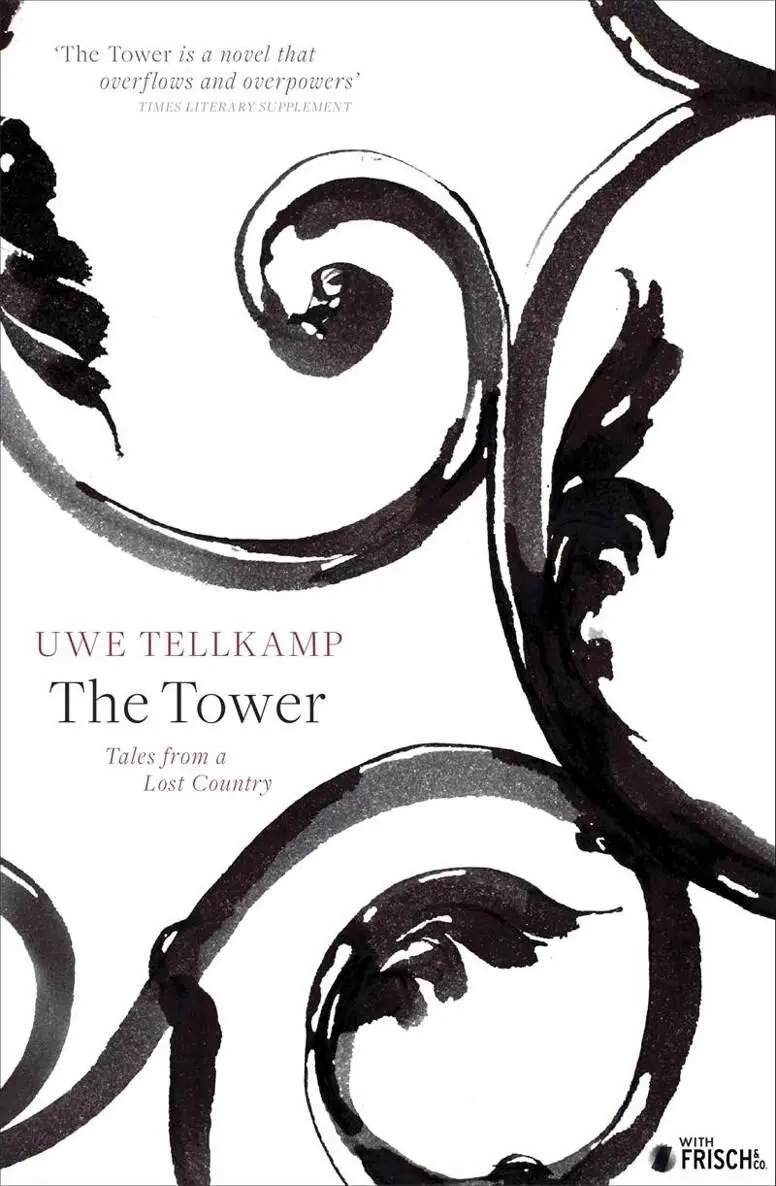
Uwe Tellkamp - The Tower
Здесь есть возможность читать онлайн «Uwe Tellkamp - The Tower» весь текст электронной книги совершенно бесплатно (целиком полную версию без сокращений). В некоторых случаях можно слушать аудио, скачать через торрент в формате fb2 и присутствует краткое содержание. Год выпуска: 2014, Издательство: Penguin, Жанр: Современная проза, на английском языке. Описание произведения, (предисловие) а так же отзывы посетителей доступны на портале библиотеки ЛибКат.
- Название:The Tower
- Автор:
- Издательство:Penguin
- Жанр:
- Год:2014
- ISBN:нет данных
- Рейтинг книги:5 / 5. Голосов: 1
-
Избранное:Добавить в избранное
- Отзывы:
-
Ваша оценка:
The Tower: краткое содержание, описание и аннотация
Предлагаем к чтению аннотацию, описание, краткое содержание или предисловие (зависит от того, что написал сам автор книги «The Tower»). Если вы не нашли необходимую информацию о книге — напишите в комментариях, мы постараемся отыскать её.
The Tower — читать онлайн бесплатно полную книгу (весь текст) целиком
Ниже представлен текст книги, разбитый по страницам. Система сохранения места последней прочитанной страницы, позволяет с удобством читать онлайн бесплатно книгу «The Tower», без необходимости каждый раз заново искать на чём Вы остановились. Поставьте закладку, и сможете в любой момент перейти на страницу, на которой закончили чтение.
Интервал:
Закладка:
Carbide. The word pursued Christian into his sleep, for here he didn’t dream. When he got back from his shift, he was all in . He flopped onto his bunk and fell asleep. Pancake had to shake him awake when Gottschlich did his rounds.
Carbide. What was it? Trees (there were meadows along the banks of the Saale that were reduced to ash) were living beings, they felt heat and cold, growth and decline, they blossomed and withered. But this, this grey stuff, this carbide? Time consists of water, the future of carbide, they said in Samarkand. The furnace was several storeys high and it produced carbide, carbide, always the dazzling white melt when Asza burnt a hole in the skin of the viscous carbide with the flame cutter, directed along caterpillar tracks, so that it would run along the ‘fox’, as Asza called the tapping spout, into the ‘walrus’ (the water-cooled cylinder drum). Christian thought, I can’t stick this out. Christian thought, Meno would say, There, you see, that’s completely unironic. Christian thought, if only you were like Pancake. Keep your head down. Always fall on your feet. Take things as they come with a shrug of the shoulders. He doesn’t get worked up about being locked up here but about the fact that he earns so little money. What sticks in his craw is the 17 per cent wages, not the hundred per cent Carbide Island. Still, Christian had become smarter . To be smarter meant keeping your trap shut. A few of the others in the cells still hadn’t become smarter, still talked about error and misfortune , wanted consultations with their lawyer , and appeals and visits . But no visits were allowed on Carbide Island. They moaned instead of sleeping. They were damaged . They ended up in the U-boat. There everything was as per regulations.
Carbide. When the wind turned to the south, it blew the dust onto the island. Roses grew against the southern wall. Christian would have liked to know what colour they were. They had no scent. The flowers looked as if they were made of plaster. Even the leaves and shoots had a light-grey dusting, a stucco-like beauty heavy with sleep.
Asza said, ‘Anyone who sticks it out for a whole summer in the carbide will stay.’ Carbide. What was it, what did they need it for? Christian learnt: it needed coke and quicklime, the mixture was called Möller. A round furnace was charged with it. Christian had assumed the furnaces here would work in the same way as the stove at home with coal on a grating through which the ash fell into the ash pan underneath. But he had never seen — never mind heard — a stove anything like this furnace. Three Soderberg electrodes, several metres high and arranged in an equilateral triangle, jutted down into the furnace, were electrically charged and, since the material from which they were made formed resistance, became hot, creating an arc with a temperature of up to 3,000 °C. In it the Möller reacted to produce calcium carbide. The arc was dazzling white and hummed in the furnace opening that Asza called the nostril of hell. The hum was accompanied by the thump of the coke-crusher, since, before they were put in the mixing tower to be made into Möller, the coke and limestone had to be of a certain particle size. It sounded as if a herd of bison were stampeding across the shed, a knocking and rattling, sometimes a deafening clatter, as if goods wagons full of sheet metal were being tipped out. The furnaces used an immense amount of electricity — so much that on some days in Halle-Neustadt the lights went out when the early shift started and high-rise blocks stood there in the semi-dark like angry mountain trolls. Furnace 8 was a vicious dragon. Asza knew it well and respected it. When Asza burnt open the carbide crust, it sounded like a record arm being pulled right across the record, potent and dangerous, and it wasn’t always carbide that shot out into the ‘fox’, there were impurities, residues of quicklime and coke that ought not to be there. The shift supervisors knew that and kept quiet about it; they were under pressure from the targets and twenty-two tappings per shift were the norm, twenty-two times the white-hot snot had to pour out of the dragon’s nostrils. But the god of industrial processes had blocked them with lumps. Even at 2,200 °C the molten mass of the Möller tended to form lumps and the chemical reaction threatened to come to a halt. Preventing this was Christian’s job. With iron poles several metres long that they called rods he poked around in the glowing mass. What did such an iron pole weigh? Enough for it to be too heavy after half an hour. There was a steel thermometer beside the steps up to the top of the furnace, over the years it had been covered by more and more layers of flue dust and now looked more like a stalactite than a thermometer. When he was standing at the furnace using the rod, Christian had the feeling he was being smelted into a new kind of creature, a cross between an otter (sweat, the side away from the furnace) and a broiling fowl (facing the opening). The heat made you tired, despite that you had to be alert. Sometimes hot oil would spurt out of a leaky pipe, land on your tough cotton clothing and sparks would spray out from the burner, setting the cloth alight. Once Asza was in flames but Ruscha, the second tapper (they worked in fours per furnace and shift), calmly threw a blanket over him and smothered the blaze. Pancake, working the rods with Christian, had leapt aside in alarm. The dust made your throat scratchy and this was soon followed by the cough, a never-ending retching and barking to clear out the dust; it was worse over in the chlorine works, Asza said, over in the chlorine works they exceeded the officially permitted level of air contamination by 100 per cent. The heat made you thirsty.
‘Some time ago,’ said King Siewert, ‘they used to give us vitamins, fresh fruit, oranges — but now? Rhubarb juice! Rhubarb juice all the time! Nothing but rhubarb juice every day!’
‘But you’re in the Party,’ Ruscha said, ‘you tell those up there what it’s like here. Where’s Monkeydad?’ Monkeydad was what they called the departmental Party Secretary. ‘Sitting at his desk but never gets his arse off it. Polishing up his speeches … You tell him, King.’
‘I do, I do! But they never tell you anything. I’m none the wiser when I come out than when I went in.’
‘They’re driving the furnaces to rack and ruin. If one of them should blow up, then Yuri Gagarin here’ll be in the landing capsule; some red-hot communists at last.’
For their thirst there was rhubarb juice, pressed by VEB Lockwitzgrund. The juice was brought on a cart by a woman, ‘Rhubarb-juice Liese’. Of indefinite age, though already a pensioner, she sold the juice throughout Samarkand in order to supplement her pension. She was thin and bent as she walked, probably from the advanced stages of osteoporosis, and Christian never saw her other than in the same old-fashioned black dress, to which the yellow hard hat with the retort emblem of Samarkand formed a jarring contrast. People said that Rhubarb-juice Liese was not quite right in the head, she had lost her husband and her son in the war and had been raped, not by the Russians but by a Canadian unit. She had worked in ‘the chlorine’, which had left her with a rusty laugh that could be heard during the breaks, when the furnaces (contrary to regulations) were shut down and the noise fell to a bearable level. With a trembling, claw-like hand she gave out the bottles of rhubarb juice and took the money, which she kept in a leather conductor’s bag, giving it a long and thoughtful look. She stopped in front of Pancake, who was resting next to King Siewert, and felt his face, which confused him; he frowned in irritation.
‘She fancies you,’ Ruscha joked.
Читать дальшеИнтервал:
Закладка:
Похожие книги на «The Tower»
Представляем Вашему вниманию похожие книги на «The Tower» списком для выбора. Мы отобрали схожую по названию и смыслу литературу в надежде предоставить читателям больше вариантов отыскать новые, интересные, ещё непрочитанные произведения.



Обсуждение, отзывы о книге «The Tower» и просто собственные мнения читателей. Оставьте ваши комментарии, напишите, что Вы думаете о произведении, его смысле или главных героях. Укажите что конкретно понравилось, а что нет, и почему Вы так считаете.