Uwe Tellkamp - The Tower
Здесь есть возможность читать онлайн «Uwe Tellkamp - The Tower» весь текст электронной книги совершенно бесплатно (целиком полную версию без сокращений). В некоторых случаях можно слушать аудио, скачать через торрент в формате fb2 и присутствует краткое содержание. Год выпуска: 2014, Издательство: Penguin, Жанр: Современная проза, на английском языке. Описание произведения, (предисловие) а так же отзывы посетителей доступны на портале библиотеки ЛибКат.
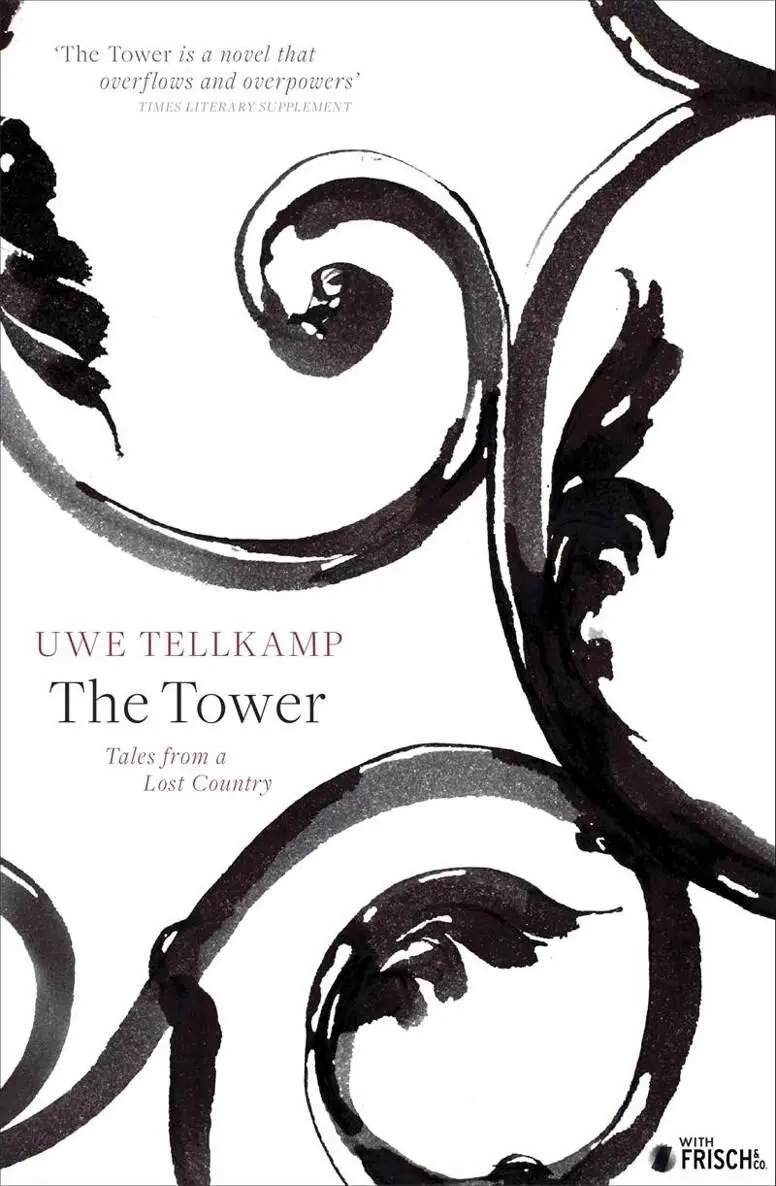
- Название:The Tower
- Автор:
- Издательство:Penguin
- Жанр:
- Год:2014
- ISBN:нет данных
- Рейтинг книги:5 / 5. Голосов: 1
-
Избранное:Добавить в избранное
- Отзывы:
-
Ваша оценка:
The Tower: краткое содержание, описание и аннотация
Предлагаем к чтению аннотацию, описание, краткое содержание или предисловие (зависит от того, что написал сам автор книги «The Tower»). Если вы не нашли необходимую информацию о книге — напишите в комментариях, мы постараемся отыскать её.
The Tower — читать онлайн бесплатно полную книгу (весь текст) целиком
Ниже представлен текст книги, разбитый по страницам. Система сохранения места последней прочитанной страницы, позволяет с удобством читать онлайн бесплатно книгу «The Tower», без необходимости каждый раз заново искать на чём Вы остановились. Поставьте закладку, и сможете в любой момент перейти на страницу, на которой закончили чтение.
Интервал:
Закладка:
‘Oh, shut your gob.’ Pancake stood up, walked away from Rhubarb-juice Liese.
‘You just be careful, she’s got the evil eye,’ Asza said. ‘I once went to see a fortune-teller in Piraeus, she had just the same look.’
‘So that’s why you’re still here! Twenty-two years!’ Ruscha tapped his forehead. ‘Only a nutcase would stay in carbide for so long.’
‘And you?’ Pancake had come back and looked Ruscha up and down contemptuously.
‘I’m not here to improve my mind, chum, but to make money. I do my twelve hours —’
‘And all the rest can go to blazes, eh?’ King laughed.
‘There’s fire everywhere,’ Ruscha replied, shugging his shoulders.
Christian sat on one side in silence, listening to their stories, mostly about carbide and women, and trying to get some rest. He sensed that he wasn’t taken seriously. Pancake, the former blacksmith with the strength of an ox, they did take seriously. Not him. He was one of the ‘white collars’ as the workers contemptuously called the management. He worked like them, they didn’t make things easy for him, they didn’t help him. Despite that, he wasn’t one of them, there remained an insurmountable barrier. He hardly took part in the conversations at all, perhaps it was his silence that made the others so reticent. One day, however, Ruscha stood up and strolled over to Christian, who was drinking his rhubarb juice. ‘What I wanted to ask, mate — you don’t happen to belong to the firm, do you?’
‘Sit down, Ruscha,’ Pancake said.
‘Wouldn’t be the first time they’d dumped a stoolie on us,’ he said threateningly.
‘Not everyone likes shootin’ his mouth off like you,’ Asza said. ‘Just be happy we’ve got the lad, or do you want to do extra shifts again?’
‘If the dough’s right …’
‘The class standpoint can go to hell …’
‘Rhubarb juice, rhubarb juice, I’ve got the very best rhubarb juice,’ said Liese, praising her wares.
Once Christian had settled in, he began to observe Asza, Ruscha and the other workers and spent a lot of time thinking about them. Ron Siewert lived in a high-rise block in Halle-Neustadt, which was cut through by a four-lane motorway connecting Samarkand with the rest of the Orient. He got up at four for the early shift, went to bed at eight in the evening. His apartment was tiny, he and his wife had one child; his grandparents lived in a little room. Dumper trucks were going round and round the building day and night, the paths consisted of wooden planks. The children played on the piles of rubble or in the rubbish containers by the huge central shopping mall. White and decked out with flags, it was stuck in a sea of mud. Asza dreamt of going to sea again, as he had done when he was young. He wanted to go round all the harbours he’d been to again, in an ocean-going yacht with a four-man crew. He lived in Halle-Neustadt as well, Housing Complex 2, Block 380, House 5, apartment 17.
‘And if you come to visit me, Krishan,’ Asza said, ‘and can’t find my apartment, ’cause it’s a bit difficult, difficult — it’s the one with the red flowers on the balcony, all the others just have white ones.’
When they sat on their chairs during the breaks, silently smoking, silently sitting with their heads leaning forward:
(because there’d been an explosion: because there was a fault in the water-cooling system, water had come out of the cracked rubber hoses and combined with carbide to produce acetylene, which was spreading,
because acetylene was inflammable and exploded in the temperatures in the furnace,
because the carbide in the air, the dust fairies, also combined with the moist air to produce acetylene so that sometimes ball lightning seemed to be zooming round the furnace shop,
because molten carbide could suddenly shoot out of the furnace and hit the tappers and rod-men,
because impurities could be deposited on the furnace shell and gradually eat their way through the fireproof masonry of the furnace wall then be hurled out of the furnace like lava surrounded by tongues of flame,
because the dust-removal vent hadn’t been built,
because the effluent from the process was spewing out of open pipes as a toxic slick into the Saale,
because carbide was an indispensable component of plastic, artificial fibres, synthetic rubber,
because Samarkand urgently needed the long-overdue investment for other parts of their operations so therefore nothing would change,
because the hum of the furnace transformers, the interconnected single-phase transformers with an output of 53 MVA, and the rotary current transformer that, in order to increase output, was in parallel with the neighbouring carbide furnace, caused headaches, unbearable throbbing headaches,
because these transformers had a tendency to short-circuit and in the shower of sparks Asza would start to pray that the Lord would let them all get home safely, because there were planned targets and therefore ‘blanking’: at the times of peak demand, during the day, when there was often less power available, the furnaces were cut back, working like pumped storage power plants as buffers for the public network — but operated at full power during the night and on Sundays, when there was power available, to make up for the loss of production,
because there was not only carbide in Samarkand, there was the vinyl chloride department, electrolysis, where the workers inhaled toxic gases and died at fifty, the lime works where the carbide factory got its quicklime from, the fibre-spinning mill, the ball crushers, a conveyor belt with capsules the size of spaceships revolving on rollers, which ground the brown lumps of carbide to dust,
because retirement at sixty had once more been cancelled,
because the cars on the four-lane urban motorway drove and drove on and drove past)
they sat in silence, seeming to Christian like damned souls.
He observed Pancake. He’d driven Burre so far, he and others.
‘Why did you do it? Support me?’
‘Because it wasn’t right, Mummy’s Boy.’
‘And Burre?’
‘He was weak, that’s all.’
‘You think that’s right?’
‘The weak have to serve the strong, that’s the way things are.’
‘No, it’s the other way round. The strong have to support the weak.’
‘Well, yes, if it’s a matter of your own turf. Everyone has their own turf and anyone who belongs to your own turf has to be protected. Even if he’s weak. That’s what it’s always been like.’
‘But that’s why I still don’t understand why you supported me.’
‘You have a home, you have someone who comes to visit you, you have a place where you belong.’
‘You haven’t?’
Something strange happened: the resistance Christian had long felt inside himself — to society, to socialism as he experienced it and saw it — disappeared, gave way to a feeling of being in agreement with everything. It was right that he was there. He was an opponent of the army and of the system and that was why he was being punished. No country in the world handled its opponents with kid gloves. Christian sensed that here, in the chemical empire eaten away by brown-coal open-cast mines and poisoned rivers, he was in the right place for him. He had found his place in society, he was needed here (he could see the despair, the quiet pleas behind all the severe masks). He did what he was told to do and if he wasn’t told to do anything, he did nothing. And when he was doing nothing, he took pleasure in little things: a dandelion in postbox yellow, the clarity of a line of migrating birds (as autumn began, the greylag geese passed over the Orient). It was so much simpler to let go and not resist. If you did exactly what was demanded, the punishments passed you by, you were left in peace. Why struggle? What use was it knocking your head against a brick wall until it was bleeding? A wise man, he remembered, walks with his head bowed, humble like the dust.
Читать дальшеИнтервал:
Закладка:
Похожие книги на «The Tower»
Представляем Вашему вниманию похожие книги на «The Tower» списком для выбора. Мы отобрали схожую по названию и смыслу литературу в надежде предоставить читателям больше вариантов отыскать новые, интересные, ещё непрочитанные произведения.











Обсуждение, отзывы о книге «The Tower» и просто собственные мнения читателей. Оставьте ваши комментарии, напишите, что Вы думаете о произведении, его смысле или главных героях. Укажите что конкретно понравилось, а что нет, и почему Вы так считаете.