Uwe Tellkamp - The Tower
Здесь есть возможность читать онлайн «Uwe Tellkamp - The Tower» весь текст электронной книги совершенно бесплатно (целиком полную версию без сокращений). В некоторых случаях можно слушать аудио, скачать через торрент в формате fb2 и присутствует краткое содержание. Год выпуска: 2014, Издательство: Penguin, Жанр: Современная проза, на английском языке. Описание произведения, (предисловие) а так же отзывы посетителей доступны на портале библиотеки ЛибКат.
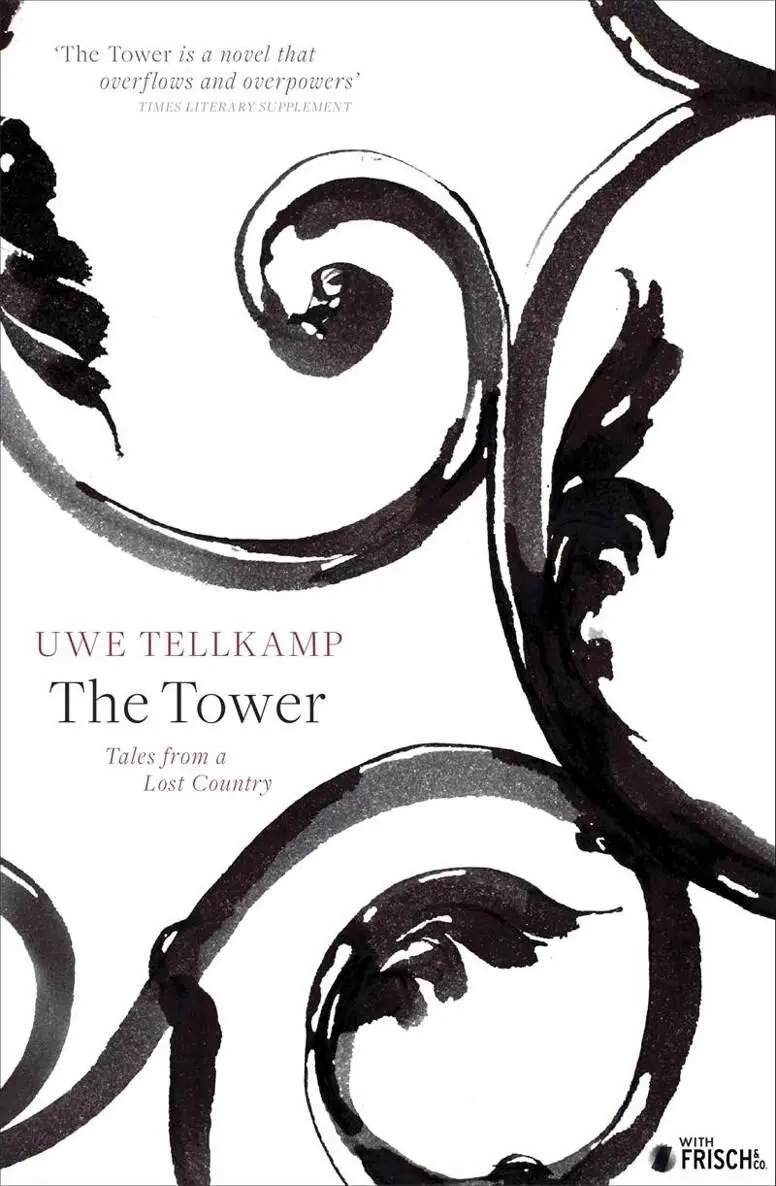
- Название:The Tower
- Автор:
- Издательство:Penguin
- Жанр:
- Год:2014
- ISBN:нет данных
- Рейтинг книги:5 / 5. Голосов: 1
-
Избранное:Добавить в избранное
- Отзывы:
-
Ваша оценка:
The Tower: краткое содержание, описание и аннотация
Предлагаем к чтению аннотацию, описание, краткое содержание или предисловие (зависит от того, что написал сам автор книги «The Tower»). Если вы не нашли необходимую информацию о книге — напишите в комментариях, мы постараемся отыскать её.
The Tower — читать онлайн бесплатно полную книгу (весь текст) целиком
Ниже представлен текст книги, разбитый по страницам. Система сохранения места последней прочитанной страницы, позволяет с удобством читать онлайн бесплатно книгу «The Tower», без необходимости каждый раз заново искать на чём Вы остановились. Поставьте закладку, и сможете в любой момент перейти на страницу, на которой закончили чтение.
Интервал:
Закладка:
‘And Focke?’ Herr Kühnast asked.
‘It took him four hours. He told me he enjoyed it.’
‘Poor Gudrun,’ Meno murmured.
But Gudrun started to sing, first of all a folk song, then ‘A shower bath, a shower bath, to wash those blues away, Annie’s got a new sweetheart, the handsome Johnny Grey.’ She sang alone, for they were lines she made up while scrubbing the children, Niklas and herself in the shower. Then something of the merriment would return that she must have bubbled over with as a girl and that reappeared at rare moments, sometimes for no reason at all. Then it could happen that Gudrun would put a washbasin on her head, shout something to Herr Orré, if he was in the neighbouring cubicle, at which the actor would leap out into the corridor, naked apart from a washbasin on his head and holding an elderly umbrella, which was used to keep the spray from the first shower out of the bathtubs, and perform a flip-flop-slapping tap dance with Gudrun Tietze to the accompaniment, bawled out rather than sung, of the other bathers: ‘We were often stony broke, / bein’ broke it ain’t no joke. / But now I’ve got a new hat / an’ I feel much better for that. / Life has its ebb an’ its flow, / you get tossed about to an’ fro, / sometimes you’re here, sometimes there / but now I’m a millionaire!’
Herr Unthan had difficulty getting past the two dancers. The buckets had to be emptied — into the zinc storage tanks that, like lavatory cisterns only higher, were hung from the cellar ceiling to provide the necessary water pressure. In order to get the water out of the buckets and into the containers, there were rails fixed to the sides of the shower cubicles up which rope hoists ran; they had tipping handles, to which the buckets were attached, and when Herr Unthan pulled a lever that worked via the rope hoist the bucket, just three metres above the floor, tipped forward and emptied the water into the storage container that could take enough water to shower a family of four. Since there were only two buckets, it didn’t make sense to accelerate one’s shower, as some intelligent observers had wanted to do, by simply pouring the contents of a bucket over one’s head. In the first place that wasn’t a proper shower and would have hurt Herr Unthan’s professional pride; in the second a safety regulation indicated that such a procedure was not permitted.
‘Good day, Herr Rohde. I hope you don’t mind but Herr Unthan’s put me in the banja with you.’
‘Hello, Herr Adeling. No water for you at home either?’
‘Oh, water, yes, but the stories, Herr Rohde, the stories. May I put my soap beside yours. There’s a cat winking on yours, quite unmistakable.’
Frau Knabe, the dentist, was telling the story of the exchanged child. And while she was talking, in his mind’s eye Meno could see the Roecklers, the couple who ran the dance school of the same name on Lindwurmring, to whose daughter the unbelievable event, which had been a topic of conversation in the town for months, had happened.
‘One day Silke Roeckler, their youngest daughter, went to the shop of the military hospital. You can go in, the guards let you through and sometimes they have things you can’t get from Frau Zschunke’s or in Sweet Corner or Konsum.’
Meno heard the click of the abacus that Frau Knabe was imitating, making her majestic bosom press against the plastic door, to the delight of the men in the shower cubicle opposite. Frau Roeckler was small with a pale, waxy complexion in the white pleated dress she wore with the gold lamé shoes for the dancing lessons partnering her husband in his black tails. In perfect posture, with doll-like make-up, as graceful as one of Kändler’s Meissen figures, she would float, her still-black hair swept up in a shiny 1950s style, across the chessboard floor of the dance school on the first floor, accompanied by the drizzle of the grand piano beside the pale-leaved Monstera, on which, when the central paste chandelier was lit, the shadow of a stuffed hobby from the Bassaraba pet shop, which was hanging from the stucco ceiling, would fall.
‘I think she went to the shop because, unusually for August, they had oranges there, and when she came out, she found a different child from her own in her pram.’
— Pliés, pirouettes, complicated tango steps: Eduard Roeckler seemed born to do them, even though dancing had not always been his profession; it was his passion, as was art in general; he was deeply moved by the passion and beauty it can convey. He wanted to be a painter and did a course in microscopic drawing at art college and that saved his life during the war, in which he ended up in Königsberg and Riga; he met a woman, that same floating Magdalene Roeckler, who came from a dynasty of dance teachers; after that war he too wanted to do nothing but dance. Hundreds of pictures on the walls of the dance school bore witness to his continuing passion for painting and microscopic drawing; he thought the large mirrors, such as they had in other dance schools, pointless. ‘If you have to have a mirror, let it be a face close to you,’ he used to say.
‘The guard called for a doctor; on that day the microbiologist of the military hospital, a Romanian called Doctor Varga, was there. He gave her an injection and she came round. They established that the child had had many operations. Silke Roeckler screamed, she was completely hysterical.’
‘How can you say that, Frau Knabe?’ Herr Kühnast objected. ‘You have no children of your own. Put yourself in the poor woman’s situation, simply terrible. — What happened next?’
‘There was an immediate investigation, of course. The whole complex of the military hospital, all the Russians’ houses on Lindwurmring and Grünleite were cordoned off.’
And Meno remembered how he had been called upon as an interpreter, for he too had heard that there were oranges in the shop there, and had gone home early on that day, a hot Friday in August, to get a little present for Anne; he’d called Barbara, and she had come from the furrier’s; a woman had looked at him and said, ‘You’re another of these stooges of the Russians’, in a quiet but clearly audible voice. The commander of the military hospital was in despair, he promised to do everything in his power to clear the matter up and get the stolen child back.
‘But to no avail, they still haven’t found the child.’
‘How old was the boy?’ Herr Kühnast asked.
‘Eight months. The other child was about the same age.’
‘But they ought to be able to find out about it. The child must have been operated on by a specialist, surely he can be found, Frau Knabe. And he would know who the mother was.’
‘I heard that the trail goes cold somewhere on the Russian border.’
‘A cover-up. And the Roeckler lad’s growing up as a Russian, with no memory of his real parents, unable to speak their language. But you can’t leave an eight-month-old child by itself like that. I don’t understand it.’
‘Yes, and then there was that solidarity bazaar, on Lindwurmring. The commander of the military hospital was devastated; although it’s not certain it was someone from the hospital, or a Russian at all, there were visitors there as well, it still happened on his patch. You can’t imagine what went on … they turned everything upside down and the guard who was nearby’s been arrested.’
‘Oh, God, yes, that solidarity bazaar with the matryoshka dolls, chai from the samovar and accordions … the stuff they happen to have.’
‘That’s rather condescending, don’t you think, Herr Kühnast? It’s not their fault,’ Meno said.
‘All right, Herr Rohde. We all know where you come from. And you don’t have any children either.’
Meno remembered: the Russian women had cooked some food, a whole cauldron full, and stood there waiting, anxious and embarrassed. A lot of local people had come to the solidarity bazaar. They had walked up in silence and spat into the cauldron one after the other.
Читать дальшеИнтервал:
Закладка:
Похожие книги на «The Tower»
Представляем Вашему вниманию похожие книги на «The Tower» списком для выбора. Мы отобрали схожую по названию и смыслу литературу в надежде предоставить читателям больше вариантов отыскать новые, интересные, ещё непрочитанные произведения.






Обсуждение, отзывы о книге «The Tower» и просто собственные мнения читателей. Оставьте ваши комментарии, напишите, что Вы думаете о произведении, его смысле или главных героях. Укажите что конкретно понравилось, а что нет, и почему Вы так считаете.