Uwe Tellkamp - The Tower
Здесь есть возможность читать онлайн «Uwe Tellkamp - The Tower» весь текст электронной книги совершенно бесплатно (целиком полную версию без сокращений). В некоторых случаях можно слушать аудио, скачать через торрент в формате fb2 и присутствует краткое содержание. Год выпуска: 2014, Издательство: Penguin, Жанр: Современная проза, на английском языке. Описание произведения, (предисловие) а так же отзывы посетителей доступны на портале библиотеки ЛибКат.
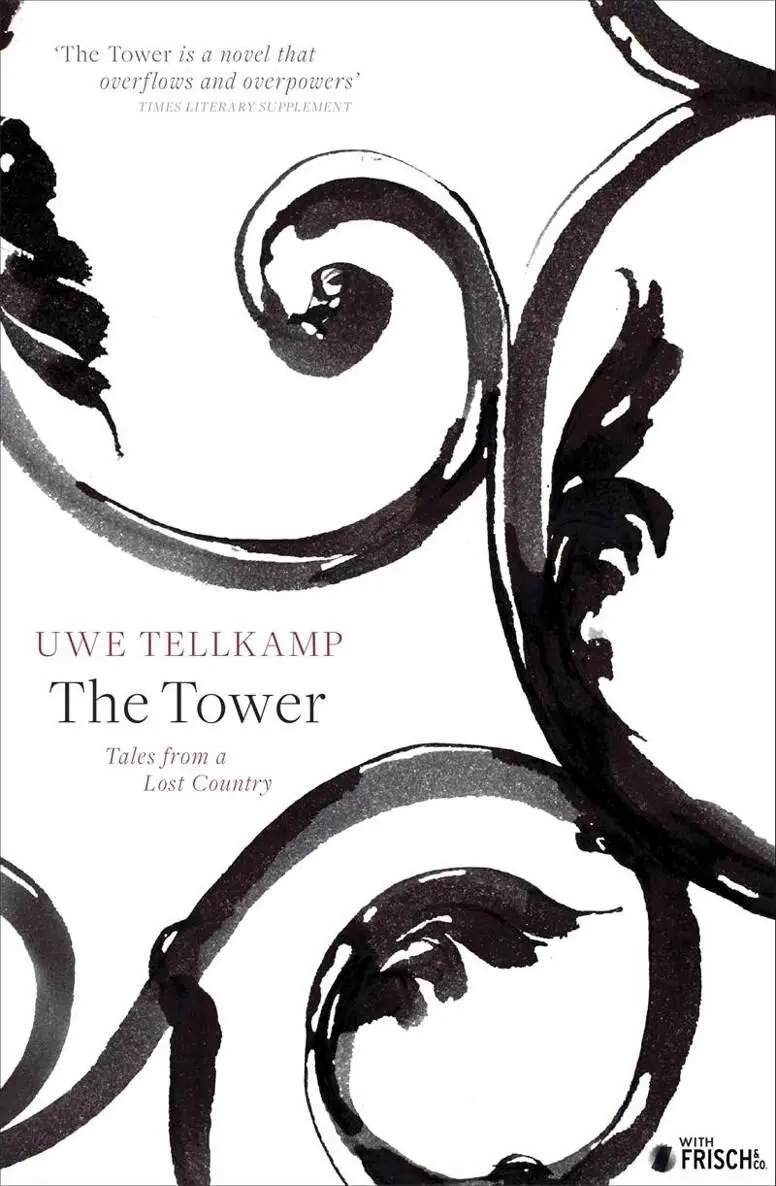
- Название:The Tower
- Автор:
- Издательство:Penguin
- Жанр:
- Год:2014
- ISBN:нет данных
- Рейтинг книги:5 / 5. Голосов: 1
-
Избранное:Добавить в избранное
- Отзывы:
-
Ваша оценка:
The Tower: краткое содержание, описание и аннотация
Предлагаем к чтению аннотацию, описание, краткое содержание или предисловие (зависит от того, что написал сам автор книги «The Tower»). Если вы не нашли необходимую информацию о книге — напишите в комментариях, мы постараемся отыскать её.
The Tower — читать онлайн бесплатно полную книгу (весь текст) целиком
Ниже представлен текст книги, разбитый по страницам. Система сохранения места последней прочитанной страницы, позволяет с удобством читать онлайн бесплатно книгу «The Tower», без необходимости каждый раз заново искать на чём Вы остановились. Поставьте закладку, и сможете в любой момент перейти на страницу, на которой закончили чтение.
Интервал:
Закладка:
64. Optional: needlework
Herr Pfeffer took off his gold-rimmed spectacles and, eyes narrowed to slits, scrutinized Christian. His glasses had left a dark-red impression on the bridge of his nose. ‘Let’s see what your boss has sent me. You graduated from senior high school?’
Christian said yes. Pfeffer wiped the lenses of his glasses with a crisply ironed white silk handkerchief.
‘You wanted to study medicine?’
Again Christian said yes. Pfeffer checked the lenses of his glasses, rolled up one corner of his handkerchief into a cone the length of his finger and used it to clean the fine streaks along where the bevelled edge of the lens ran under the gold frame. ‘I’m not all that fond of medics. Arrogant, in general artistically inclined and therefore in general of the mistaken opinion that artistic ability comes from, or is the same as, laissez-faire. Though admittedly there are different specimens of the species. Perhaps you’re one of those different specimens. We will have the opportunity to establish that. I’ve had really good experiences with philosophers and modelmakers, with many artists of the Saxon school. What does precision mean to you?’
In the middle of the harsh winter of ’86/87, during which he was to be transferred to a different job, Christian had no answer to that question.
‘Precision, young man, is love. I will give you a chance, even though it’s likely that the carbide will have completely ruined you for the kind of work that is done at my place.’ He breathed on his spectacles, checked and polished them until they were gleaming and spotless.
Traugott Pfeffer, formerly in a managerial position in the Republic’s Mint, now a foreman in VEB Phalera, which some quirk of fate had made part of the consumer goods production department of the Chemical Combine, had his own methods of convincing himself of the ‘outstanding quality of work’ that was done in his company — the certificate was hung over his desk in the foreman’s office, a bird’s nest of corrugated iron that allowed an all-round view of the shed. Below him, sitting at a circle of workbenches that allowed a view of the barred windows of the shed, were the ten men of A shift, all in the faded but spotlessly clean prisoners’ dress supplied by VEB Phalera — the state coat of arms the size of a saucer sewn on over the heart — busy making decorations, medals and badges from unfinished metal or polyester workpieces. In order to keep a close eye, both clockwise and initial-wise, on his men, one of whom Christian now was, Traugott Pfeffer, former master craftsman in the Mint, used a swivelling telescope suspended on gimbals, like a ship’s chronometer; it was made by the nationally owned ‘Enterprise with outstanding quality of work’ Carl Zeiss Jena, and belonged to him personally, which fact was lovingly engraved on it. A second method of control, the unspectacular one, as Traugott Pfeffer, for whom the unspectacular was as much a part of art as bread is of our daily diet, lay in the examination of the workpieces. For that he took a special gauge out of the right hip pocket of his grey overalls, which were always neatly ironed, placed the scale, which measured in hundredths of a millimetre, along the diameter of the Medal for Exemplary Service on the Border, the Clara Zetkin and Hans Beimler medals, checked the distance between the awns of the three ears of grain on the medal for Distinguished Inventors, counted the rays of the rising sun of the pin for Outstanding Service to the Union, on which, right in the middle, there was a very bushy ear of wheat, checked the number of radiating needles of the ten-pointed star of the Patriotic Order of Merit.
Christian’s tasks included the following operations:
Mondays: take unfinished Grand Star of the Friendship between Nations, version for wearing on the chest, from palette of materials on right, check quickly, take bronze pin from VEB Solidor from palette of materials on left, check briefly, pick up soldering iron, solder pin to Grand Star of the Friendship between Nations, check, polish five-cornered star, polish coloured enamel coat of arms of the Republic in the middle, shine and deburr curved oak leaves between the points of the star using polishing awl, clean dove of peace stamped on top point of star.
Tuesdays: take unfinished Faithful Service medal of the German Post from palette of materials on left, briefly check. Take Solidor steel pin from palette of materials on right, briefly check, pick up soldering iron, solder pin to clasp-bar of Faithful Service medal, polish front, especially post-horn and two jagged electric flashes sticking out either side of the horn’s cord. This medal was one of Traugott Pfeffer’s favourites and he urged Christian to work carefully, for: ‘Always remember, young man, it’s mostly older people who get medals and decorations, their whole life is symbolized by the piece of metal, so you ought to get yourself to solder the pin on really straight, not everyone likes to see their life engraved crookedly or hanging askew.’
Wednesdays: Christian was standing at the cutting and embossing presses where the unfinished medals and decorations were produced from little sheets of tombac, brass and aluminium.
Thursdays: Christian washed the grease and oil left over from embossing and deburring off the medals with a solution, used a brush to apply enamel to the indentations — pulverized glass that was mixed with distilled water and adhesive and then fired. After the lunch break Christian moved either to the mordant bath, where the scale left over from firing was removed with acid, or to electroplating, where the medals and decorations were lowered into baths of electrolytic gold beside Traugott Pfeffer’s Solingen oak leaf control spoon that, at the end of the procedure, had to be covered up to the handle with a clear layer of gold; only then did Traugott Pfeffer go for lunch.
Fridays: Christian was back at the workbench, mostly occupied with making Sailor of Outstanding Merit decorations, in bronze, gilt, edge smooth; Sailor of Outstanding Merit, in bronze, edge milled; the Decoration for Outstanding Achievements in Fire Protection; the Golden One children’s decoration; membership badges for the Association for Sport and Technology, Pigeon-Racing Section; the Drop of Blood badge of the German Red Cross for giving blood; the Free German Youth Harvest Pin; the Pin of Merit for Workers in the Administration of Justice, bronze, enamel and gold versions, coated with polyester.
Every day pins of the attachment systems from VEB Solidor had to be filed sharp with a triangular file. Using a doll in uniform which, for the purposes of demonstration, had decorations in the correct position, Traugott Pfeffer explained, ‘The uniform, which is the clothing with which phaleristics in this country is mostly concerned, is made of coarse material and the pins of our decorations must penetrate it easily despite that. Just imagine if the Comrade General Secretary could not attach the Karl-Marx Medal to the chest of the man or woman receiving it, or not in the time allowed, because the pins, which are unfortunately often blunt when supplied by our partners at Solidor, bent out of shape.’
The A shift had to complete 150 per cent of the planned target every day; Herr Pfeffer only put 100 per cent in the account book. Christian learnt the reason three months later.
Traugott Pfeffer did not like fog; he liked knots and Marcel Proust. Christian had worked ‘satisfactorily’, he could — having practised with the ship’s doctor — tie knots and he had at least heard the name of Proust.
‘Good,’ Traugott Pfeffer said, ‘I can see that you’re ready for the B shift.’
On the B shift, which worked at night, neither medals nor decorations were produced, instead the seven volumes of the Rütten & Loening edition of Proust’s Recherche were read. ‘Sometimes you have to force people to do what’s good for them,’ Traugott Pfeffer said. ‘This is my realm and all those who, one after the other, go through my night shift, read the Search — page by page, volume by volume. Sleeping is not allowed. I will test you, to see if you are worthy because you are thorough. With this.’ Out of the left hip pocket of his overalls he took a case, from which he extracted a tiepin, gilded in the electrolyte bath and filed sharp till it shone. Traugott Pfeffer, Christian learnt from a philosopher on the B shift who had been sent on probation to work in industry, would stick this pin into Lost Time , open it at that page, read and start to ask questions. ‘It’s best if you make notes,’ the philosopher said. ‘Anyone he finds worthy of reading Proust doesn’t come off the night shift until he’s read the whole book.’
Читать дальшеИнтервал:
Закладка:
Похожие книги на «The Tower»
Представляем Вашему вниманию похожие книги на «The Tower» списком для выбора. Мы отобрали схожую по названию и смыслу литературу в надежде предоставить читателям больше вариантов отыскать новые, интересные, ещё непрочитанные произведения.


Обсуждение, отзывы о книге «The Tower» и просто собственные мнения читателей. Оставьте ваши комментарии, напишите, что Вы думаете о произведении, его смысле или главных героях. Укажите что конкретно понравилось, а что нет, и почему Вы так считаете.