Uwe Tellkamp - The Tower
Здесь есть возможность читать онлайн «Uwe Tellkamp - The Tower» весь текст электронной книги совершенно бесплатно (целиком полную версию без сокращений). В некоторых случаях можно слушать аудио, скачать через торрент в формате fb2 и присутствует краткое содержание. Год выпуска: 2014, Издательство: Penguin, Жанр: Современная проза, на английском языке. Описание произведения, (предисловие) а так же отзывы посетителей доступны на портале библиотеки ЛибКат.
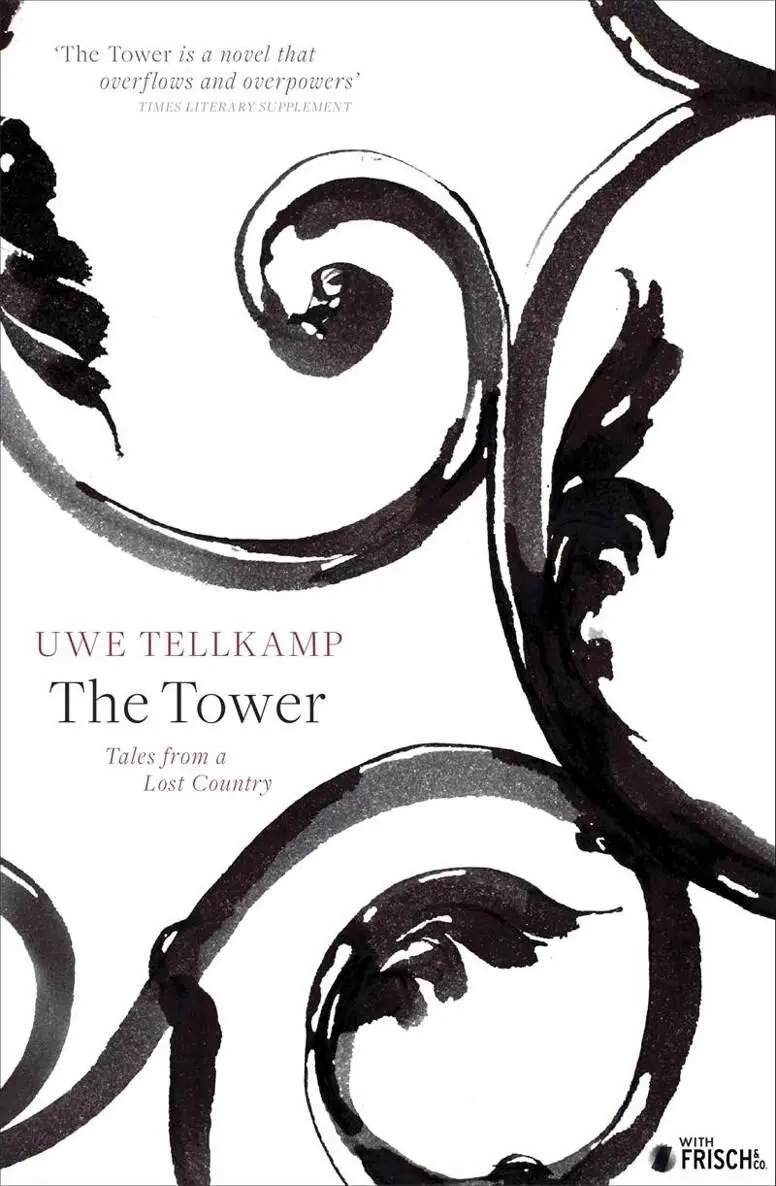
- Название:The Tower
- Автор:
- Издательство:Penguin
- Жанр:
- Год:2014
- ISBN:нет данных
- Рейтинг книги:5 / 5. Голосов: 1
-
Избранное:Добавить в избранное
- Отзывы:
-
Ваша оценка:
The Tower: краткое содержание, описание и аннотация
Предлагаем к чтению аннотацию, описание, краткое содержание или предисловие (зависит от того, что написал сам автор книги «The Tower»). Если вы не нашли необходимую информацию о книге — напишите в комментариях, мы постараемся отыскать её.
The Tower — читать онлайн бесплатно полную книгу (весь текст) целиком
Ниже представлен текст книги, разбитый по страницам. Система сохранения места последней прочитанной страницы, позволяет с удобством читать онлайн бесплатно книгу «The Tower», без необходимости каждый раз заново искать на чём Вы остановились. Поставьте закладку, и сможете в любой момент перейти на страницу, на которой закончили чтение.
Интервал:
Закладка:
‘Yes, and then Magda Roeckler went over to the Russians and said just the same as you, Herr Rohde. “It’s not your fault.” And then she said to the others, “Please, please don’t do that.” ’
While the story was being told the blind Herr Unthan wound bucket after bucket of warm water up into the storage tanks.
63. Castalia
Meno wrote,
rooms, one above the other, linked by thin bridges and the cables for clunky, black Bakelite telephones. Father said, ‘Beware of countries where poems are popular. Places where people recite lines in the trams, others join in until eventually whole compartments are echoing with rhymes, office-workers with tears running down their cheeks, holding on to the strap with their right hand, in their left their ticket for the conductor, who keeps reciting to the end of the poem before he clips the tickets’, he doesn’t miss either a line or a ticket and manages to issue penalty notices while weeping at the beauty of Pushkin’s lines, ‘places where, before the teams line up in the ice-hockey stadiums, Mayakowski is recited’, the stadium announcer reads it out and the crowd chants it after him, ‘everywhere in that country there is cruelty and fear, falsehood rules. Beware of the country where the poets fill stadiums … Beware of the country where verses are a substitute.’ Truth, truth … the choruses echoed across the Elbian river, Scholars’ Island came in sight. The major educational project … The enlightenment had been brought in, the structure grew, layer upon layer. Many years had passed since the building of the wall that enclosed the country and divided the capital, the Copper Island of the government. For many years the roses had grown, slowing down time, and when I stepped onto Scholars’ Island, the paper republic, where Hermes-Verlag was going to one of the weekly editorial and committee meetings, the speed with which the water was dripping from the leaking pipes, the undiminished effect of gravity, which made the contents of the ashtrays from the smoke-ridden rooms of Editorial Office II float down into the oily puddles covering the inner courtyard, seemed unreal to me, as unreal as the figures moving with measured tread in the oddly dry, sepia light, my colleagues, my superiors; specialists who wrote a report; staff of the institutes that give us backing against the demands of the censors, against the ideological stomach ache of strict comrades, the narrow-mindedness, the pitfalls, the unpredictable twists and turns of the Book Ministry. It was in the depths of Scholars’ Island, only accessible with a special card, an escort who knew his way around and nimble surfing of the paternosters. Creatures I found interesting from an anthropological point of view, categories of cave-dwellers, pale as plants grown out of the light, pawing at the world above ground with knuckles that were the jangle of telephones, muffled voices that seem to be creeping up out of sealed rusted catacombs and reprimanding us for hiding pieces by Musil, Joyce, Proust in an anthology in the hope that they wouldn’t notice this trial balloon, no bigger than a lemon, so that we could say, when we applied for permission to publish À la Recherche, Ulysses, The Man without Qualities , that these were authors who had long been in our list … They were, we were informed, the spearhead of Western decadence, inappropriate for ‘our people’ (they mostly said ‘our people’) … We devised afterwords that were like waybills declaring the harmless nature of the goods on 100 pages; we wrote blurbs like lead palisades to ward off the arrows of the unfathomable attackers; we sent one well-loved caravel floating along in a phalanx of battleships, staring apprehensively at the telephone that would announce the discovery of our ploy, order the destruction of the caravel and an increase in the number of battleships … Creatures like hermit crabs in rooms with the acoustics of screw tubes, twitching feelers at every deviation, seismically sensitive antennae running over the lines of text; clown fish in sea anemones, darting through their tentacles, afraid they’re no longer able to produce the semiochemical that camouflages them and keeps them safe from the voracious appetites of their host plant; hammerhead sharks furiously after blood, tearing to pieces everything the food-providing hand tipped in front of their mouths; sea cucumbers that never come to a decision, slithery and glassy, like conserved fruit; electric eels and moray eels in the reefs, lying in wait for their prey; remoras holding on tight with their suckers to the great whale shark called Socialist Realism … Hermes-Verlag wasn’t a publisher, it was a literary institute. In the silence of smoke-filled lamps, of cigarettes flaring up and dying down, in the galvanic crackle of the aquarium of reading eyes in which pieces of paper catch the light like the white bellies of fish drifting past, the geographers of horizontal and vertical planes pursued their researches, let down plumb lines into the voices of the past, plucked at meridians and waited for a response. We gave the people bread for the spirit; we were a window on the world … The wall wrapped itself round Scholars’ Island, this socialist Castalia, triply secured: inwardly, outwardly and against smiles; the barbed-wire roses sprouted up the building, only the birds didn’t get caught; searchlights scanned the wall, dogs on long chains prowled the no-man’s-land between the circular walls. Everywhere relics of lost cultures, signs waiting to be deciphered, seamarks on mouldering maps, but the old captains were dead, the astrolabes or sextants, with which the signs could have been read, sold or lying forgotten in the storerooms of the museums beneath the city. At the Hermes offices there was a sign in the vestibule, a left-over, like so much else in the houses of Atlantis, that read: ‘ “The bourgeoisie has squandered the literary heritage and we must bring it together again carefully, study it and then, having critically assimilated it, move forward.” A. A. Zhdanov at the 1st conference of the Writers’ Union, 1934’; ‘Education, education,’ was the whisper in the corridors, the crackle from the telephones, the repeated message from long-abandoned archives of discs that seemed to be fed by electric leakage from sources above ground level, so that they were able to continue revolving endlessly and, perhaps illuminated by the gleam of ‘on air’ lamps, keep on sending the sound pickup into the scratch from which the old principles came like the same workpieces filling box after box as they dropped down from a punch that couldn’t be switched off. But we enjoyed making discoveries; knowledge was our food and we couldn’t get enough of it; books were sacred and there was nothing we feared more than the heat smouldering in the cellar, the sparks that could suddenly, without advance warning, without anyone being able to foresee them, fly out from the heating appliances that were still under control, from the steaming valves, the butterfly nuts screwed down tight on tow sealant and plain washers, the cracked welds and mangy fireclay, the worn-out threads and filthy chimneys, their bricks eaten away by the acid smoke; we were afraid of fire, some of us had already seen books burning. In the editorial offices there were people playing the glass-bead game, they had set up telescopes that looked out through mildewed portholes, through well-disguised hatches in the barbed wire, at the culture of foreign countries; periscopes that saw manuscripts when they were still drying on the writers’ desks; with extreme love and care we selected what seemed important, right and valuable … A drifting head, a Jupiter head, floated across the paper republic on a tour of inspection. We anchored in Weimar, our umbilical cord attached in the house on the Frauenplan, where our sun, a disc of placenta, was rising, Goethe our fixed star … People imbued with the love of literature, of language, of the well-made book (endless discussions over tea and Juwel filter cigarettes about the disadvantages of staple binding and the advantages of sewn binding, print space, ligatures, the colour of cases and endpapers, the quality of linen for bindings), sat in the cabins of Scholars’ Island and spent years bent over Romanian and Azerbaijani poetry, translations from Persian, Georgian, Serbo-Croat, the quality of which (only that of the translations) had been checked by editors, wondered with specially appointed style editors whether someone could enter literature on ‘Jesus flip-flops’ or rather on ‘Christ sandals’, while behind them, in the walls, in the radiators with steam being let off in their wrinkled, rumbling pipes that brought up strange digestive noises from the depths, in the antique typewriters, the busy manufactory of glue pots, scissors, bone folders and pots with Barock iron-gall ink (sometimes I thought I could hear the scratch of goose-quills on their paper from the VEB Weissenborn paper factory, but it was only the standard ATO nibs with which the glass-bead-game players scribbled notes or the draft of a report), the clocks scraped away in the grinding and, depending on the season, slurping noises of the river, measurable time, terrible and submarine, fermented, while the pendulum of the other time, which gives things development and change, slowly swayed to and fro, like a metronome rod with the weight at its highest point … Whom did we reach? Sometimes we had the feeling we bounced off people or, worse still, threw things that went right through them; saw not them but ourselves, when we tried to look out of the windows of the island into the apartments of Atlantis. Who were the others? How much of the things that we considered important reached them? Philosophers in scholar’s studies high above the wall pursued research on utopian socialists, I thought of Jochen Londoner, who spent his exile in England, to whose daughter Hanna I had been married, now he was brooding in his institute, which resembled a baroque wooden screw, over the history of the working class, reflecting on the problems of a planned socialist economy, specialist workhorses were producing commentaries on the canonic works, were connected up to the system of blood vessels — The Complete Works of Marx and Engels — helping to make the sun of the Only Ideology rise. The working party of professors meets. The working party of verbal erotomanes meets. They talk themselves up into a state about a decisive, indispensable, life-saving aspect of existence in Atlantis: the colour of house walls — was it floorcloth-grey or dishwater-grey? Which dishwater? That of the Interhotels or of works canteens? Of nationally owned or private ones? Were the charred caryatids on palaces in Leningrad the colour of window putty? Fauns’ ears, stone plants, the plaster pockmarked by bullet lumps (lymph nodes, cancerous growths from the last war) — what shade of grey was it that they had taken on over decades of decay? We thought of grisaille painting. Of worry-grey. Grisette-grey. Argus-eyes-grey. Prison-inmate-grey. Of men’s-fashion-grey, snail-grey, groschen-grey, oyster-grey, tree bast, wolf-grey, pencil-grey, elephant-grey. This colour, wasn’t it a brown? Ash-coloured. Powdery-clayey, flat, wooden, produced by time, exhaust fumes, acid rain; the plaster looked flea-bitten like a camel’s rusky fleece. We were getting into the zone of justification. What was the Great Project? The reconstruction of reality so that we would be able to shape it according to our dreams …
Читать дальшеИнтервал:
Закладка:
Похожие книги на «The Tower»
Представляем Вашему вниманию похожие книги на «The Tower» списком для выбора. Мы отобрали схожую по названию и смыслу литературу в надежде предоставить читателям больше вариантов отыскать новые, интересные, ещё непрочитанные произведения.


Обсуждение, отзывы о книге «The Tower» и просто собственные мнения читателей. Оставьте ваши комментарии, напишите, что Вы думаете о произведении, его смысле или главных героях. Укажите что конкретно понравилось, а что нет, и почему Вы так считаете.