Uwe Tellkamp - The Tower
Здесь есть возможность читать онлайн «Uwe Tellkamp - The Tower» весь текст электронной книги совершенно бесплатно (целиком полную версию без сокращений). В некоторых случаях можно слушать аудио, скачать через торрент в формате fb2 и присутствует краткое содержание. Год выпуска: 2014, Издательство: Penguin, Жанр: Современная проза, на английском языке. Описание произведения, (предисловие) а так же отзывы посетителей доступны на портале библиотеки ЛибКат.
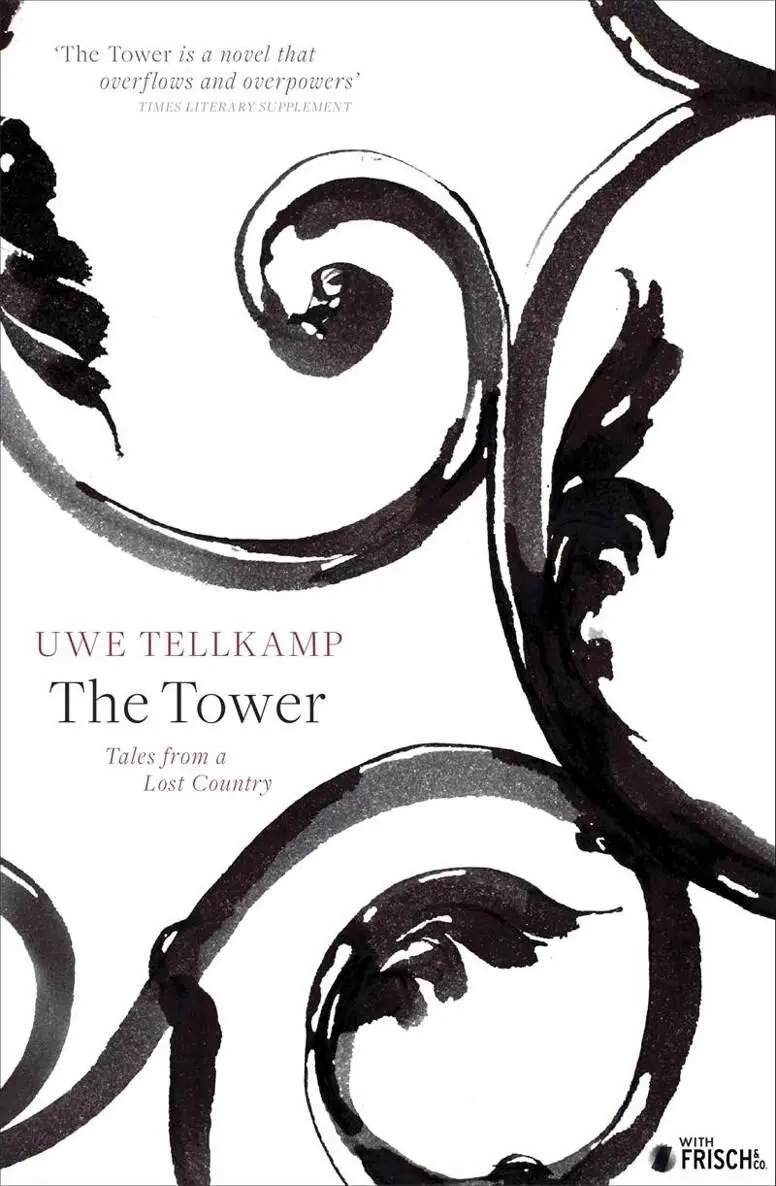
- Название:The Tower
- Автор:
- Издательство:Penguin
- Жанр:
- Год:2014
- ISBN:нет данных
- Рейтинг книги:5 / 5. Голосов: 1
-
Избранное:Добавить в избранное
- Отзывы:
-
Ваша оценка:
The Tower: краткое содержание, описание и аннотация
Предлагаем к чтению аннотацию, описание, краткое содержание или предисловие (зависит от того, что написал сам автор книги «The Tower»). Если вы не нашли необходимую информацию о книге — напишите в комментариях, мы постараемся отыскать её.
The Tower — читать онлайн бесплатно полную книгу (весь текст) целиком
Ниже представлен текст книги, разбитый по страницам. Система сохранения места последней прочитанной страницы, позволяет с удобством читать онлайн бесплатно книгу «The Tower», без необходимости каждый раз заново искать на чём Вы остановились. Поставьте закладку, и сможете в любой момент перейти на страницу, на которой закончили чтение.
Интервал:
Закладка:
Chocolate and wood — that was the smell of books and Meno knew of no house where it was such a commanding and inviting presence as at the Londoners’.
‘Chanukah!’ Irmtraud cried when she opened the door, grasped Meno by the shoulders and touched him ‘cheek-to-cheek’, a greeting he loved because of its discreet, delicate intimacy. ‘You really gave the poor guy a fright. I had to explain it to him. He’ll be telephoning now. — But you know Jochen doesn’t like that sort of joke, don’t say anything about it; he thinks it’s no one else’s concern how we live. Be at home.’
Be at home, not ‘make yourself at home’, Meno had always found that simple greeting moving; he felt slightly ashamed at having to take the roses out of his coat in such an unceremonious manner since he’d forgotten to unwrap them before ringing the bell — and since he wanted to conceal how moved he was, he held out the budding Maréchal Niels to Irmtraud, who had his hat and gloves in her hands, with an awkward firmness that was nothing other than embarrassment, which he had never managed entirely to shed at the Londoners’. Jochen knew that. Meno took his time fiddling with his shoelaces, drips or dirt from the streets made Irmtraud furious. At his first visit, to be introduced as Hanna’s ‘boyfriend’, before which he had given himself Dutch courage with three miniatures of bitters from Lange’s stock, the ‘old connoisseur of life’ (as the ‘Herr Professor’ that Jochen Londoner had been for Meno at that time put it with an understanding nod and ironically crossed fingers) had not found anything to dispel his embarrassment: neither a tour of his personal library, taking down first editions of Kant and signed copies of Brecht and leafing through them at length, nor the table loaded with delicacies, the celebrated scholar’s markedly homely attire of cardigan and tartan slippers or his amiable questions, going into detail and offering a wide range of interests. On the contrary, the wealth (both material and intellectual) of the Londoner household had intimidated Meno even more and Londoner could well have sensed that, for on future occasions he changed his ‘tactics’, as he said: since then it was Irmtraud who greeted him with ‘be at home’ and called him ‘Menodear’ or ‘my dear’, which for a long time he assumed was a bizarre term of affection, softened in the Saxon manner, until he saw it at the beginning of a letter and realized she was speaking English.
But he recognized the bat-cap on the clothes stand, and listened for what was being said in the living room instead of to Irmtraud singing the praises of the roses, and since it was what he expected to hear, it wasn’t long before it came: Judith Schevola’s gravelly laugh. Philipp was showing off, Meno heard that as well; Irmtraud now, with a mute and conspiratorial gesture to the stairs down to the basement kitchen, left him to his own devices. A brief, warm greeting, a gesture of invitation and then the guest could, if he was a friend of the family, spend the time until the official part of the invitation (the beginning of which was announced by a dinner gong or a little bell, such as the chairman of the television Professors’ Forum , of which Londoner was a member, rang) doing as he liked: sit in the wing chair in the living room and browse through one of the magazines set out there (among them Literaturnaya gazeta and the Times Literary Supplement ), leaf through the books or, if there were two of you, play a game of ice hockey on the slot machine in a niche in the basement; there was always a supply of ten-pfennig pieces there; if you put one in you could use a wheel to make the red or blue lead figures, with sticks that had been bent by the steel ball, revolve. You could also go home again, as Eschschloraque had once done: immersed in a book-covered wall on the stairs up to Londoner’s sanctum (‘The Haunted Chamber’ it said in English and in cursive letters on an oval pottery sign), the dramatist had been gripped by a scene, glassy-eyed and waving his arms about (Meno had quickly put a pencil in his hand) he had drifted down to the little telephone table, where, without success and ever more desperate, he searched for a sheet of paper (he didn’t find one; there were printed sheets of paper by the million in the Londoner residence, blank ones the old man stored in the ‘Haunted Chamber’ and kept a strict watch over where they were left; do not leave anything handwritten lying around in the house, no addresses, no notes that might be misunderstood — a maxim from the time when he’d been active in the underground), until Meno, who always put some in his pocket when he went to see Londoner, gave a sheet to Eschschloraque; in a world of his own, the Marshal of Moderation had picked up the phone, rolled out iambic lines and belaboured an imaginary public with the receiver; at that moment Londoner had come down the stairs, he too glassy-eyed, he too with accumulations of word, thought and deduction within reach, had shuffled over to the telephone, where instead of the receiver he took the pencil from Eschschloraque, nodded, stared at it intently and, shaking it in his raised hand, carried it off, leaving Eschschloraque staring uncomprehending at the receiver before leaving the house without a word and still wearing the house slippers he’d put on.
They were discussing things that were often discussed at the Londoners’: the history of the working class, economics, appropriately for the occasion the history of the Christmas roast, dates and events in the history of the Communist Party. Judith Schevola was sitting, an amused expression on her face, beside Jochen Londoner, who, in his rocking chair, had got so carried away that he kept losing one of his tartan slippers, which Philipp fitted back on his foot, addressing his father, as did Hanna, by the familiar form of Josef: ‘Seppel’ (Irmtraud was called ‘Traudel’ by her husband and children). Jochen Londoner would certainly have preferred not to be repeatedly reminded of the mortality of euphoria (let the slipper fly wherever it wanted!); in Judith Schevola there were unknown ears that had never been exposed to the Londoner fount of knowledge, at least not the old man’s one that delighted in the world around. A glass of port, filled while rocking in the middle of an extensive drilling-core analysis of the ‘main task’ and handed to him with neither comment nor eye contact was sufficient greeting for Meno; out of amazement at Schevola’s presence and a creeping feeling of discontent at the elegance and self-evident pleasure with which Philipp basked in the splendour of the house, bobbing up and down like an excited schoolboy, Meno had already poured the glass down his throat and was now perched like a tawny owl, limed to the heavy wash of the wine, in the wing chair opposite the old historian. Now ‘Londoner-speak’ flew between three points round the room, giving Meno the feeling he was sitting by the edge of sparkling electricity; Irmtraud asked when dinner should be served: ‘When kenn I servier ze roast herr, my dear?’ And Seppel, deep in a description of the starvation conditions created by the beasts of prey in the Manchester cotton mills, spread his arms interrogatively, indicating democracy — which Philipp took up instead of Judith Schevola, who was snorting with laughter, and Meno, who, assuming Londoner’s son had a bad conscience, sat there in silent ill-humour, with ‘We love you dermassen, Traudel, you are ä Heldin, denn I sink there’s not matsch fun in de Kittschen?’
‘You really don’t have tomatoes on your eyes,’ said Traudel, confirming his observation. ‘Bleib sitting, my dear’ (that to Judith Schevola), ‘de patätohs are alle geschält bei now, än I sink de Rosenkohl is quite reddy.’
‘Okäh,’ the paterfamilias decreed, ‘zänn I sink we take sammsink zu nibbeln in de Zwischentime.’
Читать дальшеИнтервал:
Закладка:
Похожие книги на «The Tower»
Представляем Вашему вниманию похожие книги на «The Tower» списком для выбора. Мы отобрали схожую по названию и смыслу литературу в надежде предоставить читателям больше вариантов отыскать новые, интересные, ещё непрочитанные произведения.





Обсуждение, отзывы о книге «The Tower» и просто собственные мнения читателей. Оставьте ваши комментарии, напишите, что Вы думаете о произведении, его смысле или главных героях. Укажите что конкретно понравилось, а что нет, и почему Вы так считаете.