Uwe Tellkamp - The Tower
Здесь есть возможность читать онлайн «Uwe Tellkamp - The Tower» весь текст электронной книги совершенно бесплатно (целиком полную версию без сокращений). В некоторых случаях можно слушать аудио, скачать через торрент в формате fb2 и присутствует краткое содержание. Год выпуска: 2014, Издательство: Penguin, Жанр: Современная проза, на английском языке. Описание произведения, (предисловие) а так же отзывы посетителей доступны на портале библиотеки ЛибКат.
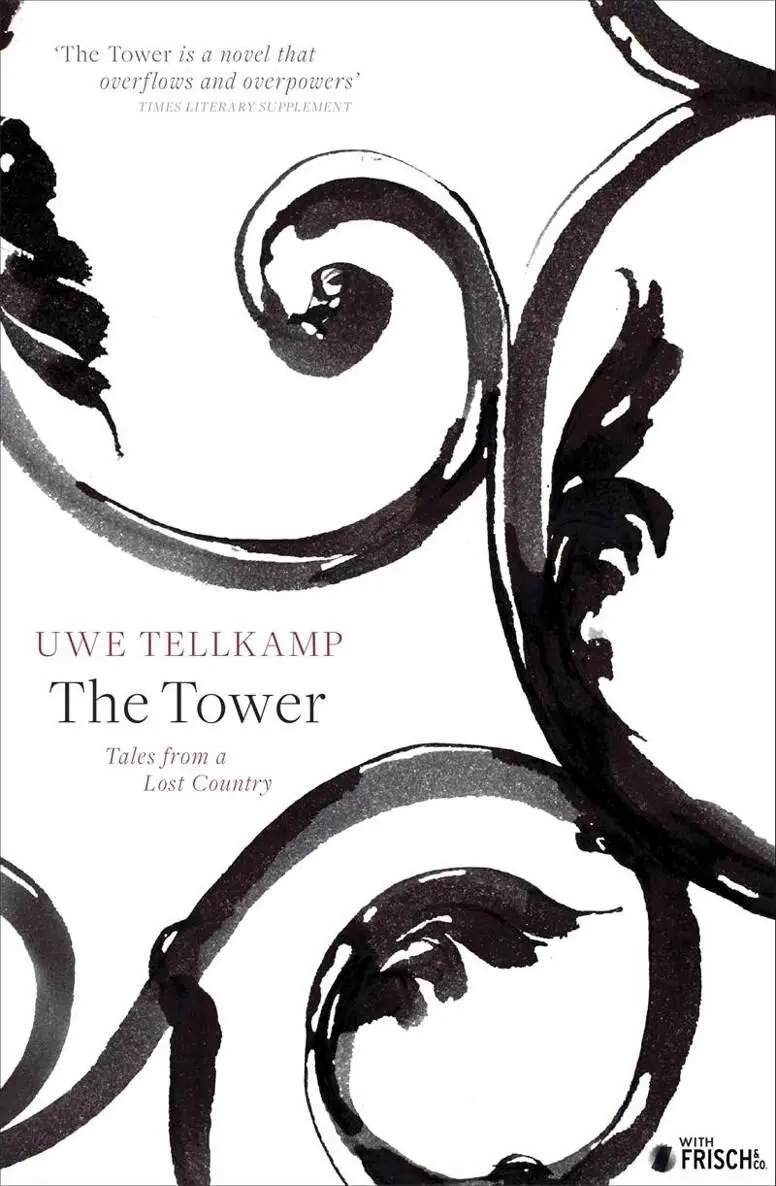
- Название:The Tower
- Автор:
- Издательство:Penguin
- Жанр:
- Год:2014
- ISBN:нет данных
- Рейтинг книги:5 / 5. Голосов: 1
-
Избранное:Добавить в избранное
- Отзывы:
-
Ваша оценка:
The Tower: краткое содержание, описание и аннотация
Предлагаем к чтению аннотацию, описание, краткое содержание или предисловие (зависит от того, что написал сам автор книги «The Tower»). Если вы не нашли необходимую информацию о книге — напишите в комментариях, мы постараемся отыскать её.
The Tower — читать онлайн бесплатно полную книгу (весь текст) целиком
Ниже представлен текст книги, разбитый по страницам. Система сохранения места последней прочитанной страницы, позволяет с удобством читать онлайн бесплатно книгу «The Tower», без необходимости каждый раз заново искать на чём Вы остановились. Поставьте закладку, и сможете в любой момент перейти на страницу, на которой закончили чтение.
Интервал:
Закладка:
54. Be at home
… but the clocks struck, it grew colder, it grew warmer, for days on end it seemed as if that year we would have a green Christmas but on the third Sunday in Advent the sky’s pillows were shaken, the arched wooden candle-holders in the windows, the illuminated Moravian stars on the balconies, in the tops of the trees (Stahl had hung one up in the copper beech, despite Pedro Honich’s protest), disappeared in the hazy snow; the lamps, when Meno strode round the streets in the evening, his Yugoslav hat pulled well down, his pipe filled with Copenhagen vanilla tobacco, were like jellyfish hanging below the branches of the elms on Mondleite and Wolfsleite with gelatinous haloes of light. In the kitchens there was a smell of gingerbread dough and cinnamon; Holfix and the grocer’s on Bautzner Strasse were both out of icing sugar and hundreds-and-thousands and when Meno stopped at the door of Caravel, his hand already on the handle inside, he could see the winged shadows of a revolving wooden pyramid from Seiffen moving across the ceiling of the Hoffmanns’ living room. In Evening Star the light was on in the Orrés’ bathroom (Erik Orré was in the habit of learning his lines in the bath), the lights were on in the Tietzes’ music room, the yellow glow was seeping through the dilapidated veranda, half hidden by a spruce tree. Meno could see a shadow bow dancing up and down the ceiling of the children’s room: Ezzo was practising. Was he using Anne’s chin rest? It was still too early for Niklas’s music hour. At this time, if Gudrun didn’t have to go to the theatre and Niklas had no more house calls to make, the music room was filled with the delicate aroma of baked apples; the tiled stove beside the mirror and chaise longue had a warming compartment in which Niklas steamed rather than baked the deep-red Consinots, Cox’s Orange Pippins, Rheinische Krummstiefel, Winterstettiner from the gardens on the slope above the Elbe — with incomparable results, Meno had never eaten such tasty baked apples as at the Tietzes’. When, a few minutes later, he went down Heinrichstrasse, he was often roused from his reflections by a loud ‘Watch out!’ — toboggans with curved-up horns, flat, wooden Davos sledges or ancient metal ones with tubular runners and seats of plaited strips of leather were on their way to the steep Dachsleite, where a merry crowd was enjoying skiing and sledging, unconcerned about the darkness and flurries of snow.
For Christmas the fathers put up the family Christmas tree that they’d bought at the Striezelmarkt or from Busse, the forester (they were the better, though of course dearer, ones), brought the stands down from the loft, the angels and coloured glass balls to decorate it, hung tinsel over the branches.
Niklas still had strips of silver foil and decorated the tree in traditional style with wooden ornaments from the Erzgebirge that had been handed down from generation to generation, and with genuine candles, for which he pinned on pine-cone holders. Green, red and silver balls, on the topmost sprig the star, between them the crinkled aluminium fringes that the Christmas department of the Centrum store sold under the name of ‘lametta’: thus decked out, the standard Dresden fir tree (that was, if truth be told, a blue spruce) stood in its place of honour in the living rooms and shed its first needles even before its owners had gone to the watchnight service. Meno spent Christmas Eve with the Londoners; Jochen Londoner had invited him: Hanna was busy at the embassy in Prague, he’d said, Philipp and his ‘companion’ (as Londoner put it after a moment’s pause for thought) would ‘bring their youthful joy and colour / to light the smoky grey of our days’. Meno didn’t buy a present; Libussa cut some roses for Irmtraud Londoner and stared wide-eyed in surprise when he said they weren’t a present, just a small token he’d take along, even though he knew how much Irmtraud Londoner loved flowers. With a lovely bouquet of flowers in her hand she could even become prickly towards her husband, something that never happened otherwise: Do you see, Jochen, you study economy and the whole house is full of scholarly treatises, but it’s this young man here who’s brought me roses in the winter. Libussa didn’t feel hurt, she knew Meno would pay her back for the roses by chopping wood and bringing up coal, four bucketfuls, Pedro Honich was going to see to the rest as ‘Timur Assistance’. Frau Honich promptly brought some wrapping paper, and a creamy smile spread over her face when she enquired: Londoner — had she heard correctly? — She had. — The famous Jochen Londoner who wrote for the weekly magazine Horizon — and a book now and then?
Now and then: Londoner’s output was notorious; he had no compunction about making use of left-over scraps, reworking things that had been printed long ago and passing them off as new; Meno responded to Babett Honich’s smile (even if suspiciously); he remembered that they were Londoner’s own words — ‘and now and then we write a little book’ — which he had the habit of repeating in his countless interviews, from which no one dared to edit out that ‘we’ — the royal ‘we’? Londoner as the head of a capitalistically enterprising business concern? — But then Herr Rohde must be an important person if he counted Londoner among his friends! Babett Honich was quite carried away. She’d realized at once that Herr Rohde was made from finer stuff, well, who was called Meno anyway, he had a ‘certain something’ about him (‘but that you write about spiders of all things, my God, yeuch!’); could he not invite Herr Londoner to tea here? — Herr Rohde had to go now, he was in a hurry and as far as she knew, old Jochen didn’t drink tea.
On Turmstrasse, waiting for a parade of Father Christmases to march past (Grauleite had taken over special shifts for the children of East Rome), Meno was still chuckling at Libussa’s presence of mind and her casual, saucy ‘old Jochen’ that had left even Babett Honich speechless. The guard in the sentry box subjected his papers and invitation to a thorough check.
‘Purpose of your visit?’ The first lieutenant had become a captain. He waited, fingers on the typewriter keys, for Meno’s answer.
‘To spend the Feast of Hanukah with Comrade Jochen Londoner.’ Meno couldn’t have said himself why he suddenly felt his oats. The Feast of Hanukah! The duty officer, who would certainly have a wife and children and had to be on guard here instead of spending Christmas with them, would probably not know what he was talking about.
‘Hannucker? Are you pulling my leg?’ The comrade immediately got worked up. ‘We’ll soon see about that.’ He picked up the telephone. The Brezhnev portrait had been removed from the guardhouses, it hadn’t been replaced by one of Gorbachev but by a sour-faced black-and-white likeness of the Minister of Security. ‘Aha.’ The captain remained sceptical. ‘A full pass? That has recently been forbidden for visitors, Frau Comrade Londoner. — I’ve no idea why. Instruction from the top. — Correct, Frau Comrade Londoner, if he gets a half-pass he’ll have to report on the Oberer Plan tomorrow morning. — No, we’re not allowed to do that. Two one-third passes, that’s the most I’m allowed to do.’
He put the phone down, typed, put a second sheet into the typewriter. ‘Sign here.’ Meno picked up the ballpoint pen and form off the revolving tray and while he was signing he could hear the captain muttering, ‘Hannucker, Hannucker’ to himself. ‘The things there are. Didn’t it use to be called Christmas? Is that official now?’
Meno tipped his hat, turned up his collar and left the captain without replying. The gusts of wind were making the bridge hum, the bulbs, of which only a few were working, were swinging between the parapets; Meno stuck the roses inside the lapels of his coat. The mule is trying to find its way in the fog, he thought; the deep snow on the bridge seemed like mist, the tracks of the Father Christmases had already been blown away. With every step Meno sank in up to his knees so that he was only making slow progress, holding on to the railing. Cobweb House loomed up black in the smoky white air in which swirls and twists of snow were dancing over the steep valley; perhaps Vogelstrom was working on the panorama of revolution or was communing in the dark with the painted garden scenes, perhaps he was away, spending Christmas with his children, though the painter never talked about them. ‘Doesn’t mean anything!’ Meno forced the words out against the assaults of the wind. Recalling Meyer’s poem, he addressed it, ‘Thou heavenly child.’ This wind was an unruly child with a mind of its own, a raging brat. Sometimes the child paused, seemed to be wondering how it could get the better of the solitary man plodding across the bridge, scurried on ahead, whirled back over his hat and dropped down in a flurry of snowflakes to try it from behind, came whirring at him from the right and the left, only, after blustering blasts, vengeful rattling of the bridge’s cables, to collapse, as if its fury had earned it a click of the fingers from up there, out of the air: then, soothingly bronchitic, the hoarse roar of the Weisse Schwester could be heard. Meno hurried up. True, Jochen Londoner had not stated a time. Even though in East Rome they were prepared to tolerate Christmas as an obviously ineradicable relic of Christianity, until there would no longer be a place for it in the period of transition from socialism to communism, even though they were prepared to remain silent, to conform to the code of conduct requiring a Christmas tree and window decorations, to sit back and, after the presents had been handed out to wife and children on Christmas Eve, enjoy the television programmes with the family, Jochen Londoner was and remained an East Roman and one who frequently indulged in mockery of that evening: so they had a family Christmas and Jochen insisted that both Irmtraud and the children first of all respected the customs, then ‘celebrated Christmas critically’. He called it the dialectical approach. That is: he took care about the decor but treated the ritual, of which the decor was, after all, an abbreviated symbol, with an indifferent shrug of the shoulders, even with disdain and dismissive pride, pride in half-recognition, in a freedom that for him might lie in not fulfilling a cliché and the demands concealed within it. He, the ‘merry Marxist and Mr Rigorous’ as he called himself, half ironically, half threateningly, took the liberty of coming up with laissez-faire where others didn’t expect it, where they would react with dismay to the stereotyped thought thus revealed or ‘at best’ (sometimes he would say ‘at worst’) with curiosity: ‘ The Jew ,’ he would then growl irritably, ‘was in exile, and the Jew , who was in exile, must know the Jewish customs, mustn’t he? And if he knows them, surely he must follow them? That’s what you always think, isn’t it? For how can the Jew take the liberty of ignoring customs that cost so many fellow sufferers their lives?’ And when Meno remained silent, horrified, he went on, ‘But I take (a), the liberty of deciding for myself who or what I am; I’m not a Jew, I’m a human being and as such I also take (b), the liberty of determining which customs are important to me and which not, which I do or do not have to follow.’ So he lit a Hanukah menorah and the lights on the Christmas tree, baked with Irmtraud and Hanna, when she was at home over Christmas, gingerbread and sufganiyot, the tasty jelly doughnuts, fried latkes that Philipp called hash browns, hung up lametta and little toy spinning tops on the Christmas tree. ‘We’re having Chrisnukah!’ And instead of ‘Maos zur jeschuati’ the sound of the Beatles echoed round the house at 9 Zetkinweg, a cul-de-sac at the end of Krupskaja-Strasse.
Читать дальшеИнтервал:
Закладка:
Похожие книги на «The Tower»
Представляем Вашему вниманию похожие книги на «The Tower» списком для выбора. Мы отобрали схожую по названию и смыслу литературу в надежде предоставить читателям больше вариантов отыскать новые, интересные, ещё непрочитанные произведения.

Обсуждение, отзывы о книге «The Tower» и просто собственные мнения читателей. Оставьте ваши комментарии, напишите, что Вы думаете о произведении, его смысле или главных героях. Укажите что конкретно понравилось, а что нет, и почему Вы так считаете.