Uwe Tellkamp - The Tower
Здесь есть возможность читать онлайн «Uwe Tellkamp - The Tower» весь текст электронной книги совершенно бесплатно (целиком полную версию без сокращений). В некоторых случаях можно слушать аудио, скачать через торрент в формате fb2 и присутствует краткое содержание. Год выпуска: 2014, Издательство: Penguin, Жанр: Современная проза, на английском языке. Описание произведения, (предисловие) а так же отзывы посетителей доступны на портале библиотеки ЛибКат.
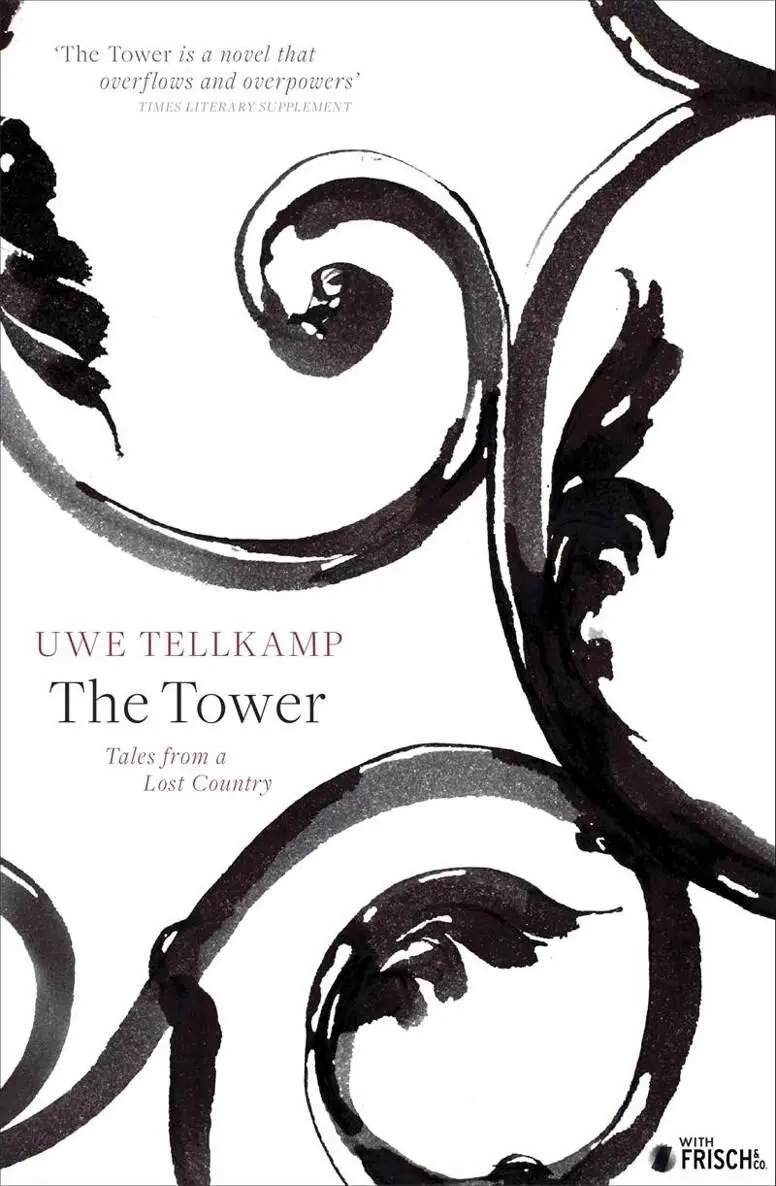
- Название:The Tower
- Автор:
- Издательство:Penguin
- Жанр:
- Год:2014
- ISBN:нет данных
- Рейтинг книги:5 / 5. Голосов: 1
-
Избранное:Добавить в избранное
- Отзывы:
-
Ваша оценка:
The Tower: краткое содержание, описание и аннотация
Предлагаем к чтению аннотацию, описание, краткое содержание или предисловие (зависит от того, что написал сам автор книги «The Tower»). Если вы не нашли необходимую информацию о книге — напишите в комментариях, мы постараемся отыскать её.
The Tower — читать онлайн бесплатно полную книгу (весь текст) целиком
Ниже представлен текст книги, разбитый по страницам. Система сохранения места последней прочитанной страницы, позволяет с удобством читать онлайн бесплатно книгу «The Tower», без необходимости каждый раз заново искать на чём Вы остановились. Поставьте закладку, и сможете в любой момент перейти на страницу, на которой закончили чтение.
Интервал:
Закладка:
‘Yes, in the ICU and the patient lift to the operating theatre, clever Dick.’
‘Clever Dick yourself! Then they can just make the coffee up there and send it down to us!’
‘And when’s the light going on here again? Oh, sorry, nurse, missed again. But you can hardly see anything here.’
‘I’m sorry to have to put it so frankly, but you’re an old goat.’
‘You’ve completely misunderstood me, nurse. It must be this pitch darkness. Goats have two horns.’
‘Where’s the testicle?’ Frau Doktor Roppe, a urologist, called across Outpatients, arms akimbo. ‘The strangulated one. — You’ve called me away from a septic catheter, Wolfgang, you’ll be sorry if it’s a false alarm.’
‘Here,’ a faint voice said shyly, ‘here, Herr Doktor.’
A National People’s Army tanker was expected but still hadn’t arrived. Scheffler, the Rector, had formed a crisis committee and inspected the clinics. Walkie-talkies were taken out of the Administration safe, important telephone calls, listed in a sealed plan, were made in the prescribed order. The Intensive Care Unit in Internal Medicine was supplied by the emergency generator there, the one in Gynaecology was working too. The idea of transferring urgent surgical cases there was dropped: moving there with all the equipment would be too much of an upheaval, and beside that Eddi and his men were already in the process of laying cables through the Academy’s system of tunnels to supply Outpatients and the operating section. A simultaneous ‘Ah!’ rang out when the lights flickered back on. The heavy X-ray machines started to hum again, the coffee maker in the rest-room sputtered water over the coffee powder, X-rays appeared on the lightboxes, nurses who had been holding torches over lacerations and scalp cuts in Minor Surgery could return to other tasks. Richard helped Grefe with the resetting of broken bones and subsequently putting them in plaster, between the cases (a wearying, mildly comic coming and going between fractures of the radius on the left, fractures of the radius on the right) he went to the enquiry desk, impatiently looking for Alexandra Barsano, telephoned Intensive Care but Kohler couldn’t be spared yet.
Richard had aspirated the haematoma on Robert’s wrist himself and given the anaesthetic that made resetting bearable for the patient. But that he had asked Dreyssiger to do, that brutal-seeming bending up and down over the broken wrist; then they’d put it in plaster, done an X-ray (Dreyssiger had done the resetting excellently, but Richard insisted on the operation; that type of fracture mostly did not stay stable), and put Robert in the duty doctors’ room. Kohler arrived an hour later.
‘I will not operate on your son, at least not immediately.’ Kohler didn’t wait for Richard to respond. ‘All patients have equal rights, you’ve always told me that, Herr Hoffmann, should we disregard it today of all days?’
‘He’s my son, he wants to be a doctor … his hand, he needs his hand.’ Richard was so taken aback by Kohler’s attitude that he didn’t ask him but Müller, who came over, ‘Would you not give your son preferential treatment?’
‘My father’s sitting out there,’ Kohler said calmly. ‘Wolfgang gave me the patients’ names in order of arrival. Others come before him, I don’t want to give anyone an unfair advantage, nor put them at a disadvantage.’
Richard flew into a rage. ‘Strictly according to the rules … like a blockhead!’ How dare the fellow, he’d given him a formal order! ‘Head down and follow the plan, head down whatever the cost, that’s the way it goes … You’re leaving your own father sitting there for the sake of your convictions?’ Richard asked, suddenly interested.
‘I give others the same rights as him. And do you know what?’ Kohler adopted an impatient, hostile tone. ‘He even approves of it. That’s the way he taught me to be. As a convinced communist. Which you are not.’
‘Gentlemen.’ Müller stepped between the two of them, for a moment Richard was surprised he wasn’t furious, that he seemed to have ignored Kohler’s open refusal. ‘Gentlemen,’ he repeated, a pointless, plaintive request, ‘gentlemen!’
‘It is against my beliefs as a doctor to give anyone preferential treatment.’
‘Herr Kohler —’ Müller ushered him out.
‘Herr Hoffmann,’ Wolfgang called from behind the desk, ‘Frau Barsano’s here.’
But it wasn’t Alexandra Barsano coming towards Richard as he went out, but the wife of the Regional Secretary. She was standing, very upright, by the door of her Wartburg. Richard plodded over to her, the blizzard had died down a little, beyond the entrance to the Academy snow-clearing teams could be seen, a lorry, perhaps the impatiently awaited army tanker, was flashing its indicators. The even blanket of fine powder snow seemed to gather the light and reflect it back onto the paths as high as the hips of the passers-by. Frau Barsano’s expression looked reserved when Richard shook her hand. The interior light flickered, he could see Alexandra Barsano, she was staring into space and holding a discoloured bandage round her left wrist.
‘We’re colleagues, of course,’ Frau Barsano said, getting straight down to business, ‘and you have problems here. My husband tells me they’re pulling all the stops out to resolve it and you should have power again in one hour, at the latest two.’ She lit a cigarette, blew out the smoke, looked at the glowing tip that lit up her face when she drew on it. ‘I suggest I treat my daughter in our place, I mean at the Friedrich Wolf Hospital. Herr Müller —’
‘— informed me. — As you wish, Frau Barsano.’
‘That’s also what my daughter wants. We have everything necessary there.’
‘You don’t owe me an explanation. Nor your daughter.’
‘We have even acquired magnifying spectacles and a operation microscope. — Good. I would like, and my husband would also like’ — she inhaled then threw the cigarette away — ‘nothing of this conversation to become more widely known. Can we rely on that? Thank you. Goodbye, Herr Hoffmann.’
‘Goodbye.’
The Wartburg slithered off, Richard watched it go. A few minutes later a figure emerged from the shadow of the park, spoke into a walkie-talkie. The flurries of snow were thicker now. For a few moments the man stood there, irresolute, then raised his arm in an awkward salute. A car drove up. When the chauffeur opened the door, the man bent down to get into the seat; the interior light revealed Max Barsano’s face.
52. Keep the record and needle free of dust
The wind had died down, the Party secretaries fallen silent, in the living rooms there was the flicker of the evening programmes: Potpourri, What’s It Worth?, Portrait by Telephone , a cowboys-and-Indians film with Gojko Mitić. Meno felt he could almost hear it, the whole country breathing a sigh of relief: at least we’ve made it, a comfortable run-up to Christmas with festive roasts, warm stoves, slippers and enough beer. The provision of pretzel sticks and peanut puffs for the New Year was guaranteed, as long as people didn’t go crazy. The masters of entertainment, of giving the people a thrill, calming them and lulling them to sleep, had taken up the baton, Willi Schwabe, in his velvet smoking jacket, white hair neatly parted, went up to his junk room to the tinkling doll-like strains of Tchaikovsky’s ‘Sugar-Plum Fairy’ and chatted, once he’d hung his carriage lamp on a hook, about the Land of Smiles that had been set up in the UFA studios of Potsdam-Babelsberg or of Wien-Film … an old charmer, a soigné esprit from the world of yesterday sashaying elegantly in front of a backdrop of black-and-white photos and theatre curtains, leaning against the curve of a grand piano with a lighted candle on it. Meno loved the programme, Willi Schwabe’s Junk Room , he was annoyed when he missed it, and when, sometimes on a Monday, as he came home late from the office, he could see in many windows of the district the simultaneously changing pictures of GDR TV 1 and imagined he could hear through the glass the well-modulated tones of the presenter reminiscing about Hilde Hildebrandt, Hans Moser, Theo Lingen, ‘the great Paula Wessely’. Once, once there was … and the silent snow, goose-white, downy flakes with grains of soot, more like organisms (starfish, children’s hands) than lifeless crystals, floated through the even tenor of the days. Once, once there was … but the clocks struck, the ten-minute clock signalled the hour with softly resonating strokes; in the evenings the theme tune of TV News crept through the houses, made its way through the apartments on Lindwurmstrasse without upsetting the creations of Lamprecht, the hatmaker, without making the apprentices in Wiener’s hairdressing salon pause in sweeping up the day’s production of fallen hair, rummaged round the premises of Harmonie, the furrier’s, where the manager was still sitting, bent over accounts, with a dutiful sewing machine humming away on fur waistcoats or mittens (no, Meno knew better: at this hour no one was sewing for the people), ignored Dr Fernau’s curses with which, in camel-hair slippers, an open bottle of Felsenkeller-Bräu in his hand, he would toast the newsreader with the lower jaw faultlessly grinding out reports of successes for the annual accounts, made Niklas Tietze, when he stopped below the windows of the Roeckler School of Dancing on his way home from his practice to listen to the out-of-tune piano, the slurred waltzes of the violin and cello, open his bag and pull out his tattered diary: for it was the time, the signal swirling in uncertain outlines from the windows and through vestibules, that reminded him of the time: was it not already Thursday today, which meant he was invited to the regular hour at Däne’s, the music critic’s, on Schlehenleite, had Gudrun asked him to do something that he might possibly have forgotten, were there still house calls he had to make, Frau von Stern, for example, who had an iron constitution but also a will of iron that insisted on her weekly examination by Dr Tietze, who, ‘as always’, ordered cold affusions that did her, the ‘old lizard’ (Frau Zschunke) of over ninety, no harm, prescribed ‘as always’ cardiac drops and digitoxin tablets, that she regularly collected from the pharmacy (one shouldn’t let them go to waste, should one?) and equally regularly (as Meno knew) mixed into the food for her ageing cats, that she called by name to prevent the young ones from snatching their food …
Читать дальшеИнтервал:
Закладка:
Похожие книги на «The Tower»
Представляем Вашему вниманию похожие книги на «The Tower» списком для выбора. Мы отобрали схожую по названию и смыслу литературу в надежде предоставить читателям больше вариантов отыскать новые, интересные, ещё непрочитанные произведения.




Обсуждение, отзывы о книге «The Tower» и просто собственные мнения читателей. Оставьте ваши комментарии, напишите, что Вы думаете о произведении, его смысле или главных героях. Укажите что конкретно понравилось, а что нет, и почему Вы так считаете.