Uwe Tellkamp - The Tower
Здесь есть возможность читать онлайн «Uwe Tellkamp - The Tower» весь текст электронной книги совершенно бесплатно (целиком полную версию без сокращений). В некоторых случаях можно слушать аудио, скачать через торрент в формате fb2 и присутствует краткое содержание. Год выпуска: 2014, Издательство: Penguin, Жанр: Современная проза, на английском языке. Описание произведения, (предисловие) а так же отзывы посетителей доступны на портале библиотеки ЛибКат.
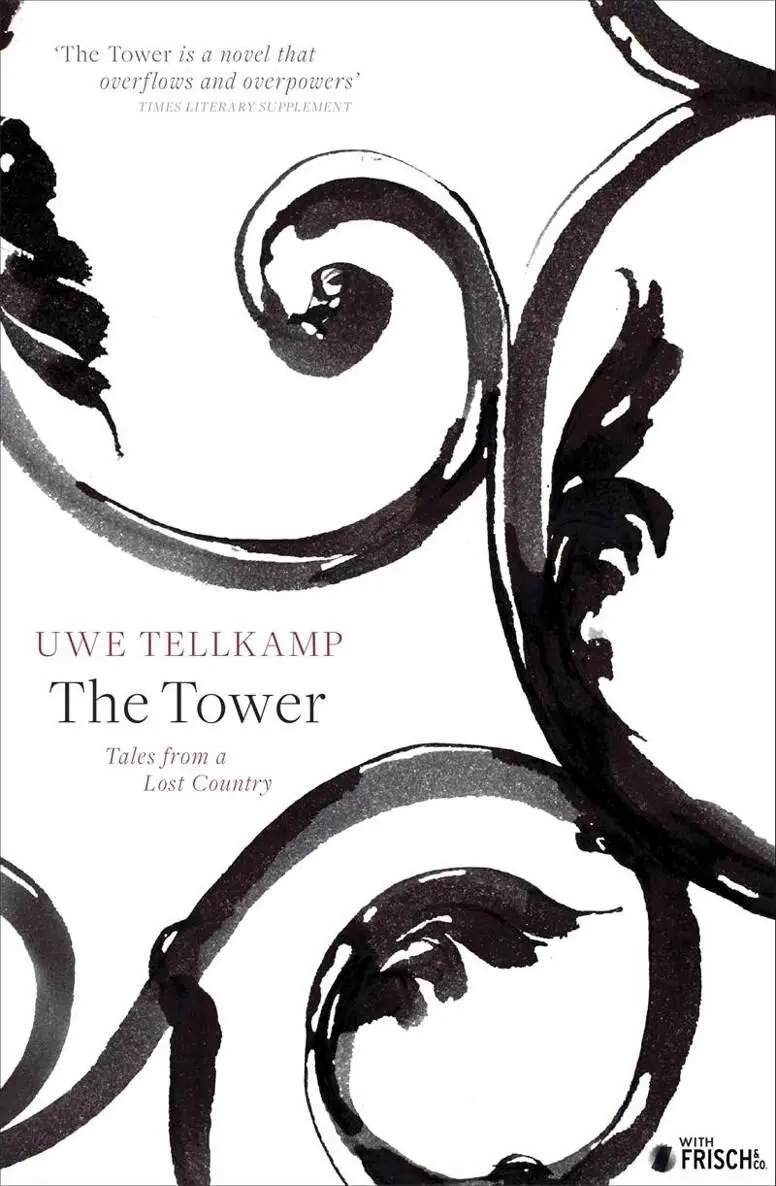
- Название:The Tower
- Автор:
- Издательство:Penguin
- Жанр:
- Год:2014
- ISBN:нет данных
- Рейтинг книги:5 / 5. Голосов: 1
-
Избранное:Добавить в избранное
- Отзывы:
-
Ваша оценка:
The Tower: краткое содержание, описание и аннотация
Предлагаем к чтению аннотацию, описание, краткое содержание или предисловие (зависит от того, что написал сам автор книги «The Tower»). Если вы не нашли необходимую информацию о книге — напишите в комментариях, мы постараемся отыскать её.
The Tower — читать онлайн бесплатно полную книгу (весь текст) целиком
Ниже представлен текст книги, разбитый по страницам. Система сохранения места последней прочитанной страницы, позволяет с удобством читать онлайн бесплатно книгу «The Tower», без необходимости каждый раз заново искать на чём Вы остановились. Поставьте закладку, и сможете в любой момент перейти на страницу, на которой закончили чтение.
Интервал:
Закладка:
One week later the washing was done and dried in the loft of Caravel. Meno and Anne had managed to get a slot on the wringer that was beside the steam laundry, an eighty-year-old fossil in Sonnenleite.
‘Well now, Herr Rohde,’ said Udo Männchen at Dresdner Edition, ‘are you going to need another day off for spring cleaning?’
‘It’s all very well for you to talk,’ said Meno, irritated by the typographer’s obvious pleasure, ‘living in a three-room all-comfort apartment and with a wife who looks after your, er, fabrics.’
The typographer had taken to wearing wide-sleeved jackets with cuffs at the wrist, self-cut and self-sewn, silk and linen combined and as colourful as the flags of developing countries.
‘How is it that the people in Central Office always go for this Garamond? Why not Baskerville for once, as in the Insel edition of Virginia Woolf? Three-room all-comfort! Are you pulling my leg? During the recent power cut it was three-room blind man’s buff! The maternity hospitals in this city have something in store for them, I can tell you.’
‘Persitif, persitif,’ said Miss Mimi, boldly and determinedly putting a ring of cactus spines round French yearnings.
‘A day off for doing housework? I assume, Herr Rohde, that you’re not a married working woman, so you have no right to a statutory day off for housework,’ Josef Redlich said. ‘Look, I too, wrinkled workhorse that I am, have to take leave when the washing gets too much for me. “The tablets of chocolate and arsenic upon which the laws are written”, Lichtenberg, Volume D.’
A distant creaking in the morning twilight mixed, as Meno and Anne turned from Rissleite into Sonnenleite, with the clatter of the coal the apprentice at Walther’s bakery was shovelling into his wheelbarrow, with the hum of a transformer, the rasp of ice scrapers on windscreens. The creaking was approaching radially from Lindwurmring, Rissleite and lower Sonnenleite; soon Meno perceived dark patches laboriously trudging closer: the women of the district who, like Anne, had the day off for housework and were bringing their washing to the steam laundry in handcarts. They approached through the grey undulations of snow, the brighter patches of their faces gradually separating from the darker ones of their bodies (their coats came down below their knees, their clumpy boots sank into the frozen snow that the few lamps with their white glow made to look like paper; the snow clearers and the winter morning shift would start work later), of those broad-shouldered, warmly wrapped-up, non-gender-specific bodies that, heading, as if drawn by a magnet, for the point of intersection of their tracks (it seemed to be Walther’s bakery, which sold rolls after 7 a.m., there was already a queue), would form an arrowhead aimed at the laundry. The women nodded greetings, but weren’t speaking yet. The creaking was an acoustic foreign body in the morning quiet, Meno thought: a rusty bar rubbed through a pelt; unpleasant, as if it were dragging bad dreams out of the night and into the day. It was the sound of the handcarts in which the women were bringing their washing, the wooden wheels scraping against dry bearings; the wheels had iron rims, on many of which quarter or half circles were missing, or the heavy square nails fixing them had loosened, causing the carts to bump and jolt; it was the screech of the shaft in the pole arm, the rumbling of the stanchions over the front wheels and the knock of the supports over the rear wheels; a medley of sounds, grey as driftwood like the colour of the carts bleached by rain and sun.
‘I just don’t know whether Richard can trust Stahl,’ Anne went on. ‘They spend whole weekends out there in Lohmen. And it’s all “Gerhart” and “Richard”. It’s not for my own sake that I’m asking and Robert often stays the weekend out in Waldbrunn … despite that we could do something together again.’
‘Go to Saxon Switzerland the way we used to,’ Meno said, ‘with Enoeff dishing up the gossip, getting annoyed she can’t find any mushrooms, that she’s got the wrong shoes on because she thought we were going out dancing, and Helmut merry and sliding into a crevasse? And once we’ve lugged him out, Enoeff says, “But we’re not over the hill yet, over the hill we’re definitely not yet.” ’
‘Reserving seats in the wrong restaurant, Niklas bawling out opera arias, Gudrun going on about Bach flower therapy, returning via Schandau …’
‘… where we all pile into Lene’s,’ said Meno, completing her sentence as Anne burst out laughing. ‘Good old Lene Schmidken. Have you been out there recently?’
‘Ulrich wanted to go but now, just before Christmas, they’ve got the Plan Commission on their backs. — They’re not showing their old car to anyone. But you’re Stahl’s neighbour.’
‘I don’t believe he belongs in that street,’ Meno replied. ‘But what does “believe” mean and “I can’t imagine”? The Stahls are certainly having problems with the new tenants.’
The ‘new’ tenants: the Honichs had been living in the House with a Thousand Eyes for almost a year now, but that was the way things were up there: hardly anyone moving in or out, many of the people had been living in the houses with the strange names for thirty or forty years and someone could still be ‘the new inhabitant’ when they’d only managed a quiet decade, hardly enough to acclimatize.
‘They must be uncouth people. Do they at least leave you more or less in peace now?’
‘A bit,’ Meno replied with a grin — had the atmosphere rubbed off on Anne so much that her childhood language had been swapped for the more discriminating mode of expression up here. Meno had noticed that even in everyday conversation they used words that some authors even avoided in written German, ‘Kunigunde-speak’, he called it, ‘uncouth’ where ‘coarse’ or ‘boorish’ didn’t seem precise enough.
‘Perhaps they don’t mean to be importunate, perhaps they think their homespun pleasures are everyone’s idea of happiness — and are baffled when they come across people who see things differently.’ Meno pulled their handcart past the queue, which stretched from the steam laundry to the rotting fencepost. Halting conversations, dirty looks that only cleared when Meno opened the door with the inscription ‘wringer’ in Gothic letters. They’d been given a slot for 7.30.
‘Oh well, perhaps I’m being too demanding as far as Richard’s concerned. He’s pretty overworked and that worries me. You know I was so happy when he came back from that terrible time when he was on duty during the power cut. With Robert in tow! He ought to have been at school! He grasped the lad by the shoulders and pushed him into the apartment. I’ve never seen him so proud of Robert. Of Christian, yes. But he’s quieter about that, doesn’t show it that much. At least not to me or the boys. — Perhaps we should prepare our washing a bit, the ironing-woman’s a real dragon. We mustn’t overrun or she’ll kick up a fuss.’
‘Morning, Herr Rohde,’ came the croaking voice of Else Alke from the door into the laundry. Clouds of steam and squashed transistor radio music poured out of the door. ‘The Baron’s waistcoat over here,’ she ordered one of the assistants. ‘And count the buttons again.’ The red of the waistcoat, the gleaming steel buttons were a refreshing sight.
‘The Baron will be sending you an invitation,’ the old woman rasped before handing the Arbogast handcart over to the assistant with a haughty nod.
53. The laundry wringer
The ironing-woman, full-bosomed with piggy eyes and reddish down on the backs of her fingers and her upper lip, brusquely instructed them in how to operate the machine, after she’d checked their time in a notebook and ticked them off with a sharp pencil stroke. Neither Anne nor Meno were there for the first time and the woman probably recognized them, but the repeat of the instructions was according to regulations, as any observant customer could see from the exclamation-mark-spattered section of the typewritten sheets of paper in the glass frame by the door connecting the wringer-room with the steam laundry, where the ironing-woman was also in charge of the button replacement department (mostly braided buttons for bed linen). The rest of the sheets of paper, printed in Gothic script and not yellowed, presented adages to do with washing and had been left behind by the previous owners, who, expropriated, had long since disappeared westwards: ‘A bar of soap, no more, no less, / brings healthy skin and happiness.’ ‘On linen white / we start and end our life.’ ‘What smooths out our wrinkles, / what can we rely on / to keep our faces young? / The wringer and the iron.’ Meno, fascinated by these reflections, would have most liked to have started thinking about them immediately; above all he felt the urge to check the substance of these axioms presented as folk wisdom (and therefore infallible): on linen white … Ulrich and he had been born in a Moscow clinic, had they had white sheets there? And for those born during the war? Anne was pointing to the clock suspended on two struts over the table, an octagonal model with hands ending in a heart shape and curved numerals on a face that was now grey; she wasn’t smiling, as she so often was when she roused her brother from one of his abstractions (a touch, an insistent look), she seemed nervous — Meno knew she was afraid of the monster in the room. Even in the clear 100-watt light of a bare bulb the wringer looked like a tarantula that had been forced onto its back and gagged; one of the giant specimens with wolf’s hair such as can be seen, modelled in synthetic material, sucking at Tertiary insects in the dioramas of museums of natural history (the stalked eyes in the woolly carnivore’s face sticking out like a binocular periscope) or circulated at research conferences on arachnids in the form of copper engravings, such as those made for Brehm’s Life of Animals , both praised for their technical skill and dismissed with a smile. Meno recalled Arbogast’s ‘our friend Arachne’ as he opened the safety grating to pick up the three beechwood rollers off the sliding table in front of the wringer box, which had returned to the starting position — first of all he stretched out to get the one farthest away, prepared in case the box, which was filled with boulders weighing tons, should shoot out towards him like a vicious prehensile claw to drag him into its gullet (in fact there wasn’t one, all that there was behind the mechanism was a black-and-yellow-striped wall, but he was haunted by the idea that there were digestive organs hidden in the casing); Meno grabbed the two remaining rollers with exaggerated speed and handed them to Anne, who silently and with the same exaggerated speed took them off him and went with them to the set-up table. She wrapped the washing, which had to be dry for this machine, round them. Now came the more difficult part of the preparation: Meno placed the three rollers with sheets and bed covers round them on the sliding table the way the ironing-woman had demonstrated (in a whiny, scarcely comprehensible voice and without switching on the wringer); rollers at a precise right angle to the direction of travel, only in that way was free rotation in both directions possible, only in that way would nothing get jammed — the wooden rollers could move freely under the box — holes wouldn’t be rubbed in the washing, as would happen should the sliding process be disrupted by a wrong angle. The difficulty lay in the precision with which the wooden cylinders had to be aligned; Meno felt less afraid offering the gagged tarantula full rollers than he had removing the empty ones previously — he stepped back, let the safety grille down, anxiously watching the box that, when Anne pressed a button, started to hum forward on a toothed rail and slowly moved onto the rollers that smoothly took up the motion. Anne nodded, pressed a second button and now it sounded as if someone — or something — were being tortured, torment and pain were flying over the solid beechwood, worn by decades of use, of the wringer, shuttling to and fro, the boulders in the box thundering and rattling, a convulsive tremor from the transmission belts running over driving wheels on the side of the machine, obeying the blind, unfeeling voltage commands of a motor. For the moment there was nothing to do. Meno looked into the laundry through the little window in the wall: steam was rising from the huge vessels, resembling autoclaves, with rod thermometers stuck into them that an assistant in grey overalls kept his eye on (his other one was, as could be clearly seen, made of glass); now and then the one-eyed man pulled over a kind of brass shawm that went into an endoscopically flexible tube, and grunted something down it, probably telling a stoker hidden in the cellar to regulate the steam pressure in the boiler. — The ironing-woman appeared right on time.
Читать дальшеИнтервал:
Закладка:
Похожие книги на «The Tower»
Представляем Вашему вниманию похожие книги на «The Tower» списком для выбора. Мы отобрали схожую по названию и смыслу литературу в надежде предоставить читателям больше вариантов отыскать новые, интересные, ещё непрочитанные произведения.








Обсуждение, отзывы о книге «The Tower» и просто собственные мнения читателей. Оставьте ваши комментарии, напишите, что Вы думаете о произведении, его смысле или главных героях. Укажите что конкретно понравилось, а что нет, и почему Вы так считаете.