Uwe Tellkamp - The Tower
Здесь есть возможность читать онлайн «Uwe Tellkamp - The Tower» весь текст электронной книги совершенно бесплатно (целиком полную версию без сокращений). В некоторых случаях можно слушать аудио, скачать через торрент в формате fb2 и присутствует краткое содержание. Год выпуска: 2014, Издательство: Penguin, Жанр: Современная проза, на английском языке. Описание произведения, (предисловие) а так же отзывы посетителей доступны на портале библиотеки ЛибКат.
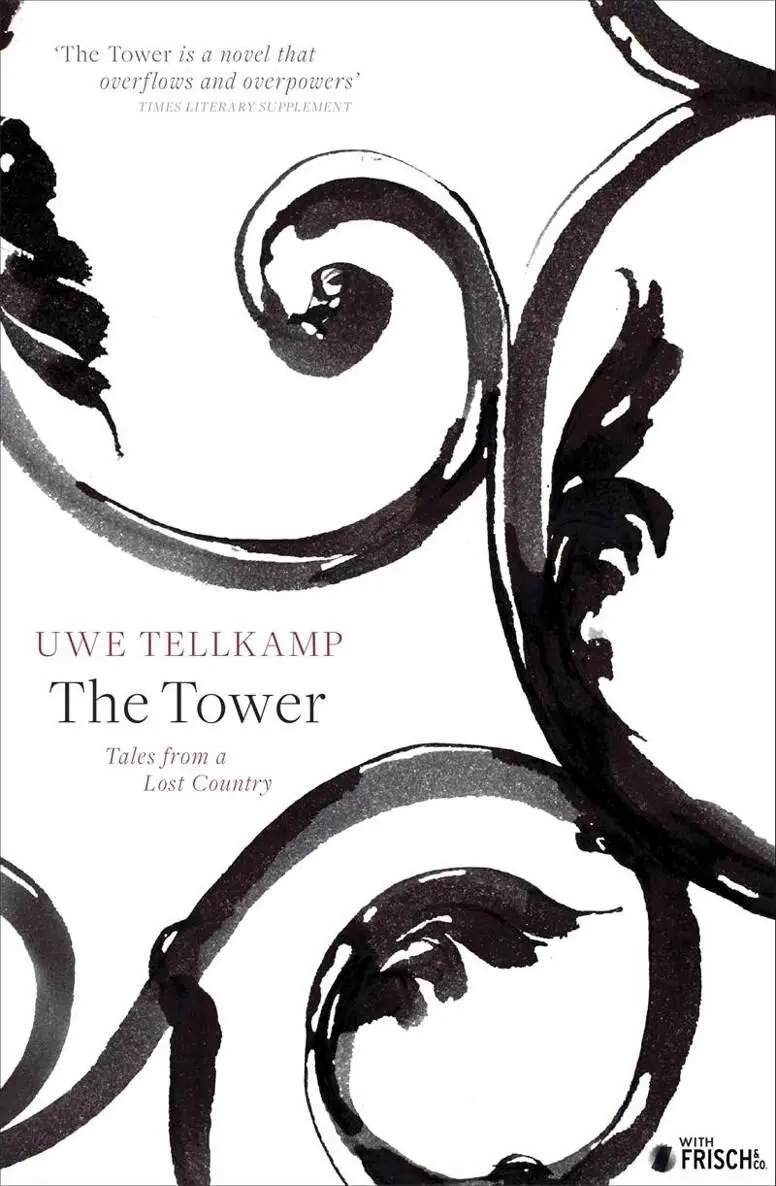
- Название:The Tower
- Автор:
- Издательство:Penguin
- Жанр:
- Год:2014
- ISBN:нет данных
- Рейтинг книги:5 / 5. Голосов: 1
-
Избранное:Добавить в избранное
- Отзывы:
-
Ваша оценка:
The Tower: краткое содержание, описание и аннотация
Предлагаем к чтению аннотацию, описание, краткое содержание или предисловие (зависит от того, что написал сам автор книги «The Tower»). Если вы не нашли необходимую информацию о книге — напишите в комментариях, мы постараемся отыскать её.
The Tower — читать онлайн бесплатно полную книгу (весь текст) целиком
Ниже представлен текст книги, разбитый по страницам. Система сохранения места последней прочитанной страницы, позволяет с удобством читать онлайн бесплатно книгу «The Tower», без необходимости каждый раз заново искать на чём Вы остановились. Поставьте закладку, и сможете в любой момент перейти на страницу, на которой закончили чтение.
Интервал:
Закладка:
A call on the upstairs telephone and the trucks of the Michurin complex on Gagarinweg were on their way with a selection of snacks. Irmtraud hadn’t wanted that, even though Jochen had made the offer several times, as Meno knew from Philipp, who by now was casting revolting sheep’s eyes at Judith Schevola. As at the time when they’d been going to see Eschschloraque, Meno felt like inquiring about Marisa; perhaps she was having Christmas with fellow Chilean exiles or playing with Judith Schevola’s knife in Philipp’s room opposite the cotton mill. Meno observed Philipp: did this man have any idea at all what he wanted? Surely you’re not jealous? He waved the idea away with a vigorous gesture that set the hand with the ring on the index finger in motion, offering Meno a bowl of pretzels; without interrupting his flow of speech or taking any notice of Meno’s reaction (perhaps Jochen Londoner took it for acceptance), the scholar continued his Manchester speech. Philipp had put a Gorbachev badge on the table in front of him, the head with its birthmark on a red background; the tin disc had a pin on the back, ironically it came from the West; Philipp had brought it back from Berlin, where these ‘sweet liddel provocations’ (as Jochen Londoner called them, he had examined it closely, praising the quality of the soldering of the pin) had been on sale for several months.
Philipp, the child of heroes. Who wanted to keep the Party pure and to uphold the ideals for which his parents had fought and suffered one (Meno could not imagine the pair of them separately) of the terrible destinies of that century: all of Irmtraud’s and Jochen’s relations had been murdered in the Nazi death camps, they themselves had escaped by hazardous routes to England (‘mit nothing in de pockets and hunger, my dear, immer hunger’), where he had worked for the British Museum Library and she as a cleaner in Guy’s Hospital before they had been interned as ‘enemy aliens’. Philipp, who attacked corrupt officials and believed in socialism as something sacred — in discussions he would never be prepared to go beyond a certain limit, to call the whole system in question, as Richard did (and Anne? had she not been brought up in the same way as Philipp and he, Meno Rohde, the bearers of a proud name in the hierarchy of communism? … at that moment she was probably in church to hear Pastor Magenstock’s sermon and see the nativity play); Philipp never doubted that socialism had the better, the more hopeful future. Everything for the welfare of the people … Philipp donated a significant part of his salary to a workers’ retirement home in Leipzig; while a student he had worked on the Baikal — Amur railway. And his science? It served the people, for whom socialism had been thought up and planned; Meno was convinced that Philipp regarded his science, his professorship, as a contribution to the strengthening of socialism and would have relinquished them without hesitation had that seemed necessary for the defence of the ‘just cause’ (as people here liked to call the dictatorship of the proletariat).
The whistle of Black Mathilda was heard, at which Jochen Londoner, taking a sip of sherry, interrupted his peroration and made Meno prick up his ears with a drawn-out ‘… by the way …’; mostly this preceded an important tip about everyday matters, as was the case this time as well. It had struck him, he said, that the energy-saving programmes on the Republic’s television had been on the increase again, Meno ‘and you too, my dear’ (Judith Schevola came back with a start from the contemplation of the many original prints on the walls between the rows of books) would be well advised to order more coal in time; if necessary he could help them in that, they only had to ask. And if there was anything else …? This offer was to be seen as a ‘liddel advance’ on the presents that were to be distributed later. Meno took it up, he had thought of doing so before setting off and asked whether Jochen could do anything for Christian, transfer to another unit, for example, a post as headquarters clerk; Londoner said sorry, that was the army, he could do nothing there, nothing at all, he had enough to do sorting out Philipp’s idiotic petty bourgeois/educated middle class comparison on Hiddensee, the comrade had played the stool pigeon and reported him; dangerous, Jochen Londoner said, but it could presumably be sorted out. And, by the way, was the telephone working again? Groaning slightly, he pushed himself up out of his rocking chair; the expression of intent listening returned as Londoner grasped his chin between thumb and forefinger. Irmtraud raised the stick of the dinner gong and said, ‘The gong is gonging.’
Meno watched as Londoner shuffled over to the telephone, hesitated a few moments before lifting the receiver and, with a concentrated expression, put it to his ear. ‘Oh, could you come round some time. Yes, I can’t get a connection when I dial. It would be a pity about all those conversations, wouldn’t it? If I can’t talk to people on the phone, you’ll have nothing to record, don’t you have your plan targets too? Goodbye and a merry Christmas.’ He remained standing while Irmtraud served up the roast hare. ‘Let’s have a liddel feastolos,’ he said in Londoner Greek.
After the meal, the presents: Meno watched Schevola, who spoke less than usual, maintained her reserve even at the old man’s sly compliments; they weren’t suggestive; Londoner liked talking and liked listening to himself (‘with crit’cal love, not that I can’t see through myself’), well aware that monologues can hold people’s attention, but not for long. Schevola was watching Philipp and the old man, as she ate her assessing gaze went from Irmtraud’s pearl necklace to the Meissen porcelain, the serviettes with monograms (all that vaguely illuminated by the first candle, lit too early, on the menorah); Meno suspected that, like himself, Judith Schevola was waiting for the moment, the ‘characterology of moments’, of which the moment would consist: the translation of the old scholar from professed revolutionary (who served the juiciest portions of the roast to his wife and Judith) into property-owning bourgeois. Would the smile on the Liebermann portrait above the settee be any less fierce, would hints of forbearance, of weariness even, an awareness of the darker side, cross the painter’s wide-awake, pitiless expression with its glint of wit? — A clearing of the throat, embarrassment, reluctance. Jochen Londoner stood in front of the tree and invited the family (his heavy eyelids pushed the word ‘guests’ aside) to join him, passed his hands, searching, over the tweed of his jacket, found a pair of glasses and, with appeasing words, much furrowing of the brow and ‘So — for you’ and ‘There — for you’, handed out envelopes that, as Meno knew, contained cheques for considerable sums of money. ‘No, no’ — Londoner raised his hands to wave away objections that hadn’t even been made — ‘warm hands, children. / Not with cold hands should you give your gifts, / the young need wings like these to fly. No, no, take it, forget it, buy yourselves sammsink. You know you shouldn’t give us presents. We don’t want any. Not one word more. But there is something’ — he nodded to Irmtraud and turned to Judith Schevola — ‘we would like from you.’ Irmtraud opened Judith’s novel, The Depths of These Years , with the mark of Munderloh’s publishing company that was so familiar to Meno, and asked for a dedication. Judith Schevola was not in the least embarrassed. Jochen Londoner read it out in a disheartened voice, ‘Since you’ve decided to be a horse — then pull.’
‘Let’s go for a walk,’ Irmtraud Londoner suggested.
‘What have I done wrong?’ Schevola whispered to Meno in the hall.
Читать дальшеИнтервал:
Закладка:
Похожие книги на «The Tower»
Представляем Вашему вниманию похожие книги на «The Tower» списком для выбора. Мы отобрали схожую по названию и смыслу литературу в надежде предоставить читателям больше вариантов отыскать новые, интересные, ещё непрочитанные произведения.



Обсуждение, отзывы о книге «The Tower» и просто собственные мнения читателей. Оставьте ваши комментарии, напишите, что Вы думаете о произведении, его смысле или главных героях. Укажите что конкретно понравилось, а что нет, и почему Вы так считаете.