Uwe Tellkamp - The Tower
Здесь есть возможность читать онлайн «Uwe Tellkamp - The Tower» весь текст электронной книги совершенно бесплатно (целиком полную версию без сокращений). В некоторых случаях можно слушать аудио, скачать через торрент в формате fb2 и присутствует краткое содержание. Год выпуска: 2014, Издательство: Penguin, Жанр: Современная проза, на английском языке. Описание произведения, (предисловие) а так же отзывы посетителей доступны на портале библиотеки ЛибКат.
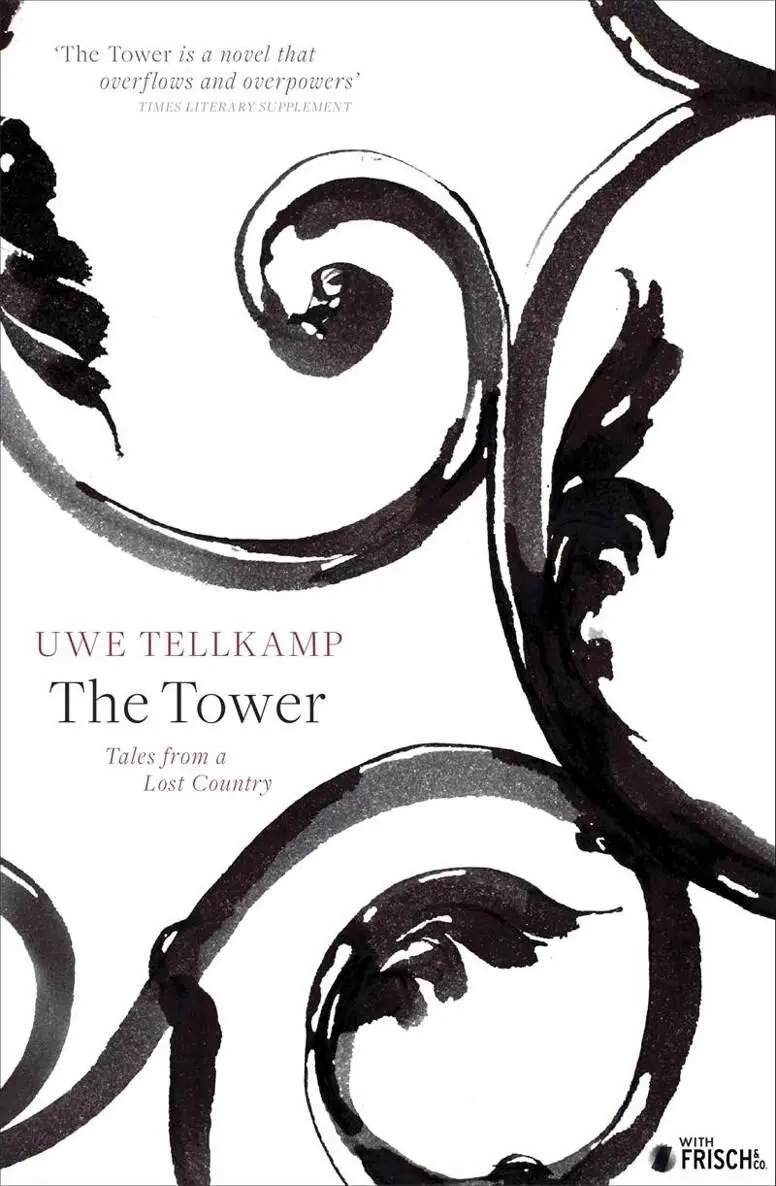
- Название:The Tower
- Автор:
- Издательство:Penguin
- Жанр:
- Год:2014
- ISBN:нет данных
- Рейтинг книги:5 / 5. Голосов: 1
-
Избранное:Добавить в избранное
- Отзывы:
-
Ваша оценка:
The Tower: краткое содержание, описание и аннотация
Предлагаем к чтению аннотацию, описание, краткое содержание или предисловие (зависит от того, что написал сам автор книги «The Tower»). Если вы не нашли необходимую информацию о книге — напишите в комментариях, мы постараемся отыскать её.
The Tower — читать онлайн бесплатно полную книгу (весь текст) целиком
Ниже представлен текст книги, разбитый по страницам. Система сохранения места последней прочитанной страницы, позволяет с удобством читать онлайн бесплатно книгу «The Tower», без необходимости каждый раз заново искать на чём Вы остановились. Поставьте закладку, и сможете в любой момент перейти на страницу, на которой закончили чтение.
Интервал:
Закладка:
‘Touched on a sore point,’ he whispered back.
‘How stupid of me, how tactless,’ she said.
‘Child’ — Irmtraud Londoner plucked her sleeve — ‘you couldn’t know. Don’t let it worry you. If you’re going to be part of the family it would be best if you got used to these swings of mood now. We are all very unstable,’ she went on, switching to English. ‘Isn’t that so, my son?’
‘It is so, my sunshine,’ Philipp agreed, helping his mother on with her coat.
Outside Jochen Londoner tried to divert attention away from the scene, discussing the book, praising its dense atmosphere, the figure of the father, applying the ‘you don’t have to be long-winded if you vant to say sammsink ernsthaftly’ that hung, in Londoner English, over his desk, to Schevola’s novel — Meno recalled reviews Londoner had written for Neue Deutsche Literatur and Neues Deutschland , in which he indulged in high-sounding phrases and empty grandiloquence without having more than sampled the books; Schevola seemed to feel that his praise was honestly meant, for she pushed it aside with a reaction Meno had seen in other authors (and they weren’t the worst): she pointed out weaknesses, played the novel down by not simply mentioning parts of the plot she felt were not quite successful, but showing them in a critical light (in East Rome the street lamps worked) in order not to appear presumptuous. What did Meno as an editor have to say to the book, Londoner asked cautiously. — Meno replied that he really couldn’t say anything since he didn’t know the book, at least in its printed form. Meno behaved as if he were having difficulty lighting the tobacco he’d tamped down in his pipe. — Had he not received it? Schevola asked in alarm. She had asked for a copy to be sent to him.
‘We read good books,’ Londoner said, waving a shopping bag and lending Meno a box of matches, ‘with a sense of security.’ He regretted that it hadn’t been possible for it to appear in the country. If it was any comfort, if it gave her any encouragement, he too knew what a muzzle felt like, he’d had to wait six years for permission for what was probably his most popular book, A Short Critique of Soap , to be printed. Did Meno know (‘by the way’) that after the book had appeared Ulrich Rohde had sent him a whole carton of the substance? After a lecture on astronomy in the Orient at Arbogast’s place. ‘You know’ — Londoner merrily hit himself on either side of his chest with his unencumbered left hand — ‘here the medals — and here the Party’s punishments, that’s the way things are; don’t imagine people like Barsano or even our Friedel Sinner-Priest can do their work without receiving such correction for their own good.’
Meno was surprised at what Londoner had said. Some of the passages he’d remembered from Schevola’s book contained strong criticism of the Party, a few were even openly aggressive … There it was again, the schizophrenia he was familiar with from Kurt. If they ever talked about such matters at all, it was the Party that punished but those it punished fell to their knees and would not say anything against the Great Mother. Even when facing the firing squad, condemned men had shouted, ‘Long live Stalin, long live the Bolshevik Party, long live the revolution.’ Meno recalled what a shock it had been for him when Irmtraud, who hadn’t worked for ages now, had talked in a casual conversation about her previous job. She had been a censor for ‘books of philosophical content’, she had even rejected Philipp’s dissertation for ‘deviant readings’. They were both, as Philipp put it, ‘coldly curious’ as to whether their children would ‘make it’ and at the same time well-disposed towards their dreams: ‘We will help, but you must do your fighting yourselves.’ And now they were both praising a book that Irmtraud would have rejected and Jochen Londoner, had he had to speak in an official capacity about it, would have classed as ‘ideologically unclear’, perhaps even as ‘harmful’.
‘ “The world’s abuzz with rumour, / The truth they would deny. / Hearts may lose their way, / We have climbed so high!” ’ Judith Schevola broke off; for a moment, so it seemed to Meno, Londoner was about quote another verse of Becher’s Tower of Babel himself, but remained silent instead. Philipp and Irmtraud were ahead of them, Philipp gesticulating.
‘May I ask you something? — Ernsthaftly.’
‘Go ahead, my dear, if I can answer it.’
‘Philipp often says I’m not interested in the problems in this country — I mean the economic problems. That’s not true. I do keep my eyes open. Do you think —’
‘Lennin,’ Londoner broke in with a sweeping gesture of his right hand; he seemed to move away from Schevola slightly. ‘As soon as the war was over Lennin introduced a capitalist economy into Soviet Russia; he always used to say, capitalism is our enemy but it is also our teacher.’ He gave her a suspicious look, perhaps he thought he’d ventured too far. ‘And it was Lennin who said that, the man who taught us all our trade.’
Meno permitted himself a quiet grin at this ‘Lennin’; it sounded like Lennon with an ‘i’ and Jochen Londoner was a professed fan of the Beatles.
‘And since it’s Christmas I’ll just add this, my dear: Lennin’s theory of the necessity of grassroots democracy. Lennin at the head of the October Revolution, ten days that changed the world — and we’re part of the Soviet Union, we couldn’t survive alone. I leave it to you to draw your own conclusions, in regard to current politics as well.’
They regrouped; Irmtraud and Jochen Londoner fell behind. They were holding hands, looking at the road, saying nothing. Philipp would probably not have been allowed to ask his father such a question; from Meno’s experience problems of that kind were not discussed in the nomenklatura, at least not between the generations. No addresses in the house, except in the safe, no doubts that threatened to become matters of substance in their own four walls, no deviancy, unquestioning loyalty to the Party. Meno recalled Londoner’s malicious subtlety in getting Philipp to invite the Old Man of the Mountain; what a humiliation — and what a strange reaction from the old man. He had been furious with the Londoners for inviting him; he thought that in such a way they had exposed his loneliness, which — and this made it worse — must be so great ‘that it was not even possible for me to decline the invitation in a friendly way’. ‘Act-u-al-ly a substitute invitation,’ that was what he had called it, ‘the way they used to issue a kind invitation to lackeys or the children of the servants to the table with the Christmas presents from which they were allowed to take home a few crumbs.’
‘Do you want to go along with this?’ Meno asked Judith Schevola softly. Philipp was in full flight, Meno was familiar with it, Hanna had also had these ecstatic states; it was something that was alien to him but that he admired, something he’d loved Hanna for. On Philipp’s lips words such as ‘world revolution’, ‘a community in which everyone has a good life, in which no one goes hungry any more and no one is oppressed’ didn’t sound like hollow phrases, as they so often did from the hardliners. Philipp believed in the future. It belonged to socialism — and it belonged to them, the children of heroes, the children of people who had gone through unimaginable suffering for the realization of their ideals. When Philipp’s eyes shone, as they did now, when his enthusiasm at being able to take part in the struggles of this age, which according to the law of history would lead to a tomorrow without exploitation and want, put a flush on his cheeks, he was beautiful and, with his long hair, though with a hat instead of a beret and star, he did resemble his ideal, Che Guevara, a little. At this point usually a different tone broke through, for he, Philipp, and others of a similar background, were the children of the victors of history, of genuine revolutionaries that was, who had not stuck to theory but put it into practice — ‘while the petty bourgeois, the shit-scared and all the riffraff, for whom men and women like my parents put their lives at risk, had kept their heads down and betrayed everything they had worked for’. Meno bit back the question of whether the ‘riffraff’, whom Philipp dismissed with a disparaging wave of the hand, did not also belong to the people, to the working class whom he and his comrades wanted to stand by; when he was in one of these ‘states’ Philipp no longer seemed open to critical arguments.
Читать дальшеИнтервал:
Закладка:
Похожие книги на «The Tower»
Представляем Вашему вниманию похожие книги на «The Tower» списком для выбора. Мы отобрали схожую по названию и смыслу литературу в надежде предоставить читателям больше вариантов отыскать новые, интересные, ещё непрочитанные произведения.



Обсуждение, отзывы о книге «The Tower» и просто собственные мнения читателей. Оставьте ваши комментарии, напишите, что Вы думаете о произведении, его смысле или главных героях. Укажите что конкретно понравилось, а что нет, и почему Вы так считаете.