Uwe Tellkamp - The Tower
Здесь есть возможность читать онлайн «Uwe Tellkamp - The Tower» весь текст электронной книги совершенно бесплатно (целиком полную версию без сокращений). В некоторых случаях можно слушать аудио, скачать через торрент в формате fb2 и присутствует краткое содержание. Год выпуска: 2014, Издательство: Penguin, Жанр: Современная проза, на английском языке. Описание произведения, (предисловие) а так же отзывы посетителей доступны на портале библиотеки ЛибКат.
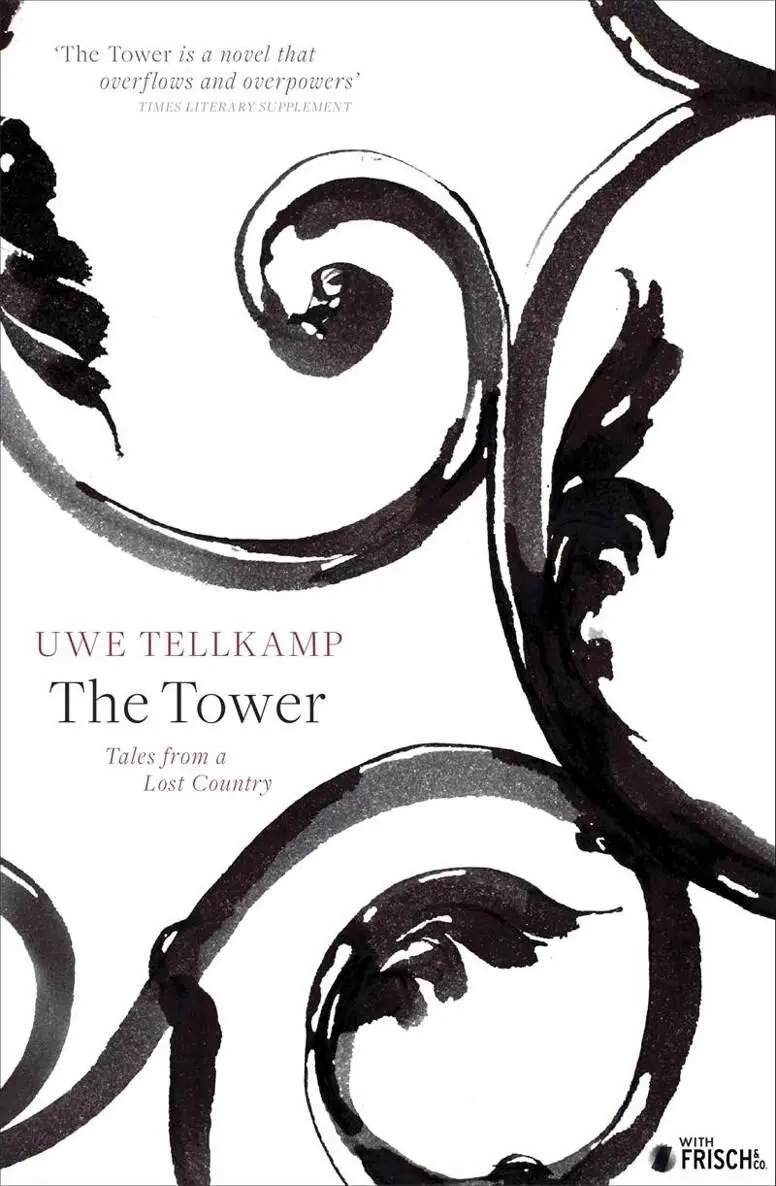
- Название:The Tower
- Автор:
- Издательство:Penguin
- Жанр:
- Год:2014
- ISBN:нет данных
- Рейтинг книги:5 / 5. Голосов: 1
-
Избранное:Добавить в избранное
- Отзывы:
-
Ваша оценка:
The Tower: краткое содержание, описание и аннотация
Предлагаем к чтению аннотацию, описание, краткое содержание или предисловие (зависит от того, что написал сам автор книги «The Tower»). Если вы не нашли необходимую информацию о книге — напишите в комментариях, мы постараемся отыскать её.
The Tower — читать онлайн бесплатно полную книгу (весь текст) целиком
Ниже представлен текст книги, разбитый по страницам. Система сохранения места последней прочитанной страницы, позволяет с удобством читать онлайн бесплатно книгу «The Tower», без необходимости каждый раз заново искать на чём Вы остановились. Поставьте закладку, и сможете в любой момент перейти на страницу, на которой закончили чтение.
Интервал:
Закладка:
a restricted area full of ammunition boxes and covered vehicles in which the men were loading up, switching from the exercise rounds to the live ammunition that was here; new orders were given, by now the regimental staff had arrived; the order that it was to continue, that from now on radio messages were only to be sent in code; Christian told his crew to relax, he knew what lay ahead of them: hard work driven on by bellowing officers running to and fro, shells out, shells in without a break, camouflage the tanks, leave for the freight line at Grün station, load the tanks onto goods wagons, then transport to an unknown destination –
‘Dear Christian, Your parents have given me your address, I also learnt from them that you are in a tank regiment and things aren’t that great. That’s why I wanted to write to you and I hope you’re not annoyed with me because of that. Now I’m in Leipzig, doing medicine — nothing came of chemistry, but medicine’s not that far away from it. I often think of that evening at your uncle’s in the House with a Thousand Eyes, of the Bird of Paradise Bar. By the way, I’ve made some tapes, Neustadt have been on DT 64 recently, if you want I can send you one. The way you sat at the table in the garden when the others were in the bar and I couldn’t go over to you because you were completely self-absorbed and I had the feeling you didn’t need other people, at least not at that moment. I have a room in the student residence, sharing with three other students, one of them’s Hungarian, she’s very jolly, I get on best with her. It’s the evening now, the others have gone out, I ought to be studying but by chance I happened to see the title of a book one of the others is reading, The Count of Monte Cristo , and all at once I could hear our conversations again, the walks in Saxon Switzerland, your voice. Your father sounds similar, it gave me a start when he answered the phone, and he also takes sudden breaths in through his nose like you if there’s too long a pause in the conversation. I can tell that this letter’s getting stupid, I keep jumping from one thing to another and all I wanted to do was to make contact again. On the card I’ve put in it’s meant to be a female flamingo staring at an empty postbox. I can’t draw as well as Heike. I didn’t put the card in with the letter as a reproach to you but because the empty, lifeless postbox simply doesn’t express for me what I feel when I read your letters. You wrote three to me, I’ve read through them again and again. It isn’t very easy finding the right words to express what fascinates me so about your letters. Under philosophy I’ve always imagined Chief Red Eagle or something supernatural. Or screwballs. It was your letters that have made me want to know more about the subject — but not because I feel I have to keep up with your interests. I haven’t failed to notice with what loving care your letters are written, in contrast to mine, but I didn’t know how to reply, to make my letters more confiding, more personal. Reina shy? That’s what you might perhaps be thinking now. I know that’s not the way I seem but actually I’m quite a reserved creature. Sometimes I’d really like to say something but can’t get a word out. And in Saxon Switzerland I finally had the chance to take a “risk” and put aside the characteristics of my quiet type. My fear of being rejected, of perhaps not finding the right words, has its origin in my partial lack of self-confidence. There are people who think they have to show something and so develop into “pushy” types. Probably one of the reasons why I feel affection for you is that you’re not like all the others but have something individual about you. I’m well aware that your free time will be very limited; it’s all right if you can’t write very often. Perhaps I think too seriously about many things. I’m sure that makes it more difficult to find answers and I tend to see the situation as more critical than it really is. Can we meet some time? There is a train from Leipzig to Grün. I would really like that. (Please answer this letter.) Reina.’
a grumpy railway inspector held up his lantern in front of the tanks, no, he knew nothing about this, yes, there were goods wagons ready but they weren’t for the army; and while the staff officers got on their walkie-talkies, turned the handles of their field telephones, Christian felt for Reina’s letter, for his Constantinople and South Sea talismans; lamps were hanging like white-hot pots over the station tracks, most of the railway clocks, encrusted in fly-shit and ash, weren’t working, had shattered glass, bent hands or only one; on the passenger platforms a few drunks were staggering round, waving bottles of beer and, as soon as they saw the soldiers, flying into a rage; they shouted and swore, just about managing to stand upright, upper bodies tilting forward, shaking their bottles, until Pancake, who was looking out of the driver’s hatch, said, ‘Hey guys, they’re not angry, they want to sell us some hooch!’ and scurried across, unnoticed by the bearers of the silver epaulettes, quickly did a deal and ran back, crouching, to the tank, where he threw the spoils, a shopping bag full of beer bottles, to the loader, who stuffed it under the machine gun on his side of the tank –
‘Load tanks!’ a voice ordered brusquely, torches made circles, the sign of ‘start engines’, the tanks moved forward to the loading ramp.
Christian and Pancake changed places, the better driver gave the instructions, the worse one drove; Christian raised the seat, he hadn’t driven since cadet school, the tank moved off, Christian let in the clutch far too quickly, straight as possible up the ramp, the gun above his head threw a dark shadow, a halogen spotlight on the left was dazzling, now the slope of the ramp, the tank had to be precisely aligned with the wagon, Pancake had to get the timing of the turn exactly right, a tank had no radius of curve, it turned on the spot and on the goods wagon the tracks would stick out a good way on either side, Pancake gesticulated with the flags, Christian tugged at the steering lever, now Pancake was waving ‘Stop’, Christian realized he was going too fast but couldn’t stop, suddenly found he couldn’t reach the brakes and gear lever, his uniform trousers had got stuck, as had his upper body between the edge of the hatch and the driver’s seat, ‘Stop!’ Pancake roared, appearing and disappearing in the sharp whiteness of the halogen lamp and the shadow beside it, ‘Stop, stop!’
Christian tried to switch the engine off with the lever above the knurled section but he was paralysed, could see the lever, the brown, oval plate of hard plastic you pulled down and pushed from side to side to regulate the revs but couldn’t reach it; now others were shouting, ‘Switch off, you idiot’ and ‘Down’, he saw the soldiers leap off the goods wagon; their task would have been to wedge the hefty steel chocks with the spikes into the wooden floor of the wagon in front of and behind the T55:
He pulled the steering levers into the ‘second position’ but the tank didn’t stop, as it ought to have, an old Russian thing, Christian thought,
and:
I might not be able to answer Reina’s letter at all
and:
What shall I say to Mum?
and:
This thing’s tipping over –
Growth; a moment, gentle as a pinprick at the beginning, a break, a tear, Richard could see the shed, Stahl’s bent back and, when he turned round again, the overgrown quarry in the sudden and alarming second of an explosion after which there were smells all at once: sun-warmed stone; plants keeping their flowers at the ready, like crazy archers desperate to start shooting, a bundle of ten arrows on their bowstring; of axle-grease, chicken shit; the light swivelled like a cutting torch, hitting his face full force: it made you want to suck in the fresh spring air, fists clenched, get drunk on the colours (a postbox-yellow oil can on a black shelf) — the way all that was growing and sprouting and bursting and splitting rotten husks, the way the sap was returning to the trees, making them vibrate and the leaves, like a thousand green fingers that touched and wanted to be touched, swell out, branches hummed with bee electricity; and how it was growing, his ‘baby’, as he called the Hispano — that wasn’t a car, wasn’t a lifeless machine, it had eyes that looked now happy, now sad, it was a living being with nickel veins and character.
Читать дальшеИнтервал:
Закладка:
Похожие книги на «The Tower»
Представляем Вашему вниманию похожие книги на «The Tower» списком для выбора. Мы отобрали схожую по названию и смыслу литературу в надежде предоставить читателям больше вариантов отыскать новые, интересные, ещё непрочитанные произведения.


Обсуждение, отзывы о книге «The Tower» и просто собственные мнения читателей. Оставьте ваши комментарии, напишите, что Вы думаете о произведении, его смысле или главных героях. Укажите что конкретно понравилось, а что нет, и почему Вы так считаете.