Uwe Tellkamp - The Tower
Здесь есть возможность читать онлайн «Uwe Tellkamp - The Tower» весь текст электронной книги совершенно бесплатно (целиком полную версию без сокращений). В некоторых случаях можно слушать аудио, скачать через торрент в формате fb2 и присутствует краткое содержание. Год выпуска: 2014, Издательство: Penguin, Жанр: Современная проза, на английском языке. Описание произведения, (предисловие) а так же отзывы посетителей доступны на портале библиотеки ЛибКат.
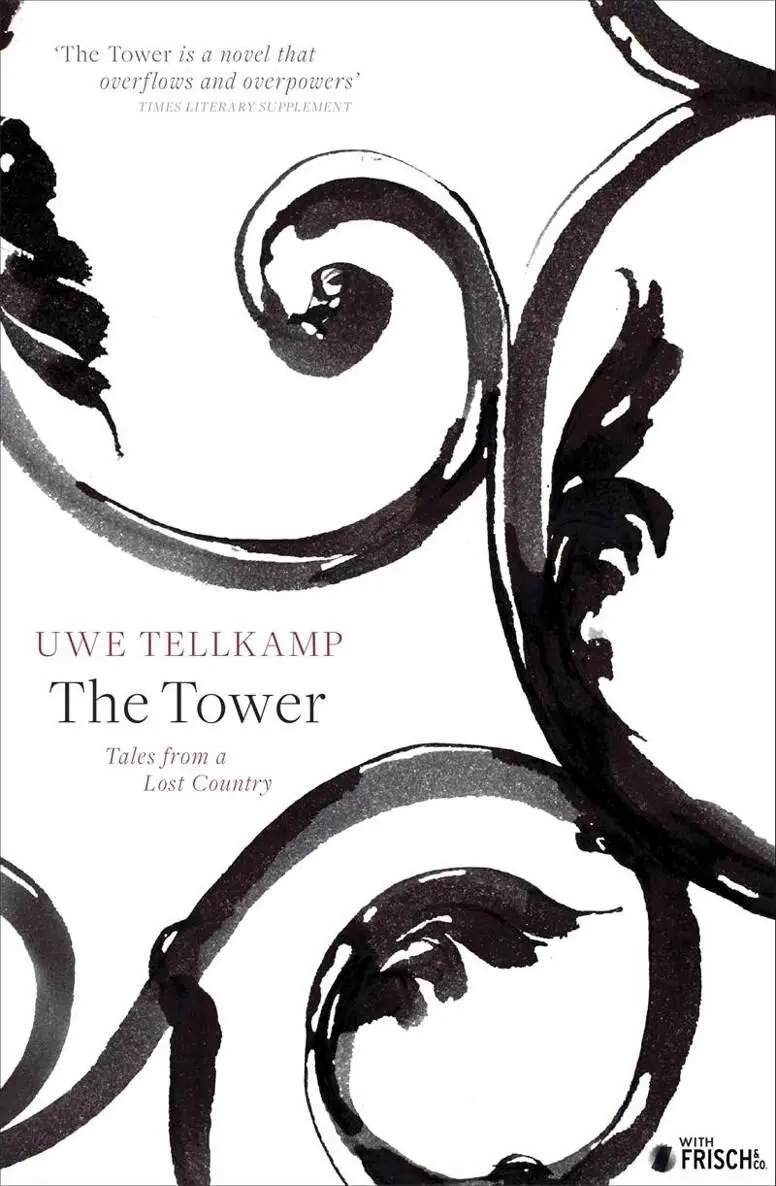
- Название:The Tower
- Автор:
- Издательство:Penguin
- Жанр:
- Год:2014
- ISBN:нет данных
- Рейтинг книги:5 / 5. Голосов: 1
-
Избранное:Добавить в избранное
- Отзывы:
-
Ваша оценка:
The Tower: краткое содержание, описание и аннотация
Предлагаем к чтению аннотацию, описание, краткое содержание или предисловие (зависит от того, что написал сам автор книги «The Tower»). Если вы не нашли необходимую информацию о книге — напишите в комментариях, мы постараемся отыскать её.
The Tower — читать онлайн бесплатно полную книгу (весь текст) целиком
Ниже представлен текст книги, разбитый по страницам. Система сохранения места последней прочитанной страницы, позволяет с удобством читать онлайн бесплатно книгу «The Tower», без необходимости каждый раз заново искать на чём Вы остановились. Поставьте закладку, и сможете в любой момент перейти на страницу, на которой закончили чтение.
Интервал:
Закладка:
‘Go along? You mean into the jungle? Where the true revolutionaries live? — Why not?’ Meno remained silent after this reply and with a shrug of the shoulders Judith Schevola went on, ‘It’s for a better world, I once went to Prague for that … however often Altberg might try to decry it. In the end we all have to die, and live … better to burn short and bright like a firework than to spend a long time poking around in cold ash.’ Hostile tones! Meno dropped back, flabbergasted at the way Judith Schevola had spoken, sickened by the smitten sidelong looks she was giving Philipp; it offended him, he recalled their conversation when they were going to see Eschschloraque, the part about calling each other ‘du’ and about wailing geniuses — smitten geniuses were at least equally disappointing.
‘Well, lad’ — Jochen Londoner took his arm — ‘is she the right one for Philipp, what d’you think? You know, I’m starting to get old, this morning Traudel and I were talking about how nice it would be if we had grandchildren and could play with them under the Christmas tree. Grandfather ambitions! Don’t you think a pair of old bracket funguses like us have the right to let the world go hang and just concern ourselves with happy smiling children? We had so hoped that Hanna and you … that you would get back together again. No fnuky , as my Polish friend calls the pleasures of being a grandfather, from those in front either. — Oh well, enough of that.’ But Londoner hadn’t finished yet — Meno, he said, still didn’t seem to realize what he’d lost. ‘Your country, lad, your real home!’, the things that would be possible if … days spent reading in the West Berlin State Library, there were visas for personal and for official travel; he, Londoner, had the ear of the General Secretary; with a document like that one could dip into one world and then another, like an amphibian, unchecked, and if Meno felt that went against his conscience (‘which I could understand’), then the ‘Archipelago’ would still be open to him, the Socialist Union, a continent of unsuspected richness that people ‘over there’, arrogant and with their Atlantic fixation, had absolutely no idea about … the Crimea, the Adriatic islands off Yugoslavia, Cuba, Vietnam, China, the mind-numbing oriental part of the Soviet Union … Dushanbe was wonderful; Bokhara, Samarkand awaited you on the Silk Road, you could sense the very breath of history … after all, Meno, like Hanna and Philipp, was a ‘child of heroes’ (Meno was grateful that Londoner had become ironic again); he was respected (‘oh, definitely’) by the leaders of Party and state, by some, ‘as I have it from a reliable source’, even very highly regarded! ‘You could have a very easy time of it, my dear boy. If you only wanted. That subordinate post in Editorial Office Seven …’
‘The roast hare was very good,’ Meno said when Londoner fell silent. Irmtraud Londoner said nothing.
‘Edu Eschschloraque told me that you all went to see him once.’ Londoner’s voice was firm again; the scholar, measured and well-disposed, had returned to his body. ‘It gave him much food for thought. I think he likes you.’
Meno had to laugh at that. ‘Altberg thinks Eschschloraque hates me.’
‘Oh yes, the red comma. That’s a sensitive matter with him. Like Siegfried, we all have our vulnerable spots. — Georgie Altberg, hm. What do you think of him?’
‘A brilliant essayist, supports young writers like no one else in this country.’
‘That’s not what I was asking.’
‘A man in the depths of despair.’
‘An opportunist, I think. A censor, an author but out of the limelight, an old pal.’ Tapping the fence with his signet ring, the old scholar slipped into his bizarre English again. ‘We are stränsch. Really stränsch.’
They were approaching the limit of East Rome, below them was Block A. The sound of dogs barking came up to them.
‘I go for a walk here almost every evening and they still always bark. Real brutes they are, I wouldn’t like to meet them when they’re running free. Or is it this here?’ Londoner raised his shopping bag.
‘Where are we going actually?’
‘You just wait and see,’ Londoner said with a sly grin. By now a special lamp was burning beside the statues of the ‘Upright Fighters’ outside the House of Culture, Eternal Flames were flickering in the pylons, guarded by two sentries either side of the avenue leading to Engelsweg.
‘Look.’ Following Londoner’s eye, Meno looked over to Coal Island, lying like a wreck dotted with yellow Argus eyes in the snowy twilight. ‘That’s where the listeners-in are, they’re even busy on Christmas Eve.’
They walked along the path that the street had become until a searchlight was turned on full beam and someone shouted, ‘Password?’
‘Roast hare.’ The searchlight was turned down, Londoner signalled to Meno to follow him. They walked slowly up to the barrier, which consisted of a concrete wall with barbed wire pointing outwards on top; there was a watchtower every fifty metres. From the nearest one a rope was let down in the beam of a torch; Londoner tied the shopping bag to it, gave it a brief tug, the rope was pulled up. Meno went up to the wall. Where he could reach the stone it felt greasy and warm; there was no snow here, the brambles, which were growing all over the concrete and barbed wire, which had climbed up the watchtower and started to wrap it in a cocoon, to catch on to the tops of trees, shimmered like oiled metal.
‘We always do it, my lad. At Christmas something is smuggled up to one of the guards on the watchtower,’ Londoner said, rubbing his hands with a conspiratorial wink. They walked back. The old scholar proudly reported his illegal mercy mission to Irmtraud, who, with an indulgently loving smile, guided him round potholes.
… but the clocks struck, snow dribbled, swirled, fluttered down on Dresden, became firmer, became softer, then grey like flakes of kapok, crusts of snow formed at the crossing points of gutters, swelled up, inflamed by ash, grew into brownish coral outcrops. Between the years Meno heard the carpet beaters again, saw the ‘Persian’ carpets from Vietnam and Tashkent, the rugs from Laos and the People’s Republic of China, saw fathers and their sons brandishing carpet beaters from Zückel’s workshop (behind the little City Hall Park with its weathered statue of Hygieia, savings bank and woodland café, which had ice cream in the summer and hot sausages and grog in the winter, and the ‘Reading Room’ inviting one to peruse the newspapers), working off, beating off, thumping off, knocking down, thwacking down, battering down the rage that had built up over the year; they pounded, they struck with the elegant weapons, with the rococo loops that sat neatly in the hand and, with a crunching, willowy blow, got rid of dirt, fluff and carpet beetle larvae; Zückel would contemplate them meditatively ‘in action’ when he walked round the district … but the clocks struck, inside, in the living rooms heated with difficulty, struck at Ticktock Simmchen’s and Pieper’s Clocks on Turmstrasse; in Malthakus’s stamp shop, on the counter with the picture-postcard albums; in Trüpel’s record shop; on Postmaster Gutzsch’s table in the post office; in Binneberg’s café; in Frau Zschunke’s greengrocer’s; and in the pharmacy: inside –
outside, however, outside the wind got up again and snowstorms danced across the country.
55. The underwater drive
Life with your comrades-in-arms will give you unforgettable experiences
What It Means to be a Soldier
Whistles like that are a fatal stab to sleep.
‘Company Four: Stand to!’
Costa’s clock with the luminous dial moved on to 3 a.m.
Читать дальшеИнтервал:
Закладка:
Похожие книги на «The Tower»
Представляем Вашему вниманию похожие книги на «The Tower» списком для выбора. Мы отобрали схожую по названию и смыслу литературу в надежде предоставить читателям больше вариантов отыскать новые, интересные, ещё непрочитанные произведения.


Обсуждение, отзывы о книге «The Tower» и просто собственные мнения читателей. Оставьте ваши комментарии, напишите, что Вы думаете о произведении, его смысле или главных героях. Укажите что конкретно понравилось, а что нет, и почему Вы так считаете.