Amir Gutfreund - Our Holocaust
Здесь есть возможность читать онлайн «Amir Gutfreund - Our Holocaust» весь текст электронной книги совершенно бесплатно (целиком полную версию без сокращений). В некоторых случаях можно слушать аудио, скачать через торрент в формате fb2 и присутствует краткое содержание. Год выпуска: 2006, Издательство: Toby Press Ltd, Жанр: Современная проза, Прочая документальная литература, на английском языке. Описание произведения, (предисловие) а так же отзывы посетителей доступны на портале библиотеки ЛибКат.
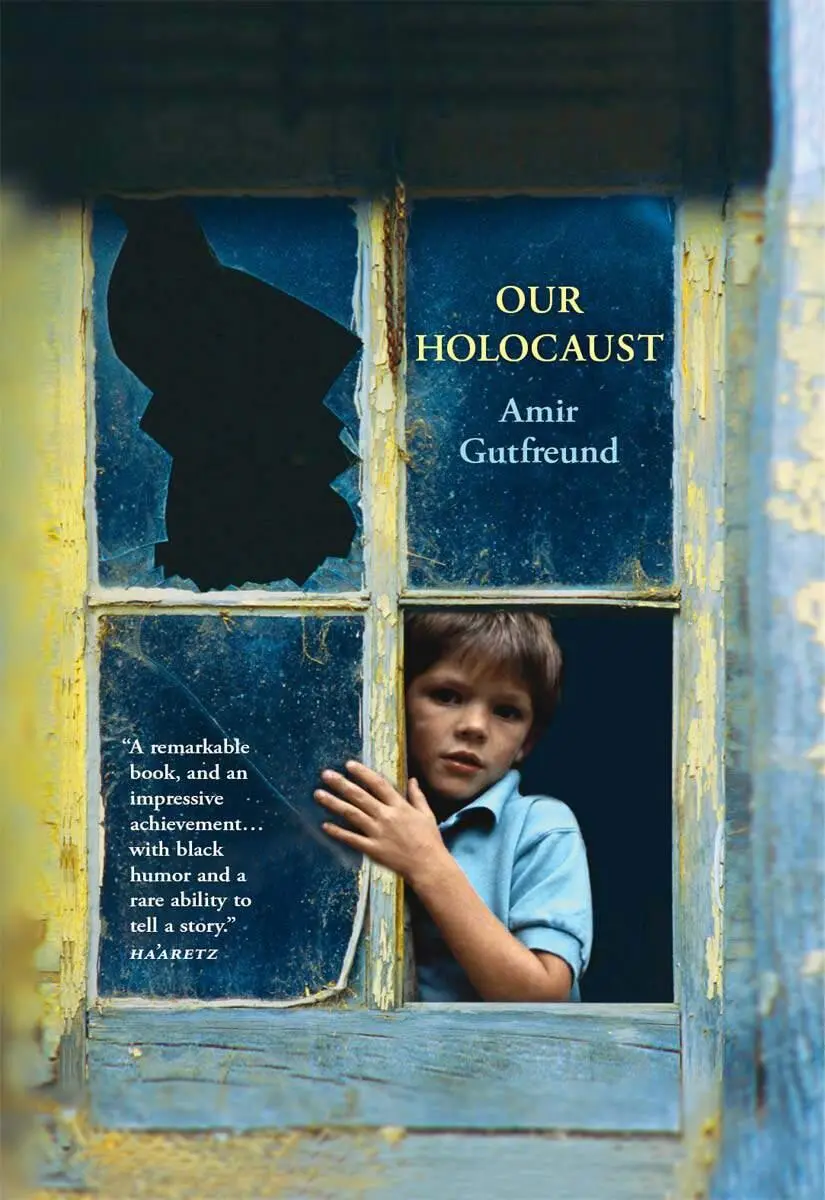
- Название:Our Holocaust
- Автор:
- Издательство:Toby Press Ltd
- Жанр:
- Год:2006
- ISBN:нет данных
- Рейтинг книги:4 / 5. Голосов: 1
-
Избранное:Добавить в избранное
- Отзывы:
-
Ваша оценка:
Our Holocaust: краткое содержание, описание и аннотация
Предлагаем к чтению аннотацию, описание, краткое содержание или предисловие (зависит от того, что написал сам автор книги «Our Holocaust»). Если вы не нашли необходимую информацию о книге — напишите в комментариях, мы постараемся отыскать её.
Our Holocaust — читать онлайн бесплатно полную книгу (весь текст) целиком
Ниже представлен текст книги, разбитый по страницам. Система сохранения места последней прочитанной страницы, позволяет с удобством читать онлайн бесплатно книгу «Our Holocaust», без необходимости каждый раз заново искать на чём Вы остановились. Поставьте закладку, и сможете в любой момент перейти на страницу, на которой закончили чтение.
Интервал:
Закладка:
“I escaped in the middle of the Death March from Stutthof. Where did they end up taking the ones who didn’t escape? How far did they get?” (Mrs. Kopel.)
“Why didn’t they make allowances for our work permits in the Vilna ghetto? Why did they take my family away even though they had permits?” (Uncle Antek.)
“What was the end of SS Landau, Goddamn him, who was with us in Drohobicz?” (Aunt Frieda.)
“Perhaps you know what happened to the Greenspans from Koretz? Adella, Adella Greenspan, she was a friend of mine.” (Aunt Zusa.)
And Dad, always practical. “Why did they want to send us to be gassed anyway?”
I should have shown Effi the Nazis’ words too, the speeches, the declarations. So she would read and understand, so she would know that we mustn’t stop thinking about the people who didn’t hate Jews. The people who were just doing their jobs. The ones who did not derive pleasure from torture, from murder. The camp commandants who tried to give Jews the regulated calorie quotas even during shortages. The commandants who punished officers who cheated and withheld the prisoners’ codified rights. The original SS people who enlisted in the purest of armies and swore not to lie or cheat or drink or curse. The people who saw themselves as exemplary human beings, whose enlistment in the SS was supposed to personify the oath they had taken towards all that was noble in the human soul. Even when they ruled over the lives of thousands and tens of thousands of people willing to do anything for a chance to live, they did not harm a single prisoner unless it was required for proper order in the camp. Pedantically and gravely, they continued to do their jobs. Effective, fair, non-murderous murderers. In the heart of a world gone mad they were not tempted to sin by enjoying the suffering of others. They squeezed, yes, they squeezed the gold out of Jews, out of their vessels, their teeth, out of what they tried to hide in their bodies. But for themselves they took not a crumb of loot. They produced raw materials — hair, teeth — for a Germany at war. They managed the annihilation efficiently. They shot anyone who hindered the process — the elderly, children — without enjoyment, without evil. Non-murderous murderers. Around them raged sadists, some in SS uniforms, uncurbed plunderers of property, rapists, demented minds, psychopaths — the war gave them a boundless cushion for their actions. Around them raged SS people who, at the beginning, did not demonstrate sadism or greed, but who slowly discovered in the camps a simple, supreme fact — that everything was allowed. The righteous purity of these paragons was vanquished by the intoxicating feeling that everything was allowed. Torture and murder and beatings and pranks — everything was allowed. Rape and plundering and a good laugh or two — everything was allowed. Simple souls who gradually comprehended that there was no one to punish them, no one to reprimand them. Sadism opened up like a fan and the temptation drew them on — how much further could they go? Without balance, without boundaries, these simple souls were dragged along in amazement — they still hadn’t reached the limit, everything was still allowed. We-are-doing-the-unthinkable-and-still-it-is-allowed. We-are-doing-everything-we-want-to-and-no-one-is-punishing-us. Allowed! Like creatures erupting into a vacuum with nothing to hold them back and prevent them from bursting forth, out came the unstoppable urges. Everything was allowed, everything allowed. After the war it would all go back inside neat boxes. Twenty years later, judges and prosecutors would ask in astonishment — is this the man accused of the charges?
Those sadists, I understand. It is not them that I fear. People like them are hiding everywhere around me today. I can guess who they will be and where they will come from if-what-happened-there-happens-here-too. What frightens me is the ones who maintained their integrity. The-people-who-did-not-hate-Jews. The-people-who-were-only-doing-their-job. Those people, I cannot understand, and I have no idea where they will come from.
I pick Yariv up from kindergarten and we walk through his world together. No one will be shot here. Pregnant women need not worry — no one will stab them in the stomach. Women pushing strollers can keep peeking at their babies to make sure they’re not too warm, not too cold. No one will throw a baby in the air, wish the first shot had hit it in flight, and try again. But I know. The monsters are here. The only thing missing is the circumstances, and when the circumstances arise it will all happen here, and it will be directed against me because I will not collaborate. They will emerge, all of them, even the people-who-did-not-hate — although where they will come from I do not know — and the camp-commandants-who-triedto-supply-the-regulated-calorie-quotas-even-during-shortages. In the midst of it all, like a sailboat stuck in the mud of Lake Tiberias, waiting for the tide to go out, waiting for a drought to spread its smooth mantle, Hermann Dunevitz’s name rises up, more than half of him now exposed. I must remember.
In the evening, Grandpa Yosef calls to report cheerfully, “I kept thinking about Hermann Dunevitz all day, and I remembered. Anat’s mother’s maiden name was Dunevitz. Maybe that’s why the name stuck in your mind?”
Anat is making our dinner, Yariv is already asleep in bed. (Anat thinks he’s getting an ear infection again.) I go up and ask her.
“Yes, before she was married my mother’s name was Dunevitz. Why?”
My memory already knows, but still it questions — perhaps it is wrong, perhaps the certainty is a mistake.
“What was your grandfather’s name?”
“My grandfather? Hermann. What are all these questions for?”
Hermann Dunevitz.
First there is a trickle of blood, not a rushing feeling. At first it goes, “So what? So what if it’s her grandfather?” But the “so what” loses out, trampled, and newly disorganized thoughts take its place. She says, “My grandfather? Hermann.” And this is Anat, and I gave him a great-grandson, and it is with me, and what am I going to do? I gave him a great-grandson who is sleeping now and he might have an ear infection and I’m married to his granddaughter. His granddaughter. Who is his granddaughter? Why, it’s Anat! It’s Anat and it’s Yariv, and what difference does it make?
But like a necessary torture, it does make a difference, and I am a breathless, silent volcano. I wait silently for the next emotion, the next thought, an uncontrollable internal torrent. In the accompanying transparent light everything comes out, bursts through from within fantastical treasure boxes and locked dowry chests. Gustav Richter, one of Eichmann’s senior aids, a primary implementer of deportation plans and the organizer of a failed attempt to transfer Rumanian Jewry to the concentration camps, was tried only in 1981 and sentenced to four years. Franz Novak, Eichmann’s assistant, particularly active in the deportation of Hungary’s Jews, hid after the war under an assumed name. In 1957 he began using his real name again, but was not tried. He continued to live his life. Only in 1961, after his name came up repeatedly during the Eichmann trial, was he incarcerated and tried; he was sentenced to eight years. He was retried after an appeal and released in 1966. Anton Streitwieser, commandant of Melk camp, was captured at the end of the war but escaped and lived under an assumed identity. He was caught in 1956. He was free until his trial, which began only in 1967. He was given a life sentence and died in prison in 1972. Alfred Nossig, a Jewish collaborator in the Warsaw ghetto, was assassinated by ZOB, the Jewish Fighting Organization ( Zydowska Organizacja Bojowa ). Herta Bothe, a female camp guard at Bergen-Belsen, was sentenced for her acts in the camp to ten years in prison in 1945, but released in 1951. George Eliot said, “Cruelty, like every other vice, requires no motive outside of itself; it only requires opportunity.” On one of the transports to Sobibor, some clown decided to spill chlorine into the moving train cars. The chlorine coated the people in the trains. By the time it arrived at Sobibor, the car was filled with pale green bodies whose skin peeled away when touched. Anat calls me for dinner. How can I eat dinner when Gottlieb Muzikant, SS-Sanitätsdienstgrad at the hospital in Melk camp, admitted at his trial, held only in 1960, that he had killed over ninety prisoners by injecting phenol into their hearts and had strangled at least one hundred patients to death? He was sentenced to life in prison, not death. Anat asks where I am and my thoughts need to stop, they must stop, they do stop. I can exist for now in the form of a breathing volcano. I can get up, eat dinner, keep going through the dark memory. I’ll sit next to her, we’ll eat, we’ll think. “So what? So what? So what? Why did I even get mixed up in all this?”
Читать дальшеИнтервал:
Закладка:
Похожие книги на «Our Holocaust»
Представляем Вашему вниманию похожие книги на «Our Holocaust» списком для выбора. Мы отобрали схожую по названию и смыслу литературу в надежде предоставить читателям больше вариантов отыскать новые, интересные, ещё непрочитанные произведения.








Обсуждение, отзывы о книге «Our Holocaust» и просто собственные мнения читателей. Оставьте ваши комментарии, напишите, что Вы думаете о произведении, его смысле или главных героях. Укажите что конкретно понравилось, а что нет, и почему Вы так считаете.