Amir Gutfreund - Our Holocaust
Здесь есть возможность читать онлайн «Amir Gutfreund - Our Holocaust» весь текст электронной книги совершенно бесплатно (целиком полную версию без сокращений). В некоторых случаях можно слушать аудио, скачать через торрент в формате fb2 и присутствует краткое содержание. Год выпуска: 2006, Издательство: Toby Press Ltd, Жанр: Современная проза, Прочая документальная литература, на английском языке. Описание произведения, (предисловие) а так же отзывы посетителей доступны на портале библиотеки ЛибКат.
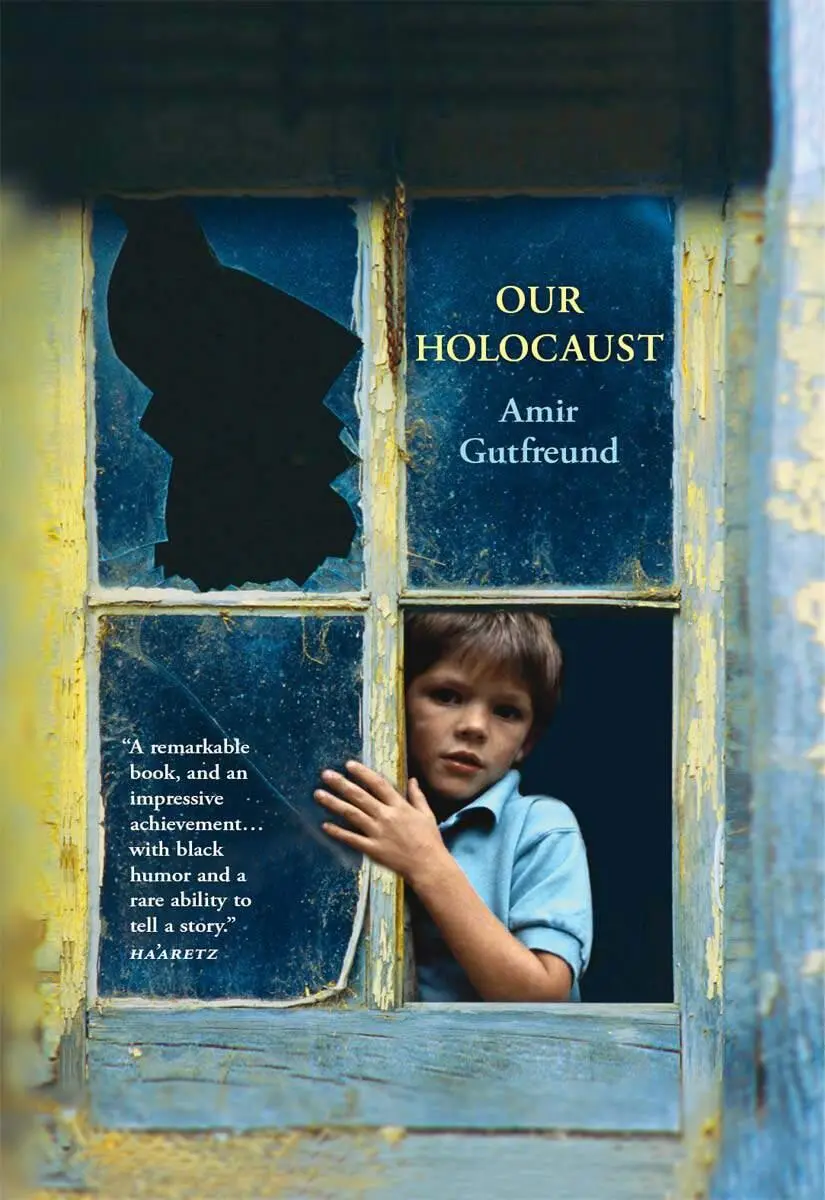
- Название:Our Holocaust
- Автор:
- Издательство:Toby Press Ltd
- Жанр:
- Год:2006
- ISBN:нет данных
- Рейтинг книги:4 / 5. Голосов: 1
-
Избранное:Добавить в избранное
- Отзывы:
-
Ваша оценка:
Our Holocaust: краткое содержание, описание и аннотация
Предлагаем к чтению аннотацию, описание, краткое содержание или предисловие (зависит от того, что написал сам автор книги «Our Holocaust»). Если вы не нашли необходимую информацию о книге — напишите в комментариях, мы постараемся отыскать её.
Our Holocaust — читать онлайн бесплатно полную книгу (весь текст) целиком
Ниже представлен текст книги, разбитый по страницам. Система сохранения места последней прочитанной страницы, позволяет с удобством читать онлайн бесплатно книгу «Our Holocaust», без необходимости каждый раз заново искать на чём Вы остановились. Поставьте закладку, и сможете в любой момент перейти на страницу, на которой закончили чтение.
Интервал:
Закладка:
“That was how it went, from the moment he made up his mind to make me his assistant. I ate well and rested and didn’t see a thing. He used to hold roll-calls too, after the regular roll-calls were over and people were about ready to die of exhaustion. But the Germans allowed him to have them, and I remember, before he took me as his assistant, I would also stand in the cold without food, tired. Now his roll-calls were after the regular ones, and people used to collapse. I would stand opposite the group without seeing anything, and he would walk among them and tell me what to write. He was always looking for Jews from his hometown, to write them down for deportations or kill them himself. During work, if he caught a Jew who wasn’t working properly and discovered he was from his town, he would beat him to death just like that, right in front of me. I couldn’t see anything, but if they were from his town, that was the end. It was as if he had decided to be like the Nazis, but instead of going after all the Jews, he wanted only the Jews from his town. I don’t know why he wanted revenge, it was his obsession. And anytime he issued a punishment for some Jew, he would offer him the option of turning in Jews from his town, if he knew any, and then the punishment would be eased. People snitched on each other, and Dunevitz would interrogate them and get the truth out.
“Finally, the camps came to an end, and the Germans took out everyone who was left and sent them on the Death March. Hermann Dunevitz was convinced he would be allowed to go with the Germans, but they laughed and whipped him, and threw him out to walk with all the other prisoners. I walked too, and I was glad that the nightmare of being with Dunevitz and his notebook was finally over. We walked for a few days, and anyone who no longer had the strength to walk was shot immediately. We didn’t get any food or drink. The Nazis took turns riding a wagon, they ate and drank, and they wouldn’t let us stop walking. I still had some flesh left on my bones, so I had more energy, but even I almost collapsed. You cannot believe what torture it is to keep walking without any rest, for no reason, just so we would die. We were saved by the airplanes that bombed us. From the sky they thought we were soldiers, and they shot at us. All the Germans ran away, it was a day or two before the war was over. Dunevitz also ran, because he knew the Jews would kill him even if it was the last thing they did. I stayed with the Jews and at first they didn’t touch me. People simply lay down on the ground with no strength left. There were some who died that way, and others who started walking and looking for food in the wagon the Germans left. After two days some soldiers found us and took us to a camp, where they took care of us. And it was there that people started harassing me, saying, ‘That’s the partner of Dunevitz, the animal.’ They wanted to kill me. I wouldn’t have resisted, I no longer had the strength to live, even though I couldn’t see anything. But one guy said, ‘Leave him alone,’ and they did. They didn’t have the strength in them either. After a few days I got hold of a pair of glasses, and I met a friend from my hometown who had heard stories about me, but he believed me when I told him I hadn’t been able to see, and together we made our way back to our town. That’s it. I didn’t hear anything more about Dunevitz. Some said he was killed, some said he escaped to America, but I don’t know, goddamn him. Because of him, people have been saying I did bad things my whole life. But I couldn’t see anything.”
Dunevitz. Hermann Dunevitz. Something in the name rings a bell in my memory, trying to come through. Hermann Dunevitz. I ask Attorney Perl.
“Dunevitz? No, I don’t know him. But there were quite a few of those characters; the war gave them an opportunity. You can read in my cards about Yakov Honigman, the kapo from the Gräditz and Faulbruck camps. I also have Hanoch Bayski, who was a Jewish policeman. When the Nazis hanged a Jew he would run after them to report if the hanged man was not dead and should be hanged again. And there was Moshe Puczich from the Ostrowiec ghetto, who was charged with many acts of cruelty, including burying a Jew alive, but he was acquitted in an Israeli court. He probably did the things attributed to him, but the testimonies got complicated because of unreliable witnesses. People testified against him, and it turned out that after the war they had sent him friendly letters, asking him to help them buy a pair of shoes. You see, not all the victims stopped being victims when the war was over. That complicated the testimonies. There were other issues too. People informed on each other because of petty grievances. They took advantage of the circumstances to get back at each other over little quarrels, even conflicts from before the war. But there were some whom they didn’t need to do much investigating to convict. Yehezkel Ingster was also a kapo at Gräditz and Faulbruck, the only person in Israel ever sentenced to death at the time he was tried. A Jew, and he was sentenced to death, even before Eichmann. They didn’t implement the sentence because at the time of the trial he was already very ill, a broken man. They incarcerated him for a short while and he died later.”
“And Dunevitz? Don’t you have anything on Dunevitz?” I can’t get rid of the impression, a plea served up from the depths, something in me knows the name — Hermann Dunevitz.
“No, I told you I don’t. But we had one in our camp too. Oh, if I could get my hands on him…but in our camp we were mainly afraid of Obersturmführer Jürgen Licht himself. He was our Angel of Death. I had to be close to him most of the time because I was the voice of the puppet theater. Every evening we put on a show for him. He built himself the theater on a little hill overlooking the Appellplatz , and the entire hill was covered with lovely rugs like a Persian palace; he put an armchair in the middle of all the rugs. We put on classical plays, adapted to fit the times, and plays that a German political prisoner wrote for Licht on topics he commissioned. I remember we put on a dramatization of Wenn ich der Kaiser Wär —If I Were the Emperor — which I knew from before the war. We did other plays too, it doesn’t matter now. It was all for Obersturmführer Licht. Sometimes he would invent a protagonist and we had to make the puppet and give it a part in the play. It didn’t matter, because he was the only spectator anyway, and if he was happy the evening finished without trouble. He especially liked a knight character he had invented, called Zibrus the Knight. We had to build ugly puppets with defects, in our own images, so that Zibrus the Knight could heroically save young German girls from us.
“One evening there was a disaster. Obersturmführer Licht invited the regional commander, Sturmbanführer Hes, to the play. Hes did not like puppet theater, and all throughout the play I could see him glaring at the carpeted ground. At the end of the play he politely refused to accept the Zibrus puppet and gave Obersturmführer Licht an odd look. I was at the front and I saw everything. I knew there would be trouble, I just didn’t know what kind. The next day all the puppets were ordered burned, the stage too, and the wooden frame; everything. All the theater workers were called for roll-call, and Obersturmführer Licht walked among us. I was first in line, and he walked past without looking at me, and for a moment we thought nothing would happen. But the man next to me was a puppet maker and he shot a bullet into his head without even hesitating. Then he kept walking and stood by different people. Sometimes he lingered, standing pensively. When he finally made up his mind he either shot the man or kept going. And it went on that way. He shot the expendable ones. That was it. In the morning, the kapos came and took all the remaining theater workers to regular jobs with the rest of the prisoners, and for almost a week we didn’t hear from Obersturmführer Licht. There were no plays and we didn’t see him. The hunger came back, the beatings, the desperation, and once again I thought I would not survive. Every evening we would go back to the camp and see his empty armchair up on the hill. We hoped something would happen, that the theater would be revived. After all, there must have been a reason why he had left some of us alive — we had a use.
Читать дальшеИнтервал:
Закладка:
Похожие книги на «Our Holocaust»
Представляем Вашему вниманию похожие книги на «Our Holocaust» списком для выбора. Мы отобрали схожую по названию и смыслу литературу в надежде предоставить читателям больше вариантов отыскать новые, интересные, ещё непрочитанные произведения.








Обсуждение, отзывы о книге «Our Holocaust» и просто собственные мнения читателей. Оставьте ваши комментарии, напишите, что Вы думаете о произведении, его смысле или главных героях. Укажите что конкретно понравилось, а что нет, и почему Вы так считаете.