Amir Gutfreund - Our Holocaust
Здесь есть возможность читать онлайн «Amir Gutfreund - Our Holocaust» весь текст электронной книги совершенно бесплатно (целиком полную версию без сокращений). В некоторых случаях можно слушать аудио, скачать через торрент в формате fb2 и присутствует краткое содержание. Год выпуска: 2006, Издательство: Toby Press Ltd, Жанр: Современная проза, Прочая документальная литература, на английском языке. Описание произведения, (предисловие) а так же отзывы посетителей доступны на портале библиотеки ЛибКат.
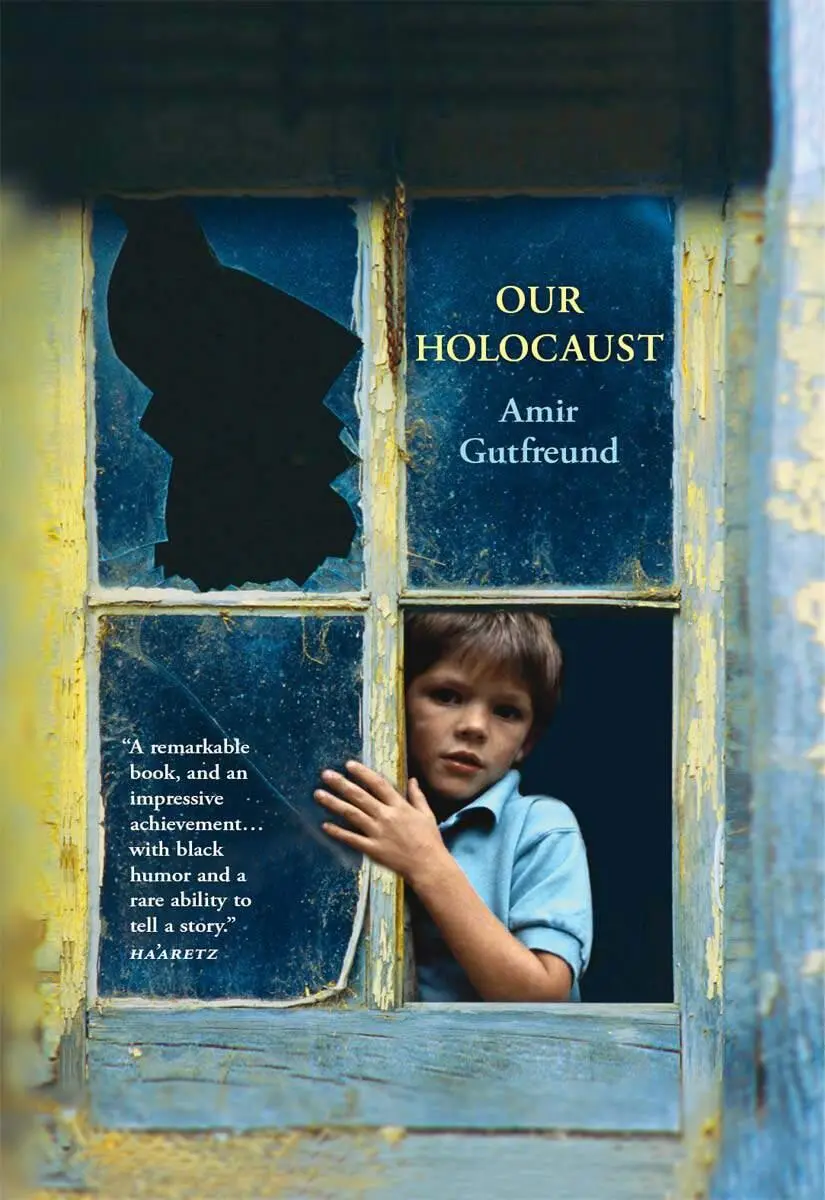
- Название:Our Holocaust
- Автор:
- Издательство:Toby Press Ltd
- Жанр:
- Год:2006
- ISBN:нет данных
- Рейтинг книги:4 / 5. Голосов: 1
-
Избранное:Добавить в избранное
- Отзывы:
-
Ваша оценка:
Our Holocaust: краткое содержание, описание и аннотация
Предлагаем к чтению аннотацию, описание, краткое содержание или предисловие (зависит от того, что написал сам автор книги «Our Holocaust»). Если вы не нашли необходимую информацию о книге — напишите в комментариях, мы постараемся отыскать её.
Our Holocaust — читать онлайн бесплатно полную книгу (весь текст) целиком
Ниже представлен текст книги, разбитый по страницам. Система сохранения места последней прочитанной страницы, позволяет с удобством читать онлайн бесплатно книгу «Our Holocaust», без необходимости каждый раз заново искать на чём Вы остановились. Поставьте закладку, и сможете в любой момент перейти на страницу, на которой закончили чтение.
Интервал:
Закладка:
“‘All the while the young woman was in the hiding place, the peasant woman stopped coming to me. She helped to care for the woman, bringing down double portions of food, but she did not give away a thing. The Kadosh Baruch Hu had granted me some respite from her. One day the farmer came down and sadly told the woman that the Germans would be searching all the village houses. Someone had informed. He had to try and take her elsewhere, perhaps he would find a friend who would agree to hide her. Having no choice, she left with him, and I never found out what happened to her. I stayed in the cellar. If the Germans came down, the farmer would be surprised to find me and would be killed with his wife and myself.
“‘Indeed, over the next few days the village was visited by Germans. They came into the house and looked down into the cellar. The Kadosh Baruch Hu saved me from them and took mercy on the household. But then the peasant woman began to come down to the cellar every day once again, to feed me of her bounty. She did not impose upon me the terror of her urges. She was good natured, serving me with respect. My heart filled with fear, as if disaster was imminent. How long would I sit through dark days, meager of deeds and poor of feats, a captive in the dwellings of Midian? My soul cried out: Escape!
“‘One day the peasant woman brought down a hearty meal for me. Eggs, fat, groats, cream and potatoes. Suddenly the goya said, “I will bear you a child.” The taste of cream was still on my lips, and she explained, “It won’t be long now. At winter’s end we shall have a child.”
“‘A number of months, then, had passed since she had become pregnant. In six months she would have a son.’”
Grandpa Yosef weighs in. “Imagine to yourself. The Fledgling Tree, and his firstborn was conceived by a goya !”
“‘Harlot!’ The rabbi screamed, his limbs frozen in terror. The peasant woman’s face turned red.”
Grandpa Yosef gets up and walks quickly to the window. He points to the distance, his fingers trembling. The Rabbi of Kalow’s deposit still unsettles him, a fifty year old pregnancy demanding to be solved. It is unclear what might placate Grandpa Yosef. Perhaps a little rain in the window coming in from the ocean — finally a November rain, offering surrender.
“The Rabbi of Kalow thinks. He must escape and save his soul from this Lilith. He will be better off if the Nazis catch him and he can join his Rachela. But how can he leave his firstborn? He is consumed with fright and distress. How can he leave? Trapped inside her body, his only son is growing.”
Grandpa Yosef comes back from the window, hunched over as if bearing a heavy weight. He has been recounting the torments of the Rabbi of Kalow during Effi’s shifts too, and during mine, and Dad’s. As he retells the journey, from within his raging spirit comes the stormy soul of the rabbi, counting the passing days, shut in the cellar, agonizing. Grandpa Yosef spreads his hands out, explaining, “His firstborn was…with the goya !”
I nod understandingly. The months go by, and time is more powerful than the rabbi’s supplications, than Grandpa Yosef’s explanations, than my quiet nod.
“The peasant woman continues to bring the rabbi food and water, trim his beard, clip his nails. She cares for him generously and her stomach grows larger, a monstrous swelling in front of his eyes. Having no choice, he survives. In the hours between dawn and day, when the farmer is out, he goes up into the house to pray and soak up some light and air. The peasant woman watches him pray, sighing, and she too moves her great body about. ‘I will call him Moises,’ she says.”
Grandpa Yosef grows agitated. “To use the name of Moshe our Teacher, she wants!”
“The Rabbi of Kalow says nothing. He finishes his prayers and goes down to the cellar. Most days he huddles there, sometimes hearing the farmer and his wife speaking above the floorboards of his prison. The farmer happily awaits the arrival of his child. He makes promises to his wife. He will work hard, make money, the newborn shall want for nothing.”
I press him. “How does everyone know it’s a boy? Are you telling me they did an ultrasound?”
Grandpa Yosef dismisses my question with a wave of his hand. He hints at the world of holy rabbis, goya witches, and life at the edge of the woods on the margins of darkness. It would be a son.
“And indeed, it was a son. Her time to give birth had come. Over the head of the rabbi, on the floorboards, many pairs of boots and shoes creak. Farmers walk around the house, young neighbor women come and go. The peasant woman falls ill, grows weak, and is ordered not to leave her bed. The neighbor women care for her. Smells of cooking fill the house. And downstairs, the rabbi starves. He nibbles on onions and raw potatoes from a sack. And he prays. He offers up many prayers.”
“What did he pray for?”
“Just prayers. The duties of a Jew.” Grandpa Yosef stares at me, trying to comprehend what I am really asking. What do I mean? “Just prayers,” he says.
“And then, one night, a great commotion. Elderly women in the house, babas dressed in cloaks, satanic midwives, they deliver a male child. A large, healthy boy, the farmer immediately falls in love with him. He repeats his promises to his ailing wife, tenderly caresses her head, promises support, good health, everything.”
The rabbi can no longer contain himself. The conduit of Grandpa Yosef is not sufficient, and so he speaks up himself:
“No sooner had the farmer set off to work than the cellar door opened. The peasant woman, weakened, padded over to me, wrapped in many clothes. Alone she came, without my son. She brought me food. She asked my forgiveness in a soft, pained voice. She could barely leave her bed, the labor had weakened her greatly. Her face looked old and wrinkled, her body had barely any strength left. And so, how can I say this…I caressed her hair. One caress. After all, she too was created in His image.”
“Caressing is permitted,” Grandpa Yosef interjects.
“The peasant woman said, ‘His name will be Mieczslaw, that is my husband’s wish. But we will call him Moises.’
“And the boy was flesh and blood, and he had a name, he was a living creature, the deed could not be undone.”
“Such an affair,” Grandpa Yosef mumbles.
“I remained in the cellar while above me, day and night, I could hear my son crying. I too wept. Seven days and seven nights. The next day the peasant woman came down. She waited for me to finish my meal and said, ‘I have circumcised our son.’
“That night there was madness. The baby cried out in pain. The farmer was beside himself. He did not know what had happened, but his instincts were unsettled. Something was wrong and he did not know what. The peasant woman cared for the baby, secretly changing his bandages. The madness descended as far as the cellar. I had pain in my feet and burning in my heart. In the chambers of my soul the rebellion stirred — I would run away, take the boy and flee. And where would I bring the child? Where would I go? The urge, barely roused, was lost. It rose and fell. Born, then dead.”
Grandpa Yosef sighs. “You must recall that he told me this story, he gave me the deposit, in the camp, by which I surmised that one day he had made a decision and committed an act. What did he do? There is no knowing. Where is the child? No telling. He ended up in our camp, and more than that he did not wish to tell. ‘Here I am,’ he said with a gray face, and looked away from me. He leaned back into the world of his ponderings, having completed his part in this world. He motioned to me to leave him alone. I was helpless. Soon the gates of liberation would open for the Jews, but the life of the Rabbi of Kalow was draining into the Next World like a leaking well.
Читать дальшеИнтервал:
Закладка:
Похожие книги на «Our Holocaust»
Представляем Вашему вниманию похожие книги на «Our Holocaust» списком для выбора. Мы отобрали схожую по названию и смыслу литературу в надежде предоставить читателям больше вариантов отыскать новые, интересные, ещё непрочитанные произведения.








Обсуждение, отзывы о книге «Our Holocaust» и просто собственные мнения читателей. Оставьте ваши комментарии, напишите, что Вы думаете о произведении, его смысле или главных героях. Укажите что конкретно понравилось, а что нет, и почему Вы так считаете.