Amir Gutfreund - Our Holocaust
Здесь есть возможность читать онлайн «Amir Gutfreund - Our Holocaust» весь текст электронной книги совершенно бесплатно (целиком полную версию без сокращений). В некоторых случаях можно слушать аудио, скачать через торрент в формате fb2 и присутствует краткое содержание. Год выпуска: 2006, Издательство: Toby Press Ltd, Жанр: Современная проза, Прочая документальная литература, на английском языке. Описание произведения, (предисловие) а так же отзывы посетителей доступны на портале библиотеки ЛибКат.
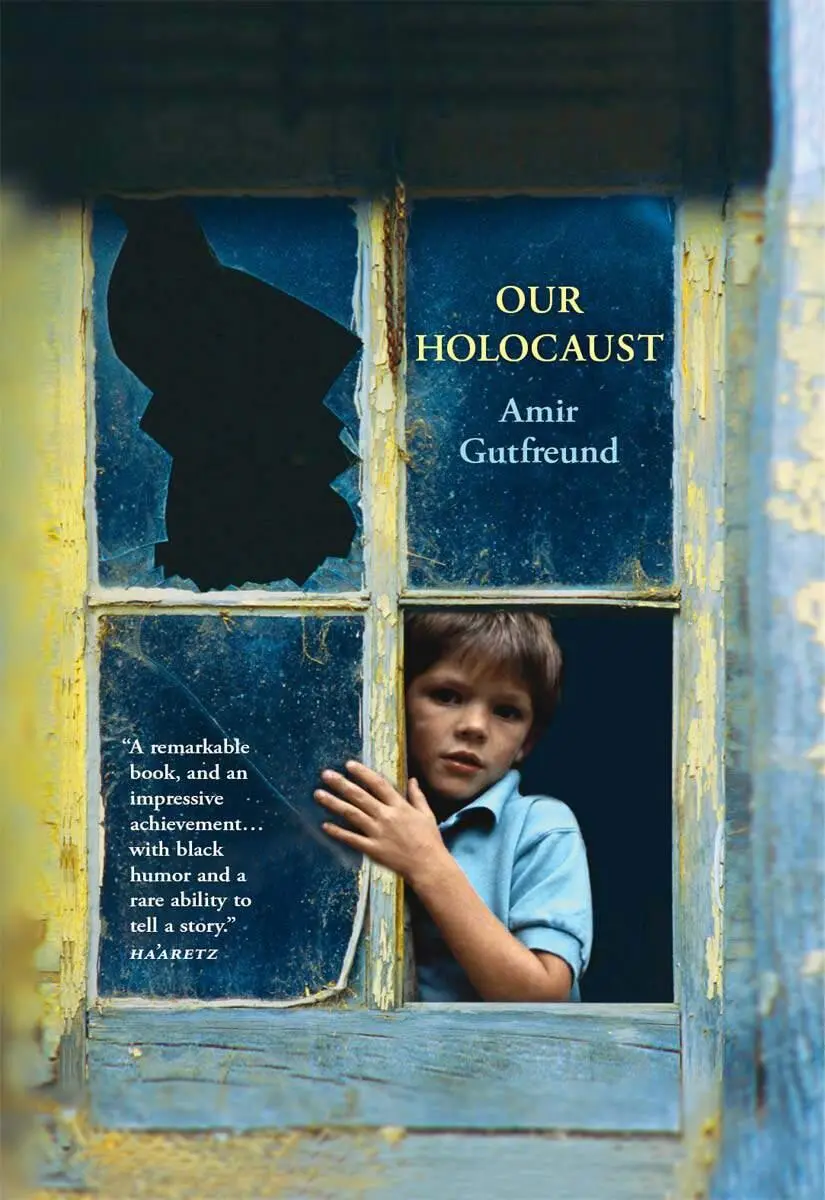
- Название:Our Holocaust
- Автор:
- Издательство:Toby Press Ltd
- Жанр:
- Год:2006
- ISBN:нет данных
- Рейтинг книги:4 / 5. Голосов: 1
-
Избранное:Добавить в избранное
- Отзывы:
-
Ваша оценка:
Our Holocaust: краткое содержание, описание и аннотация
Предлагаем к чтению аннотацию, описание, краткое содержание или предисловие (зависит от того, что написал сам автор книги «Our Holocaust»). Если вы не нашли необходимую информацию о книге — напишите в комментариях, мы постараемся отыскать её.
Our Holocaust — читать онлайн бесплатно полную книгу (весь текст) целиком
Ниже представлен текст книги, разбитый по страницам. Система сохранения места последней прочитанной страницы, позволяет с удобством читать онлайн бесплатно книгу «Our Holocaust», без необходимости каждый раз заново искать на чём Вы остановились. Поставьте закладку, и сможете в любой момент перейти на страницу, на которой закончили чтение.
Интервал:
Закладка:
“I already knew this, having heard that the Rabbi of Kalow was not blessed by Hashem with offspring, and that hundreds of Jews used to come to him for fertility blessings. He was known as a curer of barrenness.
“And so we counted the days until liberation. Rumors abounded, and we could hear the Americans bombing. Echoes of cannons, rumors of Russian artillery. The prisoners were excited, the Germans anxious and tense. Only the Rabbi of Kalow was in his own world. He lay on his bed communing with other spheres. I introduced him to the other prisoners and promised he would be our savior. Here, this is the Fledgling Tree, the Rabbi of Kalow, our hope. People dismissed him with a mumble of indifference, perhaps contempt. What did they care about one more rabbi? In any case, they hinted, the pure rabbis had all been killed in the crematoria. Whoever was loyal to his people was gone now. These weary people did not understand, they missed the hidden intentions of the Rabbi of Kalow, and even if I myself did not entirely understand them, I did see their beauty, like the face of a bride through a veil.
“The Rabbi of Kalow was unaffected by the prisoners’ opinions. Like us, he was imprisoned behind fences, but his soul danced freely wherever the good Lord took him. I was his servant, I fed him soup, found him cigarettes, while he tended the plains, measured the heavens.
“One day he put his hand to his tired face as if returning from an exhausting thought, and told me, ‘When you have a son, name him Moshe.’
“‘Moshe?’
“‘Name him Moshe, and he will be the savior of Israel!’
“He turned away from me and sunk into his contemplations.
“I let him be and went to wander through the huts and latrines. I examined the fences and the buildings and the entire world. The future suddenly seemed solid and tangible. I saw Feiga and myself embracing a child. The hope for liberation that had remained in my heart through all the camp years in a shapeless, faceless form, suddenly took on a simple outline. Here was the future — not the future I had barely known how to sketch back in Ravensbrück, but a corporeal future, a future that would not be stolen from me! I was ill, hungry, and weak, but I had ceased doubting. I knew that I would live, that I would be free.
“Soon, time itself joined the flight of my soul: liberation day was approaching. The whole camp could hear the beat of freedom, the prisoners were growing anxious, trying to fortify themselves for one more day, one more hour. Only the Rabbi of Kalow remained outside the flow of time, still in his own world. He was no longer accepting the soup I brought him, he rejected bread, even cigarettes. He did not rise from his bed. He lay with his eyes open as if standing on guard, not here, but in some loftier world, and his hand weakly dismissed my words, my pleas, my attentions.
“Right on the verge of the great day, when we were counting the hours and the minutes, he called to me. I came and stood by him. The Rabbi of Kalow’s face, although no more than skin and bones, filled with light, as if while still in this world he had been delivered to the angels. He asked to deposit his story with me. That was how he put it. Not ‘I want to tell you,’ but ‘I wish to deposit.’ In his angelic language, each word was carefully chosen. I sat alert, entirely prepared to hear his tale. And the Rabbi of Kalow deposited it:
“‘In the Kalow ghetto, there, my wife Rachel died in the typhus plague. She was taken away, baruch dayan ha’emet —Blessed be the true judge. One day three young men came to my room. They announced: Tomorrow we must escape. The ghetto has been condemned. No one will live. They demanded that I keep the news a secret. I would leave alone, at dawn. Everyone else, may God protect them.
“‘They took me to the forest. There, in advance, a hiding place had been prepared. From childhood until manhood, I had never been in the woods. Always among streets and houses, roads paved through fields on either side. Only from a distance would I gaze at the woods, contemplating their secrets, and here I was, called to a life in the forest, in a crowded hiding place with twenty men and their troubles. Bread was scarce, we never saw the light of day.
“‘One day, someone must have informed. Germans and Poles surrounded the place, shots were fired, I heard shouts. I escaped. Bullets whistled around me, and they ordered: Stop! I ran. I did not know where my legs were taking me, whether towards or away from any town. In the heart of the woods there was no sunlight, no moonlight, and I had no strength left. But my body kept walking so the wolves would not eat me alive. I prayed, I called out from the depths, where shall I go? Anyone I meet will turn me in. The Germans promise two pounds of bread and half a salami for every Jew. And why should they not turn me in? For half a salami, I would give myself up.
“‘Like a blind man I walked on. Stumbling, defeated. Suddenly the darkness was cleaved with a great light. Opposite me stood a house with the front door ajar, and a light shining from it. In the doorway, under the light, stood a huge peasant woman with white hair — she was erva , unchaste — and she called out to me, “Come, Jew, come…I will help…”
“‘And so I found myself sitting in a crude room inside the crowded, warm peasants’ house, and the goya served me. She gave me hot soup. Fed me potatoes and butter. All treif , all forbidden. But my mouth ate. The goya gave me a chicken wing and heaped a bounty of food onto my plate. She told me, “My husband is working…shhh! He must not know…I will hide you in the cellar. It will be fine.” Then she caressed my hair with her thick fingers.’”
Grandpa Yosef stops his story for a moment. It is hard for him. He softens his words. He puts his mouth up close to my face so that only my ears will hear the story of the Rabbi of Kalow.
“Starting the next day, he told me, she forced him to do with her as a man does with a woman. Yes, his life was on the line and she made her demands, set her terms. What could he do? Day and night he hid in the cellar, and in the morning when the farmer went to work, she came down to him. Gave him food. Drink. Took care of his sanitation. And then he had to…with the peasant woman.”
Grandpa Yosef is practically whispering. His modest voice seems unworthy of the Rabbi of Kalow. To heal this wound it will take a great roar.
“‘I prayed to the heavens, I begged, Take away from me this Lilith of the woods! Leave me! From the depths I called out. Asmodeus! Demon woman! Lilith! Inhabitor of the corners of the world! But no redemption came.
“‘In the cellar I was encased like a bird in the belly of a great fish, ensnared in a crevasse, embittered as wormwood. She came down every day to give me food and drink, and by the grace of the shadows she took her dues from me. There was no escape. Only prayer remained. So I offered prayers and did not give up. And indeed, on one of the days, the cellar door suddenly opened at noon and the farmer led a young Jewess down to the hiding place. He prepared a bed for her and assuaged her fears. He did not scheme like the peasant woman, not at all. Indeed he let his spouse in on the secret of the Jewess’s existence. He entreated her with words that my ears could hear. A drunken Polish goy , persuading his spouse to show a measure of mercy towards all creatures of the world. He reassured her, the war will be over, no one will know, it is our duty. She consented to his demand and agreed to hide the survivor woman in the cellar. She did not divulge to him the secret of my existence.
“‘Downstairs, in the dark, I revealed myself to the survivor. I calmed her spirits and told her my tale, omitting my deeds with the peasant woman. When I told her I was a rabbi in Kalow, she fell to her knees. Only three years ago she had come to ask for my blessing: she had asked for a son and been granted one. The son had died in the forest with her husband and mother. Baruch dayan ha’emet . She hid her face in her hands, thankful that fate had brought about our encounter, as if she was already saved. But we were both in the dark, residents of the cellar, like clods of clay, like valley denizens, and above us was life.
Читать дальшеИнтервал:
Закладка:
Похожие книги на «Our Holocaust»
Представляем Вашему вниманию похожие книги на «Our Holocaust» списком для выбора. Мы отобрали схожую по названию и смыслу литературу в надежде предоставить читателям больше вариантов отыскать новые, интересные, ещё непрочитанные произведения.









Обсуждение, отзывы о книге «Our Holocaust» и просто собственные мнения читателей. Оставьте ваши комментарии, напишите, что Вы думаете о произведении, его смысле или главных героях. Укажите что конкретно понравилось, а что нет, и почему Вы так считаете.