Amir Gutfreund - Our Holocaust
Здесь есть возможность читать онлайн «Amir Gutfreund - Our Holocaust» весь текст электронной книги совершенно бесплатно (целиком полную версию без сокращений). В некоторых случаях можно слушать аудио, скачать через торрент в формате fb2 и присутствует краткое содержание. Год выпуска: 2006, Издательство: Toby Press Ltd, Жанр: Современная проза, Прочая документальная литература, на английском языке. Описание произведения, (предисловие) а так же отзывы посетителей доступны на портале библиотеки ЛибКат.
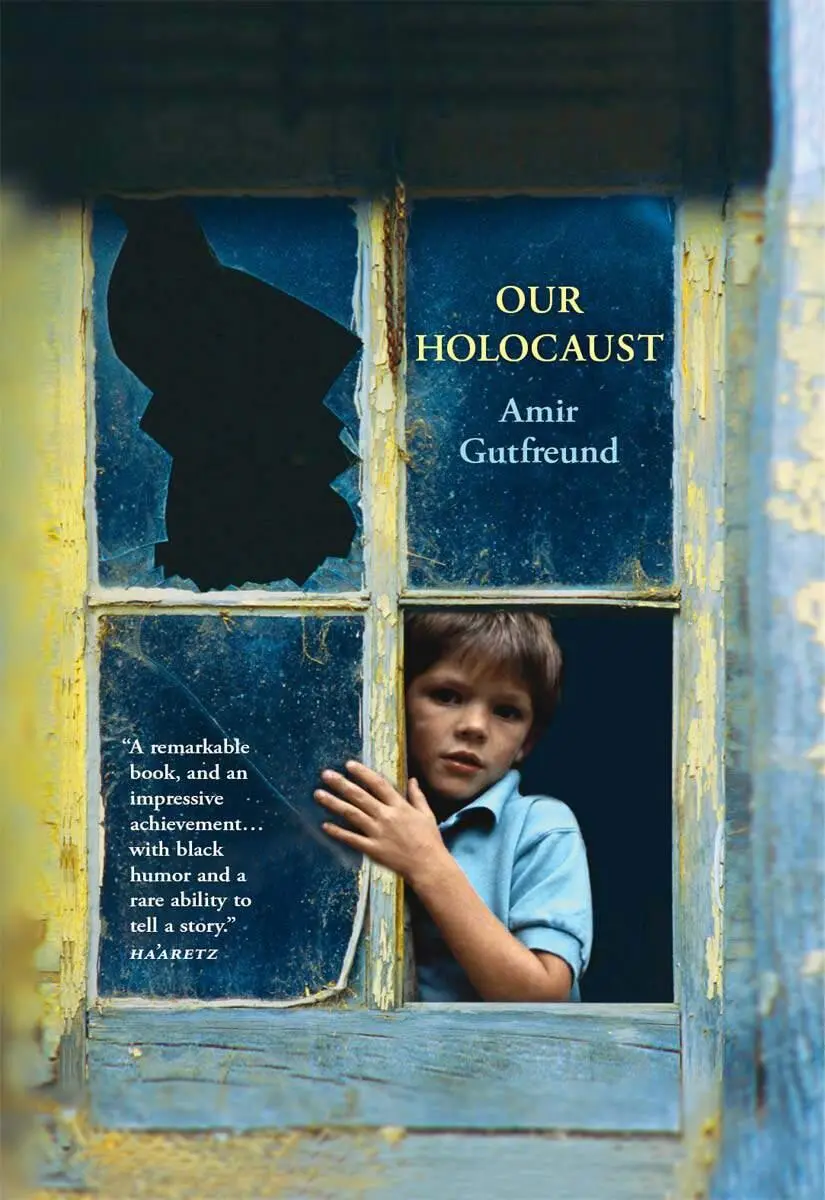
- Название:Our Holocaust
- Автор:
- Издательство:Toby Press Ltd
- Жанр:
- Год:2006
- ISBN:нет данных
- Рейтинг книги:4 / 5. Голосов: 1
-
Избранное:Добавить в избранное
- Отзывы:
-
Ваша оценка:
Our Holocaust: краткое содержание, описание и аннотация
Предлагаем к чтению аннотацию, описание, краткое содержание или предисловие (зависит от того, что написал сам автор книги «Our Holocaust»). Если вы не нашли необходимую информацию о книге — напишите в комментариях, мы постараемся отыскать её.
Our Holocaust — читать онлайн бесплатно полную книгу (весь текст) целиком
Ниже представлен текст книги, разбитый по страницам. Система сохранения места последней прочитанной страницы, позволяет с удобством читать онлайн бесплатно книгу «Our Holocaust», без необходимости каждый раз заново искать на чём Вы остановились. Поставьте закладку, и сможете в любой момент перейти на страницу, на которой закончили чтение.
Интервал:
Закладка:
“More than anything, Rothschild looked to Cell Block 18, where the Germans had built a sophisticated printing house to print counterfeit bills in other currencies. The printing house ignited a flame in Rothschild’s eyes. All his instincts fired up for the chance to get himself a job there. He talked with this one, debated with the other. Walked alongside the fence at night, returned excitedly from hasty meetings. He waited expectantly for a conversation, just a few words, a partner to arrive. Truly like a suitor and a lover. Yes, even in a creature such as Rothschild there was a manifestation of love.
“But before he managed to establish a role for himself in Cell Block 18, he had already jumped on another opportunity. A rumor was going around that soon a group of prisoners would be evacuated from Sachsenhausen. Where to? That was unclear. Perhaps, like other times, to the nearby woods to be shot in the head. But perhaps elsewhere. Rothschild considered the opportunity from all points of view, and decided to get himself into the transport. He informed me that he had put my name down for this corrupt business too. As if he could not imagine leaving for a new place without the man who prayed for him.
“I was terrified. What was I doing with a murderous character like this? How had I gotten mixed up with him? But when the rumor turned into an actual transport, and the list was real, and both of our names were on it, I joined him without a word — what life did I have without Rothschild? And that was how we arrived at Dora-Mittelbau camp.
“We were in that hell for only a few weeks. Rothschild soon realized he had struck a foul bargain. After our welcome, which included roll-call, lashings and punishments, we were thrown into rock caves. That was the camp. Entirely made of dark, stifling tunnels. There we had to dig tunnels for the Germans to store their secret missiles. Not that we knew that. We only knew that we were digging from morning till evening, no food, horrendous conditions, without any light. They did not let us see the light of day. We worked and slept and ate in the tunnels. For our intestinal needs, the Germans built for us, in their mercy, a wonderful kind of facility. Fuel barrels cut in half, which we were invited to fill up to our hearts’ content. Apparently there was no shortage of empty barrels throughout the German Reich, but we were given only a few, so as not to spoil us. As if they were saying, you’re not getting fed anyway — how could you have any excrement? There were very few barrels and they were always overflowing. We stepped in human waste. People gave up all remnants of human dignity and left their waste wherever they happened to crouch. The aqueducts filled with the smell of excrement and a strong odor of grease and dust.
“You know, there are almost no accounts of Dora-Mittelbau camp. Why is that? Because there are so few survivors fortunate enough to be able to tell what happened there. Every day people dropped dead by the dozens and the hundreds. You cannot imagine how murderous and terrible that place was. Rothschild realized immediately that he had made a bad move, and, incredibly, he discovered that in a nearby camp they needed metal workers. Right there and then he became a metal artisan, pushing himself under the kapo’s nose just in time so some other prisoner wouldn’t be taken instead. They took ten prisoners, including the metal artisan Yosef Ingberg of Bochnia. There is no way of knowing what Rothschild did to get me onto that list, but he did not forget me, he did not leave me in that awful cemetery Dora-Mittelbau. Cursed is the world in which camps such as Dora-Mittelbau are created to kill human beings.
“In the nameless new camp we were welcomed by a huge German prisoner, a criminal, who tested our knowledge of frames and metal. In the dark, Rothschild asked me, ‘What do you know about metal work?’ I answered in a panic, ‘Tubal-cain, the forger of every cutting instrument of brass and iron…’ Rothschild did not comprehend my scriptural quote, and I whispered, ‘Genesis, chapter four, verse twenty-two. The first metal cutter, Tubal-cain.’ Rothschild sighed and said, ‘In that case, you know slightly more than I do.’
“I was seized by fear — what would we answer to the German? But Rothschild remained calm, his eyes already investigating in the dark, finding out where there might be a chance to do good business. As if he himself were orchestrating things, just as we stood before the German, a siren pierced the camp, the lights went off and we were thrown into a dark hut without any orders and with no questions asked. It turned out the Allied planes were attacking. It was already September of 1943, and the Germans were no longer so sure of themselves. Every siren sent them into a panic. When calm was restored, we were miraculously led to a large cauldron, which held our dinner, and were given pieces of soft, grey bread. At the end of the meal Rothschild was already part of the kitchen crew — don’t ask how — and I was his assistant. It turned out they needed no more than two or three metal workers in the camp, and apart from the ones the huge German chose, and apart from Rothschild and me, the others were nonchalantly taken to a nearby clearing in the woods and shot in the back of their heads.
“We were saved from Dora-Mittelbau, saved too from the fate of the metal cutters, and a few days later the camp was shut down. Again we were rolled along, this time south, to Buchenwald.”
Grandpa Yosef says the word ‘Buchenwald’ and into the room comes the nurse. Behind her, the doctor. He examines Grandpa Lolek, gives the nurse some instructions, and tells us Grandpa Lolek is out of danger and has in fact begun to recover. He can be discharged, he should be in a nursing home of some sort, like Flieman Hospital, where he can complete his little journey until he goes home. Grandpa Yosef objects with a stony face — supervision is essential. But he lets it slide. He will wait for Effi’s shift. She’s a doctor, he can recruit her to his battle and do away with their plan. In the meantime he lets it slide, protesting with an angry mumble. The doctor answers, trying to explain that the treatment in a convalescence home will be better than what he’ll get here, and in any case, he doesn’t belong in this ward. All he needs is rest. Rest and observation. Grandpa Yosef decides to ignore him, as if the argument is over. He sits down carelessly in his chair, gives the doctor a defiant look, ready for battle. He has in him a courage he did not have on the train going to Buchenwald, rattling in the dark, burnt with thirst, singed from the nights of waiting, frozen on the tracks without moving, waiting for the devil knows what, perhaps for a torture that will grow, burst forth, assail these people who are desperate anyway and starving anyway in the darkness of the train car. The doctor thinks the better of any further argument. He leaves the room and the nurse follows him. The train ride goes on for days, in the depths of darkness, Grandpa Yosef and Rothschild cast into a darkness deeper than the one Grandpa Lolek is now resting in. Outside sirens rip through villages. They cross bridges, the rain slams down, and inside the arid darkness the water bucket is empty, the windows are closed, there is no air. Finally, the screeching of tracks announces the end. The train doors are flung open. Light. Buchenwald.
Buchenwald is a vast camp. First thing in the morning, the kapo is already harassing Grandpa Yosef, two shots of the whip on his face, and screams. Grandpa Yosef does not understand what he wants, the kapo kicks him in the ribs. But then Rothschild, risking his life, jumps boldly in front of the kapo and the incident is over. In some way that is beyond normal comprehension, the kapo immediately realizes that people like Rothschild should be avoided. He screams for another moment or two, kicks and fumes, but then leaves. Rothschild drags Grandpa Yosef to his cot. Grandpa Yosef is stunned, still not understanding why the kapo fell on him, but knowing that Rothschild had saved his life. Over the next few days he learns what kind of lowly murderer the kapo is, how he amuses himself with the prisoners, but Grandpa Yosef has Rothschild’s protection.
Читать дальшеИнтервал:
Закладка:
Похожие книги на «Our Holocaust»
Представляем Вашему вниманию похожие книги на «Our Holocaust» списком для выбора. Мы отобрали схожую по названию и смыслу литературу в надежде предоставить читателям больше вариантов отыскать новые, интересные, ещё непрочитанные произведения.









Обсуждение, отзывы о книге «Our Holocaust» и просто собственные мнения читателей. Оставьте ваши комментарии, напишите, что Вы думаете о произведении, его смысле или главных героях. Укажите что конкретно понравилось, а что нет, и почему Вы так считаете.