Amir Gutfreund - Our Holocaust
Здесь есть возможность читать онлайн «Amir Gutfreund - Our Holocaust» весь текст электронной книги совершенно бесплатно (целиком полную версию без сокращений). В некоторых случаях можно слушать аудио, скачать через торрент в формате fb2 и присутствует краткое содержание. Год выпуска: 2006, Издательство: Toby Press Ltd, Жанр: Современная проза, Прочая документальная литература, на английском языке. Описание произведения, (предисловие) а так же отзывы посетителей доступны на портале библиотеки ЛибКат.
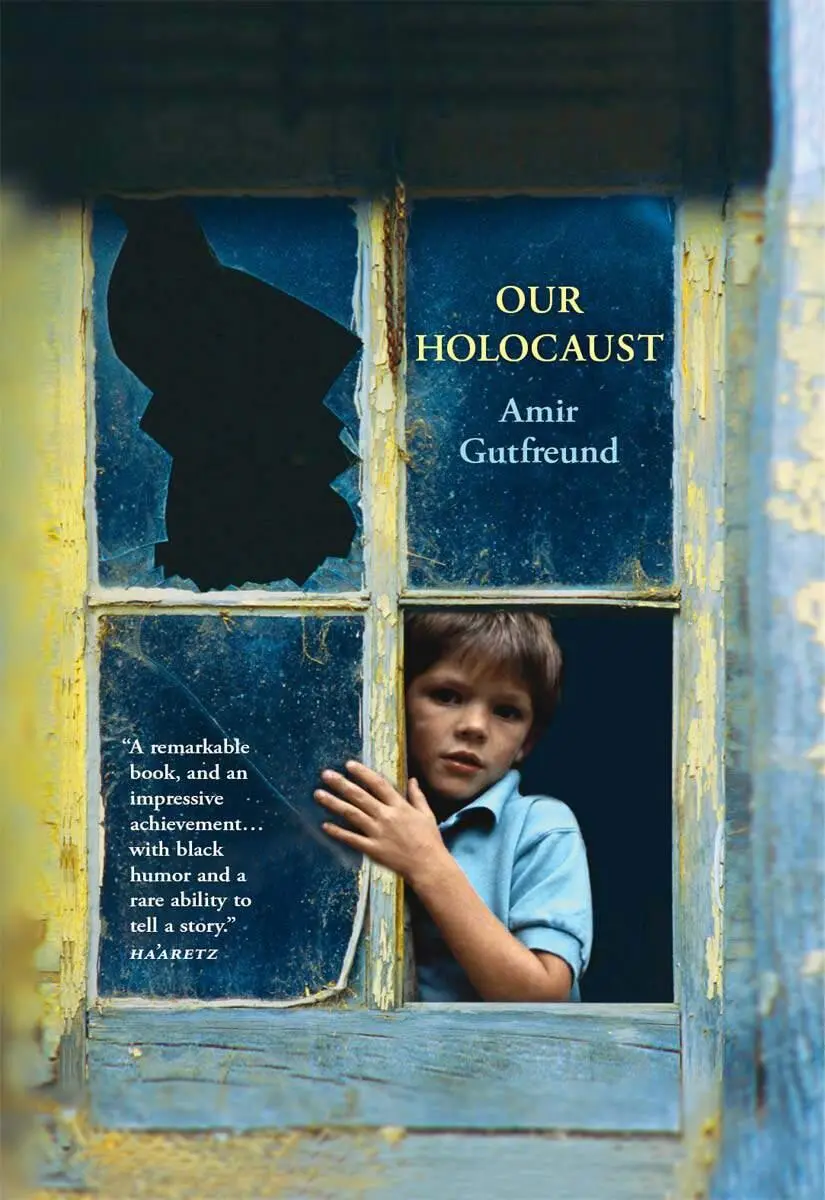
- Название:Our Holocaust
- Автор:
- Издательство:Toby Press Ltd
- Жанр:
- Год:2006
- ISBN:нет данных
- Рейтинг книги:4 / 5. Голосов: 1
-
Избранное:Добавить в избранное
- Отзывы:
-
Ваша оценка:
Our Holocaust: краткое содержание, описание и аннотация
Предлагаем к чтению аннотацию, описание, краткое содержание или предисловие (зависит от того, что написал сам автор книги «Our Holocaust»). Если вы не нашли необходимую информацию о книге — напишите в комментариях, мы постараемся отыскать её.
Our Holocaust — читать онлайн бесплатно полную книгу (весь текст) целиком
Ниже представлен текст книги, разбитый по страницам. Система сохранения места последней прочитанной страницы, позволяет с удобством читать онлайн бесплатно книгу «Our Holocaust», без необходимости каждый раз заново искать на чём Вы остановились. Поставьте закладку, и сможете в любой момент перейти на страницу, на которой закончили чтение.
Интервал:
Закладка:
“Adler, embarrassed, admitted that these murmurs of his were a theory he was trying out, a survival method, and he did not know if the theory was ripe for instruction yet. I demanded — teach me! And Adler began to teach me a simple theory. He explained that I had to contemplate the future that had been robbed from me and cry out in bitter resentment — how had they dared take the future that had been planned for me?! ‘Grow bitter! Be furious!’ he urged me. ‘Imagine the future that was ready for you, and cry out against the reality trying to cancel it out!’ And that was not all. I also had to outline before him the precise details of my robbed future, and complain, and rage, and wave my fists at reality.
“And so, every day, we both bitterly protested the theft of our futures, and threatened like lions — who would dare take this future from us? Adler was extremely fanatical about this future theory. The past was completely forbidden. He demanded that I rid myself of memories, throw them all out, shake out my pockets. When one day I began to tell him about Feiga and our good days in Bochnia, he grew enraged. ‘The future! The future! If you wish to live, think about her and you in the future, only in the future!’ He waved his pick in the air and the Ukrainian supervisor looked up in surprise and curiosity, thinking he might be lucky enough to witness one Jewish prisoner murdering another.
“There was no choice. From morning to evening the future preoccupied us. We were full of anger at all that had been stolen from us. Adler commanded the future to appear in all its details. At roll-calls, at food distribution, always we lived in the future. Day after day I left the splendid house I had built for my Feiga and myself in Bochnia, to study at a fine yeshiva . In the evenings we sat and dined and talked about life. And Adler, who held a chair at a university, labored over his book about pirates. He went to the Caribbean once or twice to expand his studies. He tasted pineapple, palm fruit, papaya. Studied the world of the pirates. And life in the future was simple and good.
“When we grew slightly tired of the future, we dwelled on Adler’s research. I began to gain courage and ask questions, make comments, even construct a few hypotheses and semi-proposals of my own. Every single moment, from before sunrise until after sundown, waving our picks up and down, it was inexplicable how death had not yet taken us, but with Adler the hours passed pleasantly. Pleasantly, nu , perhaps that is an exaggeration. But it was tolerable. There was a hint of a reason to go on living in the trenches, in the stench of the hut, with the horrible punishments and the dead we no longer counted or thought of. Every morning I longed for the moment when we would be positioned alongside the pits after roll-call, after the interminable march, after the morning punishments, and there, in the pits, a few cigarettes for the supervisor, and then I could regale Adler with ideas built up overnight. My lust for knowledge impressed and amused Adler. He straightened up over his pick for a moment, giggling, ‘As soon as you were brought here, I knew I could not lose my best student.’
“His compliment embarrassed me but filled me with pride. I wished I could be his student at the real university in Lvov. In Bochnia they had said I had the character of a scholar. One day I asked Adler, ‘Why, why this extermination? Why is all this occurring?’
“Adler stopped working and stood bewildered, holding his pick up in mid-air. Then he slowly lowered it. ‘Why the extermination?’ He repeated my question, mulling it over. He went back to work. He hummed the sentence to himself one more time, ‘Why the extermination?’ Then he demanded, ‘The future, we must think only of the future.’
“And so I told him of the future, of Feiga and me holding a son, the baby’s lavish briss ceremony, rabbis gathering from all corners of the land to see the newborn, and blessing him, not explaining why they have convened, but with hints in their eyes. They huddle secretively every once in a while and sip the good wine, khamra taba , and they closely examine the baby’s face in silence. I listed for Adler the names of the rabbis, gather them from all the dynasties of Poland and Lithuania, as if my eyes are passing over a wall of radiance.
“Adler listens, encouraging, and asks, ‘What will you name your firstborn?’
“And my heart cries out, ‘I will name him after you!’
“One day there was an outbreak of typhus in the camp and Adler fell ill. He was simply one among many. At first he kept his strength and tried to join the work group, but he quickly weakened. From then on our roles were reversed. I, the healthy one, took it upon myself to save Adler from the disease, from being finished off with a shot, from some connivance of damned Farkelstein. I called out to him, ‘Be angry! Be bitter!’ and begged our Creator to take pity on this man. I gave him food from my meager allowance, and he ate from my palm like a baby. His kind eyes thanked me, and that was the greatest gift I could have sought from Hashem , blessed be He. But Adler was dying. There was no choice but to take him to the rivier , the infirmary, a place that offered no great cures, only sadistic doctors and reduced food rations; at the end of every week, those who had not recovered were killed.
“For a day or two I was left on my own, and then a sudden boldness took hold of me. I stole an extra portion of bread for Adler and rushed to the rivier with some excuse to visit him. I handed him the bread, proud and embarrassed — but Adler needed food no longer. Instead of the bread he grasped my hand and pulled me to him. He began to mumble in my ears, words that I believed at first came from the shock of his waning mind, but slowly they began to make sense. Adler was trying to tell me about a portion of research he had not sufficiently delved into, a section he had found but had not been able to investigate. One day, he suggested, I might want to look into this line of research. From the force of his excitement he rose feverishly from his bed, attempting to sit up. I tried to hold him down with both hands, afraid he would make a commotion in that rivier of those cursed people, where both the healthy and the sick could find themselves dead. But Adler’s strength was greater than mine, like Jacob our father battling the angel.
“‘You know,’ he said, ‘Jews did not always allow themselves to be killed without taking revenge.’ His voice grew bitter, as if he were practicing the future, not discussing the past. ‘Jews fought. They formed groups to plot against the plunderers. They preferred death by the sword to a pathetic death like ours. And more than anyone, you must know about the Jewish pirates. Subatol Deul was Jewish, he wrote his secrets in Hebrew. And more wondrous than him were the rabbis that went out to sea to take revenge on the Spaniards who expelled the Jews from Spain. Pirate rabbis sailed the seven seas, kept the Sabbath, observed the mitzvahs, and on weekdays they rampaged against their enemies!’ Then he told me, ‘After you are freed, study them.’ His body radiated with a strong force and he was actually shaking me. I could not listen to his words, horrified by his strength and his awful vacant face, which contained both the most beautiful of professorial looks, and the terror of a man about to die.
“The rivier physician, Doctor Gosen, damn him, had begun his evening rounds, God help us, and I grew frightened. I extricated myself from Adler and promised to visit him the next day, but both he and I knew it was a lie. The next day I was told to work in a new group, with the corpse burners, God help us. Adler’s body was at the top of the heap, ready for us to burn in the pits. The Nazis, damn them, had not been able to kill him. Adler had returned his soul to the Creator and I said a kaddish prayer over him, so the Lord of the Universe would know that a Jew still mourned for a Jew. That even here, someone was still dear to someone else’s heart.
Читать дальшеИнтервал:
Закладка:
Похожие книги на «Our Holocaust»
Представляем Вашему вниманию похожие книги на «Our Holocaust» списком для выбора. Мы отобрали схожую по названию и смыслу литературу в надежде предоставить читателям больше вариантов отыскать новые, интересные, ещё непрочитанные произведения.









Обсуждение, отзывы о книге «Our Holocaust» и просто собственные мнения читателей. Оставьте ваши комментарии, напишите, что Вы думаете о произведении, его смысле или главных героях. Укажите что конкретно понравилось, а что нет, и почему Вы так считаете.