Amir Gutfreund - Our Holocaust
Здесь есть возможность читать онлайн «Amir Gutfreund - Our Holocaust» весь текст электронной книги совершенно бесплатно (целиком полную версию без сокращений). В некоторых случаях можно слушать аудио, скачать через торрент в формате fb2 и присутствует краткое содержание. Год выпуска: 2006, Издательство: Toby Press Ltd, Жанр: Современная проза, Прочая документальная литература, на английском языке. Описание произведения, (предисловие) а так же отзывы посетителей доступны на портале библиотеки ЛибКат.
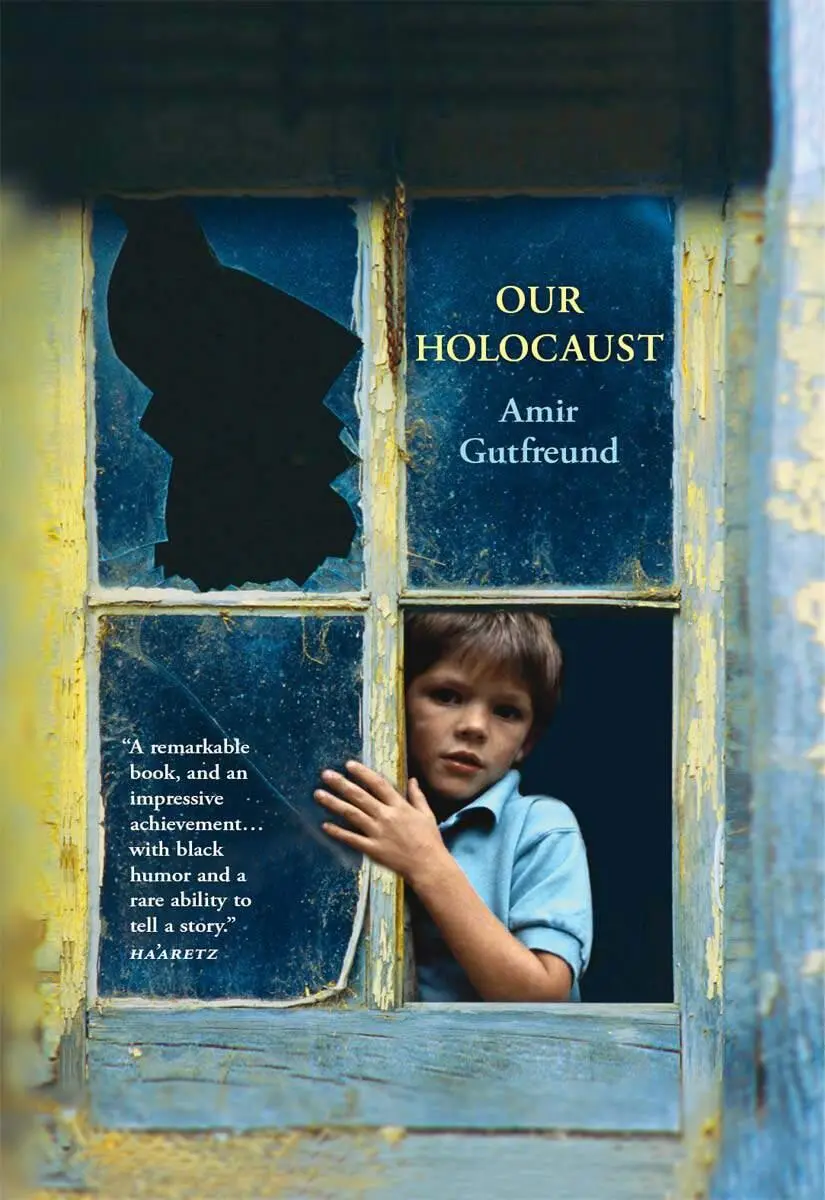
- Название:Our Holocaust
- Автор:
- Издательство:Toby Press Ltd
- Жанр:
- Год:2006
- ISBN:нет данных
- Рейтинг книги:4 / 5. Голосов: 1
-
Избранное:Добавить в избранное
- Отзывы:
-
Ваша оценка:
Our Holocaust: краткое содержание, описание и аннотация
Предлагаем к чтению аннотацию, описание, краткое содержание или предисловие (зависит от того, что написал сам автор книги «Our Holocaust»). Если вы не нашли необходимую информацию о книге — напишите в комментариях, мы постараемся отыскать её.
Our Holocaust — читать онлайн бесплатно полную книгу (весь текст) целиком
Ниже представлен текст книги, разбитый по страницам. Система сохранения места последней прочитанной страницы, позволяет с удобством читать онлайн бесплатно книгу «Our Holocaust», без необходимости каждый раз заново искать на чём Вы остановились. Поставьте закладку, и сможете в любой момент перейти на страницу, на которой закончили чтение.
Интервал:
Закладка:
Grandpa Lolek’s house stood on a small hill, a position which created interesting geometrical possibilities. It had been built by a founding member of the underground Haganah movement in the thirties, and he had exploited every single possibility. When the Haganah man was killed, the house was left to its tenant, Grandpa Lolek, who managed to defend it against claims by the legal heirs. After a generation of fighting, the heirs were exhausted, but to this day, every few years, a feeble legal bleating comes from the direction of Ness Ziona.
Now we stood over the opening of a hidden cellar, a weary cloud of dust rising up from below. We looked inside. All we could see was a dark staircase winding its way down. We were drawn to this Pharaonic tomb, and despite our familiarity with the curse ( Death shall come on swift wings to him who disturbs the peace of the king ), we had to go down. Guided by some force of maturity, we descended, older than our years, and crossed an invisible line between childhood and what comes after.
We advanced slowly. Effi went first. We stood blinded on the cellar floor, inhaling a stench of dead lizards and bricks touched only by dampness. Dust, dust, wormy and horrible. The moment was too sacred for words. We tried to accustom our eyes to the darkness. No light deigned to enter. Above us, through the cellar opening that faced the living room, daylight loomed, but in the heart of dustiness darkness reigned. We could vaguely see that the cellar continued far on into the darkness. We walked slowly, hoping for the best, until we touched a damp wall. There were two windows of a sort there, which gave way to the yard above, but no light shone in through them. Mosquito screens had been hung long ago and they were thick with spider webs, allowing only a slim line of light to barely penetrate and drag its shadow behind with a limp. Effi decreed that someone had to go up for matches.
It was me, of course. Out I went, passing through the rooms like a short apparition, pausing in astonishment opposite the hallway mirror to scan the mass of cobwebs on my body. I found two flashlights in the kitchen cabinet (the battery was kept separately, of course, in the refrigerator) and I also took candles, matches and a lighter. I looked around at the house. The furniture and rugs were coated with dust. Punishment hovered over our heads. I went back to the cellar, concealing the dusty horrors from Effi. We turned the flashlights on and dark objects sparkled and crackled in surprise from every corner. Light! Light!
Together we scanned a cellar crowded with items, furniture parts, pictures, and an inexplicable blonde wig that took our breath away. We went a little further inside. The dust glimmered in the beams of our flashlights, exposing cobwebs of withered geometry. Effi led us further inside. At the edge of the cellar was a hidden opening, concealed behind two kerosene heaters that stood like eternal guards — reeking sphinxes.
“This is probably going to lead to some secret army headquarters,” Effi decided, in a voice grown weary of secret tunnels. But when we opened the cover we found only a recess, and inside, oddly, two more kerosene heaters. The heaters were guarding heaters. The dust kept billowing out. We cast our flashlight’s glow on a small metal box and opened it, revealing envelopes and pages written in crowded Polish characters. We trembled. These were not our first stolen documents. In the houses in Grandpa Yosef’s neighborhood we got our paws on any available box. But this time we knew — these were secrets. This was a clue to something.
We made our way out and collapsed on the dusty rug, our faces colored with war-paint of soot and dust. We looked at the distant ceiling and did not talk. We saw the room around us enveloped in a frock of dust, but that was not what we were thinking of. In our hands shone the box that contained letters, possibilities. We each pondered separately but our breaths were intertwined, our souls melded. There would be no more Effi — without-a-little-Amir, no more Amir-without-a-little-Effi.
Later, we spent three hours cleaning the house meticulously to eradicate all traces of dust. We unrolled the rug, and restored the overturned furniture. And we stole the box.
The letters were in Polish, in Grandpa Lolek’s handwriting, except for one page. The page at the bottom of the box was written in a different ink in an unidentified, square handwriting, and it had no illustrations of blood-red hearts. We needed someone to translate them for us. We had an entire family of Polish speakers at our disposal but we could not give them the papers just like that and say, Please, translate these letters we stole from Grandpa Lolek’s secret cellar. We hatched a plan to translate the sentences word by word, separately, each word from a different source. We copied the words onto separate pieces of paper (we knew the English alphabet, so the Polish characters did not pose much of a problem). Next to each word we wrote down the name of the person we intended to ask. We were careful not to give any one person a sequence of words or too many words from one letter. We set off on every mission with one word and, in a roundabout way, deciphered its meaning. Each deciphered word was written on a new page. Using this mosaic approach, we slaved with a dedication usually associated with pyramid builders, and slowly created the Hebrew translation of the letters.
There were a few hitches. For example, the stubbornly puzzling sentence, “Life is a roll.” Cross-referencing, enquiries, parsing and assembling, led to the decipherment: “Life is a partnership .” Instead of spółka , partnership, we had copied down bułka , roll.
Some people were dismissed after being found unsuitable — suspicious, questioning. But we did discover a few great talents. Uncle Pessl, for example, whom everyone in the family had always considered — to put it mildly — an idiot, asked no questions, made no enquiries, and was utterly unsuspecting as he sat gobbling down a dish of chicken and providing us with translations of entire sentences.
And then there was Uncle Menashe from Netanya. We came to him and asked about the word brzoza . But Uncle Menashe looked us in the eye and said calmly, “You’ve found a letter in Polish and you’re trying to figure it out. Why work so hard? Bring me the letter, I’ll translate it.”
We held a brief and silent consultation with our eyes. And two days later, with the box on our knees, instead of going to school we were on our way to his butcher shop in Netanya. We sat in Menashe’s shop for a few hours, surrounded by freezers full of meat and slaughtered chickens hanging on the walls like sukkah decorations. He read out loud and translated, no wise-cracks.
What we had found were Grandpa Lolek’s letters to his dancer, Joyce. (He must have written them in Polish and had someone translate them into English for him, keeping the Polish copies himself). The content of the letters was not rewarding — silly love lines, promises, pleas, plans for a life together. For a while we were partners to this mythological episode in Grandpa Lolek’s life. With him, we were left for the Viennese pianist. We sent her pleas. We hoped. We knew in the bottom of our hearts that now, after the war was over, the future belonged to the pianists of the world. But still we tried, even writing poetically, “…you know, battles on the plains are still sadder,” but we did not win back her heart. We lost Joyce. We also lost interest in the letters. We asked Uncle Menashe to skim them, thinking perhaps he might come up with something of interest after all. Then we showed him the last page, written in a different ink, the one without hearts. This page piqued Uncle Menashe’s interest.
“This, you must not talk about!” he ordered. “And put the box back straight away, so no one will know you took it.”
Читать дальшеИнтервал:
Закладка:
Похожие книги на «Our Holocaust»
Представляем Вашему вниманию похожие книги на «Our Holocaust» списком для выбора. Мы отобрали схожую по названию и смыслу литературу в надежде предоставить читателям больше вариантов отыскать новые, интересные, ещё непрочитанные произведения.



Обсуждение, отзывы о книге «Our Holocaust» и просто собственные мнения читателей. Оставьте ваши комментарии, напишите, что Вы думаете о произведении, его смысле или главных героях. Укажите что конкретно понравилось, а что нет, и почему Вы так считаете.