Amir Gutfreund - Our Holocaust
Здесь есть возможность читать онлайн «Amir Gutfreund - Our Holocaust» весь текст электронной книги совершенно бесплатно (целиком полную версию без сокращений). В некоторых случаях можно слушать аудио, скачать через торрент в формате fb2 и присутствует краткое содержание. Год выпуска: 2006, Издательство: Toby Press Ltd, Жанр: Современная проза, Прочая документальная литература, на английском языке. Описание произведения, (предисловие) а так же отзывы посетителей доступны на портале библиотеки ЛибКат.
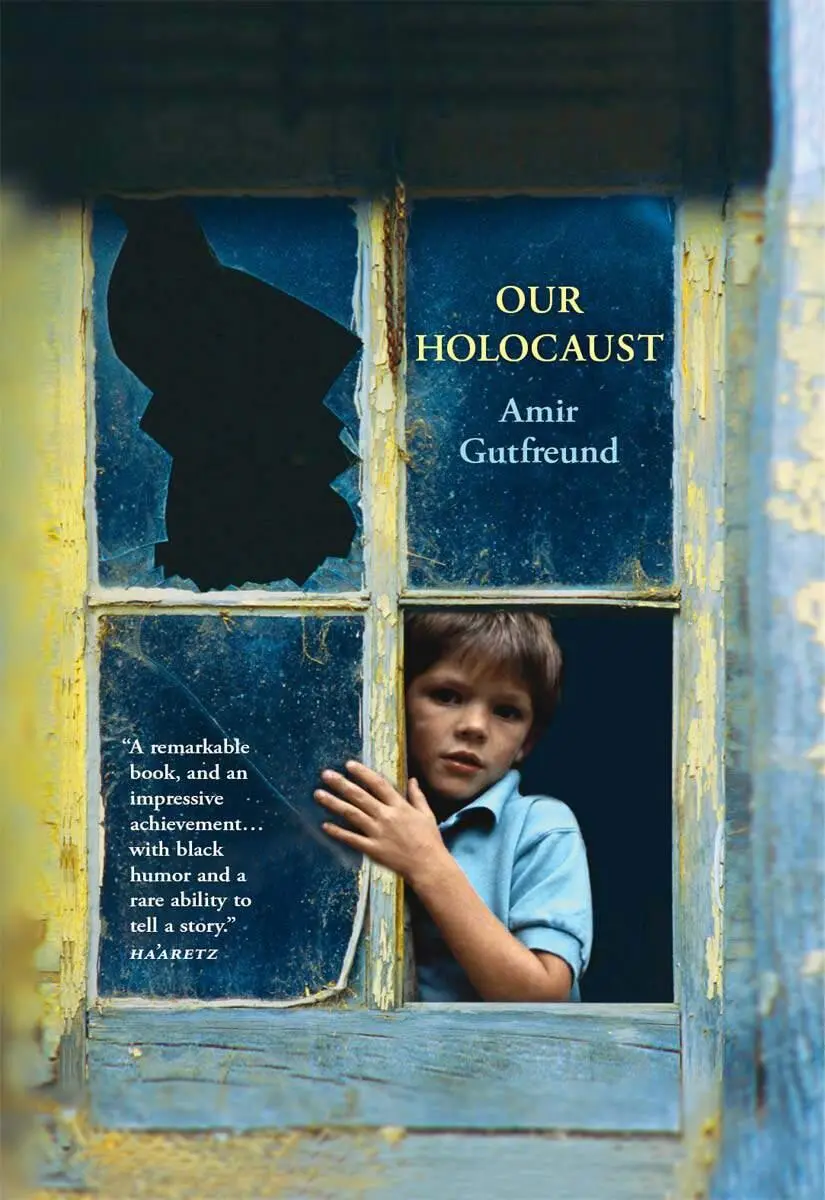
- Название:Our Holocaust
- Автор:
- Издательство:Toby Press Ltd
- Жанр:
- Год:2006
- ISBN:нет данных
- Рейтинг книги:4 / 5. Голосов: 1
-
Избранное:Добавить в избранное
- Отзывы:
-
Ваша оценка:
Our Holocaust: краткое содержание, описание и аннотация
Предлагаем к чтению аннотацию, описание, краткое содержание или предисловие (зависит от того, что написал сам автор книги «Our Holocaust»). Если вы не нашли необходимую информацию о книге — напишите в комментариях, мы постараемся отыскать её.
Our Holocaust — читать онлайн бесплатно полную книгу (весь текст) целиком
Ниже представлен текст книги, разбитый по страницам. Система сохранения места последней прочитанной страницы, позволяет с удобством читать онлайн бесплатно книгу «Our Holocaust», без необходимости каждый раз заново искать на чём Вы остановились. Поставьте закладку, и сможете в любой момент перейти на страницу, на которой закончили чтение.
Интервал:
Закладка:
The orderlies stepped out of the ambulance, skipped over Gershon Klima, and Eva Lanczer’s mouth took control of her and screamed and scratched and bit. The orderlies grabbed her with stubborn hands, grasping her bubbling flesh. It was hard to discern a face and a body within the whirlwind — only her usual fey flickering and her mouth that seemed to grow and expand. Her screams rang back from the woods, pleas emerged from the puddles. Eva Lanczer’s flesh was taken into the ambulance and her blood boiled on the path and on the orderlies’ white coats and in her fingernails. When the doors were slammed closed, one last scream escaped and the whole world clapped its hands for a moment — the mouths of its lakes cried out, its birds turned to owls and its bats took to the sky.
And then, silence. They took Eva Lanczer away. Forever.
We tried to sleep that night, shutting our eyes tightly. Beneath my closed eyelids I glimpsed shapes of darkness, hovering stains. Letters, instructions, laws. That night, I think, my hatred of Germany was quadrupled. I hated Germans, hated Germany, would never go there. Effi, in bed next to me, shut her eyes tight as well. She wet the bed too, a thin trickle that spread through the mattress and over the sheets all the way to me. In the morning, Grandpa Yosef would have trouble deciding who was to blame. We should have woken up identical, both hating Germany. One night, one conclusion. When morning came we brushed our teeth without protest and ate what Grandpa Yosef served us without complaint. A silence had befallen the whole neighborhood. It was a day no one felt like starting. But Effi, who was quiet like I was and looked like I did, as if she too had spent all night studying by the light of Eva Lanczer, awoke carefree and forgiving. I learned years later that she had not thought about Germany that night, nor about Germans. She had not seen stains of darkness in the form of Eva Lanczer, had not read letters and laws, instructing: Do not forgive the Germans.
In the morning we roamed the neighborhood aimlessly, almost without touching the ground. Two little hovercrafts with reasonably good grades — what was it all for? We wandered this way and that, not knowing what to do about Eva Lanczer. We wanted the story to go on. We couldn’t accept the first ending, could not conceive that it would be the final ending, with no sequels. We waited many days for Eva Lanczer to come back, watched her window often, trying to persuade it to produce her. We came at daytime, on Saturdays, and sometimes when it was dark. We wanted to surprise her apartment and find it with Eva Lanczer outside, half-smiling, pale.
On one of our night-time excursions we discovered that we were not alone outside the dark houses. In the middle of the path we found a hunched character dressed in black.
“It’s the Angel of Death, come for Eva Lanczer’s soul,” Effi said.
And indeed, the burglar turned to Eva Lanczer’s house, although it turned out he was after more material assets than Eva’s soul. Opposite, Adella Greuner opened her blinds and like a large cuckoo clock in a huge white night-dress, yelled out, “Kalman, vi geystu? Vi geystu ?” just as usual. The burglar fled, half-cat half-bird, rolled over the flowerbed at the foot of the scarecrow and broke into a mad dash. He took all of Katznelson — which I could do in fourteen seconds wearing shorts and cheating the start gun just a little — in less than six seconds. Just before the end of Katznelson, he turned off into a side alley and was gone.
Autumn came. The days grew shorter. More tea was sipped behind the blinds, more memories. The sky waited for the rain to finish off autumn. “The splendor of Carmel falls / Bows / To the ends of autumns whose first rains are severed,” wrote Asher Schwimmer back in Poland. In November a thuggish guava tree awoke from its slumber and flooded the neighborhood with its scent. The elderly neighbors seemed pleased. Guavas smelled of health, they claimed. And no less important, the aroma aroused their senses, emboldening their belief that not everything had weakened in them. All they needed was for someone to make a proper effort and everything would work fine. They tended to take their glasses off during guava days, dared to leave their walking sticks at home, reconsidered medication dosages. The guava flowed and flowed in a great stream. Hearing aids were cautiously removed, jaws moved in unabashed appetite. Once in a while, in random conversations, they expressed opinions and demonstrated knowledge.
“Lots of vitamin C in guavas,” they would say. To show that modernity had not passed them by. That they too were in the twentieth century.
We would come on rainy Saturdays to visit Grandpa Yosef, careful not to track mud into the house — he had enough trouble as it was. We sat with the family and the neighbors, watching the rain, talking. Winter, the mire and the rain, for some reason did not bring back memories from the camps. On the contrary, winter was good. Their heavy faces were flushed from the heaters. The couches bore their weight. They flew. Childhood memories hovered. They themselves, their childhoods in snow and mud — they did not need us there. In their pictures they were fair-eyed toddlers sledding down the snow with a screech and walking with Father, holding his big hand. Always with them it was prayer shawls and Shabbat, narrow alleyways and, in the distance, the forest. The forests had long names. Niepolomice, Naliboki, Zielona. Sometimes there were weekdays too — haberdasheries, markets and synagogues. Tall goyim . Tomorrow it will snow.
And we were outside.
Sometimes other life forms tried to infiltrate the neighborhood. Young couples grew excited by the cheap real estate, and suddenly there were baby clothes hanging from the laundry lines. Crying at night, a soft, continuous sound. For some reason the young people did not last long. They moved away, leaving only the regular crying, lights on all night, the smell of old fabric on the lines. And sometimes kids were sent to the neighborhood to do fundraising.
On one side the children wait, sometimes giggling at the funny names on the doorbells. On the other side, life comes to a standstill. Quiet! Someone’s at the door! The children of Israel wait with their vouchers in denominations of five, ten and twenty. Beyond the door the Gestapo is knocking — someone has turned us in.
Black clouds of starlings also invaded in season, finding the neighborhood a wonderful place for their needs, chattering on the trees, increasing the value of every branch. Footballs suddenly appeared in the air, kicked over from a nearby practice field. A young boy soon emerges and looks around for the ball, somewhat surprised at this neighborhood, this quiet. Sometimes he spots a resident in a window. Impudently, the boy asks Uncle Antek if perhaps he’s seen the ball, not knowing that sundown is approaching and in Auschwitz the prisoners are being counted. The inmates stand for roll-call, the shadows of their tortured bodies hidden in the earth, and when the roll-call drags on and on it seems as if only a small step separates the natural state from its opposite: the shadow straightening up while the body falls to the ground to rest.
We invade too. Our neighborhood vacation. Halfway through summer, before we arrive, a sudden blossoming in the yards. Gloomy trees light up with color. Pink, red and purple glimmer trivially in the yards. Then we show up, Effi and I. Tanned, unkempt, full of ideas. After a whole session at camp, bursting with our little disputes, bitter grudges erupting every hour. How could Effi have made us lose the indoor-soccer match? How could I have forgotten the right answer in the group quiz? Effi still resentful over the gray horse I got to ride on horse-riding day. Carried on its back, I felt afraid, with a foolish smile on my lips, hesitant but victorious. Effi got a skinny horse without a mane.
Читать дальшеИнтервал:
Закладка:
Похожие книги на «Our Holocaust»
Представляем Вашему вниманию похожие книги на «Our Holocaust» списком для выбора. Мы отобрали схожую по названию и смыслу литературу в надежде предоставить читателям больше вариантов отыскать новые, интересные, ещё непрочитанные произведения.









Обсуждение, отзывы о книге «Our Holocaust» и просто собственные мнения читателей. Оставьте ваши комментарии, напишите, что Вы думаете о произведении, его смысле или главных героях. Укажите что конкретно понравилось, а что нет, и почему Вы так считаете.