J. M. Le Clézio - Terra Amata
Здесь есть возможность читать онлайн «J. M. Le Clézio - Terra Amata» весь текст электронной книги совершенно бесплатно (целиком полную версию без сокращений). В некоторых случаях можно слушать аудио, скачать через торрент в формате fb2 и присутствует краткое содержание. Год выпуска: 2008, Издательство: Penguin Books Ltd, Жанр: Современная проза, на английском языке. Описание произведения, (предисловие) а так же отзывы посетителей доступны на портале библиотеки ЛибКат.
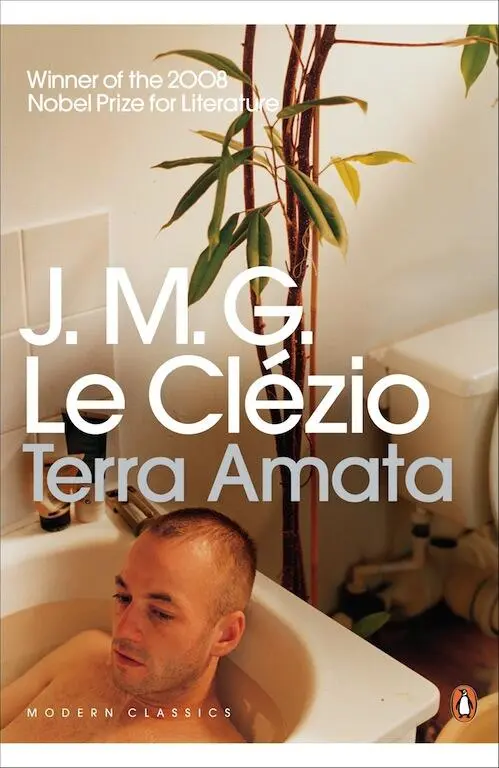
- Название:Terra Amata
- Автор:
- Издательство:Penguin Books Ltd
- Жанр:
- Год:2008
- ISBN:нет данных
- Рейтинг книги:5 / 5. Голосов: 1
-
Избранное:Добавить в избранное
- Отзывы:
-
Ваша оценка:
Terra Amata: краткое содержание, описание и аннотация
Предлагаем к чтению аннотацию, описание, краткое содержание или предисловие (зависит от того, что написал сам автор книги «Terra Amata»). Если вы не нашли необходимую информацию о книге — напишите в комментариях, мы постараемся отыскать её.
brilliantly explores humankind's place in the universe, the relationship between us and the Earth we inhabit and, ultimately, how to live.
Terra Amata — читать онлайн бесплатно полную книгу (весь текст) целиком
Ниже представлен текст книги, разбитый по страницам. Система сохранения места последней прочитанной страницы, позволяет с удобством читать онлайн бесплатно книгу «Terra Amata», без необходимости каждый раз заново искать на чём Вы остановились. Поставьте закладку, и сможете в любой момент перейти на страницу, на которой закончили чтение.
Интервал:
Закладка:
Chancelade tried in vain to escape from this hell of mirrors. He kept to the walls, stopped at a crossroads, went round a square, took ten different streets; but it wasn’t any use. Always, before him, beneath him and overhead were the impenetrable sheets of glass alive with meaningless reflections. He tried to hide behind a parked lorry, but the white metal shone fiercely and gave him back his own image in caricature. He went towards the sea, and was driven back by the horror of the great flat leaden expanse. Here too, in the curve of the bay, the sun shone thousands of times, on the edges of the waves, on the facets of the pebbles, on car-windows, on the walls of the houses along the front. A white plane crossed the mirror of the sky, and prepared to land on the other side of the town, giving off shining sparks. And in the distance Chancelade could see the mass of the hills and mountains, like huge jewels glowing through the torrid haze.
There was no hope. You couldn’t escape from yourself; the whole world’s business was to give you back your own image. It was an endless, pointless process, like a conflagration consumed in its own flames, and time was a mechanism that could no longer be halted. Nothing was simple any more; nothing happened at the proper time, magically, once and uniquely for all and then no more. All that happened here, under this sky, beside this sea, in this city of shimmering faces, happened millions of times elsewhere, under other skies, beside other seas, with other faces. It was as if some diabolical command had turned everything into a deathtrap. The cycles began over and over again without flagging, without ever forgetting. Flowers, the flight of wasps, the songs of birds, the soft sound of tyres on tarmac had ceased to be unique. They were all the others, and they wanted to destroy; and when they attacked, their furious strength was multiplied tenfold by the age of the world.
A man stood smoking a cigarette by a post with a yellow light at the top of it. And this transparent figure with its fixed gesture was there for ever, on all the pavements, by all the lamp-posts all with the same yellow light. In a corner by a glaring white wall an old woman squatted holding out bunches of flowers, and it was as if the whole population of the world was sitting there in rags, its wrinkled face and expressionless eyes and toothless mouth upturned, offering in its dirty gnarled hand a bunch of flowers without either colour or smell.
Or a woman with painted face, her dress steeped in crimson light, was standing by a door and smiled at you as you passed; and the smile suddenly opened her face, cleaving the shining eyes and distending the mouth like a wound. Then outside all the doors of all the houses of the town there appeared this same mask of glass and metal with strangely gleaming eyes; in every mirror was seen this ghost with flaming hair and steel body enclosed in scarlet silk; and this shape signed to you to follow her into her lair, to go with her into the reversed world where you could see infinity. The rough, cracked voice whispered endlessly into your ear the words that no longer had any meaning, the empty words inhabited by maddening echo:
‘Would you like to come with me?’
‘Would you like to come with me?’
‘Would you like to come with me?’
‘Would you like to come with me?’
‘Would you like to come with me?’
‘Would you like to come with me?’
‘Would you like to come with me?’
‘Would you like to come with me?’
‘Would you like to come with me?’
‘Would you like to come with me?’
On the pavements the café terraces were all ready. The tables were set out, and on their shiny surfaces the glasses and bottles stood quietly, emitting their grey and white gleams. Bodies were sitting at the tables, their pale faces poked forward — so many more smooth mirrors without relief. There were no more noses or chins or cheeks or mouths or eyebrows. All that was left were the eyes, huge eyes that had swallowed up the rest of the face, wide, incomprehensible, like rows of identical windows. Chancelade walked by all these distended pupils, and in the depths of all these mirrors he saw his own image advancing, dim, violent, wavering along the cold path that the others had prepared for him.
A girl leaned against the wall waiting for a bus or a taxi or a man. But the light lit up her white face and her legs and hands and hair as if she were a statue. Chancelade walked by slowly and tried to catch her eye, to say something to her and try to escape, to find something to cling on to. But he could see nothing. The vague countenance shone faintly in the flood of white light, its two eyes without depth, its nose indistinguishable, its mouth closed and not breathing. She wasn’t in the street, she couldn’t be there on the pavement just a few inches away from Chancelade. She was on the other side of the mirror, lost in the sheet of yellow-speckled foil. Between her and Chancelade there was the misty thickness of the glass, and she looked at him, at once near and far away, out of her own inaccessible dream. She looked at him out of her dim eyes from behind a series of aquaria of muddy water that magnified her glance like lenses. Chancelade realized that he could never reach her; she was only a reflection, the reflection of a reflection, that had appeared on this white patch of wall by chance, the fleeting result of a series of refractions from one end of the earth to the other; she was unreal, without a body, without warmth, without breath or words or thoughts.
And all the rest of the world had become like her. Reality had drawn in its claws and hidden its whiskers and scales and prickles, and all that was left was this surface covered with floating images, shot through with inverse lightning; this negative in which the darkest shadows appeared like masses of snow and light resembled coal-dust. Cinders, clouds of sparkling dust and flakes of fire filled all the interstices of a space that had once been free. Chancelade walked in the midst of all this debris, painfully and slowly. He pushed aside the twigs. He went through bushes of luminous prickles, and each thorn clung to his skin and held him back. Sometimes the waves of noise and heat fell on him like breakers, and he felt himself being sucked back by the undertow. He wasn’t going anywhere now. The horizon was endless, the streets were endless. There were open squares, great salty lakes sparkling as far as the eye could see. Then straight avenues lined with the motionless skeletons of trees. The fronts of the buildings shrank back and parted, to reveal other frontages just the same, vast tall walls from which the heat rebounded. Corridors succeeded corridors, doors doors, streets streets, alleys alleys. Flights of stairs went up and down and up again. Every so often there would be a glimpse of the sea, a sheet of beaten aluminium on which the sky bore down. Gardens revealed their scintillating crypts, their caves with heavy stalactites of metal. Then more streets, house-fronts, bay-windows, balconies, terraces, open doors through which the sombre light rushed in. Groups of windows appeared now high up, now low down, now left, now right. Car roofs lit up one after the other, sending out spirals of pale coloured fire. The street-lights stood there in line, with the trees and the telegraph-poles and the shapes of men and women with bodies in armour. And always, over everything, the lid of the sky threw back the tons of light, opposing its own opaque and vertiginous mass in a dance that went to and fro and never ceased.
Chancelade walked in the midst of the storm of glass and crystal without ever getting anywhere. It was like crossing a huge cemetery full of marble tombs, or leafing slowly through an album that had nothing written on its thick white pages.
And all around him the crazy vision never stopped. It came and went, carrying his image thousands of miles then bringing it suddenly back; throwing it against walls, pavements, trees, anywhere that there was one of the merciless mirrors. There were as many Chancelades as there were specks of dust, pylons, roofs, manholes, men, women, children, dogs or birds. There were some on the bed of the sea, gliding over the black mud. There were some in the distant hills, engraved on the purple sharp-edged mountain faces. There were even some in the air, in the air you breathed, and this countless host entered your lungs through your throat and spread through the body like millions of living needles. There were the microbes too: the invisible seething mass, this race with identical cysts, flagella, and membranes greedy to devour and destroy. Trypanosomes, bacteria, viruses, staphylococci, bacilli and amoebas. All gathered together in infinite hosts, secreting their toxins and waging their eternal battles. Chancelade had been carried into them too by the mad shimmering; and cut up and minced into invisible fragments he returned to his own body to destroy it.
Читать дальшеИнтервал:
Закладка:
Похожие книги на «Terra Amata»
Представляем Вашему вниманию похожие книги на «Terra Amata» списком для выбора. Мы отобрали схожую по названию и смыслу литературу в надежде предоставить читателям больше вариантов отыскать новые, интересные, ещё непрочитанные произведения.



Обсуждение, отзывы о книге «Terra Amata» и просто собственные мнения читателей. Оставьте ваши комментарии, напишите, что Вы думаете о произведении, его смысле или главных героях. Укажите что конкретно понравилось, а что нет, и почему Вы так считаете.