J. M. Le Clézio - Terra Amata
Здесь есть возможность читать онлайн «J. M. Le Clézio - Terra Amata» весь текст электронной книги совершенно бесплатно (целиком полную версию без сокращений). В некоторых случаях можно слушать аудио, скачать через торрент в формате fb2 и присутствует краткое содержание. Год выпуска: 2008, Издательство: Penguin Books Ltd, Жанр: Современная проза, на английском языке. Описание произведения, (предисловие) а так же отзывы посетителей доступны на портале библиотеки ЛибКат.
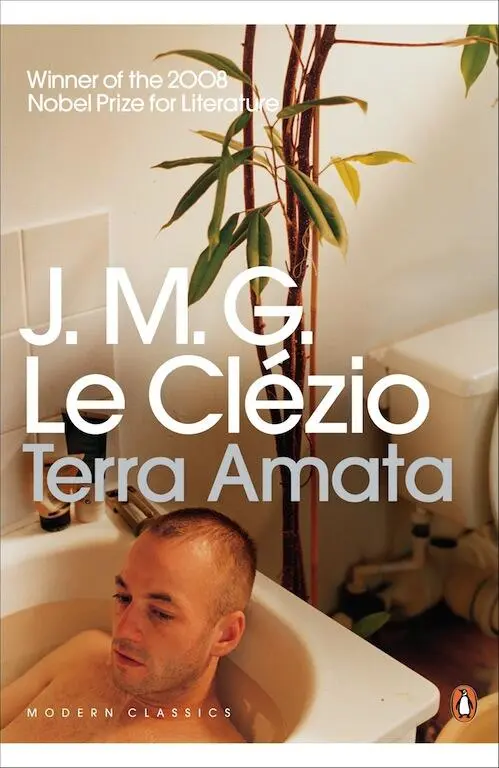
- Название:Terra Amata
- Автор:
- Издательство:Penguin Books Ltd
- Жанр:
- Год:2008
- ISBN:нет данных
- Рейтинг книги:5 / 5. Голосов: 1
-
Избранное:Добавить в избранное
- Отзывы:
-
Ваша оценка:
Terra Amata: краткое содержание, описание и аннотация
Предлагаем к чтению аннотацию, описание, краткое содержание или предисловие (зависит от того, что написал сам автор книги «Terra Amata»). Если вы не нашли необходимую информацию о книге — напишите в комментариях, мы постараемся отыскать её.
brilliantly explores humankind's place in the universe, the relationship between us and the Earth we inhabit and, ultimately, how to live.
Terra Amata — читать онлайн бесплатно полную книгу (весь текст) целиком
Ниже представлен текст книги, разбитый по страницам. Система сохранения места последней прочитанной страницы, позволяет с удобством читать онлайн бесплатно книгу «Terra Amata», без необходимости каждый раз заново искать на чём Вы остановились. Поставьте закладку, и сможете в любой момент перейти на страницу, на которой закончили чтение.
Интервал:
Закладка:
That was how things had been: shut up in an impregnable fortress, imprisoned in that blue sky, those clouds, that red earth, that line of spray at the edge of the sea. Chancelade had touched that hand, looked into those eyes that looked back at him. He had pronounced those trivial sacred words, those fragile words that scattered at once into the air. He’d said thirst, biscuit, shampoo, woman. He’d panted. He’d been out of his mind for a few seconds while somewhere in the room, miles away or perhaps only inches, that low moan of pleasure and pain had arisen and spread over the trembling walls. And the moan was repeated millions of times all over the earth, as if there was nothing anywhere but one great woman with fevered skin, wide eyes, distended veins and pounding heart.
For a few seconds everything in the world was woman. Chancelade saw the long lands floating on the water, whiter than mother-of-pearl. He saw America and Africa with bodies magnificently tensed. He entered the leaves of women-trees, women-grasses, women-algae. Everywhere you could see voracious curves, incestuous wells, long rivers with devouring currents. The light trembled in the air like gossamer hair. The strange silent figure danced inside every flame, and in the deepest hollows of the sea-bed slept the wide-hipped grey silhouette. Even all sounds were soft and grave, as if rounded red lips had given every one of them passage.
For a moment Chancelade managed to struggle against the cool white tide that slowly rolled his body over and over; then he gave in and became a woman, the same invicible woman who possessed the earth from the dazzling centre of her body, and who was no more either thought or word, but simply a sign of life eternally deployed throughout the universe.
TO TELL THE WHOLE TRUTH
Everywhere you could hear the murmur of life. At every point on the earth, and even elsewhere, the millions of engines that were in action hummed softly, diffusing their electric trepidations. From ten thousand feet up you could see the ochre expanse of earth and the puddles of the oceans. Here and there were little black knots on the floors of valleys or on the edges of wide bays. All these motionless cities lay beneath the sky waiting for who knows what, nothing perhaps, and buzzing like beehives. The long grey ribbons of the roads between them were dotted with insects moving along slowly, going round the curves, climbing up the slopes, stopping at the intersections, disappearing into the tunnels. It was all very funny, and a bit disturbing. It was as if there had been an untruth somewhere, an indiscernible lie, a joke, a pun, a riddle. Someone had said one day, without noticing, the rather simple sentence ending with a question mark:
‘But what the devil are we doing here, eh?’
And ever since it had been written everywhere, between the lines of books, in bright-coloured paintings, on the fronts of white buildings, on women’s mascaraed eyelids, on the pavement or right in the middle of the road, in the sky, on the sea, and on the sides of the snowy mountains. There was something amiss somewhere, someone lying, but it was impossible really to find out what it was.
It was that perhaps that made apartments like prison cells and streets like labyrinths. People had names and jobs and visiting cards; but there was always a mistake somewhere, a spelling error, a blot, a strange diabolical sign that cancelled all the rest. In a block of twelve floors they’d left out one number. One day somebody would notice and the whole place would collapse in a cloud of dust. Jet planes flew high, high in the air with their ear-splitting shriek. And one day a small boy would see one go over and ask:
‘But why doesn’t it fall down?’
And the plane would immediately dive down and crash, and all the thirty-five passengers would be killed.
Or you’d be staring at the setting sun one evening from the top of a hill, and the sun wouldn’t be able to disappear. It would hang there just above the horizon, floating for ever in a blood-red sky like a huge orange cut in two.
It was strange, all the questions that arose out of reality; all the lies and legends that lurked like a mist and hid the true face of things. At the end of every sentence there was a queer curly sign with a dot underneath, which meant that there was nothing really sure:
Is the earth round?
Can trees think?
Must people eat?
Is the sky blue?
Is God good?
Does matter exist?
E=mc 2?
2+2=4?
Does Mina love me?
Am I going to die?
Outside cinemas and shops, over garages and bars, the words shone out brightly in pink and blue neon letters. But they were lying too: they were there to deceive people, to draw them into issueless adventures.
Truth had disappeared from the face of the earth. She had been painted and made up age after age, and now there was nothing left but a hard insensible skin that lied all the time. Birds flew through the sky only to deceive and caricature. Boats floated in the water, waves unfurled, dust slowly covered the furniture in rooms, but none of it was true. It was not true that car-wheels turned, not true that watch-hands told the time, not true that seeds from trees split open in the earth to produce other trees. Everything that happened here, or there, or further away still, happened as if in a precise and magical dream that you dreamed with your eyes wide open.
Sitting at the open window, Chancelade simply looked out at the beautiful pure landscape sparkling in the sun. The trees shook gently in the breeze, the red and purple flowers were out, and the sky was blue, so blue you couldn’t even see it any more. And yet perhaps none of all this existed.
It was all too alive. It all breathed too much, vibrated too much, swallowed its saliva and exhaled its sweet and haunting perfumes too much. There was too much beauty, too much sweetness everywhere. All these things were tense with the will to live, braced in the posture of existence.
Chancelade looked at the square landscape through the open window and shuddered; he touched the crystalline strata of the air, he listened to the rustlings, the murmurs, the cries. So much mortal splendour was unbearable. You felt like standing up and tearing down this real picture, rending it with your nails; like burning down the trees, trampling underfoot the too beautiful flowers, gashing the pure sky with a knife. You felt like putting your fist through the window, this odious invisible window that always divided the world in two. But it was already too late; already you yourself had become a lie. Within your body there was already this pun, this unsuccessful joke, this riddle that had destroyed the name and delivered it over to vanity:
CHAMP SALADE
Everywhere men were telling far-fetched stories in order to fill the silence, in order to be admired, to be listened to. Prophets declaimed prophecies from the tops of lonely mountains, poets recited poems gazing at the moon, or the sea, or the sunset. On Sundays men sat in front of squares of canvas and tried to copy what they saw with brushes and paints: a ruined tower, a fishing port, a naked woman lying on a red divan. Novelists wrote novels, directors directed, embroiderers embroidered, fishermen fished. Everyone had his place and played at the serious game of life and death in order to try to understand the immense lie that lay all round them. In Reno (Nevada), Indian chief Fiery Horse told the crowd about his voyage through space on a flying saucer:
‘My voyage through space began on July 12, 1959 near Sapulpa, Oklahoma, when I was preparing the ground for a camp. I’d seen fourteen flying saucers since 1949, but on the day I’m telling you about one landed that was 75 yards in diameter and 8 yards high. I spoke to the members of the crew; there were three of them, and they looked like human beings. I finally decided to go with them. I thought it would be a new experience.
Читать дальшеИнтервал:
Закладка:
Похожие книги на «Terra Amata»
Представляем Вашему вниманию похожие книги на «Terra Amata» списком для выбора. Мы отобрали схожую по названию и смыслу литературу в надежде предоставить читателям больше вариантов отыскать новые, интересные, ещё непрочитанные произведения.


Обсуждение, отзывы о книге «Terra Amata» и просто собственные мнения читателей. Оставьте ваши комментарии, напишите, что Вы думаете о произведении, его смысле или главных героях. Укажите что конкретно понравилось, а что нет, и почему Вы так считаете.