J. M. Le Clézio - Terra Amata
Здесь есть возможность читать онлайн «J. M. Le Clézio - Terra Amata» весь текст электронной книги совершенно бесплатно (целиком полную версию без сокращений). В некоторых случаях можно слушать аудио, скачать через торрент в формате fb2 и присутствует краткое содержание. Год выпуска: 2008, Издательство: Penguin Books Ltd, Жанр: Современная проза, на английском языке. Описание произведения, (предисловие) а так же отзывы посетителей доступны на портале библиотеки ЛибКат.
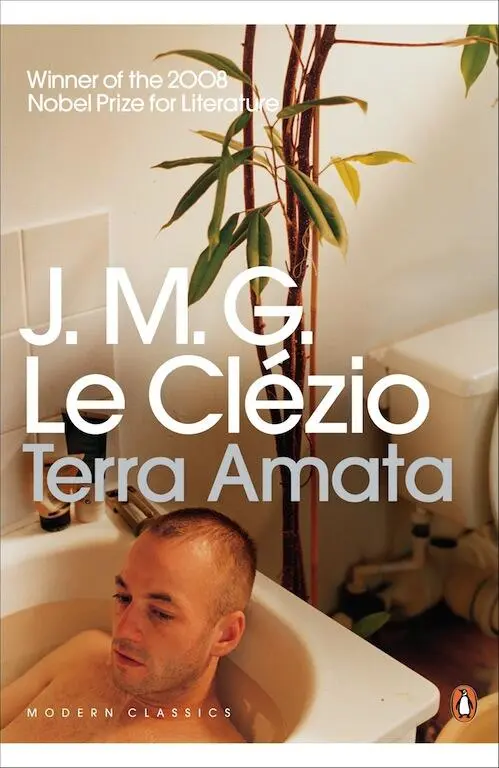
- Название:Terra Amata
- Автор:
- Издательство:Penguin Books Ltd
- Жанр:
- Год:2008
- ISBN:нет данных
- Рейтинг книги:5 / 5. Голосов: 1
-
Избранное:Добавить в избранное
- Отзывы:
-
Ваша оценка:
Terra Amata: краткое содержание, описание и аннотация
Предлагаем к чтению аннотацию, описание, краткое содержание или предисловие (зависит от того, что написал сам автор книги «Terra Amata»). Если вы не нашли необходимую информацию о книге — напишите в комментариях, мы постараемся отыскать её.
brilliantly explores humankind's place in the universe, the relationship between us and the Earth we inhabit and, ultimately, how to live.
Terra Amata — читать онлайн бесплатно полную книгу (весь текст) целиком
Ниже представлен текст книги, разбитый по страницам. Система сохранения места последней прочитанной страницы, позволяет с удобством читать онлайн бесплатно книгу «Terra Amata», без необходимости каждый раз заново искать на чём Вы остановились. Поставьте закладку, и сможете в любой момент перейти на страницу, на которой закончили чтение.
Интервал:
Закладка:
‘Watches go wrong …’
‘And what about the sun and the night and the seasons, and all that?’
‘You could live in the dark.’
‘And what about meal-times?’
‘Yes, of course, it’s impossible. But you can imagine it, and if you imagine it it’s already happened. And all these ideas of time and so on that are based on reason, they’re only valid in a certain type of society, under a certain system. If you do away with those you do away with the lot: there’s no time, no cause and effect, no — no anything that seems necessary to the reason.’
He stopped again, then went on:
‘I remember I used to think it was an insect that made watches go. I called it the watch-insect. But after all that’s just as true as to say there’s a spring that uncoils and drives a balance-wheel and cogs and all the rest. No, it was just as good to believe in a watch-insect that pushed the hands round with its legs. I mean, the relation between cause and effect was just as sound.’
He glanced quickly round him, as if he were looking for something.
‘It’s the same with everything you see. Sky, sea, clouds, cars, and everything. The connections between them are incomprehensible. The relations between them are mysteries. The sky doesn’t exist because there’s a sea, and cars don’t exist because there are roads. There may be reasons, of course, very profound ones, but we don’t know them. So it could be insects everywhere, sky-insects and car-insects and beach-insects and so on.’
‘Yes, but the—’
‘I wouldn’t be all that surprised myself — No, I really wouldn’t be very surprised to find out one day that one of those famous machines is just a cheat. I mean, you’d open up an electronic brain, say, and inside you’d find a dozen poor wretches in chains totting up figures with pencils and paper!’
Chancelade laughed and threw his cigarette in the sea. It floated for a moment between two waves, then disappeared from sight. The boy left the stones and watched a boat some way out pulling a man on water-skis. He thought he might have talked about the boat too, and said perhaps it was a fixed point, only a fixed point. Or that you could predict its course, and that even if it didn’t fulfil that course, yet in a way it still did. But he didn’t feel like pursuing it. He thought that perhaps he might write it all down one day in an essay at school or perhaps in a poem. He even imagined the first few lines of the poem, and when he shut his eyes he could see them all written down on a sheet of white paper:
THE SEA IS BLUE
THE BOAT IS BLUE
THE SKY IS BLUE
THE MAN ON WATER-SKIS
IS BLUE
IS BLUE
THE HORRIBLE
That was all. The boy wondered what it could be that was horrible. The speed? The course of the boat? The limiting horizon? Or the man gliding along on his water-skis, all blue on the blue sea? But the boat had already disappeared on the other side of the bay, and no trace remained of its passage.
Soon after this Chancelade and the boy went to buy ices at the wooden kiosk on the other side of the road. The boy had a double one, strawberry and lemon, and Chancelade had just a single vanilla. They went and ate them on a bench under a sort of plane-tree. They went on chatting for a bit. Things like this:
‘Delicious, isn’t it?’
‘Mm, not bad.’
‘Freezing cold.’
‘Yes.’
‘Hurts my teeth.’
‘They’re the best ices round here.’
‘Yes, they really are good.’
‘Specially the vanilla.’
‘The strawberry too.’
‘I prefer the vanilla.’
‘Better than Kapi’s ices anyway.’
‘Mmm.’
‘Not dear either.’
‘Better than Rand’s too — do you remember?’
‘Yes.’
‘And Arosa’s?’
‘Mm-mm.’
‘The only trouble is the cornet leaks.’
‘That’s because you don’t know how to manage it.’
‘What are you supposed to do then?’
‘Turn it round as you lick it.’
‘Like this?’
‘Yes, and bite off the bits that overlap.’
‘That’s why it hurts your teeth.’
‘Granita’s nice too.’
‘Do you like those Italian ices?’
‘Well …’
‘I’m not very keen.’
‘Neither am I.’
‘Another kind I like are those things they serve in glasses.’
‘Where?’
‘At Noel’s.’
‘Gratta Kekas, you mean.’
‘Yes.’
‘I used to like them but I’ve had too many.’
‘They’re nice with mint syrup.’
‘Yes, but not so nice as this.’
‘And rather dirty.’
‘Yes, they drag the ice all along the ground before they crush it.’
‘Yes …’
‘Can you feel the little lumps of ice?’
‘Yes, every so often they crunch.’
‘He makes his ices himself.’
‘So I believe.’
‘What a job, eh?’
‘Yes. Imagine spending every day of your life doing that.’
‘And in the winter he makes pancakes.’
‘What a life.’
‘Yes.’
‘It looks as if it’s going to rain.’
‘Yes, it’s getting overcast.’
‘It’s coming from the mountains. It’s black over there.’
‘Yes, there’s going to be a storm.’
‘We could do with one.’
‘Mmm.’
‘Have you finished your ice?’
‘Not yet, look.’
‘Look how much I’ve got left.’
‘You eat it too fast.’
‘Yes, but if you don’t the cornet gets all soft.’
‘I eat mine right down to the last bit.’
‘Hurry up or we’ll get wet.’
‘We had a nice bathe though, didn’t we?’
‘Yes, not bad.’
‘And not too many people.’
‘No.’
When the first drops began to fall Chancelade and the boy took shelter under a tree with more leaves in the middle of a public garden. The rain made a strange noise on the sanded paths and the leaves, like the sound a typewriter, with a series of quick taps, then a silence, then a few slower taps, another silence, another rush of quick taps, and so on indefinitely. The sky had become black and grey, with clouds swirling in all directions. There were occasional gusts of cool wind, and the slow smell of dampening earth. The grass and the trees began to perk up a little in the rain, and just underground the hairy roots drank thirstily.
The boy leaned against the trunk of the tree and watched the rain falling. From time to time he’d speak:
‘Just look at it coming down!’ Or:
‘It’s funny watching the rain when you’re out of it like this.’
Chancelade heard his voice but didn’t answer. He’d been suddenly snatched away, by a gust of air, or by the mechanical sound of the raindrops. He was still there under the broadleaved tree, smoking a cigarette perhaps. But it was as if he was going to be there for ever. He looked with amazement at the face of the child that resembled him, that had been born of him. He looked at the round chin, the mouth, the delicate nose, the gently curved brow that contained the brain. It was too late now to understand. Much too late. There was this child now that was not him, who lived a few inches from him, absolutely detached. One day this child would be a man, he would live in society, with his own job, his own wife, his own house. He would come to be an old man, an invalid with trembling hands, and yet it would still be the same. You could no longer get away from the truth. You had to live with this life scattering itself ceaselessly forward, creeping across the long layers of the future. You had to do all these trivial things, devote a crazy attention to all these microscopic adventures. It was comfortable, there, in the tribe. You fought against the wild beasts, you tore at raw meat with your teeth, you gulped down water from cool springs. And you fought against other men too, you protected your wife and your child. You were jealous. You possessed. That was how it was: you were alive, and this life never stopped bursting through one after the other the curtains of death. There was a definite order, come from nowhere and inhabiting your own flesh and bones and muscles, that demanded that the name of Chancelade should never die out. It was hidden here in this body, a magnificent name in letters chased in fire, a pure and magic name that signified centuries and centuries of life.
Читать дальшеИнтервал:
Закладка:
Похожие книги на «Terra Amata»
Представляем Вашему вниманию похожие книги на «Terra Amata» списком для выбора. Мы отобрали схожую по названию и смыслу литературу в надежде предоставить читателям больше вариантов отыскать новые, интересные, ещё непрочитанные произведения.

Обсуждение, отзывы о книге «Terra Amata» и просто собственные мнения читателей. Оставьте ваши комментарии, напишите, что Вы думаете о произведении, его смысле или главных героях. Укажите что конкретно понравилось, а что нет, и почему Вы так считаете.