J. M. Le Clézio - Terra Amata
Здесь есть возможность читать онлайн «J. M. Le Clézio - Terra Amata» весь текст электронной книги совершенно бесплатно (целиком полную версию без сокращений). В некоторых случаях можно слушать аудио, скачать через торрент в формате fb2 и присутствует краткое содержание. Год выпуска: 2008, Издательство: Penguin Books Ltd, Жанр: Современная проза, на английском языке. Описание произведения, (предисловие) а так же отзывы посетителей доступны на портале библиотеки ЛибКат.
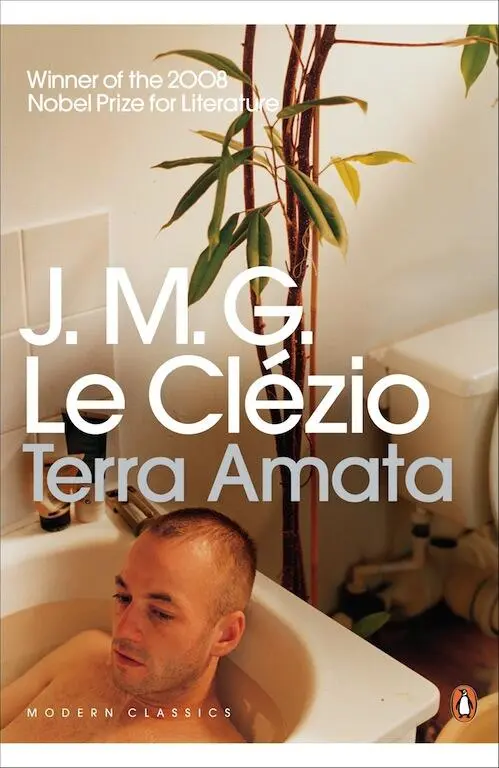
- Название:Terra Amata
- Автор:
- Издательство:Penguin Books Ltd
- Жанр:
- Год:2008
- ISBN:нет данных
- Рейтинг книги:5 / 5. Голосов: 1
-
Избранное:Добавить в избранное
- Отзывы:
-
Ваша оценка:
Terra Amata: краткое содержание, описание и аннотация
Предлагаем к чтению аннотацию, описание, краткое содержание или предисловие (зависит от того, что написал сам автор книги «Terra Amata»). Если вы не нашли необходимую информацию о книге — напишите в комментариях, мы постараемся отыскать её.
brilliantly explores humankind's place in the universe, the relationship between us and the Earth we inhabit and, ultimately, how to live.
Terra Amata — читать онлайн бесплатно полную книгу (весь текст) целиком
Ниже представлен текст книги, разбитый по страницам. Система сохранения места последней прочитанной страницы, позволяет с удобством читать онлайн бесплатно книгу «Terra Amata», без необходимости каждый раз заново искать на чём Вы остановились. Поставьте закладку, и сможете в любой момент перейти на страницу, на которой закончили чтение.
Интервал:
Закладка:
When he got tired of this Chancelade stood up and went out, the cistern flushing loudly behind him.
I LIVED IN THE IMMENSITY OF CONSCIOUSNESS
There are mirrors everywhere in the world. Great dazzling mirrors on the fronts of houses, mirrors inside rooms, on the windows, on the doors, on the pavements. The street-lights are covered with long vertical sheets of metal that sparkle all the time. Cars are so varnished and polished they disappear beneath their own reflections. The earth is a great cold mirror that shines with a strange grey and white gleam. The sea is a mirror, and the supple waves are bits of twisted glass shot through with crooked refractions. On the crystal trees the wind twirls millions of little round looking-glasses, and the sparkling rooftops are huge mercury-coloured sheets for ever deflecting the light. And over all is that infinite mirror curving above the shimmering planet, reflecting the strange spectacle; neither grey nor blue, it is a deep void where gleams of light continually come and go, and it retains in its indefectible prison the wild flickerings of entrapped life.
So Chancelade set out through the labyrinth covered with mirrors. He began to walk along the streets with their exhausting reflections, looking vaguely about him at the hundreds of identical images mutually repeating one another. The street was perfectly straight, encased between the huge glass panels of the buildings, and you couldn’t see the end of it. To left and right was an infinity of other streets all the same, long corridors of chill sunlight that led into one another and desperately mingled. The shopfronts sparkled with light, the windows, the hundreds of similar windows, shone fiercely, but you couldn’t see anything through them; you could only see the same thing always, black lines stretching towards the horizon, lines broken or engulfed by the opaque glass. And all along these lines, so many that it would have been impossible to count them, was a crowd of men like Chancelade, all walking, advancing towards one another, going this way and that, passing one another, fleeing from one another as far as the eye could see.
There was nothing left to get hold of. No opening anywhere. Not the smallest patch of dullness, not the smallest bit of stone or tar where the light would stop and rest. The light rebounded ceaselessly from one panel to another without ever penetrating, moving furiously through the lucid air, reversing a thousand times, starting off again, colliding, separating, coming together, whirling round in a sort of stationary angular maelstrom that couldn’t be dispersed. All was surface, hard slab, sharp metal, cold glass, impenetrable reflection.
Everywhere there were those pitiless eyes that reflected, rejected, destroyed you. Chancelade crossed first one street then another. He threaded his way between a row of cars, disgusting shiny monsters with windows raised and headlights shining, advancing slowly as over an ice-rink. He saw his own silhouette coming to meet him from the other side of the pavement, hands dangling, white shirt dazzling, pale face like a mask of glass with diamond eyes. Underfoot, too, he saw his body upside down, moving along with him like a white shadow. The heat reverberated like the light. It came and went all the time between the four walls of the glass prison, its waves crossing and recrossing, stopping then starting again but never finding anywhere where it might melt away. There was no more water in the world, no more cool or shade. The rivers were transformed into long ribbons of crystal, and the rain had dried on the pebbles leaving only a crust of mica and salt. There were no more hollows or caves; holes had become sharp spikes sticking up like darts, and incandescent light poured out of the windows of the houses; all openings had turned into volcanic craters, spewing out clouds of white-hot gas and tons of molten lava.
One day there had been a spark, and since then there had been no rest anywhere. Light was unleashed in the streets of the town, on the flat mirror of the sea, the earth and the sky. The ground had become a desert waste, a landscape of salt-pans and chalk shimmering in the transparent air. Chancelade looked at the sky and saw in the centre of the great white mirror, so deep that you could not say where it ended, the dazzling disc of the sun. And it was like a disc of glass, steady as a magnifying-glass, which reduced and then reflected the desperate efforts of the light. Everywhere, on the earth, on the windows, between the little glass beads on the trees and the crystal spears of the grass, there were other identical suns fiercely raging.
Chancelade had never seen anything so beautiful and so terrible. As far as the eye could see it was always the same annihilated landscape, hard, transparent, without reality. White light came from every direction at once, never ending, never dimming. The air throbbed furiously, and the reflections moved in gracious procession, like caravans of calm clouds. Human shapes rose up smoothly from the street, appearing, disappearing, sometimes even floating in the air. Stars shone on the shop-windows, or a sun would rise at a corner of the sidwalk and glide along an imaginary orbit. Sometimes, quite near Chancelade, human faces showed themselves, strange shining faces with phosphorescent eyes. And the pavement went on vanishing under his feet, a long carpet of crushed glass whose thousand depths were peopled by moving figures. Groups of women approached in dresses with countless facets. At the very instant that Chancelade caught sight of them they would disappear round a corner, mere pale reflections wiped out by the twist of a mirror. The words written on the walls disintegrated easily too, losing their letters one by one or mingling together till there was nothing of them left.
Chancelade went through the paths of the glass labyrinth, but he never got anywhere. It was always the same street ever renewed, showing new angles, new lines, new vistas. And his glance always came up against the same surfaces, to rebound indefinitely in the disorder of the light. He would turn his head to the right, for example, to look at a tree; but his glance would slip on the trunk, return, hit the windows of a car, set off upwards again and reach the sky, then come down once more to the pavement, bounce like a ball, bump into the wall of a block of flats, go off again, zigzag around, and cast about desperately but in vain; now interrupted, now restored, now thrown back again, it flew all over the place unable to rest and unable to spend itself. And everything came back to Chancelade. The town was a shining trap into which he advanced without knowing what he was doing, and its gates would never open and let him out. He was a prisoner for life of his own vision, a slave of his own knowledge. Eyes were everywhere, not only the hostile eyes of others but also his own, with dilated pupils observing himself from all sides, the cold lenses of an indestructible camera whose only purpose was to film himself. There were mirrors on all sides, huge, tiny, broken, crushed, melted, or curved, and all reflected the man who passed before them, the millions of men all exactly alike who walked and walked and walked in all directions!
Nor did the mirrors reflect images of light and heat alone: from every corner of the town came also eternally repeated echoes of noises from another time. The hum of engines, shouts, hooters, the tapping of high heels, the squeaking of soles, the rustling of materials, the barking of dogs, the shriek of jets, sirens, telephones ringing, the deep murmur of music — all returned without respite, to mingle or merge or separate for unknown intervals. They were echoes, and echoes of echoes. There was nothing left that was true or real. These sounds had occurred in the past, long long ago, but none of them had been lost. On the contrary, they had been concentrated by their comings and goings in the hermetic cave of the world. They had been to the furthest depths of the sky, and recoiled with claps of thunder on to the sheet of glass. Thus with each journey they grew, their waves doubling back on themselves within their prison; one day perhaps they would grow too strong, and the universe would shiver to pieces like a crystal ball.
Читать дальшеИнтервал:
Закладка:
Похожие книги на «Terra Amata»
Представляем Вашему вниманию похожие книги на «Terra Amata» списком для выбора. Мы отобрали схожую по названию и смыслу литературу в надежде предоставить читателям больше вариантов отыскать новые, интересные, ещё непрочитанные произведения.




Обсуждение, отзывы о книге «Terra Amata» и просто собственные мнения читателей. Оставьте ваши комментарии, напишите, что Вы думаете о произведении, его смысле или главных героях. Укажите что конкретно понравилось, а что нет, и почему Вы так считаете.