J. M. Le Clézio - Terra Amata
Здесь есть возможность читать онлайн «J. M. Le Clézio - Terra Amata» весь текст электронной книги совершенно бесплатно (целиком полную версию без сокращений). В некоторых случаях можно слушать аудио, скачать через торрент в формате fb2 и присутствует краткое содержание. Год выпуска: 2008, Издательство: Penguin Books Ltd, Жанр: Современная проза, на английском языке. Описание произведения, (предисловие) а так же отзывы посетителей доступны на портале библиотеки ЛибКат.
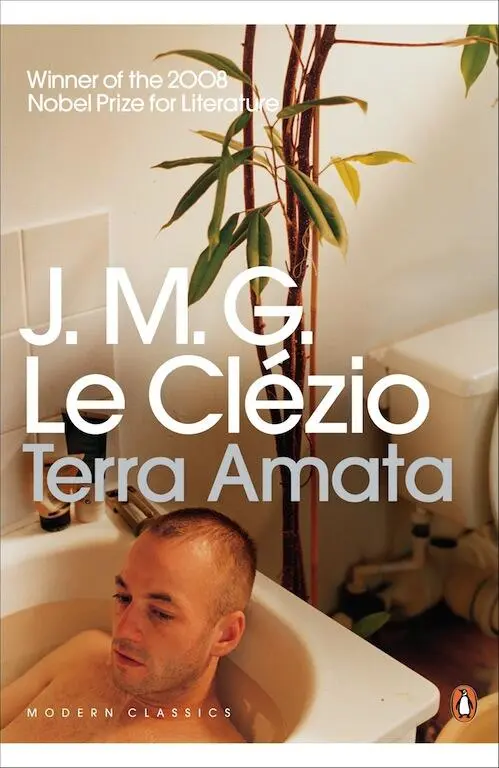
- Название:Terra Amata
- Автор:
- Издательство:Penguin Books Ltd
- Жанр:
- Год:2008
- ISBN:нет данных
- Рейтинг книги:5 / 5. Голосов: 1
-
Избранное:Добавить в избранное
- Отзывы:
-
Ваша оценка:
Terra Amata: краткое содержание, описание и аннотация
Предлагаем к чтению аннотацию, описание, краткое содержание или предисловие (зависит от того, что написал сам автор книги «Terra Amata»). Если вы не нашли необходимую информацию о книге — напишите в комментариях, мы постараемся отыскать её.
brilliantly explores humankind's place in the universe, the relationship between us and the Earth we inhabit and, ultimately, how to live.
Terra Amata — читать онлайн бесплатно полную книгу (весь текст) целиком
Ниже представлен текст книги, разбитый по страницам. Система сохранения места последней прочитанной страницы, позволяет с удобством читать онлайн бесплатно книгу «Terra Amata», без необходимости каждый раз заново искать на чём Вы остановились. Поставьте закладку, и сможете в любой момент перейти на страницу, на которой закончили чтение.
Интервал:
Закладка:
There was no possible end to this life. It was caught inside the furnace and consumed itself on the spot, in the heat and the light, each particle bearing within it the fire that devoured it.
And so Chancelade walked through the town. He went everywhere, along the glass sidewalks, between the walls of houses, under the leaden sky, beside the steel sea and the diamond hills. There was no more fatigue, and no more rest. Only hate, a sort of hate that was also love and desire. Each step he took over the hard earth was counted, weighed, divided. Each gesture was recorded; each breath went straight to the depths of the world, then spread and was lost. Each thought that flashed through his mind shone out over all the earth, sending down roots in the windows of houses, clinging to roofs, trees, clouds charged with electricity. Television aerials thought at the same time as he, and so did the waves and the traffic-lights and the mountain gullies. Words sprang up out of the earth like will-o’-the-wisps, silent words that vanished before they could be read. Now they had replaced the images of matter; the world was no longer dumb or stupid. It spoke with its myriads of mouths, antennae, legs, wing-cases, pistils and stamens. Its voice and consciousness rose continually in the air, and Chancelade was only one sound in that voice, a feeble, distant sound drowned by all the rest. Intelligence shone everywhere, terrible, insensible. The power of a superior language weighed down on Chancelade, heavier than fifty atmospheres, and crushed him. In the precisely moving street the coachwork of the cars threw off their gleams of thought, and the boiling engines purred their accurate words. The walls rose with their invulnerable facades, the iron and concrete lamp-posts stood solid, pure and invariable in their strange unhoping will. The windows were cold and beautiful, and each of their words could kill. The transparent shapes of men moved over them, and it was a language above reason. The invisible air thought. The smooth sky thought, and the rivers, and the trees with their dusty leaves, and the dogs, the rocks, the algae, the broken bottles. And in the centre of the great sparkling dome was one unique thought, more violent than the others, pressing its cone of passion down upon the earth. Chancelade was lost. He hadn’t disappeared, but he was buried in the town itself, like a place in the left-hand corner of a big brightly-coloured tapestry. The dark green shadow on the fretted edge of a rose leaf, for example, or the white gleam in the black pupil of a bird of paradise. One little place in the web, one single point in the huge tapestry depicting the world.
He walked about interminably in the midst of all these thoughts. He went to the right, to the left, to the right again. He walked for hours, minutes, seconds.
He went into a café where the walls and ceiling were covered with mirrors, and drank a glass of beer. And it was a thought. He went out to the cloakroom, and that was a thought too. At a nearby table a young woman with black hair lit a cigarette with a match; the red flame burned alone at the tip of the little stick of white wood, and its thought was a wavering speck in the grey chaos of the smoke. The yellow linoleum lay over the floor under the table, a flat language on which walked the dull thuds of the words of men. The reason of the walls with their dirty mirrors, and of the transparent ceiling, talked without a pause. Chancelade sat for a moment, listening to the sort of conversation going on endlessly in the room:
‘Flat …’
‘Up, up, up’
‘Forward, back, forward, back …’
‘Cigarette’
‘Ceiling’
‘Floor’
‘One, two, three, four, five, six, seven, eight, nine, ten, eleven …’
‘Flow, float, slide …’
‘Black coffee?’
‘STAR!’
‘The blue straw breaks in the empty glass’
‘Here’
‘Six twenty-three and forty seconds, ping!’
‘Round, curved, and spiral’
‘Pool of chocolate, granulated sugar, and …’
‘Dog! Cat! Mouse! Snake!’
‘Michel? Ready?’
‘Disinfectant’
‘Juice’
‘Sun, eh? Moon, eh?’
Then he left. As darkness fell slowly over the mirrors of the town, Chancelade was in turn: standing in front of a shop-window looking at a grey and black reflection that looked back at him. Sitting on a bench, with the rows of cars and the confusion of human legs like a painful river tearing bits of earth from the mountainside. Walking beside a girl in the street, and what they said was already too far away to be understood. Standing on the waterfront by the deep waters of the port; on the surface dark and calm as a cistern, red and white lights were already beginning to appear. With his head turned towards the hills, just in time to see the red disc disappearing beyond the horizon. Chancelade was also at the cinema; he looked through the dark auditorium at the sort of pearly mirror with ghosts dancing and shouting. But that was a subterranean thought, and the world was built around it as on a distant planet; you didn’t know where you were any more — in the caves of the Métro, in hell, or somewhere else.
When night has come down over the town the mirrors are turned back to front, the light and the heat no longer vibrate, the sky and the sea are extinguished, and all the roads are overtaken by slowness. But it is worse than it was before.
In the high-walled labyrinth the neon lights flash on and off without a pause, incomprehensible appeals indefatigably repeated. Black darkness has glided down over the great sheets of glass, opening up terrible depths. Everything has disappeared, almost, and yet everything is still there. You are on the bottom of the sea, in the folds of the icy ocean that presses down and paralyses. These mountains are submerged mountains, riven by sudden abysses whose slopes are clad in dark weeds. On the muddy floor that trembles slowly to and fro, long files of creatures crawl, covered with warts and tentacles. Reflections still reverberate even under water, but so slowly that you can see them approaching through the opaque space, sweeping aside as they come thousands of little moving mirrors that give forth a brief damp slimy gleam. There are trails of bubbles, bloodstained trails that move towards an unknown object and disappear in the darkness. Here noises move with difficulty, surrounded by a sort of halo; they shine as they radiate like stars; each explosion lights its own star. You can no longer see clearly; vision is veiled by a funereal eyelid, and from behind this dusky membrane, lowered like a blind, it seeps out imperceptibly, a light cloud of blood hovering round a wound. Everywhere are heard the tremulous thuds of a life ice-cold and silent and murky; it’s as if danger lurked somewhere, hidden among the steep black cliffs riddled with yellow holes, in the invisible sea-bed, in the air, the sea or the clouds. Everything is unknown. You have to guess and watch all the time, in fear, with cold sweat dampening brow and nape.
The mirrors dazzle no longer; they have become transparent, and on the other side a diabolical world seethes with its great black whirlpools. The mirrors are windows now through which evil will enter, fragile windows that will break from one moment to the next and let in the floods of foul revenge. Everywhere there are these giant aquaria full of sleeping congers and morays with bloodshot eyes, these glass cages in which pythons and vipers coil as in a dream. The nightmare of darkness possesses the town, and every object, every concrete corner, every streetlight vibrates dully with the threat of death. The walls will give. The pavement will open up. The invisible sky draws gradually nearer, bringing down inch by inch its mass of mud and water.
The people are terrible too; they change shape as they pass through the pools of white or blue or pink light, they make exaggerated gestures and their shadows keep deserting them and coming back to them. Some walk along close to the walls, their wan faces peering forward, and instead of eyes they have dark glasses with thick lenses which give off reflections like spikes of steel. The women tap the ground with their sharp heels as they walk, in a rhythm that makes you tremble and follow them. Chancelade is standing still, and a woman arrives at the end of the street and keeps changing colour; first she is blue, then green, then grey, then red, then white. She disappears for a moment in a lane of shadow, and when she appears again she is the colour of blood. She comes nearer, a dull scarlet that seems to be painted on her body and clothes and hair. Chancelade sees the features growing larger on her red face: the closed mouth, the nose, the eyes with their specks of pupils, the forehead, the cheeks, the eyebrows, the quivering hair. The red is in her, entered into her body like a thought. It is her thought become visible, so that she has no need of words or signs. Chancelade watches the red woman approach, and is afraid. Then at the last moment, just as he is about to turn red too, she changes colour as suddenly as if someone had pressed a switch; she turns grey, and is gone.
Читать дальшеИнтервал:
Закладка:
Похожие книги на «Terra Amata»
Представляем Вашему вниманию похожие книги на «Terra Amata» списком для выбора. Мы отобрали схожую по названию и смыслу литературу в надежде предоставить читателям больше вариантов отыскать новые, интересные, ещё непрочитанные произведения.


Обсуждение, отзывы о книге «Terra Amata» и просто собственные мнения читателей. Оставьте ваши комментарии, напишите, что Вы думаете о произведении, его смысле или главных героях. Укажите что конкретно понравилось, а что нет, и почему Вы так считаете.