J. M. Le Clézio - Terra Amata
Здесь есть возможность читать онлайн «J. M. Le Clézio - Terra Amata» весь текст электронной книги совершенно бесплатно (целиком полную версию без сокращений). В некоторых случаях можно слушать аудио, скачать через торрент в формате fb2 и присутствует краткое содержание. Год выпуска: 2008, Издательство: Penguin Books Ltd, Жанр: Современная проза, на английском языке. Описание произведения, (предисловие) а так же отзывы посетителей доступны на портале библиотеки ЛибКат.
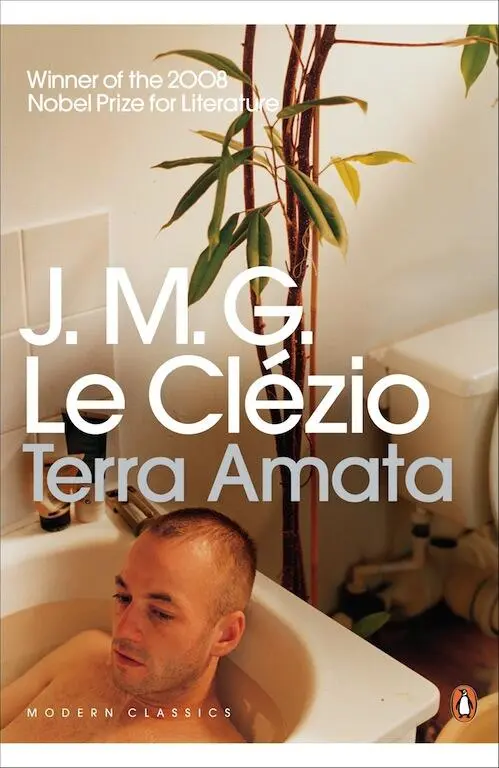
- Название:Terra Amata
- Автор:
- Издательство:Penguin Books Ltd
- Жанр:
- Год:2008
- ISBN:нет данных
- Рейтинг книги:5 / 5. Голосов: 1
-
Избранное:Добавить в избранное
- Отзывы:
-
Ваша оценка:
Terra Amata: краткое содержание, описание и аннотация
Предлагаем к чтению аннотацию, описание, краткое содержание или предисловие (зависит от того, что написал сам автор книги «Terra Amata»). Если вы не нашли необходимую информацию о книге — напишите в комментариях, мы постараемся отыскать её.
brilliantly explores humankind's place in the universe, the relationship between us and the Earth we inhabit and, ultimately, how to live.
Terra Amata — читать онлайн бесплатно полную книгу (весь текст) целиком
Ниже представлен текст книги, разбитый по страницам. Система сохранения места последней прочитанной страницы, позволяет с удобством читать онлайн бесплатно книгу «Terra Amata», без необходимости каждый раз заново искать на чём Вы остановились. Поставьте закладку, и сможете в любой момент перейти на страницу, на которой закончили чтение.
Интервал:
Закладка:
This is what night is. Ink-stains spreading over damp paper, flowing, contracting, streaming, drawing up the ever-changing map of the prison from which there is no escape. Sparks darting higher and thither from one hiding-place to another, black streaks, dust, viscous mud: and here again, red lights like falling stars that get farther and farther away and never disappear.
Chancelade walked alone through the submerged city, touching nothing. It was too far away now, much too far away. Too cold. Rejected.
Then he went into the big building with twenty-nine floors. He went through the glass door and along the corridor full of clear mirrors. Electric light bulbs shone in the ceilings, hidden inside pale globes. He walked without making any noise to the metal door of the lift. He saw the glass button with its strange winking red light. When he pressed it a green arrow lit up and there was a faint sound inside the walls. The sound grew louder every second. At last the metal door opened and Chancelade entered the steel-coloured cubicle. The door closed. Chancelade pressed the top button, which was marked 29. The cubicle immediately began to rise. You could see nothing. It went on rising. The steel-coloured walls vibrated calmly. The white light that came from the ceiling also vibrated on the walls. The cubicle still rose. Every three seconds there was a kind of sharp click and a green number lit up over the door: 9. 10. 11. 12. 13. 14. The cubicle pursued its vertical way without effort, with only that click from outside, followed immediately by a faint sigh. This too was incomprehensible; a movement away from nothing and going nowhere. The floor rose, the steel walls rose, the ceiling with its pale light rose. The clicks followed one after the other, and so did the little sighs. You were in the belly of the whale perhaps, or in a capsule travelling towards nothingness. You had stopped falling. You were retracing the course of time, and the stifled years were reappearing one by one with a click like the sound of a telescope being shut up. 21. 22. 23. Why should it ever end? The tower had no roof. It disappeared into the ether, unravelling gently into the impossible infinite. The world was a cubicle with steel walls, closed in, hermetic, full of signs and arrows, with a luminous glass ceiling. The world rose along its cables, for no reason, just for the sake of rising, in order to continue its magic journey towards a non-existent summit.
When the lift stopped Chancelade stood by the open door for a few seconds without moving. Then he got out and went to find the staircase leading up to the roof. He went up the concrete stairs one by one, listening to the echo of his footsteps. At the top of the staircase there was a door. Chancelade turned the handle and the door opened on to the night.
The wind was blowing fiercely over the concrete roofs. Chancelade did up the neck of his shirt and went forward gingerly over the slippery surface. The roof stretched around him absolutely flat, scarcely gleaming in the darkness, and everywhere you could see ventilation shafts and television aerials. Gusts of warm air heavy with human odours came out of the openings; but they were whirled away as soon as the icy wind rushed howling hollowly among the chimneys. Chancelade tried to walk into the wind, but he grew breathless and had to stop. He turned the other way and let himself be driven towards the edge of the roof, using his legs as brakes. When he got near the edge he caught hold of a chimney with one hand and looked around him. As in a dream he saw the town stretching away as far as the eye could reach, crushed against the earth at a dizzy distance, dark and empty. It was still night, and yet, seen from this height, everything was pure and sharp in its still outline. The black houses, the straight streets, the fixed specks of light, the glimmerings of the cars — everything was there below, gathered together, intact. The grey ocean had withdrawn and the relief of the earth could be seen, grey, black, purple, magnificently put together. Farther away was the inky curved mass of the sea, and further still the rolling hills and jutting mountains.
Chancelade took another step forward, without letting go of the chimney. While the wind threw itself against his body to blow him down, he looked towards the foot of the building; and the sort of black well immediately rose towards him, with its shriek of terror and hatred: the lighted street and the cars, the hundreds of lighted windows, the soundless movement of the crowd. The void grew harder, aiming an invisible shaft at him that pierced his belly, his glands, his groin, and even his brain. He stood petrified for a moment, then leapt back and drew away shivering from the precipice.
The wind was still howling among the chimneys. Chancelade noticed that he was cold. He looked round for somewhere to shelter, but the roof was flat and there was nothing but the concrete tubes of the ventilation shafts and the bristling television aerials. Then he went to the centre of the roof and lay down full length facing the sky. He stayed there for a long time, listening to the sound of the wind and looking at the black sky and the hard bright stars.
Here, in the terrible cold that swept the roof, the glass dome looked perfectly smooth. It stretched there still and cold, thousands of miles away, like a huge drop of ink on the nib of a fountain-pen. There was no light. There was no speed. The white specks of the stars were fixed in the dense block, frozen eyes that did not see. It was the wilderness or something like it. Nothing, either in or around, nothing offered to the view, nothing seen. The efforts of the light, the rumbling sounds, the chaotic movements, all were lost in the deep well. There were no legs or fins or suckers; only this hollow belly into which everything had disappeared, in which everything was digested. This flat hollow, this infinity suddenly drawn back, this shop-window out of all possible reach. Slowly, eternally, all vain things ascended towards the sky, and the shafts they raised were gradually dissolved. The world’s reflections were swallowed up by darkness — the thoughts of horses and men, the cries of parrots, wars, cycles, sufferings, joys, and deaths. The sky thirsted for life and light. It sucked up relentlessly the savours of the earth, menacing, weakening it with all its strength. All lines led towards it, seeking a meeting-point in its space. But it was always elsewhere.
Scraps of matter floated and glided in the void. Suns exploded, stars contracted, archipelagos of planets whirled round upon themselves and disappeared. Bits of diamond were heaped together in some corner of a vast room with movable walls. Specks thrown into the silence hurtled along at thousands of miles a second. Clouds of gas transparent or opaque hung motionless, yet wisps streamed towards the earth with the speed of light. There was no more chaos or order. Only gulfs, gulfs opening on gulfs, hollows, abysses, unfathomable rifts, gullies, pits, and endless couloirs; and darkness kept flowing endlessly, cramming and ever spewing clouds of vapour into the swelling glass vase. You couldn’t read any more; you could neither hope for anything any more, nor despair. Nor hate. Nor love. Nor curse. Nor try to do anything. You couldn’t make little marks on paper any more and look at them with satisfaction, thinking that the surface of the empty mirror reflected the dazzling face of a man with a gentle smile and a brow covered with blood. The sun itself had been confounded. It could no longer blind you. Its place in the sky had been taken by this kind of hollow, this screw digging ever deeper, and the movement that bored this terrible hole was the movement of the mind dying. On top of the 29-storey building, Chancelade realized that he was going to start ascending again. But this time it was not inside the steel-walled cubicle. The whole earth had now become a lift, gliding on invisible cables up through the strata of the dark sky.
Читать дальшеИнтервал:
Закладка:
Похожие книги на «Terra Amata»
Представляем Вашему вниманию похожие книги на «Terra Amata» списком для выбора. Мы отобрали схожую по названию и смыслу литературу в надежде предоставить читателям больше вариантов отыскать новые, интересные, ещё непрочитанные произведения.



Обсуждение, отзывы о книге «Terra Amata» и просто собственные мнения читателей. Оставьте ваши комментарии, напишите, что Вы думаете о произведении, его смысле или главных героях. Укажите что конкретно понравилось, а что нет, и почему Вы так считаете.