J. M. Le Clézio - Terra Amata
Здесь есть возможность читать онлайн «J. M. Le Clézio - Terra Amata» весь текст электронной книги совершенно бесплатно (целиком полную версию без сокращений). В некоторых случаях можно слушать аудио, скачать через торрент в формате fb2 и присутствует краткое содержание. Год выпуска: 2008, Издательство: Penguin Books Ltd, Жанр: Современная проза, на английском языке. Описание произведения, (предисловие) а так же отзывы посетителей доступны на портале библиотеки ЛибКат.
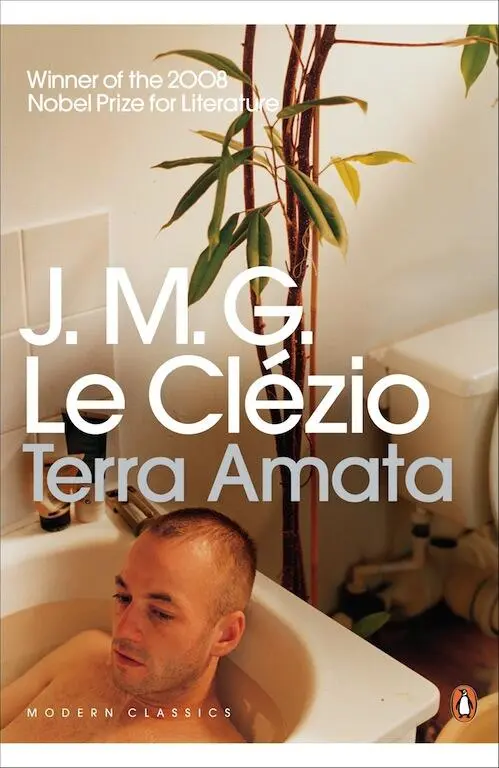
- Название:Terra Amata
- Автор:
- Издательство:Penguin Books Ltd
- Жанр:
- Год:2008
- ISBN:нет данных
- Рейтинг книги:5 / 5. Голосов: 1
-
Избранное:Добавить в избранное
- Отзывы:
-
Ваша оценка:
Terra Amata: краткое содержание, описание и аннотация
Предлагаем к чтению аннотацию, описание, краткое содержание или предисловие (зависит от того, что написал сам автор книги «Terra Amata»). Если вы не нашли необходимую информацию о книге — напишите в комментариях, мы постараемся отыскать её.
brilliantly explores humankind's place in the universe, the relationship between us and the Earth we inhabit and, ultimately, how to live.
Terra Amata — читать онлайн бесплатно полную книгу (весь текст) целиком
Ниже представлен текст книги, разбитый по страницам. Система сохранения места последней прочитанной страницы, позволяет с удобством читать онлайн бесплатно книгу «Terra Amata», без необходимости каждый раз заново искать на чём Вы остановились. Поставьте закладку, и сможете в любой момент перейти на страницу, на которой закончили чтение.
Интервал:
Закладка:
The lizard runs away over the old sunbaked wall. When he goes by a dark stone he turns brown, and when he goes by a leaf he turns green. Isn’t that a truth in its way? Everything hides when danger comes. They sham dead, and the type of the secret of the void is already in their shells. The stick insect pretends to be a twig. The leaf insect acts a leaf. The moth pretends to be only a dark patch, and the butterfly pretends to be a flower. The aloe opens its sharp-toothed jaws, the corn makes its ears bristle. The tiger wears the stripes of his fear, the bison crouches like a rock. And the crocodile is like a floating log, unless it’s that a floating log is like a crocodile. All fears work towards their mysterious design, the enigma painted on skin or scale that means there is always a prey and always a hunter. It’s as if at the moment of the Creation there was a sly old man whose cruel laugh echoes still.
So with Chancelade or anyone else you could play the final game of metamorphoses:
Chancelade turned into a mouse; death turned into a cat.
Chancelade turned into a fish; death turned into a net.
He turned into an apple; death turned into a knife.
He turned into a microbe; it turned into a sulphonamide.
He turned into fire; it turned into water.
He turned into a cigarette; it turned into a lighter.
He turned into a window; it turned into a stone.
He turned into a mountain; it turned into wind and rain.
He turned into dust; it turned into a vacuum-cleaner.
He turned into a hair; it turned into a razor.
He turned into a bird; it turned into a gun.
He turned into a tree; it turned into an axe.
He turned into a king; it turned into a revolution.
He turned into a snail; it turned into a boot.
He turned into a town; it turned into a volcano.
He turned into a corpse; it turned into a worm.
He turned into matter; it turned into anti-matter.
He turned into writing; it turned into crossing-out.
THEN I GREW OLD
Old, now. The little boy who was called Chancelade was sitting in a wicker armchair in the kitchen. There was a t able covered in crumpled newspapers in front of him, and nearby a television set, switched off. It had been hot for some days, months even; and all that heat and light had entered the kitchen, penetrating the yellow paint on the walls, thrusting into the tiled floor and the furniture, and slowly melting the oilcloth and sheets of plastic. Everything sweated: skin, ceiling, clothes, gruyère cheese, glasses. There was a sort of glue over everything, and you couldn’t move.
And the boy didn’t move; he sat on his wicker armchair gripping the arms with his trembling hands, back bowed, legs tucked under the seat. His old, emaciated face had difficulty staying still on his shoulders. It kept threatening to fall on the floor, heavy as a ball of lead. His eyelids kept shutting too; they slipped down over the damp spheres of the eyes and it needed a lot of effort not to fall asleep. On the thin face, which wasn’t white any more, merely pale and yellowish, there was a curious permanent expression of anxiety, fatigue, and incipient sleep. Chancelade looked straight in front of him, but you couldn’t have said for certain what he was looking at. Perhaps at the pages of the paper on the table, or the grey television screen, or the wall with nothing on it.
In spite of the light of all those hot months, all those bright and burning years, the kitchen was dark. What was white anywhere else, here was grey. What was red or blue was brown. And what was black was invisible. Outside there was a cobalt-blue sky and houses with red roofs. Trees, with masses of leaves and branches, faint smells, scents of sugar or pepper, rustlings, cries, sudden flashes. But they couldn’t get through the closed window, and even if they could enter the room they couldn’t be recognized any more. It was all so far away now it might never have existed. It was like a curtain of mist above the horizon, it was a blanket of clouds and vapour without movement and without relief.
The boy called Chancelade was old: he’d lost his teeth and hair, his body had gradually emptied bit by bit. His bones were fragile as glass, and his muscles had no more strength in them. The cracks of a thousand wrinkles had appeared on his skin, advancing by little bounds all over his body, drawing their little signs, a sort of writing leaving its series of hooks and loops. You could read it everywhere, the x’s at the corners of the eyes, the y’s on either side of the mouth, the z’s round the navel and on the palms of the hands. The veins too had revealed their routes along the thin arms and the calves. They sprang out on each side of the neck and stood out on the temples, the skull, and round the eyes. They made crossroads on the backs of the hands, were vivid on the thighs in little blue patches. Or else they knotted themselves into hard blocks that formed bridges and tunnels, stiff black lumps on the ankles, legs and arms. There was nothing all over Chancelade’s body but these signs and scribbles and scars. Time had weathered that skin. The sun had withered, the light had yellowed, the rain had drenched and worn and chapped it. Clothes had rubbed against it. Cushions, the straw of chairs, mattresses had hardened it. Illness and suffering had tattooed it thus for endless years. If you’d had a microscope you could have read on that body all that had happened during more than eighty-one years. Here were marked wars, there love, passion. There again on the pale forehead was a little star which meant that you’d once believed in God, or that you’d had a soul. There was a little curved vein at the corner of the left eye that meant you’d read The Grapes of Wrath . That mark on the cheek was Dostoievsky; this wrinkle between the eyebrows The Battleship Potemkin . Everything, absolutely everything, was written on this body. Nothing had been forgotten, nothing had been suppressed. It was a notebook in which the invisible hand had written all the time that elapsed, the illnesses, the desires, the thoughts, the fears. One day long, long ago Chancelade had found a wounded seagull on the beach. It was dragging itself across the pebbles with a broken wing, and had been quite easy to catch. He’d taken it home and looked after it for two months. He’d given it a name: Maya. Every day he took it down to the sea in his hands, and it used to look at the water and cry sadly: ‘Khéeeoooh kek kek kek kek kek!’ It had a very white body with black tail and wing-tips, a red beak, red feet and grey eyes that were as hard and transparent as the surface of the sea. And then one day, when its wing was almost cured, a dog came into the garden and killed it. When Chancelade came there was nothing left but a heap of bloodstained feathers and earth, and he’d thrown it right out into the road, without crying, so that the dog could finish eating it. But the bird had remained, marked there on his body, a sort of asterisk carved in the skin of his brow, a strange sort of wrinkle shaped like a bird.
Another time, also very long ago, Chancelade had upset a cup of coffee on the beach, at Acireale, or Calamayor. And the brown patch slowly absorbed by the sand was also marked on his body for ever; somewhere on the skin, or in a nerve.
Everything was written down. Everything could be read on this skin as on the skin of the world. Wrinkles, weals, spots, excrescences: faults, deposits, volcanoes and mountains! These signs had been engraved one by one, and now on the body of the little boy become an old man there were sentences and pages and chapters telling the history, the only true history, the one a man writes with his life.
Not a second was forgotten. Everything was there: the woman’s face lit up red on the dark staircase as she lit her cigarette. The whistle of tracer bullets. The broken tooth. The first kiss. The summer mosquitoes, the blue flies of winter. The moon on September 12,1951. Marriages, deaths, births. The sound of the pebble breaking. Lightning, snow, the doleful wail of the wind. Voices, voices for ever wandering in the distance, with everlasting echoes. A living novel, an epic with four limbs, armpits, hairy parts, and an expressive face. A poem born one day in the belly of a woman, which launched on his own had grown up into the greatest poem in existence. Perhaps that’s what one ought to do instead of trying to remember: learn to read life on living bodies. Keep all these mummies in huge refrigerated rooms, and come there every day and peacefully decipher every detail that’s written on them. Perhaps there’s no other art but that. Perhaps there’s no other language but that real, mysterious and beautiful script individual to each person, where nothing is omitted and nothing altered or distorted in the service of some artificial and futile beauty.
Читать дальшеИнтервал:
Закладка:
Похожие книги на «Terra Amata»
Представляем Вашему вниманию похожие книги на «Terra Amata» списком для выбора. Мы отобрали схожую по названию и смыслу литературу в надежде предоставить читателям больше вариантов отыскать новые, интересные, ещё непрочитанные произведения.
Обсуждение, отзывы о книге «Terra Amata» и просто собственные мнения читателей. Оставьте ваши комментарии, напишите, что Вы думаете о произведении, его смысле или главных героях. Укажите что конкретно понравилось, а что нет, и почему Вы так считаете.