J. M. Le Clézio - Terra Amata
Здесь есть возможность читать онлайн «J. M. Le Clézio - Terra Amata» весь текст электронной книги совершенно бесплатно (целиком полную версию без сокращений). В некоторых случаях можно слушать аудио, скачать через торрент в формате fb2 и присутствует краткое содержание. Год выпуска: 2008, Издательство: Penguin Books Ltd, Жанр: Современная проза, на английском языке. Описание произведения, (предисловие) а так же отзывы посетителей доступны на портале библиотеки ЛибКат.
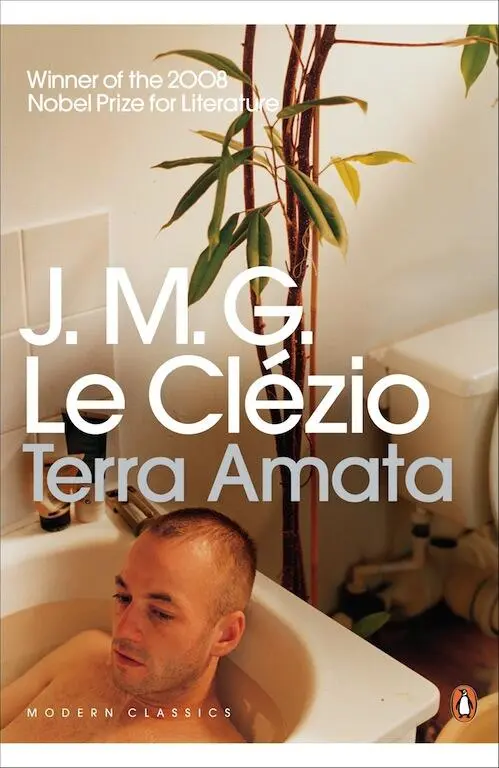
- Название:Terra Amata
- Автор:
- Издательство:Penguin Books Ltd
- Жанр:
- Год:2008
- ISBN:нет данных
- Рейтинг книги:5 / 5. Голосов: 1
-
Избранное:Добавить в избранное
- Отзывы:
-
Ваша оценка:
Terra Amata: краткое содержание, описание и аннотация
Предлагаем к чтению аннотацию, описание, краткое содержание или предисловие (зависит от того, что написал сам автор книги «Terra Amata»). Если вы не нашли необходимую информацию о книге — напишите в комментариях, мы постараемся отыскать её.
brilliantly explores humankind's place in the universe, the relationship between us and the Earth we inhabit and, ultimately, how to live.
Terra Amata — читать онлайн бесплатно полную книгу (весь текст) целиком
Ниже представлен текст книги, разбитый по страницам. Система сохранения места последней прочитанной страницы, позволяет с удобством читать онлайн бесплатно книгу «Terra Amata», без необходимости каждый раз заново искать на чём Вы остановились. Поставьте закладку, и сможете в любой момент перейти на страницу, на которой закончили чтение.
Интервал:
Закладка:
It was good to have grown old like Chancelade. You were still the same, and yet you’d changed body and soul. And one day you found yourself there at journey’s end, sitting without moving in a creaking wicker chair in the kitchen. The noise and agitation had ceased, the fever had subsided. Violence and hatred had slowly withdrawn, and now in their place was silence.
With difficulty Chancelade got out a packet of cigarettes and a box of matches; jerkily he selected a cigarette and put it in his mouth. Then his left hand, trembling, took hold of the matchbox, and the right hand tried to strike the little wooden stick, which broke. The hand hesitated a moment, then took another match; this time the orange-red flame spurted up. Chancelade raised it wavering to the cigarette and the tobacco caught alight and spread clouds of grey smoke.
Chancelade went on smoking like that endlessly. Every so often the cigarette would go out and he’d have to grope for the box of matches in his coat pocket. It was three o’clock in the afternoon, or five o’clock, or six. It didn’t matter. It couldn’t matter any more. His gaze was fixed without moving on the wall, just over the table with the papers on it, a little to the left of the silent television set. He never looked at himself now; he was lost, buried in the yellow paint, tucked right inside the wood and plaster as if between sheets. From time to time a few words would come to his lips; they came from far away, they’d crossed such vast lands, they’d travelled so long; and when, trembling, they crossed his lips, they stopped at once, mingled with the rasping breath. They said snatches of sentences, and the silence that followed them said nothing.
‘It’s funny, I …’
‘I must, I must …’
‘But what …’
The words were not addressed to anyone any more. Men, women, little children, they were all dead, easily, just like that; Mina, Alfred, Jean, Étienne, Emmanuel. Servat, Manzoni, Filippi. Schwob. Nichols. Corelle. Ensin. Alata, Tallon, Jérôme Banyors, Vultureni, Roland. All of them had gone, all. The world had swallowed them up one by one. The sea had drowned them, the sand covered and the fire consumed them. Dogs, cats, rats and scorpions had disappeared too. There was nothing left but him, the little boy with the face of an old man who was called Chancelade. In the hot kitchen with the door and windows shut, life still beat on. It had become a tiny speck in the middle of the desert, the crater dug by an ant-lion for example. It still palpitated slightly, a gentle flicker of the eyelid. It shone, a pale spark almost imperceptible in the immense chaos of the dense night. You could hardly distinguish it from nothingness. As you drew near the wicker armchair you could hear the panting breathing, the gurgling of the intestines, the sound of the throat trying to swallow a little saliva. You could even stammer the name between your quivering lips: ‘Chchchan-cece-celllladdde …’ but it scarcely meant anything now. It had become a strange almost sad name from an old civilization, a name mutilated even before it was engraved in the leprous stone. This empty bubble still preserved life and its changing reflections. But in the closed room the light and violence of the world pressed in on all sides, and the thin partition had difficulty in resisting. Everything conspired to break this bubble at last. The table wished it, with its square legs. The yellow walls wished it. The luminous window and the dull television screen wished it. The crumpled newspapers, the red floor bore down, and so did the wicker chair, clenching its arms and hardening its back; the grey light and the heat had gripped Chancelade’s head in their vice, which turned and tightened slowly and inexorably. The struggle wasn’t over, but it was now without object. The little boy had surrendered long ago, but the battle continued out of habit, because the fly goes on trembling long after the terrible blow that crushed its abdomen.
Then Chancelade began to move. First he stopped looking at the old yellow wall and turned his head towards the kitchen window. Through the dirty panes he could see the blue sky, the branch of a tree, and the pots of geraniums on the terrace. He gazed for a few moments at this unchanging fragment of the world. Then he gripped the arms of the chair and rose slowly to his feet, all his muscles trembling with the effort. At last he was standing up beside the table. He was wearing a pair of red slippers with blue heels, and his feet weighed down on the floor like two painful plinths. The little boy straightened his bent back and took a deep breath. But the air too trembled as it entered his lungs, and it was difficult to keep his balance. Chancelade peered about for his stick. It had fallen down a couple of yards from the table. For a moment he thought he’d have to call someone, his son, or his daughter-in-law, or even Daniel, the baby. But then he remembered they’d gone out for a drive after lunch and wouldn’t be back until the evening. He’d have to pick the stick up himself. He moved very slowly round the table, leaning on his right hand. Then he bent forward, and his body started to tremble even more. His glasses fell out of his coat pocket and broke on the floor. Chancelade had never imagined the ground was so far away. It was like seeing it from the top of a tower, a gleaming flat expanse of red brick, covered with little bobbles of dust like clouds. Ants hurried along the cracks between the tiles, stopping every time they came to a scrap of food. It was as if your legs had grown enormously long during the night, so that the earth was now at the bottom of an unfathomable abyss. Chancelade stretched out his left arm and groped for the stick. At last, after many attempts, his hand encountered the wood and picked it up. Then he stood up and leaned on it. A sort of thin sweat had broken out on his forehead and dampened his shirt. His legs were trembling with fatigue. He hesitated there for a few minutes, standing by the table leaning on his stick. Then he looked out of the window again and set off.
When he reached the street he stopped again and looked about him in terror. The storm of movement and colour all descended on him at once, and he had to lean against a wall so as not to fall. As far as he could see there was nothing but a tide of violence and rage. The loud long waves swept slowly down on him, the undertow dragged at his legs, flashes of light rained down without a pause on his face. The crowd marched rhythmically along the pavement with heavy, crushing feet. In the road the cars hurtled by, devouring space with their rotating black tyres. An ambulance made its way along the middle of the street, the strident shriek of its siren issuing frenziedly from the painted metal body. It was there, everywhere, distended, tensed, stretched to breaking-point: life, still the same life with its furious flickerings, life leaping forward, pullulating, felling, breaking bones. Multiple torture, wheels laden with broken bodies, gibbets with strangled corpses, garottes, guillotines, axes, pincers, gouges, whips. Still the same ditch crawling with centipedes and snakes, and the heavy flail of the sky above. Still the light with its numberless knives. Still the white walls with windows in them, the thick tar, the stifling smell of petrol. The trees. The pale panes of glass tougher than steel. Mirrors with their eternal fires. Hooters, harsh cries, voices, words lost and found and lost and found, endlessly, without respite. Still that pain, or that pleasure, it was hard to remember which, that gnawed at the pit of the stomach and made the temples throb.
The boy Chancelade went along the street step by step. He dragged his red slippers with their blue heels over the rough pavement, striking the echoing ground with the rubber end of his stick. On he went. His legs moved trembling back and forth and his body advanced bearing aloft the old wrinkled face with its grey eyes and hair. Men kept meeting or overtaking him; women glided along flaunting their hips, the sharp tap of their heels fading rapidly along the street.
Читать дальшеИнтервал:
Закладка:
Похожие книги на «Terra Amata»
Представляем Вашему вниманию похожие книги на «Terra Amata» списком для выбора. Мы отобрали схожую по названию и смыслу литературу в надежде предоставить читателям больше вариантов отыскать новые, интересные, ещё непрочитанные произведения.
Обсуждение, отзывы о книге «Terra Amata» и просто собственные мнения читателей. Оставьте ваши комментарии, напишите, что Вы думаете о произведении, его смысле или главных героях. Укажите что конкретно понравилось, а что нет, и почему Вы так считаете.