J. M. Le Clézio - Terra Amata
Здесь есть возможность читать онлайн «J. M. Le Clézio - Terra Amata» весь текст электронной книги совершенно бесплатно (целиком полную версию без сокращений). В некоторых случаях можно слушать аудио, скачать через торрент в формате fb2 и присутствует краткое содержание. Год выпуска: 2008, Издательство: Penguin Books Ltd, Жанр: Современная проза, на английском языке. Описание произведения, (предисловие) а так же отзывы посетителей доступны на портале библиотеки ЛибКат.
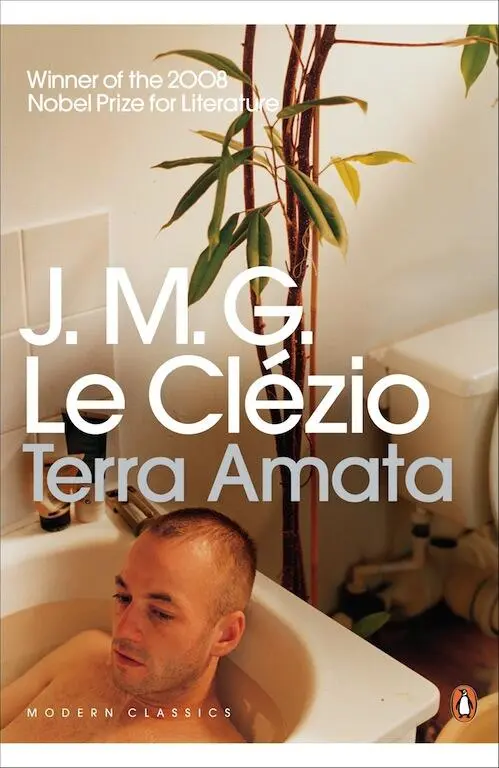
- Название:Terra Amata
- Автор:
- Издательство:Penguin Books Ltd
- Жанр:
- Год:2008
- ISBN:нет данных
- Рейтинг книги:5 / 5. Голосов: 1
-
Избранное:Добавить в избранное
- Отзывы:
-
Ваша оценка:
Terra Amata: краткое содержание, описание и аннотация
Предлагаем к чтению аннотацию, описание, краткое содержание или предисловие (зависит от того, что написал сам автор книги «Terra Amata»). Если вы не нашли необходимую информацию о книге — напишите в комментариях, мы постараемся отыскать её.
brilliantly explores humankind's place in the universe, the relationship between us and the Earth we inhabit and, ultimately, how to live.
Terra Amata — читать онлайн бесплатно полную книгу (весь текст) целиком
Ниже представлен текст книги, разбитый по страницам. Система сохранения места последней прочитанной страницы, позволяет с удобством читать онлайн бесплатно книгу «Terra Amata», без необходимости каждый раз заново искать на чём Вы остановились. Поставьте закладку, и сможете в любой момент перейти на страницу, на которой закончили чтение.
Интервал:
Закладка:
The pit had gradually deepened in the too-soft pillows. Cold had penetrated the folds in the sheets, the blankets, the mattress, and gradually enfolded the thin body, making it shudder. Chancelade was still breathing, lying on his back with his mouth open. The raucous sounds filled the room, now quick, now faint and far apart. On the bedside table, among all the medicine bottles and tubes, the clock went on ticking regularly, as if to show what had to be done. On the white dial the hands showed something like six o’clock in the morning. When the hand was on five, you’d been born. When it was on seven, you’d be dead. That was the truth about time, truth itself in the form of a clock with a little steel knob that you turned from left to right every so often to wind it up.
Outside, cars let out sudden growls as they started up. A bus made a sneezing noise as it braked, and there were strange incomprehensible cries. Somewhere in the east the sun was rising behind a twelve-storey building, and the grey and pink light spread over the pavements as usual. It was today, or yesterday. Or perhaps tomorrow. It was here, or there, or farther away still. It was true or false, beautiful or ugly, peaceful or violent. It was infinity, or the gummed square inch of a postage stamp.
The boy Chancelade has started to play the last game of all. In the soiled bed, on the collapsing mattress, he has arranged his body for the last little adventure. He is playing against himself, with his own body, skin and mind. The game is quite simple: you have to lose as slowly as possible, suffering as little as possible. You lose a toe, then another, then another. An ankle, a finger. A word. An image. The trifles disappear one after the other into the dark hole. All that you put down you lose. All that you win you abandon at once to the dark river that strips and laves so carefully, and washes everything away.
It isn’t a new game; in fact, it’s the last episode in a game that began a long time ago, so long ago that no one remembers. Every cigarette that was lit, every word that was spoken, every act performed was a move in the game, and one didn’t know it. It was a mistake to think that there was no enemy; the enemy was there from the very beginning, lurking in the depths of mirrors. He had your mouth, your eyes, your ears, your nose, your chest, your legs, your fingerprints. He had your thoughts and spoke your language, but every word of yours that he echoed automatically cancelled out its original. Your enemy was you, you.
Consciousness had killed consciousness. Sight had turned on itself and gone blind; your light struck against the opacity of the world, rebounded, and annihilated you. Intelligence was also stupidity. Creation was destruction. The light of day contained impenetrable darkness. In every reason there was frenzy. In every word the approach of silence.
They’ve come. They’re gathered in the room, around the bed on which the body now scarcely stirs. The boy suddenly saw them all standing there round him like a wall. He knows their faces but he can’t give them a name. Who is this man with the thin unmoving face and sunken eyes? Who is this black-haired woman holding a handkerchief to her nose? And that other woman with swollen eyelids? That girl in white? Who is this man with thick glasses who takes hold of Chancelade’s wrist? What are all these people called, and what are they doing here? Chancelade tries to slide to the bottom of the bed and disappear through the pillows and the mattress, sink through the floor; but in vain. With horror he sees the crowd slowly growing in the grey room and looking at him. What do they want? What are they looking for? There are faces everywhere, familiar faces become unrecognizable. The harsh light of the new day throws dark shadows on their cheeks and noses and eye-sockets. Under the heavy lids the eyes shine feverishly, like balls of steel. Chancelade is on show. His body, stretched out on the bright white bed, is exposed to curiosity and disgust. Faces are bent towards him, fingers stretched: he is the cynosure, a sort of wax-faced hollow mummy in which everyone tries to see the signs of a brotherhood betrayed. For they have abandoned him. They have denied him. No one wants anything more to do with him, he must be forgotten, forgotten. The last metamorphosis has taken place, in this closed room, in the soft and weak half-light.
And the eyes in the faces round the bed have formed the final mirror, the great sheet of tarnished foil that separates off the world of the living. There beyond the glass they are afraid of nothing. They can watch the old snakeskin writhe in the dust, the grey rag that no longer has a name or a shape. They have all come to perform the rite of exile. Father, mother, wife, friends, mistresses, children, doctors and lawyers. They have emerged from the darkness where they were hiding, and now they keep thrusting, thrusting him away.
Chancelade has slipped back even farther. He has opened his mouth wide, and he shrieks out his curse at the same time as the whistling death-rattle. He cries out, he tries to cry out, but the words cannot get past the opening of his throat. He says, looking at all the marked faces round the bed:
‘What are they doing here? Go away! Go away! I don’t need all these people round me. Tell them to go away, leave me alone. Go away! Go away!’
But no one listens. The ghosts will all stay there till the end. The woman with black hair will lean over to the man and whisper:
‘It’s awful — awful — I can’t bear it …’
‘He ought to be given an injection of caffein, but …’
‘Tell Emmanuel to go away, he oughtn’t to—’
The strange whirlpool has begun. Chancelade looks at the walls going round. He starts to laugh, choking, as the faces of the bystanders keep going past. At one point he says:
‘Hallo? I’m speaking direct to my bladder. Hallo, are you there?’
And he laughs louder, and chokes more. The doctor draws back, saying: ‘… delirious …’
After hours and hours of black and white dizziness, Chancelade sees the face of the little boy approaching the bed. He’s about eleven, with short fair hair and two staring blue-grey eyes that look at him strangely. From the midst of his dream Chancelade sees the little boy who resembles himself, and talks to him softly, stammering a little.
‘What, what’s your name?’
‘I, it …’
‘So you came?’
‘Yes.’
‘I don’t — I can’t remember.’
‘Yes, you do, it’s easy, it was when you got lost in the forest at Turini, don’t you remember?’
‘Oh yes, there was a, there was a winding road.’
‘And trees everywhere …’
‘And dark, it was dark, wasn’t it? And it rained a little.’
‘And you started to run as fast as you could, and call out.’
‘I–I was frightened …’
‘You thought there were wolves behind every tree.’
‘Yes, I kept on running and calling out.’
‘There, there were people watching you go by.’
‘I didn’t know what I was doing, I …’
‘You kept running till your legs hurt …’
‘And I was calling out … calling out all the time …’
‘That’s right … I remember quite clearly …’
‘Why are you here?’
‘You know that too, don’t you?’
‘I–I’m ill.’
‘Yes.’
‘And all these people, why are there all these people?’
‘Where? I can’t see anyone.’
‘Yes, there, all round me. Tell them to go away.’
‘But there isn’t anyone.’
‘Can’t you see them?’
‘No …’
‘Everything — everything’s so far away now.’
‘But you remember that?’
‘What, the thunderbolt that fell on the mountain?’
‘Yes, and the, the rock that toppled over. Like a bees’ nest.’
Читать дальшеИнтервал:
Закладка:
Похожие книги на «Terra Amata»
Представляем Вашему вниманию похожие книги на «Terra Amata» списком для выбора. Мы отобрали схожую по названию и смыслу литературу в надежде предоставить читателям больше вариантов отыскать новые, интересные, ещё непрочитанные произведения.


Обсуждение, отзывы о книге «Terra Amata» и просто собственные мнения читателей. Оставьте ваши комментарии, напишите, что Вы думаете о произведении, его смысле или главных героях. Укажите что конкретно понравилось, а что нет, и почему Вы так считаете.