J. M. Le Clézio - Terra Amata
Здесь есть возможность читать онлайн «J. M. Le Clézio - Terra Amata» весь текст электронной книги совершенно бесплатно (целиком полную версию без сокращений). В некоторых случаях можно слушать аудио, скачать через торрент в формате fb2 и присутствует краткое содержание. Год выпуска: 2008, Издательство: Penguin Books Ltd, Жанр: Современная проза, на английском языке. Описание произведения, (предисловие) а так же отзывы посетителей доступны на портале библиотеки ЛибКат.
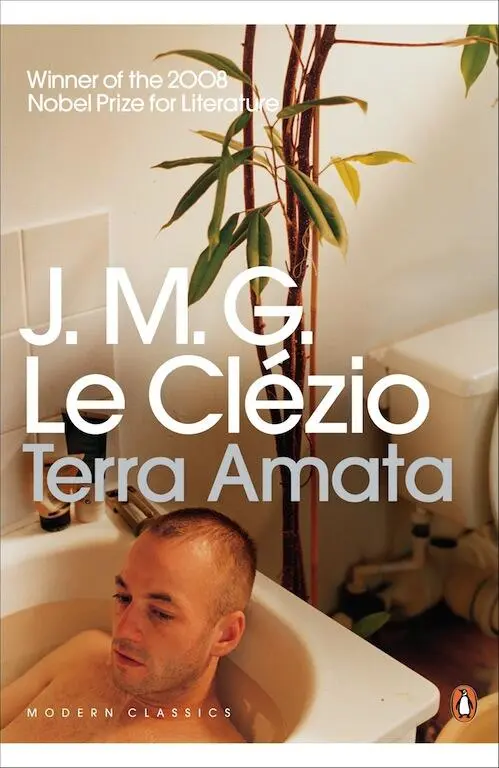
- Название:Terra Amata
- Автор:
- Издательство:Penguin Books Ltd
- Жанр:
- Год:2008
- ISBN:нет данных
- Рейтинг книги:5 / 5. Голосов: 1
-
Избранное:Добавить в избранное
- Отзывы:
-
Ваша оценка:
Terra Amata: краткое содержание, описание и аннотация
Предлагаем к чтению аннотацию, описание, краткое содержание или предисловие (зависит от того, что написал сам автор книги «Terra Amata»). Если вы не нашли необходимую информацию о книге — напишите в комментариях, мы постараемся отыскать её.
brilliantly explores humankind's place in the universe, the relationship between us and the Earth we inhabit and, ultimately, how to live.
Terra Amata — читать онлайн бесплатно полную книгу (весь текст) целиком
Ниже представлен текст книги, разбитый по страницам. Система сохранения места последней прочитанной страницы, позволяет с удобством читать онлайн бесплатно книгу «Terra Amata», без необходимости каждый раз заново искать на чём Вы остановились. Поставьте закладку, и сможете в любой момент перейти на страницу, на которой закончили чтение.
Интервал:
Закладка:
‘Yes …’
‘The rain makes a funny noise falling.’
‘Yes, on the corrugated iron roof, and—’
‘And a funny smell too, in the concrete huts.’
‘At Abakaliki, yes, I remember.’
‘And the ant-hills burst open when you hit them with a stick.’
‘Yes, and the red ants bite your legs …’
‘There are pools in the rocks.’
‘Yes, at Belle Croûte Bay …’
‘And the wind blows.’
‘At Highlands, yes, I remember …’
‘Well, I’ve come to say goodbye.’
‘Already?’
‘Yes.’
‘What time is your train?’
‘Half past six.’
‘Oh.’
‘It’s going to be a hot day.’
‘What month is it? August? September?’
‘Right, I must go now.’
‘And what year? What year is it?’
‘I don’t know.’
‘I can’t remember anything any more, and yet — and yet, it’s there just at the back of my mind.’
‘What?’
‘Those trees, those — mimosas, acacias.’
‘Hmm.’
‘And the black empty forest, with the road that—’
‘It takes such a long time, all that.’
‘Yes, it’s never-ending.’
‘Thousands of days in the sun, and nights, and …’
‘I didn’t think it could ever end.’
‘It doesn’t. Perhaps it’s only beginning.’
‘Perhaps you have to count, to stop it ending?’
‘Yes, perhaps.’
‘One, two, three, four, five, six, seven, eight, nine …’
‘Right, well …’
‘I shan’t be able to. I–I get mixed up.’
‘It doesn’t matter.’
‘It’s quiet now.’
‘Yes, you can’t hear anything any more.’
‘And there’s no one here.’
‘It makes you want to sleep for years.’
‘Yes.’
‘Right, I must go.’
‘Perhaps we’ll see each other again?’
‘Yes, perhaps.’
‘I hope so.’
‘Right, goodbye.’
‘Goodbye.’
‘So long.’
‘Goodbye.’
And now the boy Chancelade was quite alone. All around him had disappeared. The brutal faces had melted into the shadow, and the shape of the child who was like him had slipped softly away into the mist. The room had vanished too: the walls had suddenly disappeared, and the ceiling had melted away among the molecules of the empty sky. Chancelade was alone in the centre of a huge plain, lying on a gently floating bed. The horizons had drawn back, the sky had hollowed its grey gulf even deeper, and the earth was only a heaving paste of sand and water.
Rubber earth, sea of moving particles, liquid trees and stones and air! Everything is gradually retiring, like an indrawn breath. And the blood is removed drop by drop from the exhausted body, each pulsation taking away instead of giving a flush of warmth.
Now is the moment of departure, yes, now.
The vile trap has been put there on the table by the hand of men, and the terrible yet indifferent tragedy is in progress. For flies, for example:
A cake that is irresistibly attractive to
FLIES …
and FATAL!
As a magnet attracts steel and a candle moths, so FLY CAKE irresistibly attracts flies. And it rids you of them once and for all! This new American discovery will kill every fly in the house in the space of a few seconds.
A MASSACRE!
Yes, it’s true: no fly can escape, for every one is irresistibly drawn to FLY CAKE, and FLY CAKE kills flies on contact.
Why a cake?
Everyone knows that you can’t catch flies with vinegar.
American chemists therefore concluded that the best way was to offer them something they liked; i.e. something sweet.
That is why FLY CAKE is prepared as a real treat for flies. It is made of ingredients that give off a scent perceptible to flies alone. As soon as they smell it they rush towards it. But they are rushing to their death.
As soon as they alight on FLY CAKE flies roll over on their backs, and in five seconds they are dead.
What has happened?
What has happened is that as soon as their feet touch FLY CAKE flies are paralysed. The poison in this product directly attacks their nervous system. The advantages of this method are obvious. First of all death is almost instantaneous. And above all the flies don’t go away and die somewhere else; they expire on FLY CAKE itself! But FLY CAKE has other virtues too. It never wears out. Thanks to carefully researched stabilizing elements, the product retains 100 per cent effectiveness as long as the smallest fragment of it remains. So FLY CAKE can last for months and kill thousands of flies.
FLY CAKE gives astonishing results: thousands of victims in only a few minutes. Once in place it ensures continuous slaughter day after day without the slightest further attention.
Murder! Murder everywhere! All over the world, in broad daylight, in the terrible light of the sun, murders are committed. Flies take five seconds to die; five times the length of eternity. Everywhere knives are sharpened and razors ready to cut throats. Spines crack, bones break, flesh is sundered by vice-like jaws. Warm blood flows down the throat, the reeking blood of death. Guns spit out their bullets, which go straight into the panting body instead of the shoulder. The wounded ox falls bellowing to its knees. The horse rears as the gun goes off in its ear! The fish suffocates on the rotting planks of the hold, its open mouth still trying to eject the hook that tore away half its jaw. The snail eats the poison and goes stiff. The weapons of destruction are everywhere, in peaceful hands. But they will kill. They will make a hole in the skin and root out the marrow of life. The white stalls have been set up, the hooks are ready to exhibit the murder. The hatchet will split the ribs, the sharp knife slit up the rosy lungs. They are there on all sides, menacing, mechanical, mallets, iron bars, garottes, sacks, harpoons, banderillas, saws, daggers. Buckets of boiling oil, pots of boiling water where shrimps will writhe an instant before being fixed in a red cramp with bulging eyes and shrivelled legs. Green poisons, white poisons. Traps that suddenly clamp down on the neck of the little mouse-grey creature, strangling lakes, drowning pits. There is a sweet scent of lavender in the air, but the perfume is one that’s deadly. Bright-coloured ribbons hang from the ceiling, and on them hundreds of insects are trapped by the legs and die of hunger and exhaustion. Car wheels on the roads seek eagerly after dogs, and sharp stones cut off the heads of toads. Three children keep turning an octopus over and over on a slab of stone in the sun; and on the oozing star of flesh the organs stifle and death begins to shine like a pearl.
Sordid violence is everywhere displayed. Everywhere there are hard-nailed hands strangling and mutilating. Eyes look on avidly at the icy yet burning spectacle; the world is nothing but food. Murder approaches unhurriedly along the road of round links that leads towards us. It’s nearly here. It’s here. The pale plate for the sacrifice waits on the white table with silver knives and glasses of cut crystal. Then someone throws on to it the square of meat with its dead cells slightly oozing blood. Eat up. But this time, this last time, to your helpless horror, it’s yourself you are served with. It’s you that’s going to be eaten!
For countless years, devouring years, day after day he committed all these murders. Hour by hour he burned, uprooted, sliced, crushed, drowned, raped. He drank the blood, he ate the body of others. Now he must pay the price. He must slowly fall into the pit where the mandibles wait. Earth and air cry out, water and fire call for their revenge. The dread game will go on, but he will be playing no longer. He will be divided up, and the blind worm will have this part, and the roots of the briar that. There’s nothing more to be said now. Chancelade has left the world of picture postcards and red-headed matches. He’s away. He has been extracted. Who was it who thought something? Who was it that said a few words? Who wrote ‘I love you’ on a cigarette paper and then smoked it? Who picked a flower and put it in a glass of water? Who ate a vanilla ice on September 14, 1966, at twenty-five minutes to midnight, thinking that it was an eternal ice-cream cone, an eternal ice, an eternal yellow-white flavour? Who believed in God? Who studied art? Who lived the 946,900000th second of his life as if it must be the unique and only and sempiternal one? Who drew a horse, a pear, a naked woman lying on her back, who wrote about stones and waste land and women as if that was all you had to do to become immortal? Who fought in a war? Who had children, grandchildren? Who posed for photographs, smiling slightly, unafraid of the grimacing countenance shining faintly through the negative? Who did all that, eh? Who?
Читать дальшеИнтервал:
Закладка:
Похожие книги на «Terra Amata»
Представляем Вашему вниманию похожие книги на «Terra Amata» списком для выбора. Мы отобрали схожую по названию и смыслу литературу в надежде предоставить читателям больше вариантов отыскать новые, интересные, ещё непрочитанные произведения.
Обсуждение, отзывы о книге «Terra Amata» и просто собственные мнения читателей. Оставьте ваши комментарии, напишите, что Вы думаете о произведении, его смысле или главных героях. Укажите что конкретно понравилось, а что нет, и почему Вы так считаете.