J. M. Le Clézio - Terra Amata
Здесь есть возможность читать онлайн «J. M. Le Clézio - Terra Amata» весь текст электронной книги совершенно бесплатно (целиком полную версию без сокращений). В некоторых случаях можно слушать аудио, скачать через торрент в формате fb2 и присутствует краткое содержание. Год выпуска: 2008, Издательство: Penguin Books Ltd, Жанр: Современная проза, на английском языке. Описание произведения, (предисловие) а так же отзывы посетителей доступны на портале библиотеки ЛибКат.
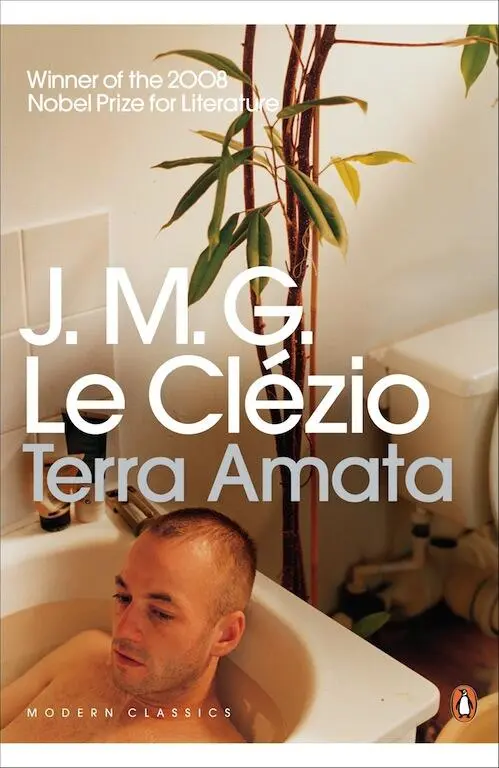
- Название:Terra Amata
- Автор:
- Издательство:Penguin Books Ltd
- Жанр:
- Год:2008
- ISBN:нет данных
- Рейтинг книги:5 / 5. Голосов: 1
-
Избранное:Добавить в избранное
- Отзывы:
-
Ваша оценка:
Terra Amata: краткое содержание, описание и аннотация
Предлагаем к чтению аннотацию, описание, краткое содержание или предисловие (зависит от того, что написал сам автор книги «Terra Amata»). Если вы не нашли необходимую информацию о книге — напишите в комментариях, мы постараемся отыскать её.
brilliantly explores humankind's place in the universe, the relationship between us and the Earth we inhabit and, ultimately, how to live.
Terra Amata — читать онлайн бесплатно полную книгу (весь текст) целиком
Ниже представлен текст книги, разбитый по страницам. Система сохранения места последней прочитанной страницы, позволяет с удобством читать онлайн бесплатно книгу «Terra Amata», без необходимости каждый раз заново искать на чём Вы остановились. Поставьте закладку, и сможете в любой момент перейти на страницу, на которой закончили чтение.
Интервал:
Закладка:
Chancelade went along close to the walls, not knowing where he was going. For a little while there had been certain instructions in his mind, words of some kind that indicated something. He’d seen them as if they were written up on white hoardings:
CIGARETTES 
SWEETS 
PAPER 
 COFFEE
Then the words had disappeared and the streets no longer led anywhere. He stumbled along on his shaky legs, one step, another step, stick forward, one step, another step, stick forward, and so on. He could see the grey pavement unfolding slowly in front of him covered with signs and markings; here dogs had wet, there a child had thrown away a half-eaten ice-cream cone. All you had to do was follow these tangled tracks, walking slowly and carefully like this. You were bound to arrive somewhere. Bound to find someone, or something. Chancelade noted as he passed all the details on the ground that would help him not to get lost:
Black patch.
Dog’s dirt.
Greasy paper.
Cigarette-end.
Cigarette-end.
Screwed-up blue paper.
Banana skin.
Scratch.
Feather.
Man-hole.
Piece of paper.
Match.
Cigarette-end.
Cigarette-end.
Cigarette-end.
Spit.
It was the unknown way that led across time like this, gently, gently. Men, women, dogs, cats, pigeons, cockroaches had without knowing it marked out their path on the earth. They had left tracks so that one day someone might chance to follow them to their lairs. They had left the signature of their lives as they passed, abandoning a little of themselves with every second. Their sweat had stained the ground, and their scales, bits of skin, hairs and waste products told that they were still alive, that they hadn’t stopped living.
But the whole world had become unspeakably old. The boy Chancelade went on walking along by the walls, against the stream of the noisy tumultuous river; and everywhere there was this continual trembling. Beneath his red slippers with their blue heels the earth quivered as if it were about to open. The asphalt was damp and gave to the tread like sand. The walls of the houses trembled, the windows were soft, the mirrors clouded. A deep weariness had invaded the whole town. In the street human shapes lurched about drunk with sleep. Cars drove of their own accord along the road, sleepwalkers advancing on nothingness. Chancelade stopped at an intersection, leaned on his flexible stick, and contemplated the spectacle of universal weakness. He saw the buildings swaying on their foundations, the ailing lights, the stutterings, the stumbles. Around, and within, everything had begun to totter. It was as if some strange disease had struck the whole town, a sort of sleepy sickness. A hypnotic sun shone in the middle of the sky, and as they fell on the earth its rays slowly paralysed things and bodies.
Nothing was certain any more, nothing rebelled. The trees slept where they stood in their capsules of heat and silence. The street-lamps too were motionless, vanquished. In the dark corners by doorways the dust accumulated speck by speck. Everything was long, slow, and far away. Even the air, that used to be so light and pure, now hung over the earth laden with heavy odours like the breath of an old woman.
Chancelade felt himself being overtaken by dizziness. He had to hold on to a wall so as not to fall. He leaned there for some time, gazing at the pavement. He listened to his heart beating faintly somewhere in his chest.
Then he started walking along the wavering street again; at the end of it there was a little shelter with a seat where people waited for the bus. It took Chancelade half an hour to reach it; then he sat down on the seat. The world was inexpressibly old. It shook like a dotard, slobbered, wet its clothes, sweated, was losing its senses. But he, Chancelade, didn’t forget anything. He was more alive than any of them, the only man left on earth. Sitting on the bench he watched the buses drive up and off again one after the other, carrying their cargoes of invalids. At one point a young woman came and sat down beside him. Chancelade looked at the youthful body, the slender hands, the smooth face with its bright eyes. With effort, hearing his voice wavering as he spoke, he said:
‘It’s funny, you know — It’s very funny … I, I’d never have believed that one day …’
The young woman looked at him in surprise.
‘What’s funny?’ she said.
But the boy Chancelade went on without taking any notice. Perhaps he’d even gone deaf.
‘Today, here, on this seat … At the 16 bus-stop. It all happened so fast, you see, so fast … I can’t remember the details, it happened so fast … I was born just the other day … Yes, just the other day … And today it’s almost all over. In one night, it happened in one night … While I was asleep, all — all those years went by without my noticing. Today I wake up, and it’s all over … Nearly over … Don’t you think that’s funny? Don’t you? It’s like, like a dream, a nightmare, I don’t know … I’ve forgotten — I’ve forgotten how it began. But now — Now I know it’s true. Sitting here on this seat with the buses coming up every five minutes. All that, all that in one night!’
The young woman tried to say something nice, something like, come now, you’re still in excellent health, you don’t look at all old, very well preserved in fact, and so on. But the boy Chancelade wasn’t listening. He spoke again:
‘It was only yesterday, or the day before. I was talking to a woman like you, yes … She was just like you, it might even have been you … She was there, and so was I. It’s funny to think that all that, all that can have disappeared in a single night. And yet nothing has changed … I can recognize everything. But it’s so far away now. So old. I can’t understand that. I—’
He swallowed his saliva with difficulty. The words were now beginning to come back to him; but it was too late.
‘How old are you?’ asked Chancelade.
‘Me? Twenty-two,’ said the young woman.
‘Twenty-two … Forty-two, sixty-two, eighty-two, what’s the difference? Yesterday I was twenty-two. I sat here on this seat waiting for the bus. To go to the cinema or go and buy some writing-paper in a department store. And I didn’t think it would be like that, so quick. They call it — They call that a life. A life! It didn’t even last an hour! Just the time between two buses … It’s really—’
‘But just the same you—’
‘No, no, I didn’t do anything! It all went by so fast. I was there, and now I’m here, with so many things still to do … I might have — I don’t know, gone to Vladivostock for instance, or got to know women, or work, or learned dozens of things. Sanskrit. Biology, cosmography, botany, archaeology. I might have had hundreds of children, gone into politics, lived in India or Peru. I didn’t do anything. I didn’t have time. It all went by so quickly, that life, it’s hard to believe … It’s as if I’d been asleep, or dreaming. I was born only the other day …’
The boy Chancelade saw that the young woman was looking at him with her bright eyes. He tried to smile, but because of his toothless mouth could only produce an ugly grimace.
‘Listen,’ he said, and his voice began to quaver; ‘listen — I’m going to tell you while there’s still time … Live every second, don’t waste any of it. You’ll never have anything else, you’ll never—’ He hesitated a little: ‘You’ll never have another chance … Do everything … Don’t waste a minute, not even a second, hurry up, wake up … Tomorrow — tomorrow it’ll be you sitting here on this seat … It’s terrible, I — you …’
Читать дальшеИнтервал:
Закладка:
Похожие книги на «Terra Amata»
Представляем Вашему вниманию похожие книги на «Terra Amata» списком для выбора. Мы отобрали схожую по названию и смыслу литературу в надежде предоставить читателям больше вариантов отыскать новые, интересные, ещё непрочитанные произведения.

Обсуждение, отзывы о книге «Terra Amata» и просто собственные мнения читателей. Оставьте ваши комментарии, напишите, что Вы думаете о произведении, его смысле или главных героях. Укажите что конкретно понравилось, а что нет, и почему Вы так считаете.