Li Cunxin - Mao's Last Dancer
Здесь есть возможность читать онлайн «Li Cunxin - Mao's Last Dancer» весь текст электронной книги совершенно бесплатно (целиком полную версию без сокращений). В некоторых случаях можно слушать аудио, скачать через торрент в формате fb2 и присутствует краткое содержание. Жанр: Современная проза, на английском языке. Описание произведения, (предисловие) а так же отзывы посетителей доступны на портале библиотеки ЛибКат.
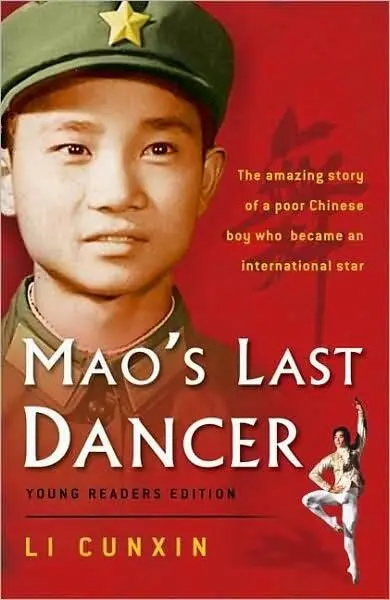
- Название:Mao's Last Dancer
- Автор:
- Жанр:
- Год:неизвестен
- ISBN:нет данных
- Рейтинг книги:3 / 5. Голосов: 1
-
Избранное:Добавить в избранное
- Отзывы:
-
Ваша оценка:
Mao's Last Dancer: краткое содержание, описание и аннотация
Предлагаем к чтению аннотацию, описание, краткое содержание или предисловие (зависит от того, что написал сам автор книги «Mao's Last Dancer»). Если вы не нашли необходимую информацию о книге — напишите в комментариях, мы постараемся отыскать её.
Mao's Last Dancer — читать онлайн бесплатно полную книгу (весь текст) целиком
Ниже представлен текст книги, разбитый по страницам. Система сохранения места последней прочитанной страницы, позволяет с удобством читать онлайн бесплатно книгу «Mao's Last Dancer», без необходимости каждый раз заново искать на чём Вы остановились. Поставьте закладку, и сможете в любой момент перейти на страницу, на которой закончили чтение.
Интервал:
Закладка:
When the bell rang to signal the end of nap time, I was still scratching my head for answers. At least I hadn't actually stolen the paper, I thought. Someone had passed it to me. Thankfully he'd also confessed so at least I didn't have to tell on him. That was something I never wanted to do.
Our afternoon discussions about the matter went by very quickly. Under the guidance of our political heads we discovered several major issues we hadn't even thought of before: we were too young to digest the contents of this newspaper so we could get the wrong impression and our communist faith could be affected; stealing was a serious crime; reading something that was only restricted to Communist Party members and knowingly passing it around to others was dishonest; and finally, we had broken the academy rules.
I wrote my self-criticism based on these four findings and it passed the first time. But deep down I didn't feel good about it at all. I still couldn't think of anything that would affect my belief in communism. Certainly not a newspaper. After all, I'd only read some sports and international news.
10 That First Lonely Year
Those first few weeks at the Beijing Dance Academy were an agony of loneliness. Nights were the worst. I couldn't wait to get to bed so I could clutch onto my niang's quilt, my only security. I hated myself for it, but the quilt was like morphine, soothing my pain, and in those first months at the academy I became introverted and spoke very little.
I knew I had no choice but to stay in Beijing. My parents, my brothers, my relatives, my friends, my old school teachers and classmates, my village and commune, all of their wishes and expectations made it impossible for me to go back. The loss of face would be unbearable. It would damage my family's reputation for ever. My success was my parents' only hope of breaking that vicious cycle of poverty. I couldn't let my parents down, even if I did feel trapped in a cage of rules, routines and frustration. Every day I couldn't wait for classes to end. Every day I couldn't wait for the year to end so I could return home to see my family and roam the streets and fields once more.
I wasn't alone in missing home. I witnessed many teary eyes among my fellow classmates. The girls sobbed more than the boys. Our political heads and teachers showed more tenderness towards the girls, though. The boys would be laughed at if they were discovered sobbing. The boys were told, time after time, that crying was a sign of weakness.
The city kids seemed to cope better than the country ones. They were more confident and adjusted to the routine faster. The Shanghai kids coped well-they were generally fairer skinned too, but us country kids were darker. I was probably one of the darkest, but fair skin was considered beautiful in China so even there I felt inadequate compared to the others, and I stuck with the students from the countryside.
Our first weeks at the academy weren't made any easier when a vicious virus swept through the school. I was among those who had the severe cough, the sore throat and high fever. Naturally I did what my niang would have done-I took out a few pieces of my precious dried snakeskin and wrapped a green onion in them. I tried to be polite and offered to share it with some of my classmates but it was as though I'd offered them poison. They thought I was evil. So to prove my sincerity I ate one in front of them, but my teachers and classmates were so repulsed they moved quickly away. I lost a few friends over that, but I did notice that their symptoms lasted much longer than mine, despite their expensive pills.
The academy's toilets were another challenge. I appreciated the idea of being able to flush away the poos to who knows where, but the reality that always confronted us was blocked toilets. We had no choice but to poo on top of a hole that was already full of shit, and the smell was revolting. It penetrated through the walls. It lingered in the building. Often I had to run to other floors to use the toilets there and most of the time other students would already be waiting. Toilet rush hours were the worst-in the mornings after waking up, after breakfast, after lunch, after nap time, and the worst time of all was after dinner before the "go to sleep" bell. I would wait until I was absolutely desperate. I would close my eyes, hold my breath and charge into the toilet, trying to breathe as few times as possible.
One day as I joined the queue for the toilet, I saw a classmate of mine standing outside meditating. A dreadful smell pushed through my nose and I knew immediately that at least one or possibly both toilets were blocked.
"How many?" I asked.
"Both of them!" he replied desperately. I backed out of the bathroom, took a deep breath from the open window by the stairs, and charged onto the wee stand.
On my way out, my classmate was still outside taking deep breaths. "Still working up your courage?" I asked.
"I'm sure the smell will damage my health!" He shook his head in disgust, but he too took a deep breath and charged in.
The toilet might have been one of the worst things about the Beijing Dance Academy, but the showers were one of the best. We were assigned to take showers on different days, usually three times a week. We had to get in early though, because the hot water would run out and latecomers were always left with cold showers.
My very first shower was like magic. One of our teachers led ten of us to the changing room, which had wooden benches along the walls for us to put our clothes on. It was very damp, with a pleasant soapy smell. We had to bring along a facecloth, a washing-basin and soap. We had no shampoo. Massive amounts of steam pushed out into the changing room as the class of students before us came out. I hesitantly followed the other boys into the shower. I was a little afraid, but I'd heard some adults in our village talking about this thing called a shower, so I tentatively popped my head under the jets of water. It was wonderful! Warm water streamed down my hair and over every part of my body. I opened my mouth to breathe. Warm water filled it up and it felt so good that I kept my mouth open and let the water glide over me.
I was surprised to see my classmates show no particular reaction one way or another to the shower. Maybe they'd had one before, I thought. But all I wanted to do was stay under all day. Compared with the filthy, cold water in the washing-basin back home, this was a thrilling experience. I wished my family could have the same privilege. I had never felt cleaner. But we didn't know, then, that in winter we would be encouraged to take cold showers, to make our hearts and minds grow stronger.
The food at the academy was also good. Beyond good. We had rice nearly every day and it tasted so glorious because I rarely had it at home at all. And, luxury of luxuries, we had fresh fruit twice a week! Apples, pears and occasionally even bananas. We would get one piece each, or if we were lucky, sometimes even two. I savoured every bite. With enough food to eat for the first time in my life, I was in ninth heaven. I wished I could share the food with my family too: my niang and my dia deserved to have this.
One of the treats we soon experienced at the academy was, once a month, watching documentaries and occasionally a movie. All of the foreign films were from other communist countries. A North Korean movie that I remember particularly well was about a young man who had lost his ambitions for the communist cause, and a beautiful girl, a Communist Youth Party member, who helped him and fell in love with him. What I enjoyed most about this movie was not the politics but the love story. For the next couple of weeks I started to behave differently towards the captain of the girls' class. She was a pretty Qingdao girl with big, bright eyes. I imagined that if I performed badly enough in class, the political head might send this girl to help me, or more excitingly, perhaps she might even volunteer. But all I got was criticism and dirty looks. The longed-for love and attention never materialised.
Читать дальшеИнтервал:
Закладка:
Похожие книги на «Mao's Last Dancer»
Представляем Вашему вниманию похожие книги на «Mao's Last Dancer» списком для выбора. Мы отобрали схожую по названию и смыслу литературу в надежде предоставить читателям больше вариантов отыскать новые, интересные, ещё непрочитанные произведения.






Обсуждение, отзывы о книге «Mao's Last Dancer» и просто собственные мнения читателей. Оставьте ваши комментарии, напишите, что Вы думаете о произведении, его смысле или главных героях. Укажите что конкретно понравилось, а что нет, и почему Вы так считаете.