Li Cunxin - Mao's Last Dancer
Здесь есть возможность читать онлайн «Li Cunxin - Mao's Last Dancer» весь текст электронной книги совершенно бесплатно (целиком полную версию без сокращений). В некоторых случаях можно слушать аудио, скачать через торрент в формате fb2 и присутствует краткое содержание. Жанр: Современная проза, на английском языке. Описание произведения, (предисловие) а так же отзывы посетителей доступны на портале библиотеки ЛибКат.
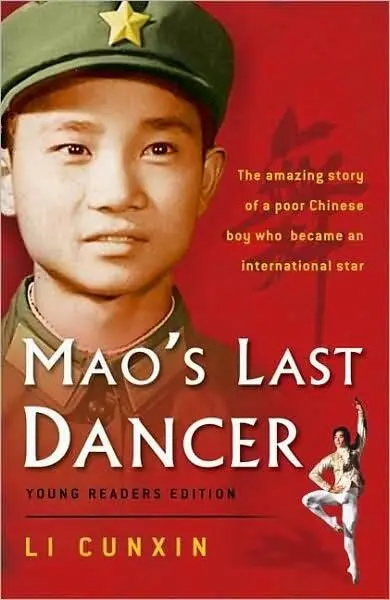
- Название:Mao's Last Dancer
- Автор:
- Жанр:
- Год:неизвестен
- ISBN:нет данных
- Рейтинг книги:3 / 5. Голосов: 1
-
Избранное:Добавить в избранное
- Отзывы:
-
Ваша оценка:
Mao's Last Dancer: краткое содержание, описание и аннотация
Предлагаем к чтению аннотацию, описание, краткое содержание или предисловие (зависит от того, что написал сам автор книги «Mao's Last Dancer»). Если вы не нашли необходимую информацию о книге — напишите в комментариях, мы постараемся отыскать её.
Mao's Last Dancer — читать онлайн бесплатно полную книгу (весь текст) целиком
Ниже представлен текст книги, разбитый по страницам. Система сохранения места последней прочитанной страницы, позволяет с удобством читать онлайн бесплатно книгу «Mao's Last Dancer», без необходимости каждый раз заново искать на чём Вы остановились. Поставьте закладку, и сможете в любой момент перейти на страницу, на которой закончили чтение.
Интервал:
Закладка:
I wandered back to the canteen just in time for lunch. I didn't expect to see anyone there, but to my surprise I noticed a boy sitting by himself at one of the music academy's tables. He was a bit younger than me and looked lonely and sad, so I collected my food and walked over to him. "Do you mind if I sit with you?" I asked.
He shyly shook his head.
I sat down opposite him. "My name is Li Cunxin. I'm from Qingdao. I'm a student in the dance academy. What's your name?"
"My name is Zhang Xiaojia," he replied timidly.
"Where are you from?"
" Henan province."
"Why didn't you go with the others to the Summer Palace?"
"I felt sick. What about you?" he asked.
"I didn't feel well either," I replied. "What musical instrument do you play?"
"I'm not playing anything yet."
"Why?" I became curious.
"No one has been assigned one yet. We were told our teachers will test us and then they will decide what instrument we'll learn," he said.
"Did you play anything before you came?"
He shook his head. "They only chose me because of my long fingers -and my parents are peasants. What about you? Did you dance before?" he asked.
"No, I've never danced before. I didn't even know what ballet was. I still don't. I just had long toes and a bit of flexibility. And my parents are peasants too."
"Do you play badminton?" he said all of a sudden.
"What's that?"
"I will show you, just follow me!"
So after lunch I followed him to his dormitory, where he took out two racquets and a feathery flyer from under his bed. We ran outside and played badminton in the space between the two dormitory buildings for hours. We drew a line in the dirt with a stick in lieu of a net. We didn't keep any score, the flying feathery thing just bounced back and forth, up and down, back and forth, and those were the happiest few hours I'd spent since leaving my family. For once we weren't being judged or criticised. We just enjoyed each other's company. Zhang and I became good friends, and that more than anything helped ease the intense loneliness and homesickness we both experienced. I only wished he was in my class.
Before the students left for the Summer Palace that day, the political head of our group had asked me to wash his white shirt while he was out and I happily accepted this job. I wanted to do it well for him-I wanted him to like me. "Use your toothpaste to wash it," he'd said. "Make sure you wash the armpits thoroughly." But the armpits were badly stained by sweat. I used so much of my toothpaste and washed the shirt so many times, but the stains still remained.
When the political head returned I proudly handed him the pressed and folded shirt. But he was not impressed. "I told you to use toothpaste! Just look at the stains!" He shook his head as he walked away.
I was angry. I had used nearly half my tube of toothpaste, which I could hardly afford to buy. I ended up having to cut the toothpaste tube and turn it inside out, so I could use every last bit of toothpaste-all because he'd wanted a clean shirt.
From the minute we arrived at the academy, we were expected to wash and sew our own clothes. At home, my niang had done all our sewing and washing. Having to do this myself only compounded my loneliness. I missed my niang terribly. I so dearly wanted to hear her voice, but I never telephoned the village to speak to my parents. I didn't have the money. Instead I wrote letters, but not too often because that cost money too. My parents wouldn't be able to read my letters themselves, but I knew one of my brothers would do that for them.
The first letter I sent home was so hard to write. I desperately wanted to tell them how much I missed them and how homesick I was, but I knew this would only make my niang sad. Instead I told them about the train trip to Beijing and how exciting everything was. I wrote about seeing Chairman Mao's compound, about Tiananmen Square and the Ming Tombs, about the beautiful jewellery I'd seen and how I wished I could take just one piece home to give to my niang. I told them I had plenty of good food: I could find oil and meat in every dish! How I wished I could share it with them. I told them I had to wash and sew my own clothes, and that I'd left my corduroy jacket in one of the papier-mâaché clothes boxes for Jing Tring to have instead. I didn't think this letter would cause my niang sadness, but I was wrong. My second brother Cunyuan replied soon after and said that when he'd read the letter, my niang had sobbed.
One of my favourite places I'd discovered in the academy was the library. It was only a small room, with just a few shelves of books. There were no foreign books and almost all of the books were picture books-stories about foreign children written by Chinese authors, and the stories were always sad and tragic. Most of them were about struggling coloured children in America and how the whites mistreated them, or they were about the struggle between good and evil. The good characters were always beautiful and handsome. The evil characters always had big crooked noses and fat ugly faces. They were Chiang Kaishek's Guomindang officers and spies, or the foreign enemies. I hated the evil guys and felt so sad for these impoverished coloured children. I often shed sympathetic tears and I felt even more grateful for the heavenly life that Chairman Mao had given us. If our life was heavenly, then these poor children's lives in America must be hell indeed.
There were several different newspapers delivered to our academy too, for the political heads and teachers to read. The People's Daily was the official paper of the government, but there were also the Workers' Daily, the Soldiers' Daily and some other industry papers. All were full of propaganda and all were controlled by the Gang of Four. We could only read them after the adults had finished with them, and by then they were a day or two old, sometimes up to a week old. But still we read the editorial comments-the Cultural Revolutionary ideas and themes, pages upon pages of domestic news, unbelievable human achievement stories that denounced the old filthy ideas of the rightists and anti- revolutionaries. There would perhaps be a couple of pages of sport and less than a page of international news-the information pitifully thin. There was also the Reference Paper, but this was only available to a certain level of Communist Party member and it included slightly more international news and slightly less propaganda. Occasionally though, someone would find an old copy and pass it around.
We'd only been at the academy about two weeks when one day all of us were called out into the grounds, just before lunch. We waited in our usual four lines. All three political heads were looking very stern indeed as they stood on the stairs in front of us.
Director Wang began. "We have discovered a serious misconduct by one of our students," he said. "According to this student, there were others involved in the same misconduct. I want this matter thoroughly investigated!" We all looked at each other. No one knew what he could possibly be talking about.
Director Wang continued. "We have told you before that no one is to touch the Reference Paper. Today, we have discovered a student reading it! I want to know who took the paper from our offices, who read it, and how long this has been going on. This is a most serious matter. The first class this afternoon has been cancelled. You will instead discuss why this is a serious matter and how you should prevent it from happening again. I want the students who have read the Reference Paper to write a self- criticism and to search deep into their souls!"
During lunch, the guilty students went to the three political heads and confessed. I was one of them. I spent my entire nap time trying to work out what crime I had committed just by reading a newspaper. There was nothing in it that could shake my faith in Chairman Mao.
Читать дальшеИнтервал:
Закладка:
Похожие книги на «Mao's Last Dancer»
Представляем Вашему вниманию похожие книги на «Mao's Last Dancer» списком для выбора. Мы отобрали схожую по названию и смыслу литературу в надежде предоставить читателям больше вариантов отыскать новые, интересные, ещё непрочитанные произведения.



Обсуждение, отзывы о книге «Mao's Last Dancer» и просто собственные мнения читателей. Оставьте ваши комментарии, напишите, что Вы думаете о произведении, его смысле или главных героях. Укажите что конкретно понравилось, а что нет, и почему Вы так считаете.