Li Cunxin - Mao's Last Dancer
Здесь есть возможность читать онлайн «Li Cunxin - Mao's Last Dancer» весь текст электронной книги совершенно бесплатно (целиком полную версию без сокращений). В некоторых случаях можно слушать аудио, скачать через торрент в формате fb2 и присутствует краткое содержание. Жанр: Современная проза, на английском языке. Описание произведения, (предисловие) а так же отзывы посетителей доступны на портале библиотеки ЛибКат.
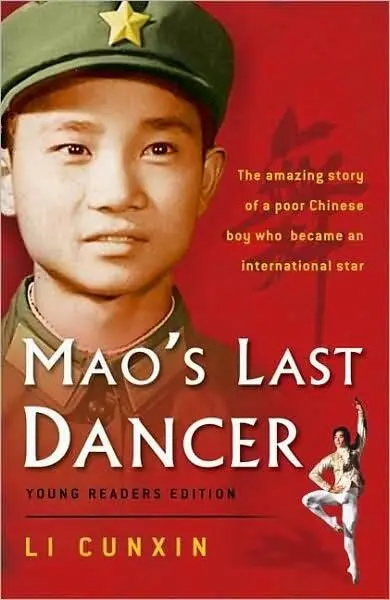
- Название:Mao's Last Dancer
- Автор:
- Жанр:
- Год:неизвестен
- ISBN:нет данных
- Рейтинг книги:3 / 5. Голосов: 1
-
Избранное:Добавить в избранное
- Отзывы:
-
Ваша оценка:
Mao's Last Dancer: краткое содержание, описание и аннотация
Предлагаем к чтению аннотацию, описание, краткое содержание или предисловие (зависит от того, что написал сам автор книги «Mao's Last Dancer»). Если вы не нашли необходимую информацию о книге — напишите в комментариях, мы постараемся отыскать её.
Mao's Last Dancer — читать онлайн бесплатно полную книгу (весь текст) целиком
Ниже представлен текст книги, разбитый по страницам. Система сохранения места последней прочитанной страницы, позволяет с удобством читать онлайн бесплатно книгу «Mao's Last Dancer», без необходимости каждый раз заново искать на чём Вы остановились. Поставьте закладку, и сможете в любой момент перейти на страницу, на которой закончили чтение.
Интервал:
Закладка:
During that first ballet class I couldn't feel my toes at all in those tight, tiny shoes and in the freezing-cold weather. Chen Lueng told us to stand with our feet turned out in all sorts of funny ways-he called them first, second, third, fourth and fifth positions. It felt ridiculous. I couldn't imagine anyone in their right minds wanting to watch us do these ugly positions. Surely even Madame Mao would fall asleep if we performed like waddling ducks! I had such difficulty getting my feet to cooperate. They kept rolling inwards.
The studio was very damp and dusty. There was everywhere the smell of sweat and mildew. Through the beams of light I could see millions of tiny dust motes floating in the air. The wooden floor was so old that it splintered, and for our feet to get some grip Chen Lueng showed us how to sprinkle water on the floor using a metal pot, which looked almost exactly like a watering can with many holes in its large, round shower head. We twisted the head to spin the water out onto the floor while walking backwards. To qualify as a student of the Beijing Dance Academy, one had to be able to do this quickly and efficiently.
Everything felt weird in that very first class. We had to extend our arms to the side, palms facing forwards, just below shoulder height, while Chen Lueng walked among us, pushing our arms down and asking us to resist him with all our strength. We held this position for several minutes until he told us to relax. He said this was to develop our arm strength, so our arms would look soft, never strained. This was not dancing, I said to myself. Where were the leaps and skips? How could I possibly suffer this agony for six years? My feet felt so cramped. I couldn't imagine how bad it must be for the girls standing on their toes in pointe shoes.
That first class lasted nearly two hours, but it seemed like for ever. I couldn't wait for the bell to ring so I could take those horrible shoes off and let my cramped toes stretch out. I thought about running in the streets like I did in my commune, or wrestling with my friends. I didn't want to dance. I wanted to go outside and make a snowman and throw snowballs. Our second class that morning was Beijing Opera Movement. Our teacher was Gao Dakun. "Hurry up, you're late!" Gao shouted. "Spread out around the barre!" he barked. "Beijing Opera movements are all about flexibility and suppleness. If you don't have suppleness, you can't be good in my class. Do you understand?"
We all nodded, terrified.
"Good, let's start with your legs up on the barre," he said.
I looked at the barre in front of me. It was as high as my chest.
"What are you waiting for? Didn't you hear me? Your leg on the barre!"
I was one of the three smallest boys in our class. I tried to put my leg up but the barre was just too high.
Without another word Gao walked over to me and lifted my leg. I felt a tinge of pain in my hamstring and automatically bent my knee.
"Keep your knee straight!" He pushed my knee down on the barre. "Now I want you to bend your body forward and try to touch your toes with your head. Stay down there! Don't get up until I tell you so!" Gao ordered.
The pain was excruciating and was increasing at an alarming rate.
"Didn't you hear me, keep your knees straight!" Gao shouted at Zhu Yaoping, the small boy from Shanghai who'd spoken to me at dinner the night before. "Keep your head down!" he told Fu Xijun, another boy from Qingdao. "Okay! Now, let's change legs!"
My right leg was now in such pain that I had trouble even lifting it off the barre. I quickly glanced at the other students. I wasn't the only one suffering.
When I lifted my other leg onto the barre, I knew what to expect this time. So I started to count. I was prepared to count up to fifty. I wondered if I was the only one counting as a way of coping with such agony, until I heard the boy next to me counting too.
Each time, from that first class on, I prepared myself for the worst. I decided I needed to be mentally strong enough to last through at least a hundred slow counts. But if Gao left the classroom to get himself some water or have a cigarette, then the hundred counts would increase to who knew how many. The pain made me want to scream. Often Gao would lean on our bodies and force us down lower. We would be in terrible trouble if we bent our knees. My hamstrings would often tear, but we were not allowed to stop. We were not allowed to scream or cry.
I hated Gao Dakun and his class. I feared confronting him. I dreaded looking at him. Just the thought of his class made my stomach churn. He always seemed angry and he constantly screamed at us. He called us names too. He called me "the boy with the brainless big head", and I hated him even more.
Before our midday sleep on that first day, as we were heading back to our room, Zhu Yaoping, the small boy from Shanghai, slid down the stair rail at our dormitory. It looked fun, so I copied him. We ran up the stairs and slid down the rail, chasing each other, until one of the political heads appeared from nowhere. "What do you think you're doing?" he growled.
We stood there, hearts thumping.
"You are never to do this again! Do you understand? You could break your legs if you fall. This is not allowed in Madam Mao's school!"
There was no fun in this place, I thought. Only rules.
We had other classes that day, but they were just a blur. I couldn't understand the teachers' Mandarin accents, but at least we were to have an early dinner because, we were told, we were going to see the Central Ballet of China perform.
We went by bus to the Heaven's Gate Theatre close to the centre of Beijing. The ballet was one of Madame Mao's model ballets, with the familiar title The Red Detachment of Women. Zhu Yaoping and I sat next to each other. I managed to stay awake for the first act, but during the second I could no longer fight off my sleepiness. My eyelids got heavier and heavier and I eventually fell into a deep sleep. I was woken only by the applause at the end of the act.
I was frightened when I looked around. I didn't know where I was or what I was doing. The trip to Beijing, the whole of the last twenty-four hours, all seemed like a dream. When I recovered from the initial shock, I realised that Zhu Yaoping and all my classmates had already left. Suddenly I had to go to the toilet but by the time I found it there was already a long queue, and then the bell rang and the ushers were urging people back to their seats. I hurriedly followed some people into the theatre but couldn't find my classmates. I panicked. I went back to the lobby again. "I've lost my group, I can't find my seat," I told an usher.
"May I see your ticket?"
"I don't have my ticket, our political head has all of our tickets," I replied.
By this time the lights were fading. The usher grabbed my arm. "Follow me, I'll help you find your group after the performance," and he pulled me into the theatre and found an empty seat in the back row. I was nervous being separated from my friends, but soon tiredness overcame me again and I slept through the rest of the performance. Then, just as the lights came on, the usher pulled me out of the theatre and we waited for the familiar faces of my friends. They eventually emerged two doors away. I was so happy and relieved when Zhu Yaoping rushed up and said something to me in Shanghai dialect. I didn't even care that I couldn't understand a word of it.
On the bus trip back to our university, I began to feel terribly sick. It was as though the whole world was spinning. I wanted to vomit. I told the teacher, who asked the driver to stop the bus, and I hopped off just in time. They put me in the front seat after that, just behind the driver. One of the teachers assured me that I only had motion sickness and I would feel better sitting there. But I'd never been sick when I went on the bus with my niang to visit our grandparents. I felt traumatised, embarrassed, trapped in my own emotionally torrid world.
Читать дальшеИнтервал:
Закладка:
Похожие книги на «Mao's Last Dancer»
Представляем Вашему вниманию похожие книги на «Mao's Last Dancer» списком для выбора. Мы отобрали схожую по названию и смыслу литературу в надежде предоставить читателям больше вариантов отыскать новые, интересные, ещё непрочитанные произведения.







Обсуждение, отзывы о книге «Mao's Last Dancer» и просто собственные мнения читателей. Оставьте ваши комментарии, напишите, что Вы думаете о произведении, его смысле или главных героях. Укажите что конкретно понравилось, а что нет, и почему Вы так считаете.