Li Cunxin - Mao's Last Dancer
Здесь есть возможность читать онлайн «Li Cunxin - Mao's Last Dancer» весь текст электронной книги совершенно бесплатно (целиком полную версию без сокращений). В некоторых случаях можно слушать аудио, скачать через торрент в формате fb2 и присутствует краткое содержание. Жанр: Современная проза, на английском языке. Описание произведения, (предисловие) а так же отзывы посетителей доступны на портале библиотеки ЛибКат.
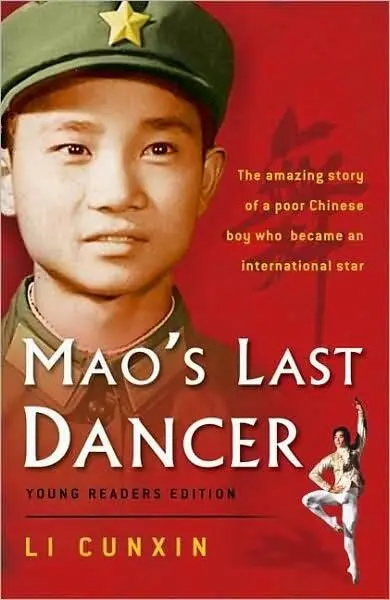
- Название:Mao's Last Dancer
- Автор:
- Жанр:
- Год:неизвестен
- ISBN:нет данных
- Рейтинг книги:3 / 5. Голосов: 1
-
Избранное:Добавить в избранное
- Отзывы:
-
Ваша оценка:
Mao's Last Dancer: краткое содержание, описание и аннотация
Предлагаем к чтению аннотацию, описание, краткое содержание или предисловие (зависит от того, что написал сам автор книги «Mao's Last Dancer»). Если вы не нашли необходимую информацию о книге — напишите в комментариях, мы постараемся отыскать её.
Mao's Last Dancer — читать онлайн бесплатно полную книгу (весь текст) целиком
Ниже представлен текст книги, разбитый по страницам. Система сохранения места последней прочитанной страницы, позволяет с удобством читать онлайн бесплатно книгу «Mao's Last Dancer», без необходимости каждый раз заново искать на чём Вы остановились. Поставьте закладку, и сможете в любой момент перейти на страницу, на которой закончили чтение.
Интервал:
Закладка:
That was the first night I had ever slept on my own, yet all I wanted to do was transform myself into a bird and fly home to sleep with my family again, in my parents' bed, next to my younger brother's smelly feet, even for just one night. My misery was so intense that I was only vaguely aware of my classmates returning from their supper. To hide my tears, I pretended to be asleep and buried my head under my niang's quilt.
The next morning, I was jolted back to reality. The familiar smell of the smoke as my niang cooked breakfast and her loving voice were not there. Instead there was the harsh sound of the wake-up bell. I was not back home, I was here, alone, somewhere foreign. I looked around the room and remembered every detail of the night before.
There seemed to be loud bells for everything that morning. Speed and efficiency were all important. Strict orders, schedules and rules had to be rigidly observed. And it was still so early-we'd been woken at half past five. We rolled our blankets military- style, and brushed our teeth (a completely new, strangely uncomfortable experience-I had to watch the others to see how they did it). Then we washed our faces and the bell rang again within five minutes to call us outside onto the still dark sportsground.
We soon discovered that every morning would be the same. Each class captain would report that all students were accounted for and we'd jog for half an hour around the open fields, half asleep, every day of the year. I loved the fresh air in the mornings, but at first I found it hard to wake up so early. Breakfast was at seven-fifteen: rice porridge, steamed bread and salty pickled turnips. Never dried yams. Sometimes we even had eggs if we were lucky.
That first morning after breakfast we went to try on our ballet and Chinese folk dance shoes, our white vests, dark blue shorts and royal blue cotton tracksuits. These were all we would need for the next six years, we were told. The ballet shoes had small strips of leather wrapped around the toes and the heels, so only the worn-out leather strips would need to be replaced and the whole shoe would last a long time. The dark blue shorts had elastic on the waist and around each leg. They felt very strange.
Then we were introduced to Chiu Ho, the head ballet mistress, who took us to the shoe workshop for our ballet shoe fittings. It was the moment I had been dreading.
Chiu Ho, we soon learned, was considered one of the most knowledgeable ballet teachers in China. She had been trained by the visiting Russian teachers in the 1950//s, and despite her diminutive size, she was the teacher we would learn to fear most.
In the shoe workshop, Chiu Ho told us to choose the tightest ballet shoes possible because, she said, they would eventually stretch. We were then greeted by a short hunchbacked man who looked so strange that he terrified us, but he was supposed to be the best maker of ballet shoes in China. His workshop wasn't big, but it had racks and racks of ballet shoes, including pointe shoes. There were stacks of leather and cotton fabrics too, and buckets full of shoe glue which had splattered everywhere. A few old sewing machines sat on the workbenches against the walls. It was very crowded, and my eyes immediately fixed on the rows of pointe shoes, for I feared these the most: the time would come when I would have to squeeze my feet into these tiny, tiny shoes.
"Boys first!" Chiu Ho barked. One by one we tried on the ballet shoes. They were so small they cramped my long toes. I couldn't imagine how uncomfortable the hard pointe shoes would be.
"Okay, boys are done! You can all get out of here!" Chiu Ho bellowed.
"What about the pointe shoes?" I asked.
"What about them?" she frowned.
"Don't we have to try them on?" I asked.
She looked at me, then she and the shoemaker roared with laughter. "No, only girls wear pointe shoes!" Chiu Ho chuckled.
I felt like collapsing with relief! I wouldn't have to walk like my na-na after all! But I didn't realise that even the small flat shoes Chiu Ho had given me to wear would be enough to cause permanent damage to my toes.
We spent the rest of that day preparing for the official start of our training the following day. The Beijing Dance Academy, due to Madame Mao's involvement, was, we were told, regarded as the most prestigious dance school in the whole of China and the only one to offer full scholarships which would pay for our food, our board, our tuition and our training clothes. Our parents would have to provide our everyday clothes, blankets and spending money, and a tiny little shop within the academy grounds sold other essentials such as soap, toothbrushes, toothpaste and sweets. Madame Mao's military officers would head key departments of the university. These were the "political heads" we had already encountered and we soon learned to be terrified of them too. Even our teachers seemed to show them an unusual amount of respect. They had absolute power and would become our political and ideological mentors.
We checked our timetable for our classes the following morning. Our first would be ballet, followed by Chinese folk dance and Beijing Opera Movement. We would do ballet every morning; other classes alternated on different days. Lunch was at noon. Between 12.30 p.m. and 2 p.m. we would have our midday sleep, a Chinese tradition, and from 2 p.m. to 5.30 p.m. we'd have normal school subjects such as mathematics, Chinese, history, geography, politics and Madame Mao's Art Philosophy. From 5.30 p.m. to 6 p.m. was dinner time, and then for two hours after that we were expected to either study politics or practise ballet. We didn't know, then, that political studies would fill most of our evenings for the next five years.
Next day arrived. My first ever ballet class was at eight o'clock, taken by Teacher Chen Lueng, the tall man from Beijing who'd auditioned us at school in Qingdao. His familiar face was my only comfort.
The studio we were taken to seemed huge and empty with only ten boys and a pianist in it. It was snowing outside and the windows were frosty. There were some heaters along the walls, but they were so inefficient they might as well have not been there. We wore our little shorts and vests, and shivered with cold.
Chen Lueng gathered us in a semicircle. "Can anyone tell me what ballet is?"
We all just looked at each other.
He smiled gently. "Ballet is an art form that originated from dancing in the French imperial courts. It is a universal art form now," he explained. He then told us that our syllabus would be based on the famous Vaganova method from Russia, which had produced some of the world's finest dancers, including Nureyev and Vasiliev.
Everything he said went in one ear and straight out the other. These names didn't mean anything to me at all.
"The first two years, we call them the foundation years, are considered crucial. I'll be your teacher for this period. To start with, I'll teach you some basic positions and exercises. Over the course of this first year, I'll teach you some ballet terminologies. They are in French. The French gave all the steps and movements names. Internationally everyone uses these French terminologies. However, it is Madame Mao's wish that we should give the steps Chinese names as well. Therefore, not only will you learn the French terminology, you'll also learn the Chinese names. I expect you to remember them."
I couldn't believe what I'd heard. French? I had such problems understanding Chen Lueng's Mandarin, let alone French! I had to think of some way to remember the ballet terms though, so when Chen Lueng started talking about the French word "tendu", I tried to remember the sound and immediately thought of the Chinese sounds "Ton Jiu", which means "nine pieces of lollies"- backwards. For "penché", I thought of "Pong Xie", which means crab. Some words I couldn't find any Chinese equivalent for. "Arabesque" was simply not worth the effort. By the time I finally worked out "Ar La Bai S Ker", I had to remember five different Chinese words and that sounded even more ridiculous. Eventually I tried to write the words down in a diary I'd been given, but my Chinese vocabulary was completely inadequate. So I drew little pictures instead. It was the only thing I could do. I was too embarrassed to ask for help. I was so afraid they would laugh at me, this uneducated peasant boy.
Читать дальшеИнтервал:
Закладка:
Похожие книги на «Mao's Last Dancer»
Представляем Вашему вниманию похожие книги на «Mao's Last Dancer» списком для выбора. Мы отобрали схожую по названию и смыслу литературу в надежде предоставить читателям больше вариантов отыскать новые, интересные, ещё непрочитанные произведения.

Обсуждение, отзывы о книге «Mao's Last Dancer» и просто собственные мнения читателей. Оставьте ваши комментарии, напишите, что Вы думаете о произведении, его смысле или главных героях. Укажите что конкретно понравилось, а что нет, и почему Вы так считаете.