Li Cunxin - Mao's Last Dancer
Здесь есть возможность читать онлайн «Li Cunxin - Mao's Last Dancer» весь текст электронной книги совершенно бесплатно (целиком полную версию без сокращений). В некоторых случаях можно слушать аудио, скачать через торрент в формате fb2 и присутствует краткое содержание. Жанр: Современная проза, на английском языке. Описание произведения, (предисловие) а так же отзывы посетителей доступны на портале библиотеки ЛибКат.
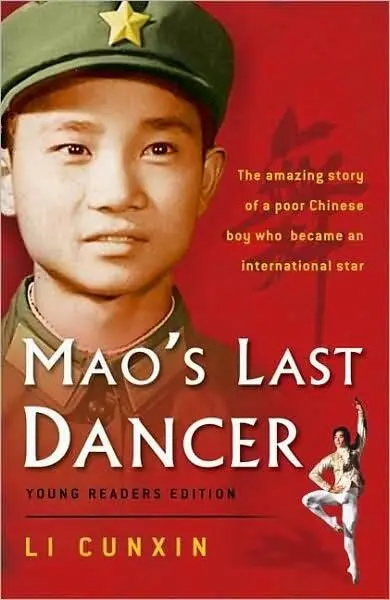
- Название:Mao's Last Dancer
- Автор:
- Жанр:
- Год:неизвестен
- ISBN:нет данных
- Рейтинг книги:3 / 5. Голосов: 1
-
Избранное:Добавить в избранное
- Отзывы:
-
Ваша оценка:
Mao's Last Dancer: краткое содержание, описание и аннотация
Предлагаем к чтению аннотацию, описание, краткое содержание или предисловие (зависит от того, что написал сам автор книги «Mao's Last Dancer»). Если вы не нашли необходимую информацию о книге — напишите в комментариях, мы постараемся отыскать её.
Mao's Last Dancer — читать онлайн бесплатно полную книгу (весь текст) целиком
Ниже представлен текст книги, разбитый по страницам. Система сохранения места последней прочитанной страницы, позволяет с удобством читать онлайн бесплатно книгу «Mao's Last Dancer», без необходимости каждый раз заново искать на чём Вы остановились. Поставьте закладку, и сможете в любой момент перейти на страницу, на которой закончили чтение.
Интервал:
Закладка:
My niang has made many dumplings for my last lunch and although they are my favourite, I can't eat even one. A hot ball of emotion is plugged in my throat. All six of my brothers are at the table. Everyone pushes their bowl of dumplings in front of me, but still I eat nothing. I want to say something special to each of my brothers, but few words are spoken. Time seems to run so fast and before we know it, it is time for me to go. Now I have to say goodbye to my niang and my brothers.
My brothers take my bags outside. My dia did not make it back for lunch. I look at my niang for the first time today and we both burst into tears. We can say nothing. We just hold each other. Then some of her friends come into our house, as I had asked them to, and I go quickly into the street.
My oldest brother Cuncia is to come with me as far as Qingdao City, and as a special honour our village has provided us with their only tractor to take us there. The admission letter from the Beijing Dance Academy said that all fifteen students chosen from Shandong Province are required to meet at a dormitory where we will spend the next eighteen hours before we embark on our train journey to Beijing. As the tractor pulls away from our house, three of my brothers run after us in the dust, crying and shouting goodbye. I can no longer hide my emotions; I sob and sob, all the way to the city.
The tractor journey takes us over an hour. The ride is bumpy, but I don't really notice. Finally we reach our gathering place, a kind of dormitory divided into six rooms. Everything smells mouldy and dusty, and the rooms are dark with only small windows. It feels foreign and unwelcoming. Nothing feels right. I am shy. I already miss my parents and brothers.
The time at the dormitory allows us to meet the other students. Four are from the countryside and others are from the city. There is something different about the city students. They seem more worldly than us country kids. There is also a man wearing a military uniform. He is called "the political head". And there's one of the teachers who auditioned us. They have come to Qingdao to collect us and will accompany us on our train trip to Beijing. We are briefed by the political head about certain rules and expectations the academy has for us. I have trouble understanding some of the terminology because they all speak in the Mandarin dialect.
By the time night comes, I still have not eaten since breakfast, so my brother peels me an apple. It's the first time I've ever had a whole apple to myself. I feel so lucky and so special. We settle down for the night. My only real comfort is my big brother, sleeping on a small bed next to mine.
Early next morning, we take a bus to the train station, an old building crammed with hundreds of people. I have never been to a train station before. I've only seen trains from a distance. Our train is a steam train, puffing out volumes of smoke and making an enormous noise. Our teachers push their way through the crowds and onto the train, and we pass our luggage through the windows because everyone is fighting their way on at the same time.
I leave my brother standing on the platform and find my seat on the train. Then, five minutes before departure, the loudspeakers announce that all family members and friends are to leave the platform. This is my last chance to say goodbye to my brother. He extends his hand through the window. As I grasp it I feel him give me something. It is a two-yuan note, his cigarette money. He will have to go without his beloved cigarettes for the next few months. I know how precious his cigarettes are to him. But he quickly runs into the crowd before I can say anything. I hold the money in my hand, tears streaming down my face, and watch Cuncia disappear into the crowd.
I listen to the sound of the train. With a sudden jolt, a massive puff of steam swallows our carriage and Qingdao Station slowly slips away. With the click-clack sound of each passing section of the track I know I am moving further and further away from my parents. My heart races along with the gathering speed of the train. I don't know how I am going to survive the next twelve months before seeing my niang again. I long to sleep next to my parents. Even my brother's smelly feet don't seem too bad now.
We have reserved seats on the train, but being Chairman Mao's good children, we give our seats to some elderly people who can only afford to buy standing-room tickets. Five people are squeezed on a bench for three. The overhead rack is overflowing with luggage. A couple of times the train makes a sudden jolt and some bags crash down onto unfortunate passengers below.
At first, the trees and fields flashing by are familiar sights, but then the landscape changes and the trees, crops, even the smell of the air, become different and unfamiliar. Even though it is winter, the windows are open to allow the fresh air in.
At almost the halfway point in the journey, the train stops at Jinan, the capital of Shandong Province. Here the station is grander than Qingdao 's, and well lit. Our teachers tell us that we can go and stretch our legs. There are peasants selling smoked chicken, steamed bread, roasted peanuts, sunflower seeds and sweets. Most of the students from the city buy something but the country students like me just watch.
Later, back on the train, the political head and the teacher lead us to the dining car. Not many people are allowed in this car. In fact, only government officials are allowed, but we are Madame Mao's students, so we are invited to go along. We occupy nearly half the car. There are two cold dishes on each table, a plate of pickled peanuts and some thinly sliced marinated beef. The beef is tough but delicious-this is heavenly food! We quickly demolish the cold dishes and then three steaming hot courses arrive: a whole fish, stir-fried pork with green chives and a mixed vegetable dish. We each have a bowl of rice too. The rich and delicious smells take my breath away. Every dish is shining with oil! Even the sauce for the vegetable dish is full of flavour. I have never seen so much meat in my whole life! We devour the food like hungry tigers. I wish for more, but I am too embarrassed to ask.
I hardly sleep for the entire twenty-four hours of the train journey. Just before we pull into Beijing Station, our teachers warn us that it will be very crowded. Stay very close, or we will get lost.
I am stunned when I see the sea of people at the station. There is no way our teachers could have prepared us for such a scene. Instead of hundreds of people, I see hundreds of thousands, all pushing and shoving in a huge open space. The ceiling is so high and bright, almost blinding me with its many fluorescent lights. It is so grand. Even the passageways are chock-a-block with people, sleeping on the floor while they wait for their next train. The sound is deafening-hundreds of thousands of people all talking at the same time. The smell too is indescribably strange-virtually everyone carries some kind of hometown delicacy: I have my apples, pears, sorghum sweets, snakeskin and dried shrimps, but who knows what others are carrying. The smell makes me want to escape this place as quickly as I can, but my bags are too heavy and I can only move slowly. I try so hard to keep up with my group. I enter a tunnel, but when I come out the other end, the familiar faces of my fellow students are nowhere in sight. My two bags are pushed and pulled by the crowd, and several times I nearly lose my balance. I look around. I don't know which direction to take. I am exhausted and desperate, so I move to the side, out of the way of the fast-moving people. I sit down against a wall, lost.
I am frightened. I want to go home to my niang. I start to sob. A soldier comes up to me and asks me why I am alone. I tell him I have become separated from my group and don't know which way to go. He kindly takes one of my bags and leads me to the exit. I am so grateful to him, this Lei Feng-like soldier, and as I step out of the crowded train station I am relieved to see one of our teachers from the Beijing Dance Academy.
Читать дальшеИнтервал:
Закладка:
Похожие книги на «Mao's Last Dancer»
Представляем Вашему вниманию похожие книги на «Mao's Last Dancer» списком для выбора. Мы отобрали схожую по названию и смыслу литературу в надежде предоставить читателям больше вариантов отыскать новые, интересные, ещё непрочитанные произведения.






Обсуждение, отзывы о книге «Mao's Last Dancer» и просто собственные мнения читателей. Оставьте ваши комментарии, напишите, что Вы думаете о произведении, его смысле или главных героях. Укажите что конкретно понравилось, а что нет, и почему Вы так считаете.