Li Cunxin - Mao's Last Dancer
Здесь есть возможность читать онлайн «Li Cunxin - Mao's Last Dancer» весь текст электронной книги совершенно бесплатно (целиком полную версию без сокращений). В некоторых случаях можно слушать аудио, скачать через торрент в формате fb2 и присутствует краткое содержание. Жанр: Современная проза, на английском языке. Описание произведения, (предисловие) а так же отзывы посетителей доступны на портале библиотеки ЛибКат.
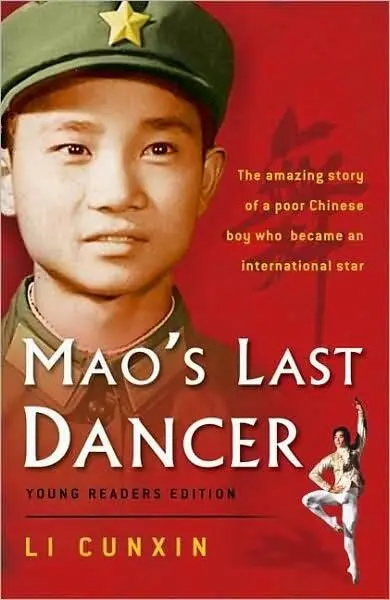
- Название:Mao's Last Dancer
- Автор:
- Жанр:
- Год:неизвестен
- ISBN:нет данных
- Рейтинг книги:3 / 5. Голосов: 1
-
Избранное:Добавить в избранное
- Отзывы:
-
Ваша оценка:
Mao's Last Dancer: краткое содержание, описание и аннотация
Предлагаем к чтению аннотацию, описание, краткое содержание или предисловие (зависит от того, что написал сам автор книги «Mao's Last Dancer»). Если вы не нашли необходимую информацию о книге — напишите в комментариях, мы постараемся отыскать её.
Mao's Last Dancer — читать онлайн бесплатно полную книгу (весь текст) целиком
Ниже представлен текст книги, разбитый по страницам. Система сохранения места последней прочитанной страницы, позволяет с удобством читать онлайн бесплатно книгу «Mao's Last Dancer», без необходимости каждый раз заново искать на чём Вы остановились. Поставьте закладку, и сможете в любой момент перейти на страницу, на которой закончили чтение.
Интервал:
Закладка:
Our bus came to a stop inside a compound and we all filed out. A small group of officials and teachers helped the girls with their luggage before we were all taken inside a new three-storey building. I smelt fresh paint as we entered, an overpowering, unfamiliar smell, but the teachers didn't seem to notice. Before we climbed upstairs to the second floor, one teacher read out our names and divided us into groups according to our age and gender. I was put in the younger boys' class.
There were three stairways: we went up the centre one and I noticed next to the other stairs there were two bathrooms, one for each sex. The teachers explained things as we went. The boys' bathroom was divided into two sections: the outer section was for washing and there was only cold water there. We were told that we had to collect our hot water from the boiler-room near our canteen. Water coming through pipes, instead of having to carry buckets from the well! I thought it was amazing!
Next we were shown our bedrooms. There were four rooms, two for boys and two for girls, and about ten or eleven of us to a room. The beds were crammed in so close together. It would be a luxury to have a bed all to myself, but I knew I'd still miss my brother's smelly feet and long for the security of my parents.
We were allowed a few moments to put our personal belongings away, so I put my snakeskin and the smelly dried shrimp and my other items in a little bedside chest of drawers next to the bed I was allocated. Then I got out my niang's precious handmade quilt and carefully folded it on top of the bed. Then all of us, all forty-four students, were taken to the sports-ground near the canteen by our three political heads. They organised us into four straight lines according to height, the smaller ones at the front and the tallest at the back. I was the second smallest boy in my line.
Once everyone was standing quietly, the head of our academy, a broad, strong man in a green army uniform, started his lecture. "Students, I am your director and you can call me Director Wang," he said in a rusty, deep voice with a distinct southern accent. He looked around. I could see his scary little eyes. There was complete silence. "On behalf of our beloved Madame Mao, I welcome you to the Central 5-7 Performing and Arts University. You are privileged to be chosen to be part of Madame Mao's new school. Do you know what your chances of being chosen were?" He paused. "One in a billion! That's right, one in a billion! You are the lucky and proud children of the workers, peasants and soldiers of China! You will carry Chairman Mao's artistic flag into the bright future. Not only will you receive six years of ballet training, but you will also study Chinese folk dance, Beijing Opera Movement, martial arts, acrobatics, politics, Chinese and international history, Chinese and international geography, poetry, mathematics and Madame Mao's Art Philosophy. What's Art Philosophy you may ask?" He paused again and looked around once more with his scary little eyes. "Art Philosophy is the relationship between politics and the arts. It is Madame Mao's wish that you don't just grow up being a dancer, but a revolutionary guard, a dedicated and faithful servant of Chairman Mao's great crusade! Your weapon is your art. Madame Mao and over a billion pairs of eyes will be watching your progress. The expectation is enormous. The hurdle is high. The task is difficult.
But what you are assigned to do is glorious! "Your parents helped Chairman Mao win his first war. You can help him win his future battles. You will need skills and mental strength. They don't come easily. You will need to work hard every day of the year. Your daily schedules will be posted on the noticeboard on your floor and they will be strictly followed and reinforced." Another pause. "Any who are not up to this important task, raise your hand now!" His head did not move but those scary little eyes moved from left to right, and right to left. Nobody raised a hand. He smiled, which made his already tiny eyes look even smaller. "Good!" he continued. "There are five people working full time to support each of you here. I hope you don't let them, and over a billion other people, down. Now, you can go to your supper."
Director Wang's lecture left me confused and lost. I vaguely understood that we had been assigned an important job, that I was to devote my life to Chairman Mao's revolutionary causes. But this was nothing new. From the first day of school we were told to love, follow and even die for our great leader Chairman Mao. Director Wang's words were clear and authoritative about that, but I couldn't grasp the rest of what he said about art and politics. I wondered whether Chairman Mao's artistic flag was going to be a different colour from the flag of China. I didn't know what to think. All I could think of was standing on my toes in a pair of pointe shoes all day.
Next we were led, in line, to the canteen, a large square room with many tables and chairs in it. By the time we arrived, there were over a hundred students from the opera and music academies already sitting at their tables. It was unbelievably noisy.
We were told we were to have slightly better food than other academy students, because of the physical demands of our training. I saw two big bowls full of steaming food on each table, and on each side of the canteen were several larger tables for bread rolls, rice and soup. We were each given two metal rice bowls plus a small soup bowl, a pair of chopsticks and a soup spoon. Everyone had exactly the same bowls. Easy to get them mixed up, I thought.
We sat down, eight of us to a table, and divided the food evenly between us. On my table, only one girl and one boy looked familiar: I'd seen them on our train trip to Beijing. The others were all from Shanghai and although they talked a lot I didn't understand a thing they said because they only spoke Shanghai dialect. The boy next to me, who was as small as I was, turned and said something to me-I looked at the two Shandong students to see if they'd understood, but they just shook their heads and when I tried to tell him, in my Qingdao accent, that I couldn't understand, he just smiled.
The food looked inviting and it smelt delicious, but I had no appetite. My stomach felt like a twisted knot. I looked out the windows. I could see that it was already dark outside, and the darkness cast a sadness in my heart. The sadness began to creep up and overwhelm me. I forced myself to eat a few mouthfuls of rice but it was tasteless, so I quickly rinsed my bowls, chopsticks and spoon and quietly left the canteen before anyone noticed.
It was cold outside. The grounds were deserted. I could see only a few dim lights between the canteen and our dormitory. I looked up at the distant moon, and a few far-away stars in the night sky. I was afraid to go back to the dormitory alone in this unfamiliar darkness. I looked at the steamed-up windows of the canteen and knew that I couldn't go back there either: they would surely laugh at me. I had to keep going. I thought of my parents and all my brothers back home, and with each step towards our dormitory building, I fought my fear and growing loneliness.
The building was pitch black. All the lights were turned off. With shaking hands I searched for the light switches, but I couldn't find any. Slowly I felt my way up the stairs and eventually found a switch at the top. I got to my room, but I had no desire to turn on the lights there. Instead I groped my way to my bed, dived onto it and grabbed the precious quilt my niang had made for me. I plunged my face into it and wept.
I remember that first night alone so well. I was adrift. My niang's quilt was like a life-saving rope in the middle of an ocean of sadness. I couldn't stop the tears from welling in my eyes and I couldn't stop thinking of my family back home. It would be their evening playtime now: my dia's simple stories, my niang's sewing and my brothers' game of finding words in the wallpaper. I tried to tell myself to stop thinking like this, but I couldn't. I couldn't stop feeling the quilt and smelling its familiar smell. I couldn't stop this unbearable homesickness, like a merciless dark ocean, and me, left in the middle of it, without a lifeline. The rope I was clutching onto wasn't enough. I was drowning, deeper and deeper, and it would be for many nights in those first few months that I would cry myself to sleep.
Читать дальшеИнтервал:
Закладка:
Похожие книги на «Mao's Last Dancer»
Представляем Вашему вниманию похожие книги на «Mao's Last Dancer» списком для выбора. Мы отобрали схожую по названию и смыслу литературу в надежде предоставить читателям больше вариантов отыскать новые, интересные, ещё непрочитанные произведения.


Обсуждение, отзывы о книге «Mao's Last Dancer» и просто собственные мнения читателей. Оставьте ваши комментарии, напишите, что Вы думаете о произведении, его смысле или главных героях. Укажите что конкретно понравилось, а что нет, и почему Вы так считаете.