Li Cunxin - Mao's Last Dancer
Здесь есть возможность читать онлайн «Li Cunxin - Mao's Last Dancer» весь текст электронной книги совершенно бесплатно (целиком полную версию без сокращений). В некоторых случаях можно слушать аудио, скачать через торрент в формате fb2 и присутствует краткое содержание. Жанр: Современная проза, на английском языке. Описание произведения, (предисловие) а так же отзывы посетителей доступны на портале библиотеки ЛибКат.
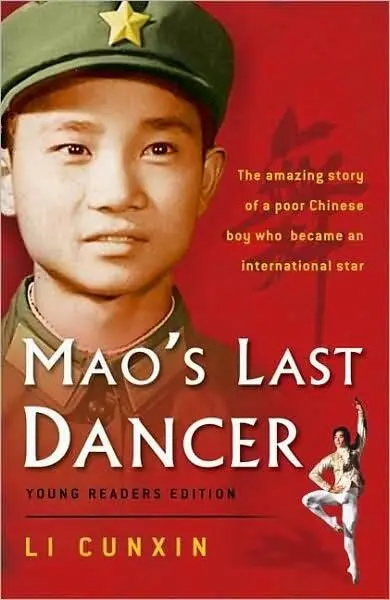
- Название:Mao's Last Dancer
- Автор:
- Жанр:
- Год:неизвестен
- ISBN:нет данных
- Рейтинг книги:3 / 5. Голосов: 1
-
Избранное:Добавить в избранное
- Отзывы:
-
Ваша оценка:
Mao's Last Dancer: краткое содержание, описание и аннотация
Предлагаем к чтению аннотацию, описание, краткое содержание или предисловие (зависит от того, что написал сам автор книги «Mao's Last Dancer»). Если вы не нашли необходимую информацию о книге — напишите в комментариях, мы постараемся отыскать её.
Mao's Last Dancer — читать онлайн бесплатно полную книгу (весь текст) целиком
Ниже представлен текст книги, разбитый по страницам. Система сохранения места последней прочитанной страницы, позволяет с удобством читать онлайн бесплатно книгу «Mao's Last Dancer», без необходимости каждый раз заново искать на чём Вы остановились. Поставьте закладку, и сможете в любой момент перейти на страницу, на которой закончили чтение.
Интервал:
Закладка:
The whole village came to congratulate my parents. There would be one less mouth to feed and now at least their sixth son had some hope of escaping from the poor living conditions and of making a decent life for himself.
Several of my niang's lady friends gathered on our kang one day, shortly after this, to sew, gossip and drink tea as usual. One of the ladies said to me when I walked into the room, "Jing Hao, take off your shoes, let me see your feet."
I was puzzled, and hesitated to take off my smelly shoes.
"Ah ya, come on, don't be shy," my niang urged me. "You can't be a dancer if you're shy!"
I reluctantly took off my shoes. The lady took my feet in her hands, like a doctor examining a seriously sick patient. Suddenly she shouted with excitement, "Look at this, I was right! Look, just look at his three long toes! I knew his feet would be different. This is the reason he was chosen! These three long toes will help him to stand steadily on his pointe shoes."
All the ladies, including my niang, nodded their heads and praised her wisdom. As I was putting my shoes back on, another lady added, in a more serious tone, "I heard it is very painful to stand on your toes. You must have a high pain threshold."
"Yes," a third lady said. "I heard dancers often get bloody toes from standing in their pointe shoes all day long. It must be like binding your feet and standing on top of them!"
I couldn't imagine my toes growing together and walking on my heels like Na-na used to. I began to worry. Eventually I had to tell myself not to think about it until I had at least tried on the pointe shoes. Then I'd know.
News of my selection spread quickly throughout our commune. Our usually quiet village sprang to life. People began to talk about me. "A smart kid." "That boy was born with a lucky look." I was embarrassed by all of these comments. I especially felt uncomfortable with my niang's friends' constant examinations.
Besides my three long toes, they were convinced that my double- folded eyelids, which made my eyes appear larger, were a factor too. It was true that many of my friends in the village had eyes that looked smaller than mine, but now people would stop me in front of my friends and examine my eyelids. One of my niang's friends even believed that the teachers of the Beijing Dance Academy had specific roles in mind for a dancer with a scar on his arm.
Our Chinese New Year was extra special that year. My eldest brother was home from Tibet. Everyone gave me firecrackers as gifts. It was a joyous time.
A few days before New Year's Eve, however, one of my "double kicker" firecrackers went wrong and exploded in my hand. It nearly tore off my whole thumbnail, and blood gushed out from under it. My parents immediately worried that this could jeopardise my chances of going to Beijing, so as an extra precaution they took me to the hospital to get my first tetanus shot, an expensive luxury. If it wasn't for Beijing, nobody would have bothered. "Put some dust on it," my niang would have said.
My last dinner at home. Nine of us sit around the food tray. My niang has cooked a delicious meal. She's made an egg dish with bits of dried shrimp, and Chinese cabbage with a few pieces of pork. We also have a cold dish-marinated jellyfish-and she has used her precious flour to make some mantos. My dia and my older brothers drink rice wine while everyone talks enthusiastically about my bright future.
I am quiet. I can't eat much, despite the good food. My stomach is too full with anxiety and dread. I am too afraid to look into my niang's eyes because if I do I know my tears will flood out.
As soon as dinner is finished I announce that I am going to my friends' houses to say goodbye.
"Why don't you do it tomorrow?" my fifth brother Cunfar says.
"I won't have enough time tomorrow," I lie.
"Stay! We can play your favourite card game," Cunfar persists.
"Why didn't you show Jing Hao this kind of passion before?" my fourth brother Cunsang says, which makes everyone laugh.
"Speedy return if you want to go tonight," my niang says. "You should get some good sleep in your own familiar bed. Who knows if you can stomach the luxurious life in Beijing."
I quickly slip off the kang and go outside.
"Who couldn't stomach a luxurious life!" I hear my second brother say as I hurry into the darkness. I have no intention of going to my friends' houses. I just want to be alone. I walk through the usually scary, dark narrow lanes between the houses and I pass my friends' places but don't go in. You should be happy, I keep telling myself. And I am, deep inside, happy about this god-given opportunity, but I am overwhelmed by the sadness in my heart as well. I don't want to leave my niang, my dia, my brothers and my friends. Already I feel so alone. I can't imagine how alone I will feel in Beijing. I look up at the stars, and even they are few and distant tonight.
Eventually I wander home. All my older brothers have gone out. My parents have already spread the quilts on the bed and are waiting for me.
"How are your friends?" my niang asks.
"Fine," I reply. I look at her eyes for the first time that night. They are moist.
"Sixth Brother, can I sleep on your side tonight?" my little brother Jing Tring asks.
"Yes," I reply. For the first time I am happy about that. I wish I could put him and the rest of my family in my pocket and take them to Beijing with me.
Tonight, as Jing Tring is sleeping, I look at his content and peaceful face. Suddenly I feel a rush of brotherly affection for him. I wish I'd been kinder to him. I wish I'd taken time to enjoy his company more.
My niang has made me a black corduroy jacket to take to Beijing, but I know my youngest brother loves that jacket. I know my parents don't have enough money to make him one too, so in the middle of the night, I pretend to get up for a wee, and quietly take my new jacket out of my bag and tuck it inside one of the papier-mâaché clothes boxes-Jing Tring will find it there after I'm gone.
The morning finally arrives. I've had a restless night and I wake with the first sound of the rooster's call. My dia rose earlier, to pack my belongings in two string bags. They are net bags, loosely woven, so you can see clearly what is inside. Many of my relatives, friends and neighbours have given me presents: souvenirs or some local specialty food such as dried shrimp. The shrimp has a strong "dead fish" sort of smell and it makes the bags stink.
Some of my classmates and friends have chipped in to pay for us to have our photos taken together. They also give me a beautiful diary with many pictures of Chairman Mao in it. The photo means a lot to me because my parents can't afford to waste money on such a luxury. We have very few photos, and only one family photo-a black-and-white one of my niang and all her seven boys. There is also my niang's handmade quilt, a thin futon-like mattress, two small handtowels, a metal washing-basin, a metal mug, some clothes, apples, pears, and a Qingdao specialty called "sorghum sweet", a soft lolly made from the grain. My niang has also packed some dried snakeskin. No one has noticed that I have taken out the new corduroy jacket.
After he finishes packing my bags, my dia quietly hands me five yuan. "I wish I could give you more, but this is all we have. Be good. Don't let the Li name down." He leaves for work, saying he'll try to make it back for lunch so he can see me one more time before I leave.
My niang is busy making dumplings this morning, as a special treat to send me on my way. I want to stay with her for every remaining minute, but I can't. I know if we look at each other we will not be able to control our tears. So I walk around the village, bidding farewell to my friends. I ask several of my niang's friends to come to our house after lunch to keep her company. I don't want her to be sad and on her own. I go to my na-na's grave and to our ancestors' burial place and kowtow. I want to smell the earth, the air, to remember the surroundings and take everything in. This village has been my life for my whole eleven years. Even the things I hate about it are suddenly not so bad. My heart feels as though it is hanging in mid-air. I return home for lunch.
Читать дальшеИнтервал:
Закладка:
Похожие книги на «Mao's Last Dancer»
Представляем Вашему вниманию похожие книги на «Mao's Last Dancer» списком для выбора. Мы отобрали схожую по названию и смыслу литературу в надежде предоставить читателям больше вариантов отыскать новые, интересные, ещё непрочитанные произведения.





Обсуждение, отзывы о книге «Mao's Last Dancer» и просто собственные мнения читателей. Оставьте ваши комментарии, напишите, что Вы думаете о произведении, его смысле или главных героях. Укажите что конкретно понравилось, а что нет, и почему Вы так считаете.