Li Cunxin - Mao's Last Dancer
Здесь есть возможность читать онлайн «Li Cunxin - Mao's Last Dancer» весь текст электронной книги совершенно бесплатно (целиком полную версию без сокращений). В некоторых случаях можно слушать аудио, скачать через торрент в формате fb2 и присутствует краткое содержание. Жанр: Современная проза, на английском языке. Описание произведения, (предисловие) а так же отзывы посетителей доступны на портале библиотеки ЛибКат.
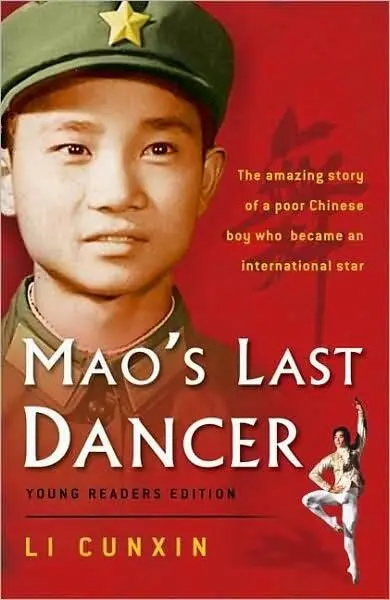
- Название:Mao's Last Dancer
- Автор:
- Жанр:
- Год:неизвестен
- ISBN:нет данных
- Рейтинг книги:3 / 5. Голосов: 1
-
Избранное:Добавить в избранное
- Отзывы:
-
Ваша оценка:
Mao's Last Dancer: краткое содержание, описание и аннотация
Предлагаем к чтению аннотацию, описание, краткое содержание или предисловие (зависит от того, что написал сам автор книги «Mao's Last Dancer»). Если вы не нашли необходимую информацию о книге — напишите в комментариях, мы постараемся отыскать её.
Mao's Last Dancer — читать онлайн бесплатно полную книгу (весь текст) целиком
Ниже представлен текст книги, разбитый по страницам. Система сохранения места последней прочитанной страницы, позволяет с удобством читать онлайн бесплатно книгу «Mao's Last Dancer», без необходимости каждый раз заново искать на чём Вы остановились. Поставьте закладку, и сможете в любой момент перейти на страницу, на которой закончили чтение.
Интервал:
Закладка:
By the time they'd finished testing everyone, only one boy and one girl were selected to go to the next level. I was that boy. I was excited but frightened. I didn't know what was going to happen. The officials mentioned ballet, but all I knew about ballet was what I'd seen in the movie, The Red Detachment of Women. I had no idea what ballet was all about.
The audition was a hot discussion topic both at school and in our village over the next few days. At first my parents didn't pay much attention. There was no way in the world anyone in our family could have any artistic talent. Several of my brothers and my classmates teased me. "Show us a ballet step! Show us a ballet step!" But they knew I had no idea. For me, the most exciting aspect of it all was not the ballet but the possibility of going to Beijing to be near our beloved Chairman Mao; the possibility, however unlikely, of getting out of my deep well.
I went to the commune office a few weeks later to go through the next level of audition. This time they sent notices to parents beforehand, asking candidates to come dressed with underwear.
This audition was much harder. The girl with the big eyes from my class didn't pass this round: she screamed when they bent her body backwards and was disqualified for inadequate flexibility of her back. Then it was my turn. One teacher lifted one of my legs upwards, two others held my other leg steady and straight. They kept asking me if it hurt. Of course it hurt: it was excruciating! But I was determined to be chosen, so I kept smiling and replied, "No, it doesn't hurt," as they lifted my leg higher and higher. Be strong! Be strong! You can bear the pain! I kept telling myself. I did bear the pain, but the hardest thing was pretending to walk normally afterwards. They had torn both my hamstrings.
After the audition at commune level we went through to county, city and provincial levels. Each time there were more children who auditioned and each time more were eliminated. During the physical examination at the county level, the scar on my arm from the burn I received as a baby nearly disqualified me. One of the teachers from Beijing noticed it and referred me to a medical examiner.
"How did you get this scar?" the doctor asked.
I didn't want anyone to think of my niang as irresponsible, so I told him I'd cut my arm on a piece of broken glass and that the cut had got infected.
"Do you have any funny sensations, like itching on rainy days?"
"No, never." I looked straight into the doctor's eyes. I prayed he wouldn't eliminate me. I prayed for my niang's sake. She would be so sad, feel so guilty, if I was disqualified because of this scar. She didn't need to suffer any more.
After the examination, as I was putting my clothes back on, I overheard the doctor talking to a tall teacher from the Beijing Dance Academy. The teacher's name was Chen Lueng. He was the same gentleman from Beijing that Teacher Song had tapped on the shoulder that day at my school. "That boy's scar will definitely get larger as he grows," the doctor said. My heart sank. My only chance of getting out of my deep well was gone. I would be disqualified. I made up my mind never to tell my niang it was the scar that did it. The scar was from an accident. My niang was the best mother with the most loving heart. No one should take that reputation away.
When the physical tests were completed, we were tested for other abilities: our response to music, our understanding of Chairman Mao's ideology. They also checked our family background three generations back. Chairman Mao's communist theory about the so- called "three classes of people" was crucial when selecting us. All three classes had to be represented-peasants, workers and soldiers. Children whose families were associated with wealth and education anywhere in the past three generations were classified as class enemies and were disqualified. Madame Mao wanted to train us to be faithful young guards, so our backgrounds had to be pure, safe and reliable.
The final hurdle in the selection process was for the officials to meet my family. They wanted to meet everyone: parents, brothers and grandparents, to check out their physical proportions. I was nervous that they might have a problem with my niang because she was short, but her larger-than-life personality, and my dia's good figure, saved the day.
Days passed, weeks passed. No news from Beijing. The hope in my heart gradually dimmed with each passing day. I felt disappointed, then devastated. I became quiet. I shrank into my own cocoon. I kept looking at my scar, convinced it was the sole reason that I'd missed out. I wanted to cut my arm off to rid myself of the scar. But still, I didn't blame my niang. It wasn't her fault. It was just my unfortunate fate.
Everyone in my family had also given up hope by now. I could tell they felt sorry for me, because they all went out of their way to be nice. This only left me feeling sadder.
Then one day, just as my dia was going back to work after lunch, a group of village, commune, county and city officials suddenly came into our small courtyard, for our door was always open. They had broad smiles on their faces. My parents offered them some tea. Some sat down on our crowded kang, others just stood around. Eventually one of the officials asked my niang, "Which of your sons is Li Cunxin?"
My niang pointed at me.
The city official turned back to my niang. "Your lucky son has been chosen for Madame Mao's Beijing Dance Academy."
I was stunned. We were all stunned. A whole month had gone by! How could this be? My mother was speechless, but her face smiled like a full-bloomed flower. "Thank you! Thank you!" was all she could say.
My dia poured more tea for the officials, and then more, and then still more. His face was filled with pride.
When all the officials had left our house, all my dia said was, "I'd better get to work. I'll see you tonight." But he looked at me in a strange way, as though he was seeing something new.
After everyone had gone, my niang and I were left to ourselves. She looked at me for a long time, lost for words for the first time in her life. Finally she said, "My lucky boy, I'm so happy for you. This is the happiest day of my life!"
"I don't want to leave you," I said.
She looked at me with a slight frown. "Do you want to stay here and eat dried yams for the rest of your life? My dear son, this is your lucky chance to escape from this cruel world. Go, go and do something special with your life! Become someone other than a peasant boy. Don't look back! What is here? A leaking roof, your brothers' smelly feet and an empty stomach?"
"Stop it!" I said. I put my hand over her mouth. Happy tears welled in her eyes. She pulled me close and hugged me tight. I heard the loud beat of her heart, as though any minute it would jump out with joy.
She hugged me for a long time. I was too afraid to move. I wanted us to stay like that for ever. My entire body melted under her warmth.
"What about you?" I eventually asked. "Can you come to Beijing with me?"
"Do you want me to come and wipe your bottom, silly boy?" she replied with a chuckle. "You are the lucky one. Don't you think your brothers would love to have a chance like this? No, I can't go with you, but my love will. I will always love you, with all my heart. I know you have your secret dreams. Follow them. Make them come true. Now, go and play with your friends." She gave me a gentle push, but just as I was disappearing into the streets, she called out. "Don't forget to come back and help me push the windbox!"
A few days after this, we received a letter notifying me that I had been awarded a full scholarship and that I was to leave for Beijing in four weeks, just after the Chinese New Year. For the reopening of Madame Mao's new Beijing Dance Academy, fifteen students had been selected from Shandong Province. Fifteen from over seventy million people. Twenty-five students from Shanghai, three students from Beijing and one student from Inner Mongolia were also selected. It was February and I had just turned eleven.
Читать дальшеИнтервал:
Закладка:
Похожие книги на «Mao's Last Dancer»
Представляем Вашему вниманию похожие книги на «Mao's Last Dancer» списком для выбора. Мы отобрали схожую по названию и смыслу литературу в надежде предоставить читателям больше вариантов отыскать новые, интересные, ещё непрочитанные произведения.





Обсуждение, отзывы о книге «Mao's Last Dancer» и просто собственные мнения читателей. Оставьте ваши комментарии, напишите, что Вы думаете о произведении, его смысле или главных героях. Укажите что конкретно понравилось, а что нет, и почему Вы так считаете.