Li Cunxin - Mao's Last Dancer
Здесь есть возможность читать онлайн «Li Cunxin - Mao's Last Dancer» весь текст электронной книги совершенно бесплатно (целиком полную версию без сокращений). В некоторых случаях можно слушать аудио, скачать через торрент в формате fb2 и присутствует краткое содержание. Жанр: Современная проза, на английском языке. Описание произведения, (предисловие) а так же отзывы посетителей доступны на портале библиотеки ЛибКат.
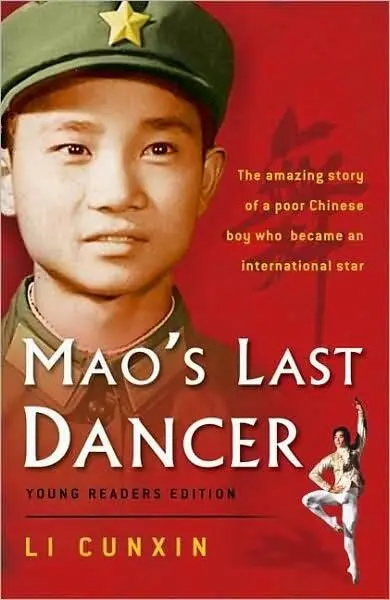
- Название:Mao's Last Dancer
- Автор:
- Жанр:
- Год:неизвестен
- ISBN:нет данных
- Рейтинг книги:3 / 5. Голосов: 1
-
Избранное:Добавить в избранное
- Отзывы:
-
Ваша оценка:
Mao's Last Dancer: краткое содержание, описание и аннотация
Предлагаем к чтению аннотацию, описание, краткое содержание или предисловие (зависит от того, что написал сам автор книги «Mao's Last Dancer»). Если вы не нашли необходимую информацию о книге — напишите в комментариях, мы постараемся отыскать её.
Mao's Last Dancer — читать онлайн бесплатно полную книгу (весь текст) целиком
Ниже представлен текст книги, разбитый по страницам. Система сохранения места последней прочитанной страницы, позволяет с удобством читать онлайн бесплатно книгу «Mao's Last Dancer», без необходимости каждый раз заново искать на чём Вы остановились. Поставьте закладку, и сможете в любой момент перейти на страницу, на которой закончили чтение.
Интервал:
Закладка:
Without any success, the officials eventually let the matter go. But the police appeared in our village quite frequently after that, and none of the children ever dared write anything on the walls again.
It wasn't long after this, on the way home from school, that I found something that was to become my secret treasure. It was a book. Only about forty pages, lying on the street near the garbage tip. I picked it up with the intention of taking it home so our family could use it as toilet paper, but somehow I started to read the first page and couldn't stop. It was a foreign story translated into Chinese. I couldn't understand all the words but I could make out that the story was about a rich steel baron, in some place called Chicago, who fell in love with a young girl. I'd just got to the bit where he used his money to build a new theatre when the pages ran out. How I wished I'd had the rest of the book! It was such delicious reading! Love stories were hard to find. I would have given anything to read the whole thing. But the Red Guards destroyed any books that contained even a hint of romance or Western flavour. You would be jailed if such books were found in your house.
I kept those forty pages for a long time, locking them like a treasure in my personal drawer, never realising the danger I'd put my family in. I read it many times. I pored over the words. I wondered how the people in the story could have such freedom. It sounded too good to be true. But even after hearing years of fearful propaganda about America and the West, the book was enough to plant a seed of curiosity in my heart. I asked some of my brothers if any of them had read such a book and hoped that one of them could tell me the rest of the story. But none of them did. My fifth brother even accused me of making it all up, but still I was not going to divulge my sacred find.
To satisfy our need for stories, some friends and I turned to the opera and ballet storybooks which our older siblings were given at school. We would act out different characters, and especially loved the scenes with guns, swords or fighting. Acting out the dying scene was always a delight! Everyone wanted the hero's role but we had to share that over different days. We play-acted like this even before we started school in the mornings. We couldn't read many of the words in the books, so we based the plot on fables we'd been told or we made up stories and dialogue as we went along.
More stimulus for our hungry imaginations came from the touring movies. Once or, if we were lucky, twice a year, a small group of people from the Qingdao Propaganda Bureau would come to our village to entertain us with a movie about things like Mao's Red Army triumphing against the Japanese army, or Chiang Kaishek's Guomindang regime, or the struggle against the class enemies, or touching stories about Mao's revolutionary heroes. There were also popular opera and ballet movies such as The Red Lantern and a ballet called The Red Detachment of Women, but the first half-hour of every showing always screened documentaries about Mao's faithful followers-unbelievable but inspiring stories for us youngsters to absorb.
The day before the movie was to be shown, our village had to put up a temporary wooden frame to hang the movie screen from. We set our little stools or bamboo mats in front of it as soon as the frame was up, to secure our places and, to prevent anyone from stealing our belongings, at least two of my older brothers would sleep there overnight. Arguments often flared up about whose place was whose, but as soon as a date was set and the names of the movies were known, we would discuss nothing but the coming event. I could hardly contain my excitement! I was such an emotional mess at the movies. Everything would make me sob. My emotions would linger for many days afterwards as I went endlessly over the details of each movie in my mind. My devotion to Mao and his ideology was greatly intensified. I wanted to be a revolutionary hero! Another child of Mao! But I loved the Beijing Opera singers as well, their singing, dancing, fighting and acrobatic skills. They were as close to a Kung Fu movie as we would ever get. The Kung Fu masters were the heroes of my imagination, but the Kung Fu books and movies were banned in China then. We had only the folktales told by some of the elderly people in our village to keep that passion alive.
I liked the stories and the fighting in the Chinese ballet movies too, but I really thought the people looked funny standing on their toes, and they didn't speak any words, so opera always won over ballet when it came to choosing a play for us to act out. Secretly I held a dream-one day I would be able to sing and do the Kung Fu steps that the opera singers did. But I knew deep in my heart that this dream would never come true. It was the commune fields for me.
7 Leaving Home
I was nearly eleven years old when, one day at school, while we were busy as usual memorising some of Chairman Mao's sayings, the headmaster came into our freezing classroom with four dignified- looking people, all wearing Mao's jackets and coats with synthetic fur collars.
I immediately thought of the incident about the writing on the wall. Not again. What's wrong this time? But to my surprise, the headmaster introduced them as Madame Mao's representatives from Beijing. They were here to select talented students to study ballet and to serve in Chairman Mao's revolution. He asked us all to stand up and sing "We Love Chairman Mao":
The east is red, the sun is rising.
China 's Mao Zedong is born.
Here to give us happiness.
Hu lu hai ya.
Our lucky star who saved us all.
As we sang, the four representatives came down the aisles and selected a girl with big eyes, straight teeth and a pretty face. They passed me without taking any notice, but just as they were walking out of our classroom, Teacher Song hesitated. She tapped the last gentleman from Beijing on the shoulder and pointed at me. "What about that one?" she said.
The gentleman from Beijing glanced in my direction. "Okay, he can come too," he said in an off-hand manner, in perfect Mandarin dialect.
The girl with the big eyes and I followed Madame Mao's people into the headmaster's office. It was the only room with a coal- burning heater, a handmade contraption cobbled together from a bucket, with pipes attached in all directions like spider legs. Despite this luxury though, the room was still extremely cold.
There were other children already in the room when we arrived- ten children had been chosen altogether and we all wore our thick-quilted homemade coats and pants and looked like little round snowballs as we stood together in the freezing room.
"Take all your clothes off except your underwear! Step forward one by one! We are going to measure your body and test your flexibility," a man with glasses ordered.
Everyone stood there nervously. Nobody moved.
"What's your problem? Didn't you hear? Take your clothes off!" our headmaster barked.
"I'm sorry," one of the boys answered timidly, "but I don't have any underwear."
To my surprise, I was the only child who had underwear, hand-me- downs from several older brothers, multi-layered and patchworked with mending by my niang. All ten of us during that audition had to share my one set of underwear.
The officials measured our proportions: our upper body and our legs, our neck length, even our toes. I watched a few of the students being tested before me, and they cried out and winced. One of the officials came over to me and bent both of my legs outwards. Another official held my shoulders to stabilise me and a third pushed his knee against my lower back, at the same time pulling both of my knees backwards with great force to test the turnout of my hip joints. It was so painful it felt like everything would break at once. I wanted to scream as well, but for some reason I didn't. I had a stubborn thought: I didn't want to lose my dignity, I didn't want to lose my pride. And I clenched my teeth.
Читать дальшеИнтервал:
Закладка:
Похожие книги на «Mao's Last Dancer»
Представляем Вашему вниманию похожие книги на «Mao's Last Dancer» списком для выбора. Мы отобрали схожую по названию и смыслу литературу в надежде предоставить читателям больше вариантов отыскать новые, интересные, ещё непрочитанные произведения.



Обсуждение, отзывы о книге «Mao's Last Dancer» и просто собственные мнения читателей. Оставьте ваши комментарии, напишите, что Вы думаете о произведении, его смысле или главных героях. Укажите что конкретно понравилось, а что нет, и почему Вы так считаете.