Li Cunxin - Mao's Last Dancer
Здесь есть возможность читать онлайн «Li Cunxin - Mao's Last Dancer» весь текст электронной книги совершенно бесплатно (целиком полную версию без сокращений). В некоторых случаях можно слушать аудио, скачать через торрент в формате fb2 и присутствует краткое содержание. Жанр: Современная проза, на английском языке. Описание произведения, (предисловие) а так же отзывы посетителей доступны на портале библиотеки ЛибКат.
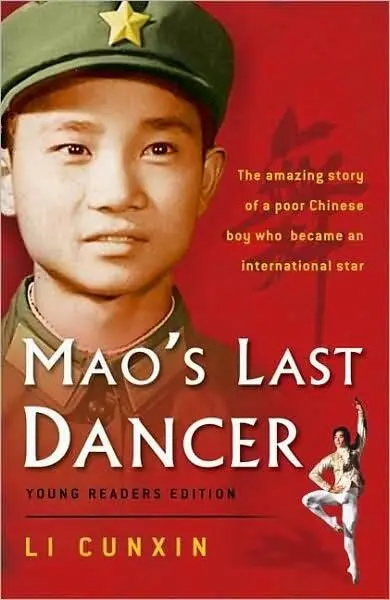
- Название:Mao's Last Dancer
- Автор:
- Жанр:
- Год:неизвестен
- ISBN:нет данных
- Рейтинг книги:3 / 5. Голосов: 1
-
Избранное:Добавить в избранное
- Отзывы:
-
Ваша оценка:
Mao's Last Dancer: краткое содержание, описание и аннотация
Предлагаем к чтению аннотацию, описание, краткое содержание или предисловие (зависит от того, что написал сам автор книги «Mao's Last Dancer»). Если вы не нашли необходимую информацию о книге — напишите в комментариях, мы постараемся отыскать её.
Mao's Last Dancer — читать онлайн бесплатно полную книгу (весь текст) целиком
Ниже представлен текст книги, разбитый по страницам. Система сохранения места последней прочитанной страницы, позволяет с удобством читать онлайн бесплатно книгу «Mao's Last Dancer», без необходимости каждый раз заново искать на чём Вы остановились. Поставьте закладку, и сможете в любой момент перейти на страницу, на которой закончили чтение.
Интервал:
Закладка:
Three? She must have come from an official's family to have so many pencils!
"What's the matter?" Teacher Song suddenly appeared in front of us.
"He broke his pencil," my desk-mate answered.
"Oh dear, and you haven't written a single stroke yet," she said.
My face swelled up like a red balloon. I reluctantly took the girl's pencil. Under Teacher Song's gaze I carefully placed the tip on the paper and to my horror the strokes popped out of my uncontrollable pencil like popcorn, ugly and messy, in all directions. They looked nothing like what was written on the blackboard.
"I can't do it," I conceded hopelessly.
"Let me help you," Teacher Song said patiently. She placed her hand over mine and we finished "Long, long live Chairman Mao" together.
"Good. Now you know how, repeat these words five more times and you'll be fine," she said, and went to help some others. I quickly looked at my friend behind me. He shook his head in disgust at the words he was supposed to write, and made funny faces. Another friend in front of me kept grunting and kicking his workbench. Others gave him dirty looks. It was as though he was a trapped tiger, but my friends' reactions made me feel better. At least they felt the same as me.
It might have been cold outside, but all through class that day I felt agitated and hot, beside myself with frustration. It felt like I was sitting on thousands of needles. My whole body itched.
I wasn't sure if it was paranoia or lice. All of the students scratched, even our teacher scratched herself occasionally. Itchiness became a permanent feature of our class for the first few years of my schooling. That day I itched so much I couldn't sit still, and before I knew it a huge splinter from the bench stuck right into my thumbnail. Nobody could pull it out and blood gushed everywhere. I cried all the way home with my bloodied hand. My fourth uncle was there, home from his nightshift, and he managed to pull only half of the splinter out with a pair of pliers. The other half was left in there until the nail fell off a few weeks later. My niang smacked a thick layer of dust on the wound and, with throbbing pain, I was sent back to school.
The class was only halfway through the third hour of Chinese when I returned. The rest of the day went by excruciatingly slowly, and we only had a ten-minute break between each hour. Teacher Song's sweet voice went in one ear and out the other. The lessons were far beyond my comprehension. My thoughts were instead out on the streets and in the fields. I felt trapped and bewildered. I couldn't wait for each ten-minute break to arrive.
During the final hour of our lessons that day, as I continued to try and write with my bloodied finger, I heard a bird chirping outside. My heart immediately flew out and joined it.
I was always fascinated with birds when I was a child. I would watch them and daydream. I admired their gracefulness and envied their freedom. I wished for wings so I too could fly out of this harsh life. I wished to speak their language, to ask them what it felt like, flying so high. I wondered which god to ask or indeed if there was such a god who had the power to transform humans into animals. But then I also thought of the constant danger of being shot down by humans or eaten by larger animals. And the birds never seemed to have enough food to eat either, because they were constantly nibbling human faeces. Without food, life as a bird might not be much better than life as a human. And if I became a bird, I would not see my family again. This would surely break my niang's heart. Sometimes I thought I might be able to help them more as a bird, flying high in the air and spotting food for my family. I sat at my desk that day and remembered a tale my dia once told me:
Once upon a time, a hunter shot down a bird, his arrow injuring one of its wings. The hunter could speak the bird's language and when the bird begged him not to kill her, to her surprise, the hunter said, in her own language, "I don't want to kill you, but I have no other food to eat." The bird promised him that she would return his leniency by finding food for him once she could fly again. The bird had only one condition: the hunter had to share any findings with her. The hunter agreed. True to her word, the bird passed on information to the hunter. "There is a dead squirrel up the mountain by the big rock." The hunter was ecstatic. He followed the bird's guidance and found the squirrel. He happily shared it with the bird. The bird went on to provide the hunter with other food and their sharing arrangement continued. But gradually the hunter became greedy and stopped sharing with the bird. The bird wanted revenge. One day the bird told him about a dead mountain goat. The hunter followed the bird's instructions and rushed to the location. From the distance he could see a white object lying on the ground, surrounded by a small group of people. He was worried that those people who had arrived before him would take the goat. He rushed towards the goat. "That's mine, that's mine! I killed him!" But the white object was not a goat. It was a man wearing a white shirt. The hunter was charged with the man's murder and was sentenced to death by a hundred cuts. The hunter told his story about the bird, and appealed to a higher court. The higher court judge didn't believe that this hunter could speak the bird's language, so on the day of his execution, the judge asked the hunter, "What are those two birds saying up in the tree?" The hunter replied, "The birds are angry about their missing children and said, `Judge, judge. There is no animosity between us. Why did you hide our babies?`" The judge found the hunter innocent and released him, for the judge had secretly removed the young birds from the nest, to test the hunter's innocence.
I liked this tale and its moral: that it's important to keep one's promises. I also liked the fact that the little bird had outwitted the powerful hunter.
That day at school I continued to daydream about my birds while others practised their writing. I scribbled mindlessly on my practice pad, my thoughts interrupted only by Teacher Song's voice. "All right, that's enough for today. I want you to practise what you've learned at home. It is called `Homework`. Tomorrow, I expect you to remember what we've done today. Do you understand?"
"Yes!" we replied.
"Good. Now I'm going to teach you a song. You would have heard it before. It is called `I Love Beijing Tiananmen`."
We'd heard this song many times over our village's loudspeakers. So Teacher Song led and we sang:
I love Beijing Tiananmen,
The sun rises above Tiananmen.
Our great leader Chairman Mao,
Lead and guide us forward.
The singing became my favourite part of our day.
On the way home we exchanged our feelings about that first day of school.
"What a boring day!" one of my friends said.
"Boring? It's horrible!" said another.
"I hate sitting next to girls."
"What about the bird?" I asked.
"What bird?"
"Didn't you hear it? On the windowsill during the last hour," I said.
"I was struggling so much trying to write `Long, long live Chairman Mao`, why would I hear a bird?" another friend replied.
We stopped at a sandy bank by the little stream south of our village and were surprised to discover that Yang Ping's group of friends had beaten us there and were playing "horse fight" already. This was one of our favourite games, and I soon joined in with my friends. One person would sit on another's shoulders and opposing groups would try hard to unseat their opponents. Both Yang Ping and I were physically similar and were the "anchor horses" at the bottom. That day we were the last two standing on each team. We fought one another tooth and nail until we dragged each other down in a draw, totally exhausted, muddy and with our clothes torn. Yang Ping and I immediately struck up a good friendship after that, and our after-school gatherings became frequent. My niang cursed me for my irresponsible behaviour though, because my clothes were always either torn or dirty or both. One afternoon, after our usual "horse fight", Yang Ping and I went on wrestling, tripping and pushing each other to the ground. Yang Ping went down hard on one of his arms and broke it. I felt so bad and afraid that his family might make my family pay his hospital costs, so I kept the accident a secret. When my parents did find out, from one of my other friends, they were livid. "Why didn't you tell us?" my niang demanded.
Читать дальшеИнтервал:
Закладка:
Похожие книги на «Mao's Last Dancer»
Представляем Вашему вниманию похожие книги на «Mao's Last Dancer» списком для выбора. Мы отобрали схожую по названию и смыслу литературу в надежде предоставить читателям больше вариантов отыскать новые, интересные, ещё непрочитанные произведения.



Обсуждение, отзывы о книге «Mao's Last Dancer» и просто собственные мнения читателей. Оставьте ваши комментарии, напишите, что Вы думаете о произведении, его смысле или главных героях. Укажите что конкретно понравилось, а что нет, и почему Вы так считаете.