Li Cunxin - Mao's Last Dancer
Здесь есть возможность читать онлайн «Li Cunxin - Mao's Last Dancer» весь текст электронной книги совершенно бесплатно (целиком полную версию без сокращений). В некоторых случаях можно слушать аудио, скачать через торрент в формате fb2 и присутствует краткое содержание. Жанр: Современная проза, на английском языке. Описание произведения, (предисловие) а так же отзывы посетителей доступны на портале библиотеки ЛибКат.
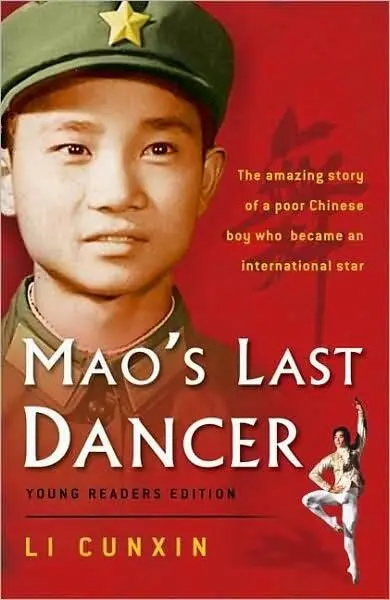
- Название:Mao's Last Dancer
- Автор:
- Жанр:
- Год:неизвестен
- ISBN:нет данных
- Рейтинг книги:3 / 5. Голосов: 1
-
Избранное:Добавить в избранное
- Отзывы:
-
Ваша оценка:
Mao's Last Dancer: краткое содержание, описание и аннотация
Предлагаем к чтению аннотацию, описание, краткое содержание или предисловие (зависит от того, что написал сам автор книги «Mao's Last Dancer»). Если вы не нашли необходимую информацию о книге — напишите в комментариях, мы постараемся отыскать её.
Mao's Last Dancer — читать онлайн бесплатно полную книгу (весь текст) целиком
Ниже представлен текст книги, разбитый по страницам. Система сохранения места последней прочитанной страницы, позволяет с удобством читать онлайн бесплатно книгу «Mao's Last Dancer», без необходимости каждый раз заново искать на чём Вы остановились. Поставьте закладку, и сможете в любой момент перейти на страницу, на которой закончили чтение.
Интервал:
Закладка:
On the day of the funeral, the procession began from Na-na's house, with my eldest uncle carrying a big clay pot on his head. At one point he had to drop the pot on the ground. The pot broke into pieces, the signal for everyone to begin crying, one of the only occasions when crying in public was acceptable. Only men were permitted to go to the burial site. The women were left to cry in the house and cook the feast.
The Li funeral entourage was very impressive. Many distant relatives appeared, some we didn't even know existed! The procession moved very slowly behind the coffin, all the way to the gravesite. It seemed to take for ever. I had never heard or seen my dia cry before, and haven't since, but there was more crying to come at the gravesite. We had to kneel in front of Nana's coffin and kowtow three times before she was lowered into her grave. I remember seeing the little window-like holes in the grave to hold her mirror, her cups and other possessions.
The closing of the grave was the worst moment though. My heart throbbed. I tried so hard to drive away that last frightening image of her dead face lying in the coffin. My fourth brother was the worst affected. Cunsang cried for days. He slept on Na-na's old bed for many months afterwards.
We had to wear something white for a whole year after Na-na's death. Our parents wore white shirts, but for us children the only things our niang could afford were white strips of cloth, which were sewn onto our shoes. We often went to visit Na-na's graveyard with our dia and fourth uncle, so she wouldn't be lonely in her new world. Each time, we brought her lots of symbolic money, gold and food. I loved going back to her grave to wish her a happy life, but it always saddened me too.
Within a month of Na-na's death my niang suddenly fell ill with vomiting and a high fever. Despite seeing a few local healers, her sickness persisted and on the second night she had a strange dream: Na-na accused her and my dia of not looking after her. She complained that her house was shabby and that the roof leaked. My niang tried to reason with her. "We looked after you to our best ability while you were alive and gave you a lot of money for your new world. What else can we do?"
"Who told you I'm dead?" my na-na snapped, and turned her back on my niang.
The next morning my niang told one of her sewing friends about her strange dream. "Maybe she needs help," her friend whispered in her ear. "Why don't you do a test to see if I am right?"
"I'll do a test, but why do you have to whisper?"
"There are too many loose spirits! If they overhear our conversation they might play tricks on you!"
After her friend left, my niang took out a pair of chopsticks and a raw egg and placed the chopsticks pointing north on her kang. She lit two sticks of incense, closed her eyes and called out, "Niang, mother of Li Tingfang, if it was you who showed your spirit last night and if you are in need, please show your spirit again now." Then she placed the egg between the chopsticks with the pointed end down. The superstition held that if it was Na- na's spirit calling for help, the egg should stand up on the pointed end all by itself.
My niang opened her eyes and was stunned. The egg was still standing up! Even for a deeply superstitious person like my niang, it seemed a little scary.
For a few moments she didn't know what to do, until the egg fell and started to roll towards her. She grabbed it in her hand, as though it were Na-na's spirit, and immediately kowtowed three times in the direction of Na-na's burial place. "Niang! We will come to see you soon and bring you food and money! Please forgive us for our sins!" she murmured.
When my second brother arrived home from school that day she asked him to take two of his younger brothers to check on Na-na's grave straightaway. Three of us raced each other to the burial site and found a large round hole there, dug by an animal. We were not aware of our niang's dream then, so we simply filled the hole with the loose dirt and told Niang what we'd found. As soon as our dia came home from work, she said to him urgently, "Go to our niang's grave with some food and money, and make sure the hole is properly secured and patched up."
My dia was about to ask what this was all about, but my niang stopped him. "Just go now and I will explain later!"
At first my dia was reluctant to go because all of us were waiting for dinner, but after he saw how serious and determined she was, he went back to the grave, carrying a lantern, a shovel, a bottle of water and some incense and paper money.
Later that night our niang finally told us of her dream and her experiment with the egg. All of us children laughed and thought she was just being superstitious, but our dia was more thoughtful. "One cannot fully believe it and yet one shouldn't disbelieve it." That's what Confucius would have said, I thought. But even so, our niang's fever receded the very next day.
My parents discussed this incident often. So did our niang's group of friends, whose superstitious beliefs gave them hope beyond the harsh reality of daily life.
But one question which bothered my parents for many days after this incident was why Na-na didn't send her message about her leaking grave to my dia instead. Perhaps, my parents considered, Na-na wouldn't have thought he would take this dream too seriously, or perhaps she thought he would have been too tired to even dream. But most importantly, they believed that Na-na wouldn't have had the heart to strike down the main breadwinner of our family with sickness, her youngest and most favourite son.
The death of Na-na was the first time in my life that I had lost someone I loved dearly. Every time I entered or passed her house, tears would stream down my face. I kept hearing her sweet voice. I dreamed about her often. I missed her for many, many years.
6 Chairman Mao's Classroom
The year my na-na died was the year I was supposed to start school. The compulsory age was eight, but there was no room for my group that year, so I didn't start until later.
It was February 1970. I had just turned nine. For my first day at school, my niang dressed me up in my best clothes, a new black cotton, quilted winter jacket and hand-me-down cotton pants with patches on the knees and the bottom, and a hat for winter of cotton and synthetic fur. She also made me a simple schoolbag from dark blue cloth. My dia bought me two notebooks, one with pages full of squares for practising Chinese characters, and another one for maths. He made me a wooden pencil box containing one pencil, a small knife and a round rubber eraser. Of course, one of the most important requirements was Mao's Little Red Book.
"This is a special day for the Li family!" my niang jokingly declared at breakfast.
"Why?" our dia asked.
"The Li family has one more scholar today," she tilted her chin at me. "I hope you'll study hard. We're not sending you to school to play. I hope you'll learn more than your dia and your brothers have learned from school."
"Mmm," our dia said. "It wouldn't be too hard to do better than your dia."
"Listen to your teachers, follow their instructions, be a good student. Don't lose face for the Li family. Make us proud," said my niang.
I felt apprehensive throughout breakfast. School meant the end of my carefree days. It meant that I had to wear clothes and shoes and conform to rules. School would teach me how to read and write, but deep down, like my dia and my brothers, I wondered what use an education would be to a peasant boy who was destined to work in the fields. How would school help my family's food shortages? I didn't need an education to be a good peasant.
The school we were supposed to go to was about a mile from our village, but there wasn't a spare classroom there at first, so our village donated an abandoned, run-down house as a temporary classroom. I knew this house. It was always vacant. I was told that a childless couple had lived there, and had mysteriously disappeared when they went to another province to visit their relatives. Our commune officials made repeated inquiries to the police but all investigations had failed. Rumours spread that the couple were spies and had secretly escaped to Taiwan. We used to throw stones at the house and the older boys told us it was haunted. I always wanted to peek through the window and see what was inside, but I chickened out each time. And now this mysterious house was going to be our temporary school.
Читать дальшеИнтервал:
Закладка:
Похожие книги на «Mao's Last Dancer»
Представляем Вашему вниманию похожие книги на «Mao's Last Dancer» списком для выбора. Мы отобрали схожую по названию и смыслу литературу в надежде предоставить читателям больше вариантов отыскать новые, интересные, ещё непрочитанные произведения.




Обсуждение, отзывы о книге «Mao's Last Dancer» и просто собственные мнения читателей. Оставьте ваши комментарии, напишите, что Вы думаете о произведении, его смысле или главных героях. Укажите что конкретно понравилось, а что нет, и почему Вы так считаете.