Li Cunxin - Mao's Last Dancer
Здесь есть возможность читать онлайн «Li Cunxin - Mao's Last Dancer» весь текст электронной книги совершенно бесплатно (целиком полную версию без сокращений). В некоторых случаях можно слушать аудио, скачать через торрент в формате fb2 и присутствует краткое содержание. Жанр: Современная проза, на английском языке. Описание произведения, (предисловие) а так же отзывы посетителей доступны на портале библиотеки ЛибКат.
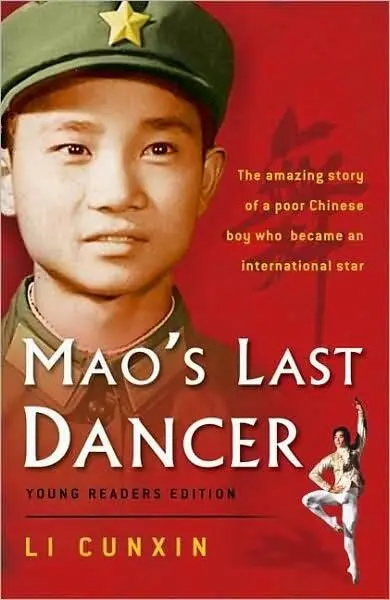
- Название:Mao's Last Dancer
- Автор:
- Жанр:
- Год:неизвестен
- ISBN:нет данных
- Рейтинг книги:3 / 5. Голосов: 1
-
Избранное:Добавить в избранное
- Отзывы:
-
Ваша оценка:
Mao's Last Dancer: краткое содержание, описание и аннотация
Предлагаем к чтению аннотацию, описание, краткое содержание или предисловие (зависит от того, что написал сам автор книги «Mao's Last Dancer»). Если вы не нашли необходимую информацию о книге — напишите в комментариях, мы постараемся отыскать её.
Mao's Last Dancer — читать онлайн бесплатно полную книгу (весь текст) целиком
Ниже представлен текст книги, разбитый по страницам. Система сохранения места последней прочитанной страницы, позволяет с удобством читать онлайн бесплатно книгу «Mao's Last Dancer», без необходимости каждый раз заново искать на чём Вы остановились. Поставьте закладку, и сможете в любой момент перейти на страницу, на которой закончили чтение.
Интервал:
Закладка:
My parents told us that the head of our village was a good man. I was confused. I couldn't understand what crime he could have committed. A few days later, however, the communist revolutionary leader led a big crowd to the head villager's house. Only then did I realise that he'd been missing from the group of accused during the parade and rally.
The door of his house was locked when we got there and the leader banged on it, screaming, "Open the door, open the door! Otherwise your crime will be increased ten-fold!"
Eventually the door opened. His wife stood there, begging mercy for her husband. She told the communist leader that her husband was so sick he couldn't even get off the bed. The leader didn't believe her. He demanded to see him, but when he did he became convinced that the head villager was indeed very sick. A few years later, I remember seeing our head villager sitting by his gate on a little chair. He looked pale and motionless. He'd lost all his hair. Even his eyebrows were gone. I felt desperately sorry for him, but by that time I was one of Mao's young Guards too, and I felt guilty for even thinking that way.
I witnessed many rallies and parades during the Cultural Revolution. The Red Guards said they were killing the class enemies, which included the landlords, factory owners, successful businessmen, Guomindang Party members and army officers, intellectuals and anyone who might pose a threat to the communist government. But there was one particular rally that still, to this day, makes my heart bleed. It was a huge rally. My friends and I went along as usual. We heard the communist leader read out the sentences for about fifteen landlords, factory owners and counter-revolutionaries. Then they were loaded onto a truck. We could see their pointed white hats, with their names written on them in black ink and with a huge red cross struck through each name. They were taken to a nearby field. Despite the adults' warnings, my friends and I followed as fast as we could. By the time we got there, an excited crowd had formed a semi-circle around the accused. There were so many people that nobody noticed us peeking through the cracks between the crowd's legs.
I saw the men standing against a mud wall. Someone started counting. Two of the men crumbled onto their knees. One started to scream, "I'm innocent, I'm innocent! I didn't do anything wrong! Please let me live!" Another screamed, "I have young children! They'll starve to death without me! Have mercy for my family!" Then I heard someone shouting, "Yi, er, san!" One, two, three… Guns fired. The sound ripped through my heart. I saw blood splatter everywhere. The bodies fell down. I screamed, and ran home as fast as I could.
I wished I had listened to the adults. I wished I'd never witnessed this. It haunted me in many of my dreams.
5 Na-Na
Chairman Mao's regime not only changed the way we lived: it also changed the way we died. Even the treatment of the dead changed under Mao's rule. Everything changed under Mao.
One day when I was still about eight, I wanted to impress my niang by cooking lunch for the family myself, when she was late coming back from working in the fields. So I placed some of the leftover food on a bamboo steamer and tried to be creative by adding a couple of my niang's precious eggs in a seafood sauce. The fire was hard to make that day, and the room soon filled with smoke. To see if the food was properly cooked, I lifted the big, heavy wok cover. I was so short that I had to stand on a little stool, and the wok cover was engulfed in steam. As I lifted the cover the stool fell from under my feet. Steam from the wok gushed out at my face. I crashed forward onto the scalding edge of the wok, burning my skin, and my niang's six precious newly purchased plates were knocked to the floor, smashed.
I was terrified! I knew it had taken my parents all year to save enough money to buy those plates. And now, there they were, in a thousand pieces on the floor at my feet.
I ran to Na-na's house next door. If we were ever in trouble, we'd go to Na-na's. My parents would never yell at us in front of her. Was I ever in trouble now!
"What's wrong?" she asked when she saw my frightened face.
"I've broken Niang's new plates!" I sobbed.
"How many did you break?" she asked.
"Six."
"How many?!" she shouted. I wasn't sure if she hadn't quite heard me or if she couldn't believe I had broken all six. My niang had proudly shown the plates to Na-na only the day before.
I repeated the number louder, and stuck out my thumb and my little finger on my right hand to indicate the number six.
"Oh! Wo de tian na!" My god! she exclaimed, with an expression of disbelief. "How did you manage to break that many?"
I quickly told her what had happened. Niang would be so upset when she found out.
"Don't worry. I'll take care of it. You can have lunch with me." Na-na looked at me reassuringly. "You broke those plates by trying to help your niang. You're a good boy. You shouldn't be punished for this." Then she murmured to herself, "What a world we're living in now. A mother of seven has to work in the fields! I've never heard of such a thing!"
She had already cooked her lunch and was placing some food on her wooden tray as she spoke. When I saw the amount of food on the tray, I knew she only had enough for herself.
"You go ahead and finish the food," she said. "I'll wait to eat with your niang later."
I hesitated. Na-na's food was provided by my parents and my uncles and aunties. Her food was always better than ours.
"Your niang will be home any minute if you don't hurry. I wouldn't be around when she gets back if I were you!" she said.
I gobbled up her delicious bread roll quickly and ran out. When I returned home late that afternoon I found my niang very upset. I heard her sigh to my dia, "Our niang was trying to help cook our lunch. She accidentally slipped off the stool and broke all our six new plates! She is getting on in age."
"Is she all right?" Dia asked, concerned.
"Yes, miraculously she didn't hurt herself at all," my niang replied.
I was eternally thankful to my na-na for saving my skin. I quietly slipped into her house that evening and whispered in her ear, "Thank you, Na-na!"
"What?!" she shouted.
I was so afraid others might find out the truth if I said it any louder, so I just gave her a big kiss on her bony cheek and went back home.
My na-na's health became progressively worse for the next half year. My fourth brother Cunsang, who always had a special bond with her, began to sleep in the same bed to watch over her. But still she worsened-she couldn't walk, she became unable to eat, lost her bowel control and gradually slipped away from us. She died about a year after I broke the plates.
As was the local custom, her body was laid in a coffin, in her living room, for three days. The smell of incense filled our houses.
"Why does Na-na's body have to stay here for three days?" I asked my third brother Cunmao.
"In case she comes alive again."
"How can a dead person come back to life?"
He told me a story then, which he'd heard from a friend: "A couple were looked after in their old age by their only son and daughter-in-law," he began. "They were not well cared for. Most of the time they were given leftovers to eat."
"Shouldn't they have been kind to their mother and father?" I interrupted.
"Not all people are kind to their elderly as we are in our family," he continued. "One day, a distant relative of the old couple took pity on them and quietly slipped two hard-boiled eggs into their hands. They were so excited that they quickly peeled the shells off and just as they were going to eat them they heard their daughter-in-law coming towards their room. The wife told her husband to hurry up and eat his egg. Fearing their daughter- inlaw would accuse them of stealing the eggs, the old man quickly put the egg in his mouth and swallowed it whole."
Читать дальшеИнтервал:
Закладка:
Похожие книги на «Mao's Last Dancer»
Представляем Вашему вниманию похожие книги на «Mao's Last Dancer» списком для выбора. Мы отобрали схожую по названию и смыслу литературу в надежде предоставить читателям больше вариантов отыскать новые, интересные, ещё непрочитанные произведения.







Обсуждение, отзывы о книге «Mao's Last Dancer» и просто собственные мнения читателей. Оставьте ваши комментарии, напишите, что Вы думаете о произведении, его смысле или главных героях. Укажите что конкретно понравилось, а что нет, и почему Вы так считаете.