Li Cunxin - Mao's Last Dancer
Здесь есть возможность читать онлайн «Li Cunxin - Mao's Last Dancer» весь текст электронной книги совершенно бесплатно (целиком полную версию без сокращений). В некоторых случаях можно слушать аудио, скачать через торрент в формате fb2 и присутствует краткое содержание. Жанр: Современная проза, на английском языке. Описание произведения, (предисловие) а так же отзывы посетителей доступны на портале библиотеки ЛибКат.
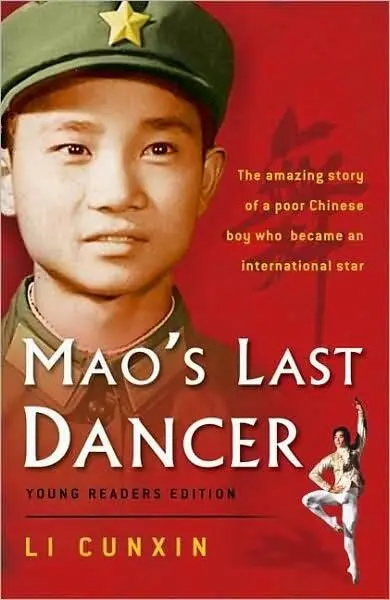
- Название:Mao's Last Dancer
- Автор:
- Жанр:
- Год:неизвестен
- ISBN:нет данных
- Рейтинг книги:3 / 5. Голосов: 1
-
Избранное:Добавить в избранное
- Отзывы:
-
Ваша оценка:
Mao's Last Dancer: краткое содержание, описание и аннотация
Предлагаем к чтению аннотацию, описание, краткое содержание или предисловие (зависит от того, что написал сам автор книги «Mao's Last Dancer»). Если вы не нашли необходимую информацию о книге — напишите в комментариях, мы постараемся отыскать её.
Mao's Last Dancer — читать онлайн бесплатно полную книгу (весь текст) целиком
Ниже представлен текст книги, разбитый по страницам. Система сохранения места последней прочитанной страницы, позволяет с удобством читать онлайн бесплатно книгу «Mao's Last Dancer», без необходимости каждый раз заново искать на чём Вы остановились. Поставьте закладку, и сможете в любой момент перейти на страницу, на которой закончили чтение.
Интервал:
Закладка:
But my last wish was my most important of all. I looped a third piece of paper around the kite string, and wished to get out of the deep, dark well. I confessed to the gods all my inner feelings. I made my secret wish. I daydreamed about all the beautiful things in life that were not mine. I begged them for more food for my family. I begged the gods to get me out of the well so I could help my family. My imagination travelled far beyond the far-away kite into my own special land.
My messages to the gods often got stuck at the knots in the string along the way. I had to shake and jerk the string to get my messages past the knots. Sometimes I would have many messages stuck at different knots on the kite string, and often I was the last one to leave the freezing-cold fields on the Northern Hill. But the cold always gave in to my imagination. It was my imagination that kept my heart warm and my hopes alive.
4 The Seven Of Us
My brothers and I were like all other boys, fighting at times and getting on each other's nerves. But the bond between us was strong: we were expected to love and care for each other, to be happy for each other's achievements. The older brothers were expected to look after the younger ones and the younger ones to respect the older.
Our dia and his fourth brother grew up very close too, although my dia was nearly eight years younger. My fourth uncle and aunt could not have children, so out of love and compassion my parents agreed to let them adopt their third son. So, before he was two years old, my third brother Cunmao was given to my uncle and auntie a couple of houses away, and we always thought we were cousins.
It wasn't until years later, when he was a teenager, that he found out the truth.
I was feeding our hens that day with what little grain we could spare, when Cunmao stormed into our house. "Where is my seventh niang?" he shouted, which was what he called our niang.
"She is sewing on the kang," I told him. He looked so strangely emotional that I quietly followed him, and listened.
"Why did you give me away? Why not one of the others?" I heard Cunmao demand angrily.
"This was decided even before you were born," our niang replied gently. "You were not singled out. I love you just like my other sons."
"I want to come back!" he said.
There was silence. "No, you can't," our niang said at last, her voice quivering.
"You're my niang and I'm your third son. I want to come back!" I could hear his shaking voice. He was close to tears.
Our niang let out a long sigh. "I beg you to forget that I'm your real mother! Do you think this is easy for me to see you around every day? Go back and love your parents. Be good to them until they die. They love you like their real son. You're luckier than your brothers. At least you have enough food to eat. Just look at how poor we are!"
"I'd rather be starving with you than living apart from you!" Cunmao said.
"What has been done is done. Your parents would be destroyed if I took you back now! I'll always love you as one of my sons whether you're living with us or not. But you must first love them and bear a son's responsibilities towards them. You may then love us too if you desire."
There was silence again. After a brief moment she said, "Come here." And through the window I could see them hug each other, sobbing uncontrollably.
I ran away then, and hid in a cornfield. I couldn't believe my third cousin was really one of my own brothers. My heart felt wretched. My eyes filled with tears, and from that moment on I regarded Cunmao as one of my real brothers. I stayed in that cornfield for the rest of the afternoon.
Cunmao's pursuit of returning to his real family broke my parents' hearts, as well as my uncle's and aunt's. But in the end Cunmao respected my parents' position, and he remained a faithful son to my uncle and aunt. I could not imagine what emotional trauma he went through though, especially as we lived so close.
My eldest brother, Cuncia, we called Big Brother. He was thirteen years older than me. I didn't really know him when I was growing up, because I was only four years old when, in August 1965, he left for Tibet. The central government called for hundreds of thousands of young people to go to Tibet to help advance the government's political agenda: they wanted people like my brother to influence Tibetan culture in the dominant Mandarin way. His journey to Tibet, riding buses, trains and horses, would have taken him more than a week. In his absence, my second brother Cunyuan took on the responsibilities of the eldest son. But Cunyuan wanted to be free and different. He too wanted to go to Tibet, but my parents refused. They needed his salary, and they were desperate for a daughter-in-law to help our niang with the domestic duties. So they arranged his marriage to a girl from our first auntie's village. Our aunt told our parents that this girl was hardworking and could cook, and would be a perfect match for Cunyuan. And now, under Chairman Mao, they could even meet each other before their wedding day to "talk about love".
But Cunyuan was in love with a classmate instead. Her father was a county official. When she found out about the arranged marriage she immediately came to our house. "Uncle, Aunt," she said to my parents, "I've known Cunyuan for nearly four years now. I love him and he loves me too! I beg you not to force him into marrying someone he doesn't love."
"Young girl," my niang replied, "you're too young to understand what love is or what is required. You don't understand him. He is not worthy of you. There is no future working in the commune."
"Aunt, I do know what love is! I will follow him to the end of the earth. I'm willing to eat only grass for food as long as I can be with him."
"You don't know our son's temperament. You wouldn't suit each other," my dia replied.
"Please give us a chance! I know we'll make each other happy."
"You come from a different background to Cunyuan's," my dia added. "You won't like our poor commune life."
"Yes, I will! I'll get used to it. I promise you I'll be a faithful wife and a good daughter-in-law!"
But my parents felt strongly that this girl came from a family that was too good for us. Cunyuan needed someone who was sturdier, to rein him in. "You're a beautiful girl and you will find a nice husband in the city one day. That's where you belong. We hope you will understand our decision and leave our son alone," my niang said.
By this point the girl was in tears. "Is there any chance for me to marry Cunyuan?" she asked weakly.
"No. He is engaged to someone else," my dia said.
The girl covered her face with a handkerchief and flew out of our house. I can recall it vividly: I'd felt my heart throbbing. I'd wished my parents had given in. I never saw that girl again.
Cunyuan had many emotional fights with my parents over this girl. He resented our parents for arranging his marriage and his relationship with my parents suffered terribly.
I remember my fourth brother Cunsang could carry heavy grain sacks on his shoulder and could balance and push a heavily loaded cart with ease. He wasn't the cleverest among us, but our niang always had a tender spot for him. She often blamed the accident he'd had as a baby, when the chairs crashed down on his head, for his poor school results. I loved my fourth brother: he was kind, honest and loving. He always smiled, and he was the only older brother of mine who didn't mind me sitting beside him while he played his card games.
It was my fifth brother Cunfar who was the closest to me, however. We were two and a half years apart-and we fought over everything. I was notorious in the family for loving food, and if any food was missing they would always blame me first. Cunfar seized upon this and sometimes nicked food and blamed me for it. But I loved him. He was my protector against the bullies, my partner in games and my rival in races.
Читать дальшеИнтервал:
Закладка:
Похожие книги на «Mao's Last Dancer»
Представляем Вашему вниманию похожие книги на «Mao's Last Dancer» списком для выбора. Мы отобрали схожую по названию и смыслу литературу в надежде предоставить читателям больше вариантов отыскать новые, интересные, ещё непрочитанные произведения.




Обсуждение, отзывы о книге «Mao's Last Dancer» и просто собственные мнения читателей. Оставьте ваши комментарии, напишите, что Вы думаете о произведении, его смысле или главных героях. Укажите что конкретно понравилось, а что нет, и почему Вы так считаете.