Li Cunxin - Mao's Last Dancer
Здесь есть возможность читать онлайн «Li Cunxin - Mao's Last Dancer» весь текст электронной книги совершенно бесплатно (целиком полную версию без сокращений). В некоторых случаях можно слушать аудио, скачать через торрент в формате fb2 и присутствует краткое содержание. Жанр: Современная проза, на английском языке. Описание произведения, (предисловие) а так же отзывы посетителей доступны на портале библиотеки ЛибКат.
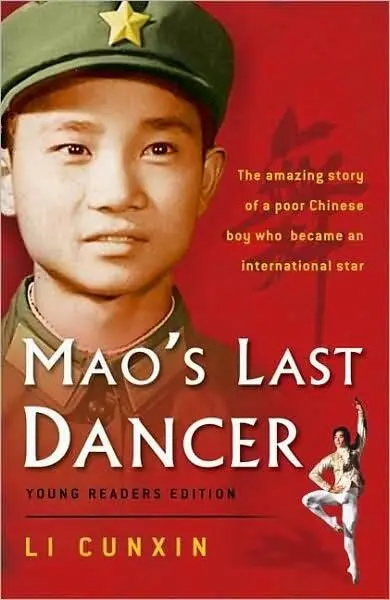
- Название:Mao's Last Dancer
- Автор:
- Жанр:
- Год:неизвестен
- ISBN:нет данных
- Рейтинг книги:3 / 5. Голосов: 1
-
Избранное:Добавить в избранное
- Отзывы:
-
Ваша оценка:
Mao's Last Dancer: краткое содержание, описание и аннотация
Предлагаем к чтению аннотацию, описание, краткое содержание или предисловие (зависит от того, что написал сам автор книги «Mao's Last Dancer»). Если вы не нашли необходимую информацию о книге — напишите в комментариях, мы постараемся отыскать её.
Mao's Last Dancer — читать онлайн бесплатно полную книгу (весь текст) целиком
Ниже представлен текст книги, разбитый по страницам. Система сохранения места последней прочитанной страницы, позволяет с удобством читать онлайн бесплатно книгу «Mao's Last Dancer», без необходимости каждый раз заново искать на чём Вы остановились. Поставьте закладку, и сможете в любой момент перейти на страницу, на которой закончили чтение.
Интервал:
Закладка:
So, on this first day, a small group of us, around twelve neighbourhood friends, walked to our school, excitedly chatting about the house and guessing what would be inside. Halfway there, we met some older students. "Here come the new scholars!" one teased. "Aren't they in for a treat?" another remarked, and they all laughed at us.
Forty-five new kids from four villages were enrolled that year. When we arrived at our school, all forty-five of us gathered outside. One teacher introduced the man beside her as our sports teacher and introduced herself as our Chinese and maths teacher. Her name was Song Ciayang.
"Students, this is an important day for you all, a new beginning in your lives! I hope you will treasure this opportunity Chairman Mao gives you. I hope you will study hard, and not let our great leader down. But before we can start our lessons we must clean this place and set up your workbenches." To my disappointment, the contents of the old house had already been cleared out, so we never did discover what had been inside.
Nearly the entire house was made of mud bricks, with German-style roof tiles. There were two small wood-framed windows, but the thin rice paper pasted onto them had long ago been broken by our stone-throwing. The ceiling was low and the room was depressingly dark and damp. It smelled of ancient dust, mildew and animal shit. It was revolting. We spent that entire first morning cleaning the floor, scrubbing the walls, and pasting new rice papers onto the window frames. Teacher Song brought pictures of Chairman Mao and Vice-Chairman Lin Biao, and we pasted them onto the middle of the front wall. Under these we hung a make-do blackboard. There were no chairs or desks so we were asked to bring our own foldable stools which our fathers had made for us. We also had to make workbenches from used wooden boards which were full of splinters.
We didn't learn anything that first morning. We were divided into several small groups and Teacher Song selected two captains. The girl captain was taller than nearly all of us who lived in our area. The boy captain, Yang Ping, lived in the east part of our village. He was considered privileged because his grandfather had been in Mao's Red Army and had died in the civil war. I never played with him because of the strong territorial pride within our village. And besides, my eldest brother had once been kicked by Yang Ping's father from behind during a fight, and even though Yang Ping's grandmother had apologised profusely and had shown kindness towards my brother, I was determined not to make friends with Yang Ping. And anyway, by the time we had selected our own spot and placed our stools next to whoever we wanted to sit with, our first day of school was over.
Next morning we started at eight o'clock. Teacher Song called out our names one by one from her roll-book and we all obediently answered, "Ze!" Then she picked out the boys and mixed us in with the girls, which I thought was cruel, because I had chosen a spot at the back with two of my best friends. Now I was sandwiched between two girls I didn't even know.
Teacher Song handed out our textbooks. "Students. Welcome to your first official lesson," she paused. "Do you know who this person is?" She pointed to Mao's picture on the wall.
"Chairman Mao, Chairman Mao!" we all shouted excitedly.
"Yes, our beloved Chairman Mao. Before we start our first class each day, we will bow to Chairman Mao in all sincerity. We should wish him a long long life, because we wouldn't be here if it wasn't for him. He is our saviour, our sun, our moon. Without him we'd still be in a dark world of suffering. We will also wish his successor, our second most important leader, our Vice-Chairman Lin Biao, good health, forever good health. Now, let's all get up and bow to Chairman Mao with your heart full of love and appreciation!"
We all stood up, took our hats off, bowed to Mao's picture and shouted, "Long, long live Chairman Mao! Vice-Chairman Lin, good health, forever good health!"
"Before you sit down," Teacher Song continued. "We need to perform one more school rule: I'll say `Good morning, students,` to you and you will say `Good morning, Teacher,` in reply. Now, let's have a practice. Good morning, students!"
"Good morning, Teacher!" we replied in unison.
"Good! Now sit down," she smiled. "Raise your hand if you have Chairman Mao's Red Book."
Most of us raised our hands.
"Those who don't have one, please ask your parents to buy you one from town. I want you to have them tomorrow. This is very important. We should follow Vice-Chairman Lin's example and never go anywhere without Chairman Mao's Red Book. The Red Book will give us guidance in our lives. Without it we will be lost souls."
We placed our Red Books on the left-hand side of our workbenches, as instructed.
"I'll be your teacher for both Chinese and maths," Teacher Song continued. "You will learn how to read and write. Raise your hand if you can already read or write." I looked around. Very few students raised their hands: mostly girls, and I was relieved. I, for one, couldn't recognise a single word in my textbook.
"Good, we have a few smart kids here. Now, please open the first page of your textbook," Teacher Song instructed.
A big coloured picture of Chairman Mao stared out at me, occupying half the page, with shooting stars surrounding his face, as though Mao's round head was the sun. The bottom half of the page had words on it, which just looked like a field of messy grass to me. Whoever invented them must have been a peasant, I thought.
"Can anyone read the words on this page?" the teacher asked. The same girls raised their hands again.
"What does the first line mean?" Teacher Song asked the girl sitting to my right.
"Long, long live Chairman Mao!" replied the girl in a proud voice.
"Good, very good!" Teacher Song paused. She glanced over the class. "Yes, we want to wish Chairman Mao a long long life, because our great leader saved us. I'm sure your parents have told you many stories about the cruel life they lived under Chiang Kaishek's Guomindang regime. They were cold, dark days indeed. That government only cared for the rich. Children like you couldn't even dream of sitting here, but Chairman Mao made it possible for everyone in China to have this privilege. Today, I'll teach you how to write, `Long, long live Chairman Mao, I love Chairman Mao, you love Chairman Mao, we all love Chairman Mao.` I'll now write them on the blackboard. Pay special attention to the sequence of the strokes." She turned to the blackboard and wrote several lines with furious pace.
I was stunned. I didn't get the sequence of strokes at all! I turned to look at one of my friends. He just drew a circle around his neck with his right hand and pulled upwards, his eyes rolling and tongue hanging out, as though he were being hanged.
"Okay, now I want you to repeat each phrase after me." The teacher pointed to the first line of words with her yard-long stick. "Long, long live Chairman Mao," she read.
"Long, long live Chairman Mao!" we repeated.
"I love Chairman Mao!" she read.
"I love Chairman Mao!" we replied.
We repeated the phrases again and again until we had memorised them for life.
The next hour, Teacher Song explained in detail how to write each stroke of the words and the sequence we had to use. I picked up my pencil and realised that I didn't even know how to hold it. I looked to my right and copied the girl next to me, but I pressed too hard and broke the tip. I quickly took out my dia's knife, but as I tried to sharpen the tip, it broke again.
"Here, you can use mine," the girl next to me said.
"No. Thank you," I said, embarrassed. "I'm all right."
"I have three. You can use it for this class and return it to me later," she said in a soft voice.
Читать дальшеИнтервал:
Закладка:
Похожие книги на «Mao's Last Dancer»
Представляем Вашему вниманию похожие книги на «Mao's Last Dancer» списком для выбора. Мы отобрали схожую по названию и смыслу литературу в надежде предоставить читателям больше вариантов отыскать новые, интересные, ещё непрочитанные произведения.





Обсуждение, отзывы о книге «Mao's Last Dancer» и просто собственные мнения читателей. Оставьте ваши комментарии, напишите, что Вы думаете о произведении, его смысле или главных героях. Укажите что конкретно понравилось, а что нет, и почему Вы так считаете.