Li Cunxin - Mao's Last Dancer
Здесь есть возможность читать онлайн «Li Cunxin - Mao's Last Dancer» весь текст электронной книги совершенно бесплатно (целиком полную версию без сокращений). В некоторых случаях можно слушать аудио, скачать через торрент в формате fb2 и присутствует краткое содержание. Жанр: Современная проза, на английском языке. Описание произведения, (предисловие) а так же отзывы посетителей доступны на портале библиотеки ЛибКат.
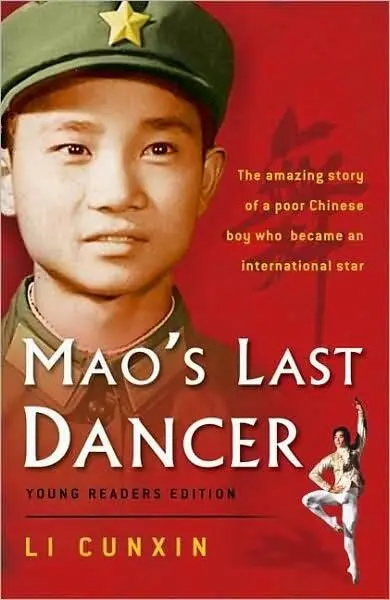
- Название:Mao's Last Dancer
- Автор:
- Жанр:
- Год:неизвестен
- ISBN:нет данных
- Рейтинг книги:3 / 5. Голосов: 1
-
Избранное:Добавить в избранное
- Отзывы:
-
Ваша оценка:
Mao's Last Dancer: краткое содержание, описание и аннотация
Предлагаем к чтению аннотацию, описание, краткое содержание или предисловие (зависит от того, что написал сам автор книги «Mao's Last Dancer»). Если вы не нашли необходимую информацию о книге — напишите в комментариях, мы постараемся отыскать её.
Mao's Last Dancer — читать онлайн бесплатно полную книгу (весь текст) целиком
Ниже представлен текст книги, разбитый по страницам. Система сохранения места последней прочитанной страницы, позволяет с удобством читать онлайн бесплатно книгу «Mao's Last Dancer», без необходимости каждый раз заново искать на чём Вы остановились. Поставьте закладку, и сможете в любой момент перейти на страницу, на которой закончили чтение.
Интервал:
Закладка:
"Why didn't he chew it?" I asked Cunmao.
"He didn't have any teeth left," he replied. He knew by that stage I was gripped by his story. "Let's stop here," he said. "It may be too scary for you."
"Please, please! I promise I won't get scared!" I begged.
"Only if you promise me that you won't tell our parents I've told you this story if you can't sleep at night because of it!" he said.
"I promise, I promise with all my heart!" I pounded my fist on my chest.
"You swear?" he asked.
I spat on the ground and stamped on it with my foot.
"All right," he continued. "The old man choked on the egg and instantly stopped breathing."
"Was he dead?" I gasped.
"Of course he was dead!" Cunmao replied. "So they bought him a cheap coffin and had a cheap burial. In the meantime, the old lady didn't want to remain in this world without her husband and begged her son to bury her as well."
"Did they bury her?" I asked.
"No! It's illegal to bury a live person," he replied.
I could tell the best part of the story was still to come.
"The old lady's only treasure was a pearl necklace her husband had given her and she wrapped it around his neck. She begged his soul to find a peaceful resting place and then come back to get her. The old man's son didn't wait for the three-day period. He buried his father on the first night after his death. The word spread wide about the buried treasure around the old man's neck. At midnight, a robber dug up the grave and opened the coffin. He could see the pearls reflected in the moonlight. The robber made sure the old man was truly dead before he took the necklace by punching hard on the old man's chest three times. Just as he reached for the necklace…" Cunmao stopped. "Guess what happened?"
"The old man's son showed up?" I guessed.
"Ha-ha!" Cunmao laughed heartily. "Are you sure you won't be scared?"
"I already promised you, hurry up!" I urged him.
"The old man suddenly opened his eyes wide and said in a loud voice, `What do you think you're doing, young man?` The robber, as if he had seen a ghost, jumped out of the grave and bolted away witless."
I sat there petrified to the spot. This was the last outcome I'd expected. Cunmao opened his eyes big and wide, just like the old man's.
"Why did he become alive again?" I asked, terrified, gasping for air.
"I knew you wouldn't get it!" Cunmao scoffed. "The egg got stuck in the old man's throat and when the robber punched him, the egg was knocked loose so he got his breath back. And that's why we have to leave Na-na's body here for three days in case she comes alive again too."
"Then why didn't anyone punch our na-na three times?"
"Do you think our elders would do it in front of us? Okay, go and play now."
I still had a lot of questions I wanted to ask, but I could see Cunmao had had enough of me. When I asked my second brother Cunyuan about the reason for our na-na's three-day staying, he told me it was just to allow relatives who lived far away to see her before she was buried. But I thought Cunmao's story was much more satisfying.
I was stricken with grief at Na-na's death. At the beginning I didn't mind seeing her pale, motionless face in the coffin, but as time wore on, her face turned strange and very scary. I had nightmares for several nights.
Na-na didn't want to be buried near my grandfather because his first wife was also buried there and she didn't want any fights. She said the first wife always had priority. But she did say to my parents, a few days before her death, "If there is one thing I want you to do for me when I'm dead, it is to bury me properly." She firmly believed that her spirit would live on in a different world. So my dia and uncles asked a good carpenter to make a special coffin, carved with birds, flowers, trees and water. Our youngest aunt's husband painted it, the one who was the furniture painter and had lots of photographs.
It wasn't easy to obtain permission for Na-na's traditional burial however, since this was now considered an old, unhealthy tradition. The government had just started forcing people to cremate the dead. Our elders had to do a lot of lobbying, at different levels of the commune leadership, but none of the leaders wanted to take responsibility. Nobody officially gave us permission to bury our na-na. But nobody said we couldn't either, so she was buried as she had wished. "This shows how important it is to be honest and kind," my dia said to us. "If it wasn't for the Li family's reputation, we couldn't do this." Na-na's burial was to be the last one allowed in our village.
The village leaders let us select the edge of a ditch for Na-na's burial site. It was a water escape channel from the fields. Any place with water was a lucky place. It lay north of our house, halfway up the Northern Hill.
Before she died, Na-na had personally chosen her funeral clothes, shoes and other essential burial items. She'd made her own clothes and shoes so she'd feel comfortable in the other world. After she died, she was washed with a warm cloth to represent "cleansing her of the filth of this world" so she'd have a clean start in the new world. Na-na's own daughters then dressed her in her burial clothes, a dark greenish-blue cotton jacket, and black shoes with flowers stitched on the soles. The man with the best writing in the village was fetched to write Na-na's name on a large piece of white paper, the same shape as the stone nameplate on the graves. Once a person died, his or her spirit would linger, looking for the place where they belonged. This temporary nameplate would show her that this was her place. If we didn't have Na-na's nameplate put up quickly, her soul might wander away and become lost for ever. The man with the good writing also wrote Nana's name and her date of birth and death on a piece of white silk, large enough to drape over the coffin. At least one person would stay by the coffin at all times during those three days, to "keep the beloved company". Any person related to Na-na or our family had to cry loudly as soon as they walked into the room, regardless of their age. The person who was "keeping the beloved company" had to cry as well and as they cried they would call out the visitor's name so Na-na would know who was paying her their respects.
On the first night after Na-na's death, we used sorghum stems and blue rice paper to make some figures of a cow and a horse, and several child-size figures. A painter would then paint some faces onto these, not human faces, but half-human faces. The models represented food and servants for Na-na to use in her new world. Na-na was so poor in our world, I thought to myself, and yet she is meant to die so rich. In reality, when she died, her only possession was a chest of drawers.
As soon as the sun went down on the first day after her death, the entire family formed a procession. Everyone cried loudly all the way to a temporary miniature temple, about ten minutes away from our house. The Red Guards had destroyed all the real temples, so my dia and uncles had to make this one themselves. It was only about a yard or so high-it looked like a toy temple to me, but here the local god would determine if our na-na was worthy of a happy life. If there were a god and he were fair, he would definitely look after my na-na. She was the best na-na in the world. I couldn't imagine anyone kinder.
This procession was repeated again on the second night after sunset, and very early on the third day, the funeral day, just before sunrise. Skilled diggers then went to the burial site to prepare for the coffin.
The funeral itself was expensive. Some families would spend up to a third of their savings on it. Our family hired many people, even though it cost us dearly: coffin carriers, dancers on stilts, musicians, blanket-and-quilt-carriers, even people to carry mirrors, combs, cups, food, drinks and, most importantly, a lot of fake paper money.
Читать дальшеИнтервал:
Закладка:
Похожие книги на «Mao's Last Dancer»
Представляем Вашему вниманию похожие книги на «Mao's Last Dancer» списком для выбора. Мы отобрали схожую по названию и смыслу литературу в надежде предоставить читателям больше вариантов отыскать новые, интересные, ещё непрочитанные произведения.




Обсуждение, отзывы о книге «Mao's Last Dancer» и просто собственные мнения читателей. Оставьте ваши комментарии, напишите, что Вы думаете о произведении, его смысле или главных героях. Укажите что конкретно понравилось, а что нет, и почему Вы так считаете.