Li Cunxin - Mao's Last Dancer
Здесь есть возможность читать онлайн «Li Cunxin - Mao's Last Dancer» весь текст электронной книги совершенно бесплатно (целиком полную версию без сокращений). В некоторых случаях можно слушать аудио, скачать через торрент в формате fb2 и присутствует краткое содержание. Жанр: Современная проза, на английском языке. Описание произведения, (предисловие) а так же отзывы посетителей доступны на портале библиотеки ЛибКат.
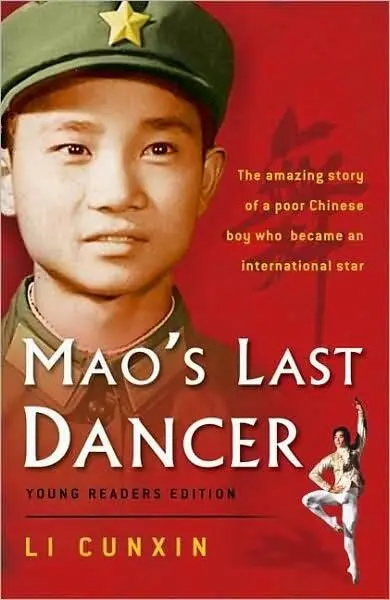
- Название:Mao's Last Dancer
- Автор:
- Жанр:
- Год:неизвестен
- ISBN:нет данных
- Рейтинг книги:3 / 5. Голосов: 1
-
Избранное:Добавить в избранное
- Отзывы:
-
Ваша оценка:
Mao's Last Dancer: краткое содержание, описание и аннотация
Предлагаем к чтению аннотацию, описание, краткое содержание или предисловие (зависит от того, что написал сам автор книги «Mao's Last Dancer»). Если вы не нашли необходимую информацию о книге — напишите в комментариях, мы постараемся отыскать её.
Mao's Last Dancer — читать онлайн бесплатно полную книгу (весь текст) целиком
Ниже представлен текст книги, разбитый по страницам. Система сохранения места последней прочитанной страницы, позволяет с удобством читать онлайн бесплатно книгу «Mao's Last Dancer», без необходимости каждый раз заново искать на чём Вы остановились. Поставьте закладку, и сможете в любой момент перейти на страницу, на которой закончили чтение.
Интервал:
Закладка:
By this time I was ten years old and the campaign to "Learn Lei Feng" had started in all the local schools. Our textbooks were full of Lei Feng's inspiring stories. He was a humble soldier who did many kind deeds. He helped the disadvantaged and especially the elderly, not for personal glory but because, he wanted to be a faithful and humble soldier of Mao's. Lei Feng's diary showed how devoted he was to Mao's ideals. Extracts from his diary were published and included in our textbooks. Everyone of all ages in China was encouraged to learn from him. Everyone wanted to be a "Living Lei Feng". We learned a song that encouraged us to "pick up the screw by the roadside and give it to the police", to contribute to our great country in any way, from the smallest contribution, such as the little screw, to the great sacrifices of one's life, like Lei Feng himself.
One day a student from our school found a coin on the road and gave it to his teacher. He was instantly praised by the headmaster as a model student. His action was what Lei Feng would have done. From then on, much money was found by students by the roadside and the headmaster's money jar quickly filled up, until one day a parent complained that his child had taken all their savings and given them to her teacher.
For a brief period some students stopped attending school or were late for classes because they said they were helping the elderly and the needy just like Lei Feng. But they were just being lazy, and the teachers soon found out. A moral, a "tonic story", for these students was told in our classes:
One day, Lei Feng was late for his military activity because he was carrying home an elderly lady with bound feet. The head of his army unit criticised him without knowing the real reason behind his tardiness. Lei Feng apologised and wrote in his diary that he should be able to do kind things for the needy as well as carrying out the normal required activities.
After this, the school demanded that all kind deeds should be conducted outside school hours.
I, like many of my classmates, wanted to be a hero like Lei Feng. The things he did deeply moved me. His spirit of "forgetting himself to help others" was my living motto. Some classmates and I often went to veterans' homes to help them sweep their yards or carry water from the wells. We even picked up horse droppings from the street and took them to the fields as fertiliser. We needed to do at least one kind deed each day and write it down in our diaries. I thought maybe someone would read my diary after I'd died and realise I'd done even more kind things than Lei Feng. Then I would be a hero too! But I was only ten years old. I didn't think of it as another propaganda campaign to secure our loyalty to Mao and his communist state.
During those school years of mine, the central government released Mao's newest propaganda campaigns one after another. Our regular classes were constantly disrupted and we were ordered to study Mao's latest magical words by heart. Often our school organised rallies when we would march around the villages playing drums, cymbals and other instruments, carrying gigantic pictures of Chairman Mao and waving red flags. Everyone carried Mao's Red Book, and we marched with pride and honour. I felt so happy to be one of Mao's Little Red Scarf Guards. Once I was chosen to lead the shouting of the political slogans. When we passed our village, I glanced around and saw my niang and my fourth aunt standing in the middle of the crowd. I shouted at the top of my voice then. "Long, long live Chairman Mao!" Other leaders shouted at the same time. Different sections of our class followed different leaders. It was completely chaotic, but we all wanted our mothers to see and hear us.
"Niang, did you hear me?!" I asked her when I came home that day.
"How could I hear you? It was like a zoo out there!" she replied.
One day at school, during lunchtime, some shocking news about Mao's chosen successor came through our village's loudspeakers. Vice-Chairman Lin Biao's plane had been shot down over Mongolia. It was October 1971. Lin Biao had been trying to flee to the Soviet Union when his evil motives were discovered. There was speculation that the plane he was on contained many top-secret documents. The most nerve-racking speculation was that there were factions of the military loyal to Lin Biao who could be attempting a coup to topple Mao's government.
As young boys we were told how close Lin Biao was to Chairman Mao, how devoted and trustworthy he was to Mao's political cause. After all, he had written the foreword in Mao's Red Book. Lin Biao was said to have always had the Red Book in his hand.
When we returned to our school that afternoon, all scheduled classes were suspended. We were summoned to the school-ground. Two speakers were set up by the headmaster's office. With microphone in hand, the headmaster read out a document from the central government. Lin Biao had been planning a major coup for a number of years and Chairman Mao had narrowly escaped several assassination attempts. How fortunate it was that our great leader was safe and that we would still be able to enjoy our sun, our rain and our daily oxygen! We must study harder to strengthen our resolve so we, the next generation of communist young guards, could carry the communist red flag forward.
After this speech, he ordered us back to our classes to study Mao's Red Book for the rest of the afternoon. I, like all my classmates, was truly scared that if Lin Biao had succeeded, we would all live in the dark ages once more. This only made me more determined to be a good young guard of Chairman Mao's. At dinner that night, all of my brothers talked excitedly about Lin Biao's demise. But our parents' reactions were different.
"Who cares about Lin Biao!" our niang said. "All I'm concerned about is food on the table."
"Your niang is right," our dia chipped in. "Who has time to worry about the government? What we need is enough food so we can survive."
Our parents were not alone in taking little notice of Lin Biao's fate. But at school in the following days we had many discussion sessions about the Lin Biao incident. When there was no more information from the central government, the school eventually resumed its normal schedule.
During my second year at school, we learned how to write "We love Chairman Mao' and "Kill, crush Liu Shaoqi, Deng Xiaoping and the class enemies". I still wondered how useful all this talk about Liu Shaoqi the Chinese president and his right-hand man Deng Xiaoping was meant to be. Sometimes we'd write these things in chalk on the walls of people's houses. Over time, with people scribbling over each other's writing, all the words became muddled. Some of the older boys often wrote rude remarks about people they didn't like, and common family names such as Zhang, Li, Wang and Zhou often got mixed up in the scribble.
One day, an education official from the Qingdao government passed through our village and noticed some of the writing: "Kill, crush, Mao, Zhou and Lai", it read. The official charged into the village office and demanded a thorough investigation. Many people were questioned by the police. And for the first time I could remember, mass hysteria began in our commune.
The next day, in the middle of our maths class, our headmaster and two policemen came in and asked all the students who lived in the New Village to stand up. We didn't know what was happening. The headmaster told us to follow him to his office. The door was shut behind us and we were divided into two groups. The police questioned us, one by one, for a whole morning. To my great surprise, the topic was about the writing on our village wall. I thought it was going to be about something much more important! Did you write on the wall? What did you write? Did you see anyone else write on that wall? Have you seen any strangers in your village lately? Do you know anyone who may dislike Chairman Mao or Premier Zhou? I was so puzzled. I couldn't imagine anyone not loving our great leaders, and anyway, anyone who was a counter- revolutionary would surely have been shot already.
Читать дальшеИнтервал:
Закладка:
Похожие книги на «Mao's Last Dancer»
Представляем Вашему вниманию похожие книги на «Mao's Last Dancer» списком для выбора. Мы отобрали схожую по названию и смыслу литературу в надежде предоставить читателям больше вариантов отыскать новые, интересные, ещё непрочитанные произведения.







Обсуждение, отзывы о книге «Mao's Last Dancer» и просто собственные мнения читателей. Оставьте ваши комментарии, напишите, что Вы думаете о произведении, его смысле или главных героях. Укажите что конкретно понравилось, а что нет, и почему Вы так считаете.